
 AI photo
Raspberry Mousse
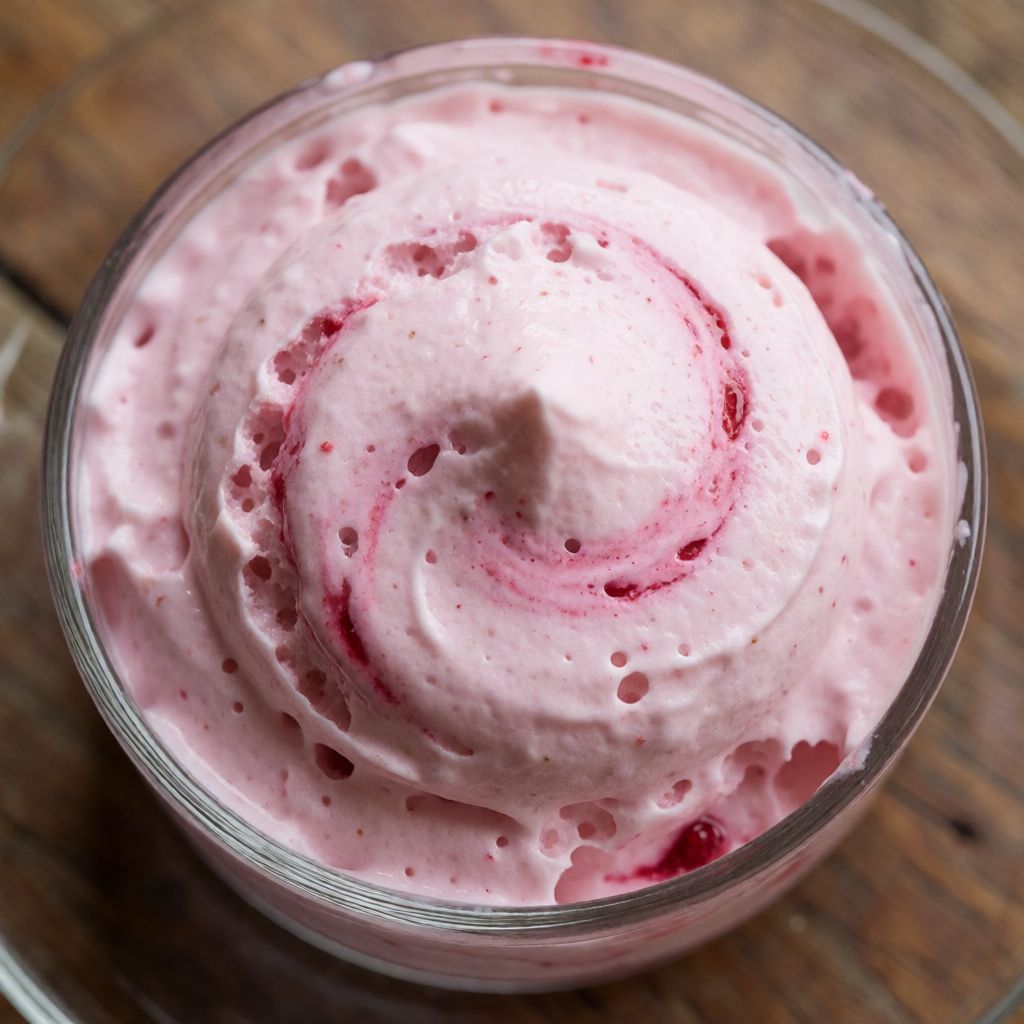
A light raspberry mousse with whipped cream and vanilla, chilled in glasses until set.
Labels are worked out automatically from the ingredients and can be wrong. Check the packaging if it matters to you.
Ingredients
- 3 pcs Gelatine sheets
- 300 g Raspberries frozen
- 3 pcs Eggs
- 1 pcs Vanilla pod seeds scraped out
- 70 g Caster sugar
- 150 ml Double cream
- 2 pcs Mint sprigs, for decoration
- 8 pcs Raspberries fresh
- 100 ml Double cream whipped to soft peaks







Steps
Soak the gelatine in cold water for 10 minutes.
10 minPut the raspberries in a pan and bring quickly to the boil, stirring.
Cook for almost 1 minute, stirring, then remove the pan from the heat.
1 minSqueeze the water from the gelatine and stir it into the pan with the hot raspberries. Mix well and let it cool to room temperature.
Separate the eggs into whites and yolks. Whisk the whites to a stiff, glossy foam with firm peaks.
Split the vanilla pod lengthwise, carefully scrape out the seeds with a knife and mix them into the sugar.
Whisk the yolks, sugar and vanilla together until pale and fluffy.
Fold the cooled raspberries into the yolk mixture, stirring with a spatula until smooth.
Whip the cream to soft peaks.
Gently fold the whipped cream into the raspberry mixture with a spatula, using an under-and-over motion to keep it airy.
Stir 1 tablespoon of the egg whites into the raspberry mixture, then gently fold in the rest of the whites.
Spoon the mousse into individual glasses and chill for at least 3 hours, until set.
180 minBefore serving, decorate with fresh raspberries, mint and a small dollop of whipped cream.
What was changed
The garnish herb was swapped for Mint, which is easy to find in UK shops.
A raspberry mousse is really three structures fighting for the same bowl: foam (egg white), emulsion (cream), and a set jelly (gelatine with fruit). The whole point of the recipe is building each one correctly on its own, then combining them before any of them collapse. Get that order wrong and you don't get a light mousse — you get raspberry-flavoured scrambled eggs floating in pink cream.
What decides whether it works is temperature at the moment of folding. The raspberry-gelatine base has to come down to room temperature before it meets the egg yolks and cream. Gelatine starts setting around body heat — if the base is still warm, it will seize in streaks the second it touches cold whipped cream, and you'll be picking rubbery threads out of your mousse instead of eating it. Patience here isn't a virtue, it's a load-bearing ingredient: rushing this step is the single most common reason home mousses fail.
Some say raw egg in a mousse is dangerous and should be cooked out — no, because the brief boil the raspberries get is not there to cook the eggs, it's there to release pectin and juice from frozen fruit fast, and the eggs go in raw and stay raw. If that worries you, use pasteurised egg (sold in UK supermarkets in cartons) — it whips the same way, just slightly less stiff.
Gelatine sheets, not powder, because sheets bloom evenly and give a cleaner set — no grainy bits that didn't dissolve. Three sheets for 300g of fruit is a light set, deliberately: this is a mousse that should wobble and fall off a spoon, not stand up like a panna cotta. If you only have powdered gelatine, use roughly the same weight (about 9g, three 3g sheets) and bloom it in a little cold water first rather than sprinkling it straight into something hot — it clumps otherwise.
Raspberries frozen, not fresh, is not a compromise here — it's correct. Frozen fruit has already had its cell walls burst by ice crystals, so it releases juice fast under heat, which is exactly what you want for a quick near-minute boil. Fresh raspberries would need longer cooking to break down the same way, and longer cooking means more water boiled off and a firmer, jammier result than the recipe wants. Buy the cheap frozen bag; it is, genuinely, the better tool for this job.
Eggs get split for a reason beyond tidiness. Yolks carry fat and lecithin — they're there to enrich and emulsify, which is why they're whisked with sugar until pale, trapping air that stabilises the base. Whites carry no fat at all, which is precisely why they whip to stiff peaks: fat is the enemy of egg-white foam, it stops the proteins linking up. That's also why your whisk and bowl for the whites need to be properly clean and dry — a smear of yolk or butter in there and the whites will refuse to climb past a sloppy foam.
Vanilla pod and its scraped seeds go into the sugar before anything else, rubbed in with your fingers if you like — this spreads the flavour and the tiny black specks evenly through the sugar crystals instead of leaving them clumped in one spot of the mixture. No pod in the cupboard? Use a good vanilla extract, not essence — extract is made from real pods, essence is usually synthetic vanillin and tastes thinner and more one-note.
Double cream, whipped only to soft peaks, twice in this recipe — once folded into the mousse, once as the finishing dollop. Soft peaks, not stiff, because cream whipped too far starts turning into butter, and a mousse made with over-whipped cream sets heavy and grainy instead of light. Any cream with enough fat to hold air will do this job — double cream (around 48% fat) is the UK standard for it; whipping cream will work but holds its structure less confidently, especially once gelatine and egg are also fighting for space in the bowl.
The fresh raspberries and mint at the end aren't just garnish for the photograph — a chilled mousse is cold and soft all through, and a whole raspberry gives you something with a bit of resistance to bite into, a different texture against the smoothness you've spent the whole recipe building. It's a small thing, but it's the difference between a dessert that's pleasant to look at and one that's pleasant to eat.