
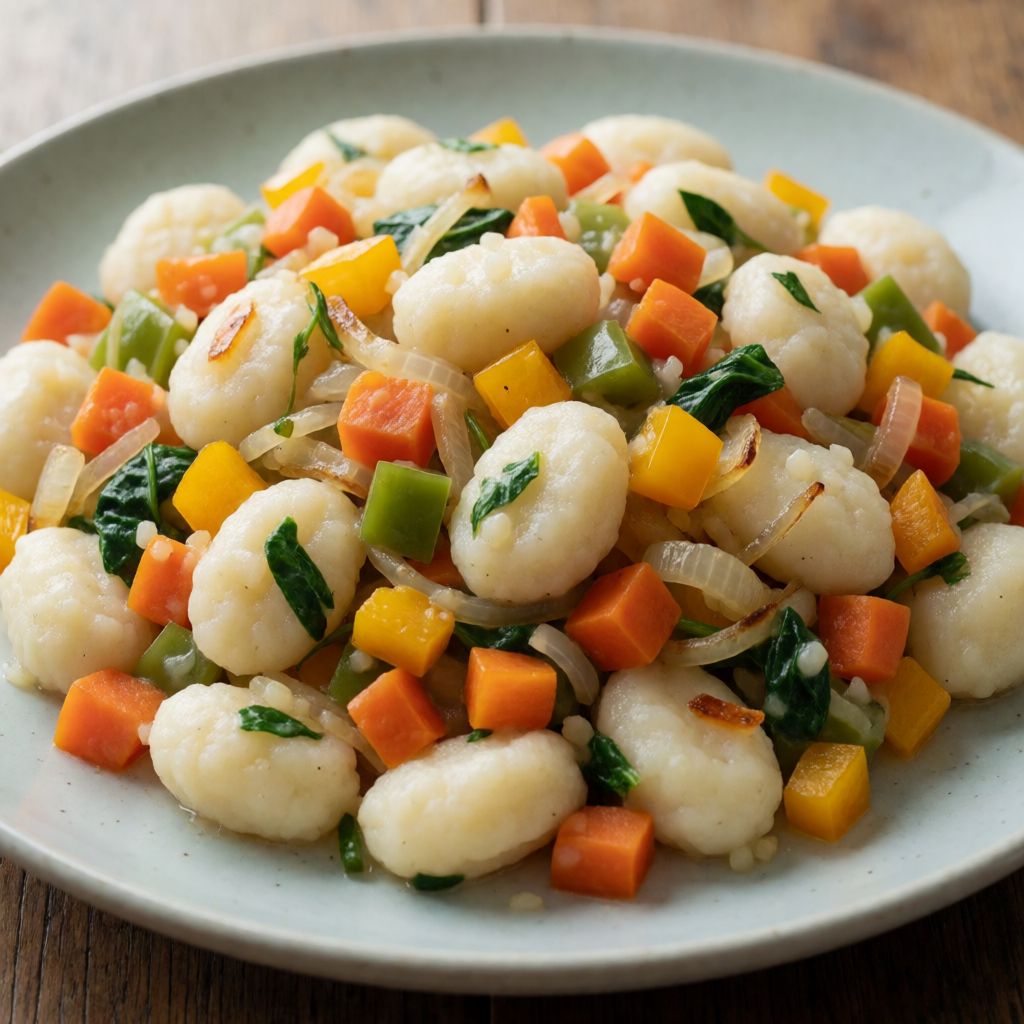
 AI photo
Rice Gnocchi with Vegetables
A rice-flour gnocchi dish tossed with sautéed carrots, peppers, broccoli and mushrooms.
Labels are worked out automatically from the ingredients and can be wrong. Check the packaging if it matters to you.
Ingredients
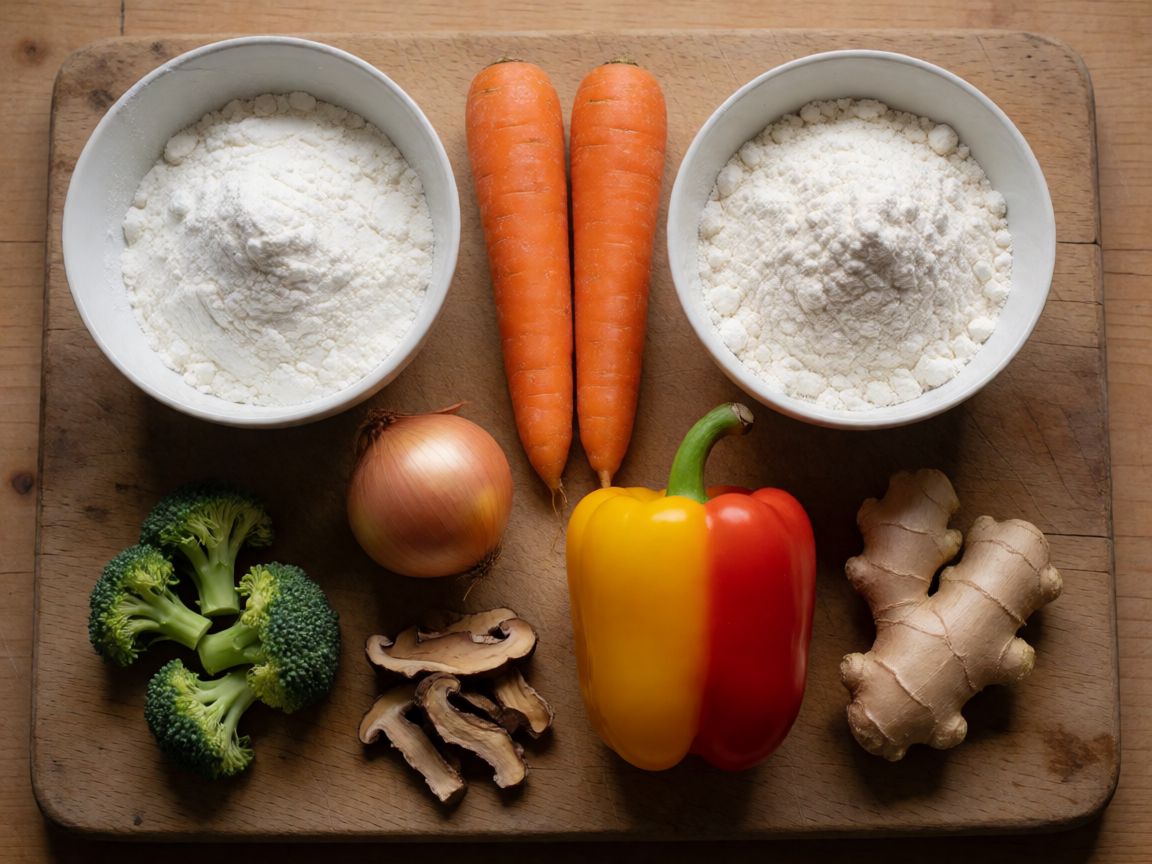
- 200 g Rice flour
- 100 g Plain flour
- 200 ml Water
- 2 pcs Carrot
- 1 pcs Onion
- 1 pcs Bell pepper
- 150 g Broccoli
- 40 g Dried porcini mushrooms
- Vegetable oil to taste
- 1 pcs Ginger
- 1 tbsp Soy sauce
- Salt to taste








Steps
Sift the plain flour and rice flour into a large bowl. Add a pinch of salt and pour in cold water in a thin stream while stirring with a spoon. Knead the dough by hand until smooth.
Wrap the dough in cling film and place it in the fridge for 30 minutes.
30 minPeel the onion and cut into thin rings. Wash and peel the carrot, then cut into thin strips.
Trim the broccoli, remove any tough leaves, and boil in salted water or steam until tender.
10 minWash the bell pepper, cut it open, remove the seeds and slice into strips.
Soak the dried porcini mushrooms in water and drain once softened.
Take the dough and place it on a floured board. Cut thin slices about 5 mm thick with a sharp knife. Shape each gnocchi into an oval.
Heat the oil in a wide frying pan. Sauté the onion for a few minutes, then add the broccoli, carrot, mushrooms and pepper.
Season with grated ginger and soy sauce. Cover and cook over medium heat.
10 minBoil the rice gnocchi in plenty of salted boiling water, lifting them out with a slotted spoon as soon as they float.
Transfer the cooked gnocchi into the pan with the vegetables. Let everything sit for a few minutes over high heat.
This isn't the gnocchi your nonna warned you about. No potato, no egg, no eggy dough glue at all — just rice flour, a bit of plain flour for backbone, and cold water. Think of it less as Italian dumpling and more as a flatbread's cousin that got cut into ovals and thrown into boiling water. That's the trick of it: rice flour alone has no gluten to hold shape, so the plain flour isn't there for flavour, it's there as scaffolding. Drop the plain flour entirely and you get a pot of rice paste, not gnocchi.
What decides whether this works is two separate things cooked separately and married at the end: a chewy, slightly springy starch dumpling, and a stir-fried vegetable mix sharpened with ginger and soy. The dish lives or dies on timing those two correctly, not on either one alone. Boil the gnocchi too early and they sit around going gluey and stuck together, starch leaching into itself. Boil them too late and your vegetables have gone from bright and resistant to grey mush waiting on the hob.
Some say gnocchi always means potato. No — gnocco just means "lump" in Italian, a shape, not an ingredient. Potato gnocchi is one regional answer to feeding a lot of people cheaply with a starch nobody could afford to waste. Rice flour is another answer, further east, same economic logic: bulk a meal with what grows abundantly and cheaply where you are.
The float test is the only clock you need for the dumplings — when they rise to the top of the water, they're done, not a second before you see it happen. Time given anywhere here is a floor, not a verdict.
Rice flour versus plain flour isn't a style choice — it's physics. Plain flour has gluten, which stretches and holds air and water like elastic. Rice flour has starch granules with nothing to link them. Use all rice flour and your dough tears and crumbles when you try to roll it thin; use all plain flour and you lose the particular dense, slightly glassy bite that makes this rice-based rather than wheat-based. The 2:1 ratio here is a compromise — enough gluten from the plain flour to let you knead and shape, enough rice flour to keep the chew distinct from ordinary pasta. If you've only got rice flour in the cupboard, don't skip the plain flour substitute — a little cornflour or tapioca starch won't give you the same stretch, you genuinely need something with gluten in it, however small the amount.
The fridge rest isn't decoration either. Cold rest lets the water fully hydrate the starch and lets any gluten that did form relax, so when you roll the dough out it doesn't spring back and shrink on you. Skip it and you'll fight the dough the whole time you're cutting ovals, the edges pulling tight and curling. Thirty minutes is the minimum — if your kitchen runs warm, give it longer; you want the dough firm enough to slice cleanly, not sticky.
The vegetables are chosen for contrast, not tradition — crunch against the dumplings' chew. Carrot cut into thin strips cooks fast and still keeps resistance; it's done when it bends without snapping, not when it goes limp. Broccoli gets boiled or steamed separately first because it needs longer than a quick stir-fry gives it, and because broccoli dropped straight into hot oil with everything else either scorches at the florets or stays raw at the stem — cooking it apart solves both. Bell pepper and onion go in raw to the pan because they soften fast in hot oil; onion turning translucent and sweet-smelling, not browned, tells you it's ready for the next vegetable, not a clock.
Dried porcini mushrooms are doing a job here that fresh mushrooms can't: concentrated, almost meaty savour, the kind you get from drying and rehydrating, which breaks down the mushroom's cells and intensifies flavour compounds you don't get from a fresh cap. Soak them properly — don't rush it under a tap — and don't throw out the soaking liquid if you can help it, strain it and it's free stock for the pan. If you've no dried porcini, any dried mushroom with a strong, earthy smell does the same job; fresh button mushrooms will cook fine but you'll lose that depth, so add them later and in more volume to compensate.
Ginger and soy sauce aren't garnish, they're the entire seasoning backbone replacing salt as the main flavour driver — grate the ginger rather than slice it so it disperses through the oil instead of sitting in clumps, and add the soy sauce toward the end because its sugars scorch if they hit a hot pan too early and sit too long.
For oil, the rule is simple: anything with no smell of its own, so it doesn't fight the ginger and soy. Sunflower or groundnut oil both do fine in a UK kitchen; olive oil's flavour will argue with the ginger, so save it for something Italian.
On a domestic hob you won't get a kazan's even, blasting heat, and that's fine — a wide frying pan just means you accept the vegetables need a bit more watching and stirring than a wok would demand, since heat won't climb the sides the same way. Cover the pan for the simmer stage not to steam everything soft, but to trap enough heat that the vegetables finish without you needing a flame higher than your extractor fan can handle. And when the gnocchi finally meet the vegetables, that last stretch over high heat isn't for cooking anything further — it's for getting the dumplings to pick up the sauce clinging to the pan, so don't walk away and don't let it run past a couple of minutes.