
 AI photo
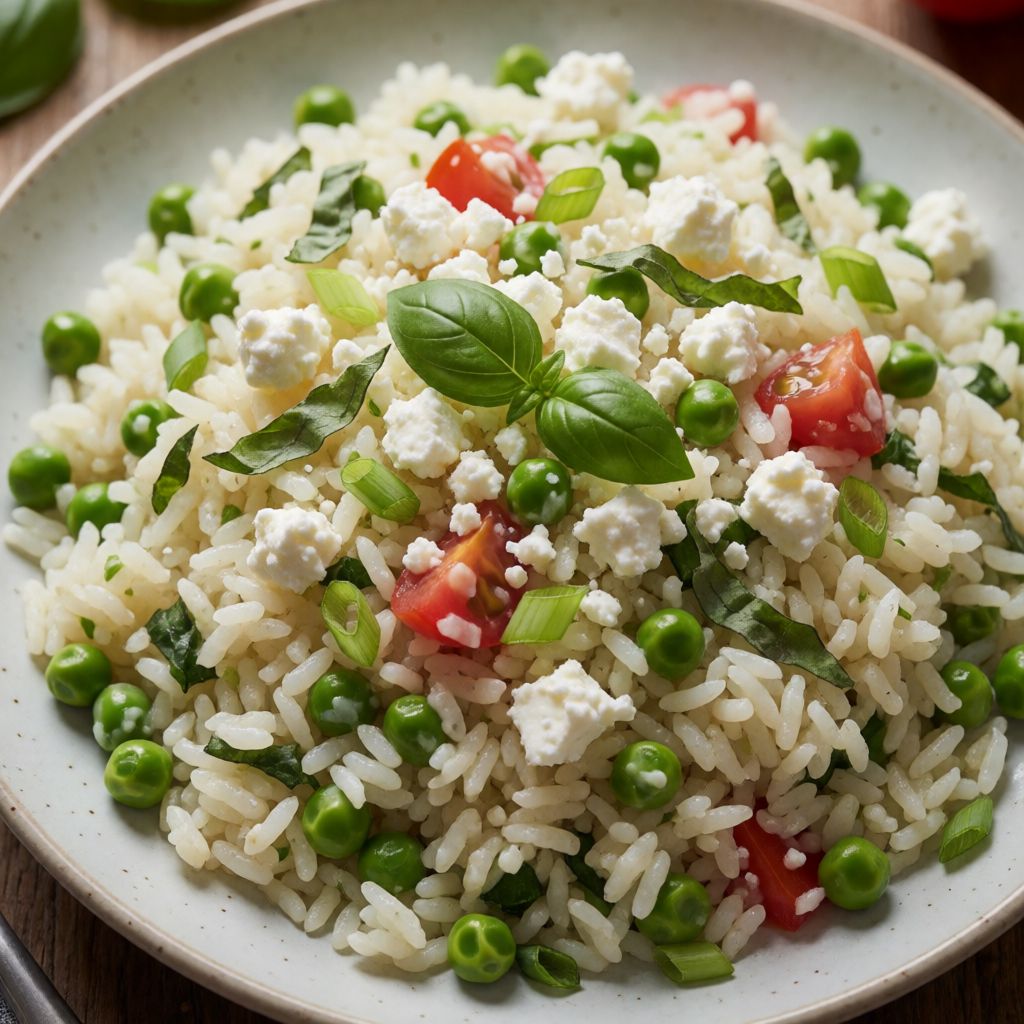
Rice with Feta and Peas
A simple side of rice cooked with peas, tomato and feta, finished with rosemary and basil.
Labels are worked out automatically from the ingredients and can be wrong. Check the packaging if it matters to you.
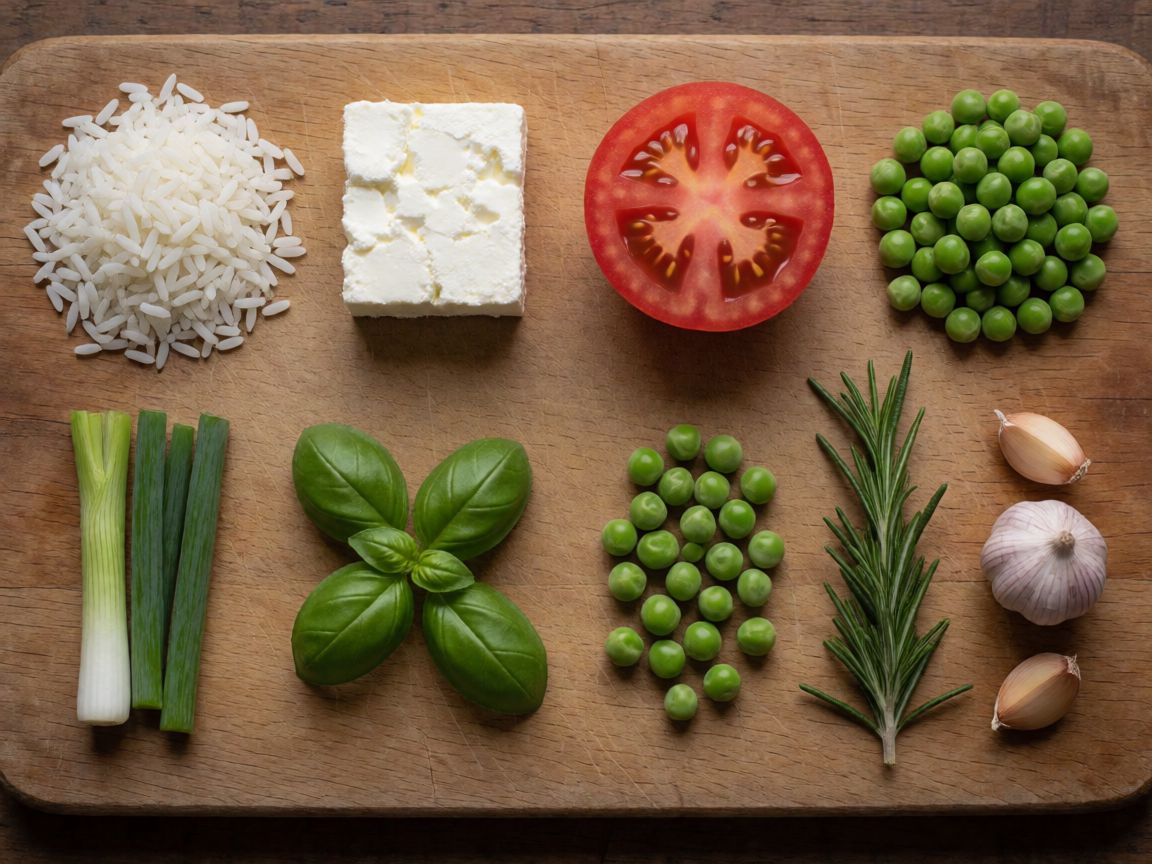
Ingredients











Steps
Pour olive oil into a frying pan, add the chopped spring onion and fry for a few minutes.
Add the rice and fry for 5 minutes.
5 minPour in 600 ml of hot water and cook over medium heat, stirring occasionally.
In another pan, fry the peas with olive oil and garlic.
Add the chopped tomato and cook for about 3 minutes.
3 minRemove from the heat, discard the garlic and add the peas to the rice.
Stir everything together over the heat for another minute, flavouring with rosemary.
Season with salt to taste and leave to cool slightly.
Divide the rice between plates, top with sliced feta and add basil leaves.
This is a rice pilaf wearing a Greek salad's clothes — parboiled rice, cooked almost like a risotto but without the fuss, finished cold-ish with raw feta and basil on top instead of stirred through. The reason it works is temperature contrast: hot rice underneath, cool crumbled cheese on top, so the feta stays itself instead of melting into a sauce. Melt it in and you've made something else — a baked rice bake, not this.
What decides it is the rice. Parboiled rice has had its starch partly set by steam before milling, which is exactly why it suits this method: it won't turn gluey no matter how long it sits in that water, so you get separate grains, not porridge. If you used ordinary long-grain, you'd need to watch it like a hawk; with parboiled you have slack, which matters in a flat kitchen where the phone rings mid-stir.
Frying the rice in oil for five minutes before any liquid touches it isn't decoration — it coats each grain in fat, which is what stops the grains gluing to each other once the water goes in. Skip that step and you're relying on luck and constant stirring instead of chemistry.
The two pans running at once — onion-and-rice in one, peas-garlic-tomato in the other — exist so that nothing stews into mush waiting for something else to finish. Combine too early and the peas go grey and tired by the time the rice is done; keep them apart until the last minute and they stay bright, with their own bite against the soft grain.
Some say rice needs a lid to cook properly. No — what rice needs is enough liquid and enough time for that liquid to be pulled into the grain; a lid just slows evaporation so you don't have to top up water halfway through. In a UK kitchen, a plate laid over the pan does roughly the same job as a lid, badly but enough. Watch the water level, not the clock on this one — 600 ml for 200 g rice is your starting point, not gospel; if your hob runs hot and strips the liquid faster, you top up with more hot water, not cold, because cold water stops the cooking dead and you end up with a hard core inside a soft grain.
The feta is the one non-negotiable: it's a brined sheep's-or-goat's milk cheese, firm enough to slice, salty enough that it does the final seasoning of the dish almost on its own — which is why the salt step comes before the feta goes on, taste the rice, not the finished plate. If feta isn't to hand, a firm, salted, non-melting white cheese does the job — not mozzarella, which melts, not cottage cheese, which has no structure to slice. The test is simple: can you cut a clean slice that holds its shape sitting on warm rice for a minute? If yes, it'll work.
The peas here are doing a job cooked frozen veg does well and fresh veg does with more effort: they hold their green and their shape through a quick fry, which is the only cooking they get before meeting the rice. Garlic goes in with them purely to perfume the oil — it's discarded, not eaten, so don't bother mincing it fine; a bruised, lightly crushed clove gives up its flavour to the oil just as well and is easier to fish out.
The tomato's three minutes aren't about cooking it through — they're about breaking down just enough flesh to make a loose sauce that coats the peas, while the tomato still reads as tomato and not as stock. If your tomatoes are the pale, watery supermarket kind rather than something ripened properly, give it a touch longer and don't expect much colour; that's not a failure of your pan, that's the tomato.
Rosemary goes in at the very end, stirred through for a minute over heat and then — implicitly — it should come back out before serving, or at least be pushed to one side, the way the garlic clove was discarded. Herbs like rosemary give their oils to fat and warmth quickly; leave the sprig sitting in the rice as it cools and you risk a medicinal, woody bitterness overtaking the dish rather than seasoning it.
Letting the rice "cool slightly" before plating is patience doing real work, not just a pause for the sake of it. Pile feta onto rice that's still roaring hot and it half-melts, loses its edges, bleeds brine into everything around it. Give the rice a few minutes off the heat — long enough that steam stops rising off it urgently — and the cheese sits on top as itself: cool, sharp, distinct against the warm grain. That contrast is the whole point of the dish, and it is the one thing you cannot rush back once it's gone.