
 AI photo
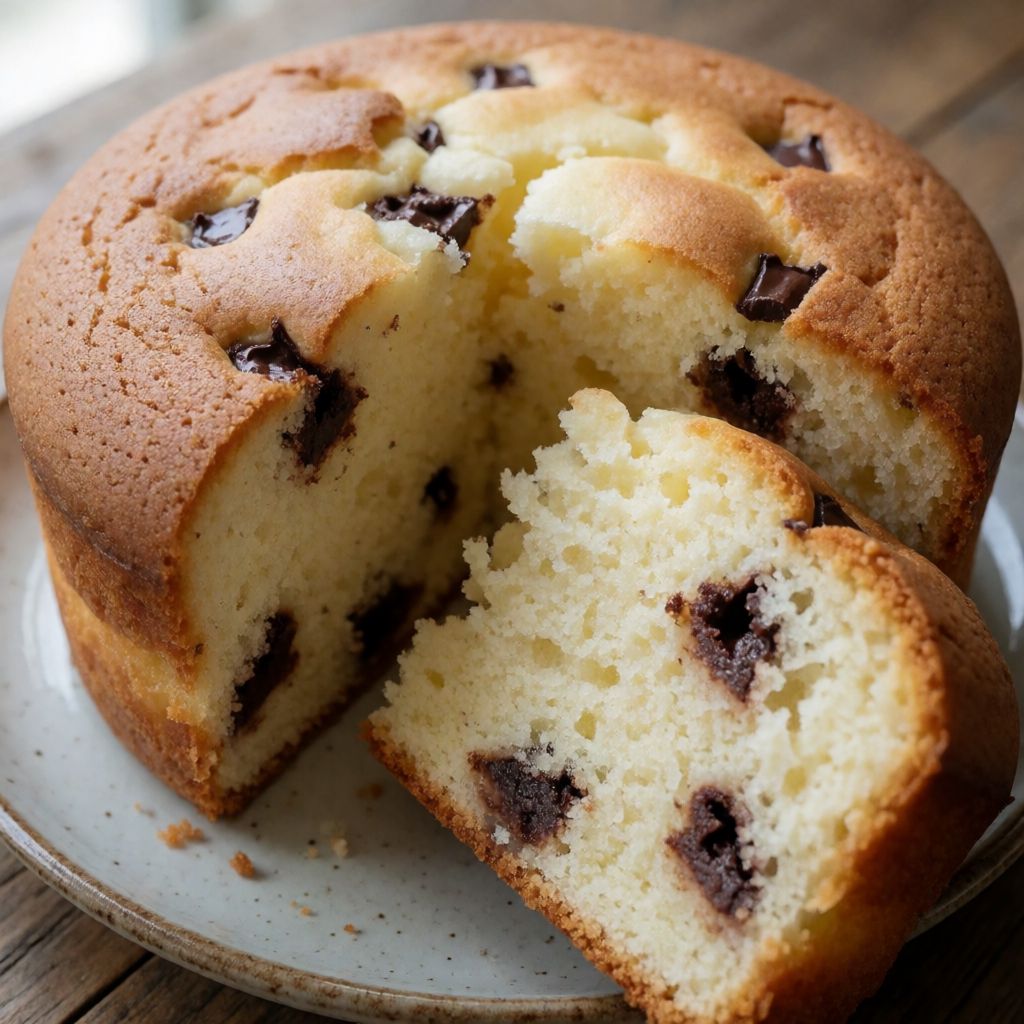
Ricotta and Dark Chocolate Cake
A soft, buttery cake made with ricotta and chunks of dark chocolate, perfect for an afternoon treat.
Labels are worked out automatically from the ingredients and can be wrong. Check the packaging if it matters to you.
Ingredients
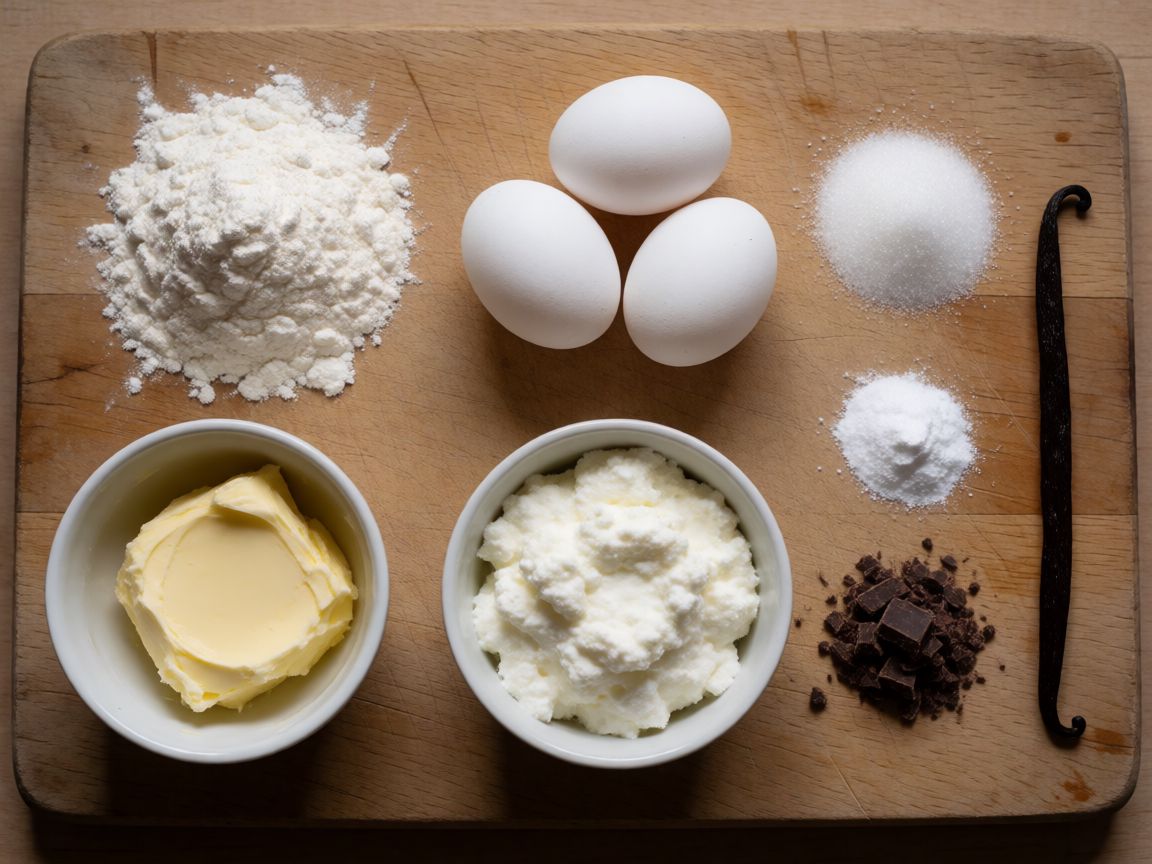
- 250 g Plain flour
- 3 pcs Eggs
- 150 g Caster sugar
- 80 g Butter softened
- 250 g Ricotta
- 16 g Baking powder
- 100 g Dark chocolate roughly chopped, some reserved for topping
- 1 tsp Vanilla extract or the seeds of half a vanilla pod








Steps
Separate the egg yolks from the whites into two bowls. Add the sugar to the yolks and beat with an electric mixer until light and creamy.
Add the softened butter and the ricotta, and mix well.
Whisk the egg whites to stiff peaks, then gently fold them into the batter, stirring from the bottom up.
Flavour the batter with the vanilla extract, or with the seeds scraped from half a vanilla pod split lengthways.
Sift the flour and fold it in gradually, mixing thoroughly, then add the baking powder.
Roughly chop the dark chocolate and fold it into the batter. Set a little chocolate aside for sprinkling on top.
Pour the batter into a 24 cm tin, greased with butter and dusted with flour. Sprinkle the reserved chocolate over the top.
Bake in a fan oven at 170°C for about 40 minutes, or in a conventional oven at 180°C for about 45 minutes.
40 min
This is not a cheesecake, even though the ricotta makes people's minds jump there first - no, because there's no biscuit base, no water bath, no slow low bake to protect a custard. This is an ordinary flour cake, lifted the old way with beaten egg whites folded in, and ricotta is used to replace some of the fat and liquid you'd normally get from milk or cream. Its job is to keep the crumb damp and faintly sour against the sweetness, not to be the filling. Chocolate studs it, nothing more.
What decides whether it works starts right at the beginning, with yolks and sugar. Beat them until the mixture goes pale and thick enough that, when you lift the whisk, what falls back off it sits on the surface a second before sinking in. That's the sign the sugar has actually dissolved and air has gone into the mix. Skip that stage and the sugar stays grainy, little crunches turning up in a cake that should be smooth all the way through.
Then come the whites, beaten stiff, folded in from underneath rather than stirred round and round. Stirring knocks the air straight back out again, and the baking powder can't rescue that on its own - there's a generous double dose of it here, because ricotta is heavy and wet, and lifting it needs two engines working together, not one doing all the work. Flatten the whites and you get a cake that stays dense at the centre no matter how long it sits in the oven.
Plain flour, not a strong bread flour - you don't want gluten building here, you want the batter to set around the air you've folded in rather than stretch and chew. Sift it in gradually rather than dumping it, partly so it doesn't clump and partly so you're never tempted to beat hard to smooth it out, which is the second way (after a careless stir of the whites) to lose the air you worked for.
Three eggs, separated - ordinary supermarket mediums are fine. The separating is what buys this cake its lift once ricotta's weight is added to the batter; skip it and you'd need far more than 16g of baking powder to get the same rise, and the cake would taste of baking powder rather than chocolate.
Butter needs to be properly soft - press-with-a-finger soft, not melted - so it blends smoothly into the yolk-and-ricotta mixture instead of sitting there as cold lumps that turn into greasy spots once baked. Any neutral solid fat does the same structural job; a flavourless margarine is the honest substitute if butter's not to be found, but oil is not, because oil has no structure to hold air, and this batter is carrying enough moisture from the ricotta without more liquid fat added. Ricotta itself wants to be the firm, slightly crumbly kind from a tub, properly drained rather than sitting in its own whey - if yours looks wet, tip it into a sieve for ten minutes first, or you'll be fighting a soggier centre than the recipe expects. Some say any soft cheese does the same job - no, because fat and moisture differ: mascarpone makes it heavier, cream cheese brings a sharper tang that argues with the chocolate. Either will get you a cake, just not quite this one. Ricotta earns its place in home kitchens the way it earns its place on the cheap shelf - it's traditionally what's left over once the proper cheese has been made, a byproduct turned into Sunday pudding economy, which is why Italian households have been folding it into cakes for generations rather than buying something dearer.
Chocolate should be roughly chopped, not bought as chips, because chips are made to hold their shape in heat and here you want the opposite - uneven pieces melting down into soft pockets through the crumb. Something around 50-60% cocoa behaves best; push much darker and it can seize and read bitter against the sweet batter, go milk chocolate and it simply melts flat and sinks, leaving streaks instead of pockets.
Vanilla extract or the scraped seeds of half a pod do the same job from different directions - extract gives a rounder, already-cooked flavour, the pod gives flecks and a sharper top note. Use whichever is in the cupboard; it's not the ingredient deciding anything here. The tin matters more: 24cm, greased and dusted with flour rather than lined with paper, because a wet batter like this sticks hard to bare metal and tears coming out. A springform tin, if you own one, removes the anxiety entirely. This feeds six properly - stretch it further and the slices thin out past the point where this particular crumb still feels generous.