
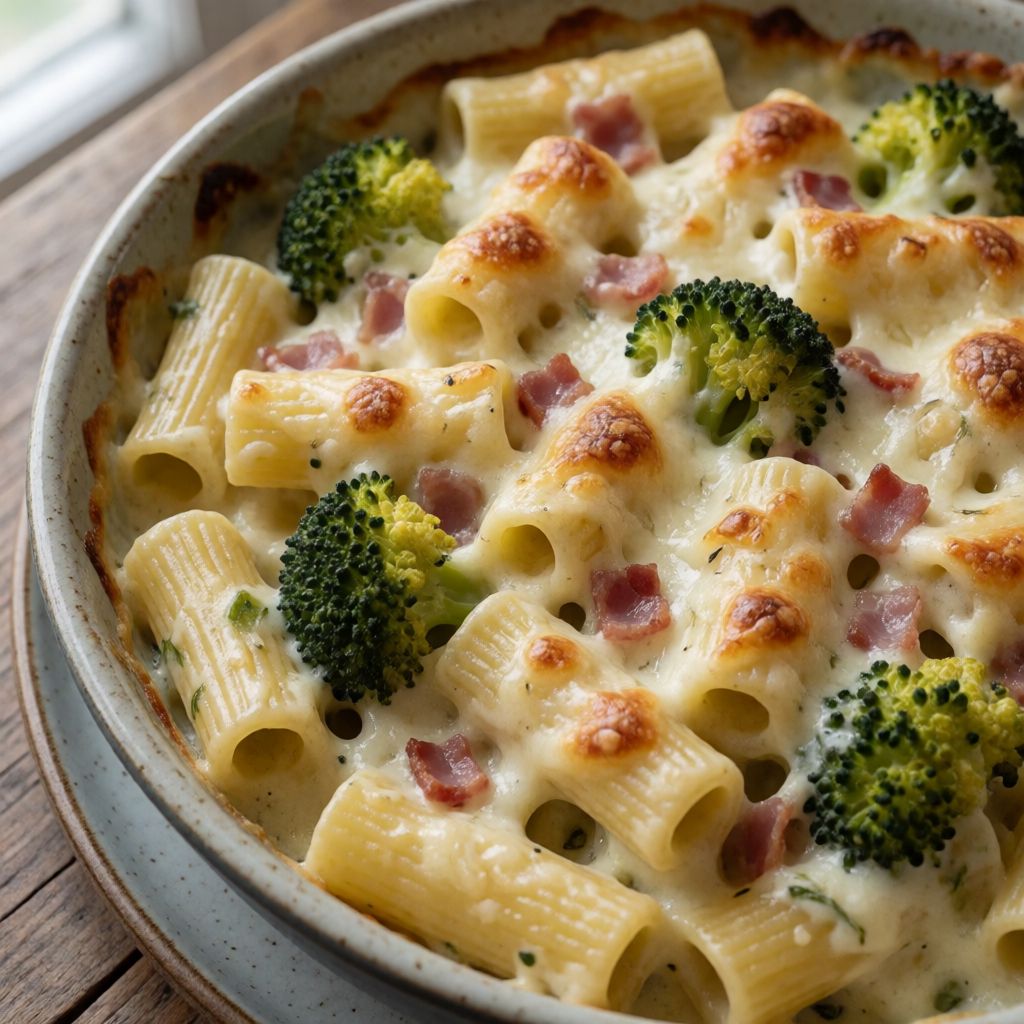
 AI photo
Baked Rigatoni with Broccoli and Scamorza
Oven-baked rigatoni with broccoli, pancetta and smoked scamorza in a creamy béchamel sauce.
Labels are worked out automatically from the ingredients and can be wrong. Check the packaging if it matters to you.
Ingredients
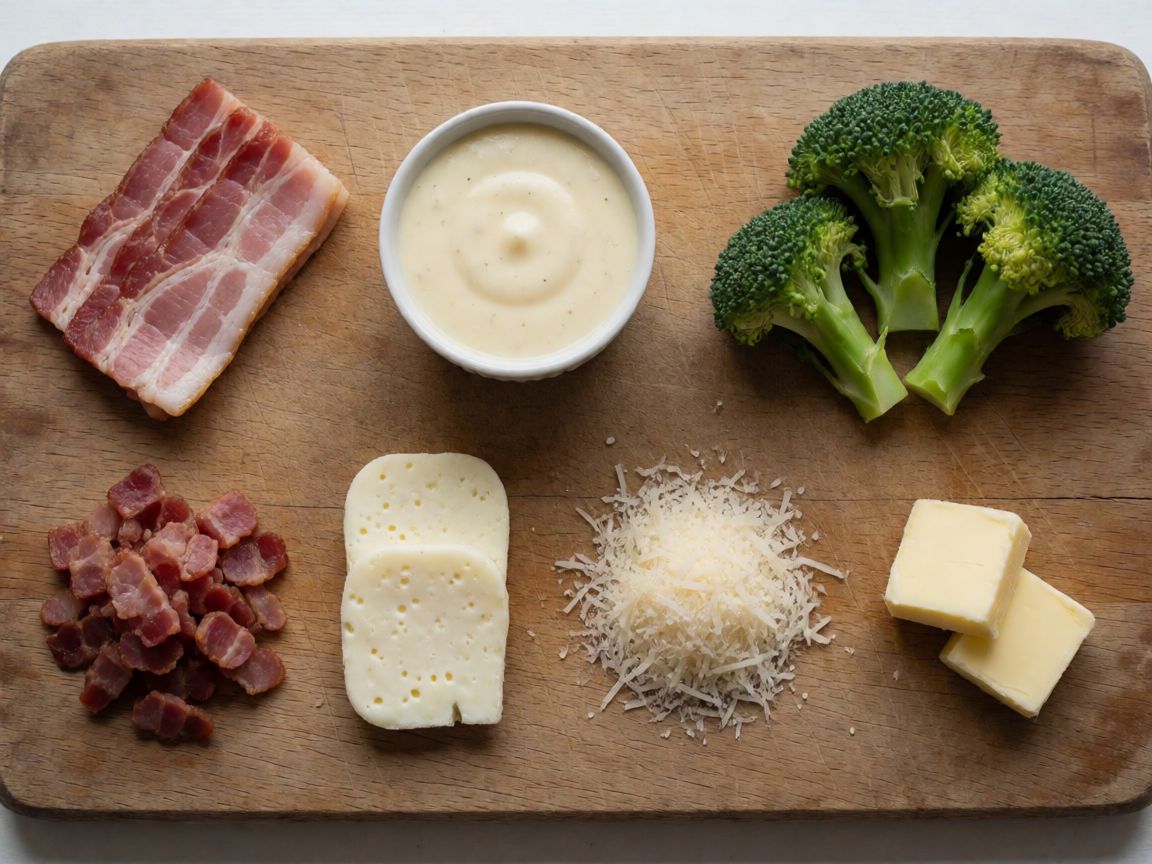
- 350 g Bacon
- 200 ml Béchamel Sauce
- 1 pcs Broccoli
- 150 g Pancetta
- 100 g Smoked Scamorza
- Salt to taste
- Black Pepper to taste
- Parmesan to taste
- 20 g Butter
- Vegetable Oil to taste, for frying








Steps
Boil the broccoli florets in salted water until tender, then drain.
In a dry pan without oil, fry the pancetta until crisp.
Add the broccoli and butter, stir and cook for a few more minutes.
Cook the rigatoni in the same water used for the broccoli until just shy of done, then drain.
In a bowl, combine the drained rigatoni, the broccoli and pancetta, and the diced scamorza; mix well.
Pour 2 tablespoons of béchamel into the bottom of a baking dish, add the pasta and broccoli mixture, sprinkle with black pepper, then pour the remaining béchamel over the top and sprinkle with Parmesan.
Bake in a preheated oven at 200°C for 20 minutes, then switch to the grill function until done.
20 min
What you've got here is a pasta al forno — pasta baked, not just sauced — and the whole dish turns on one piece of timing: the pasta has to still have fight in it when it goes into the dish, because the oven and the béchamel are going to finish the job for you. Pull the rigatoni at a point where it's firmer than you'd eat it from the pot, with a thin white thread of resistance still in the middle. That's not an aesthetic choice, it's arithmetic — twenty minutes at 200°C plus a stretch under the grill is real cooking time, and pasta that was already soft when it went in comes out as paste.
Some say you should boil pasta fully before any bake, the way your gran did with lasagne — no, because a bake is a second cooking, and béchamel is wet. Boil it soft, bury it in sauce, put it under more heat, and you've cooked it three times over. The rigatoni's ridges and tube are there precisely to hold a bit of sauce and a bit of air inside while they firm back up in the oven — that's the whole design of that pasta shape, not decoration.
The pancetta goes into a dry pan for the same reason you don't add oil to a steak that already has its own fat cap — it's carrying its own grease, and that grease is the point. Render it out, crisp the edges, and that fat is what the broccoli cooks in at step three. Skip the dry-pan instruction and pour oil in first, and you're not frying pancetta, you're boiling it in two fats at once — it goes grey and chewy instead of crisp, and the broccoli tastes of nothing but itself.
Broccoli first, because the method reuses its water for the pasta, and that's not laziness, it's housekeeping. The water's already salted, it's already picked up a little green sweetness from the florets, and using it twice means one less pot to fill, boil and wash in a kitchen with one hob doing all the work. Some say that water's spent once the vegetable's out — no, it's seasoned stock at that point, use it. Pick a broccoli where the florets are tight and dark, not yellowing at the edges — yellow means it's been sitting too long and will go to mush before it's properly tender, and 'tender' here means a fork slides through with no resistance, not that it falls apart on its own.
The list gives you both bacon and pancetta, but only pancetta gets a line in the method — that's a sign of where one stands in for the other, not an instruction to use both. The criterion for either is the same: a salted, fatty pork cut with enough fat in it to render on its own in a dry pan, no oil added. Streaky bacon is the honest British answer to pancetta when the deli counter doesn't stock it — more smoke, slightly less fat, so expect a touch less crackle. Guanciale, if you ever come across it, goes further the other way: more fat, richer, and you'll need even less of it.
Scamorza is mozzarella's smoked, aged cousin — same cow's-milk family, but firm enough to dice rather than stretch, and smoked so it carries flavour into the bake rather than just melting into white glue. The criterion for swapping it: something semi-firm that melts into pockets instead of oiling out. Smoked cheddar or smoked mozzarella both do the job; an unsmoked low-moisture mozzarella works but you lose the thing that makes this version of the bake distinctive, which is the smoke sitting under the Parmesan crust.
Béchamel here is doing insurance, not flavour — its job is moisture, so it needs to be thick enough to coat the pasta rather than pool and drown it, and no thinner. Parmesan on top wants to be a hard, aged, salty cheese that browns rather than just melts — Grana Padano or an aged Pecorino both answer to that, the common thread being age and salt, not any particular name on a wheel.
The vegetable oil sits in the ingredient list but never actually earns a job in the method — the pancetta fries dry, the broccoli cooks in pancetta fat and butter. Keep it by the stove as a safety net in case your pancetta's leaner than expected and starts to catch, but don't pour it in as routine, or you undo the point of the dry pan.
This feeds four, and it's built the way a Sunday roast is built — one big tray doing the work for the whole table, oven on for a stretch rather than a quick stir-fry on the hob. Patience sits in two places: letting the broccoli go properly tender rather than rushing it out half-raw, and standing by the oven door for that grill stage instead of setting a timer and walking off. The dish doesn't reward hurry, and a grill element doesn't give you a second warning before it goes from gold to burnt.