
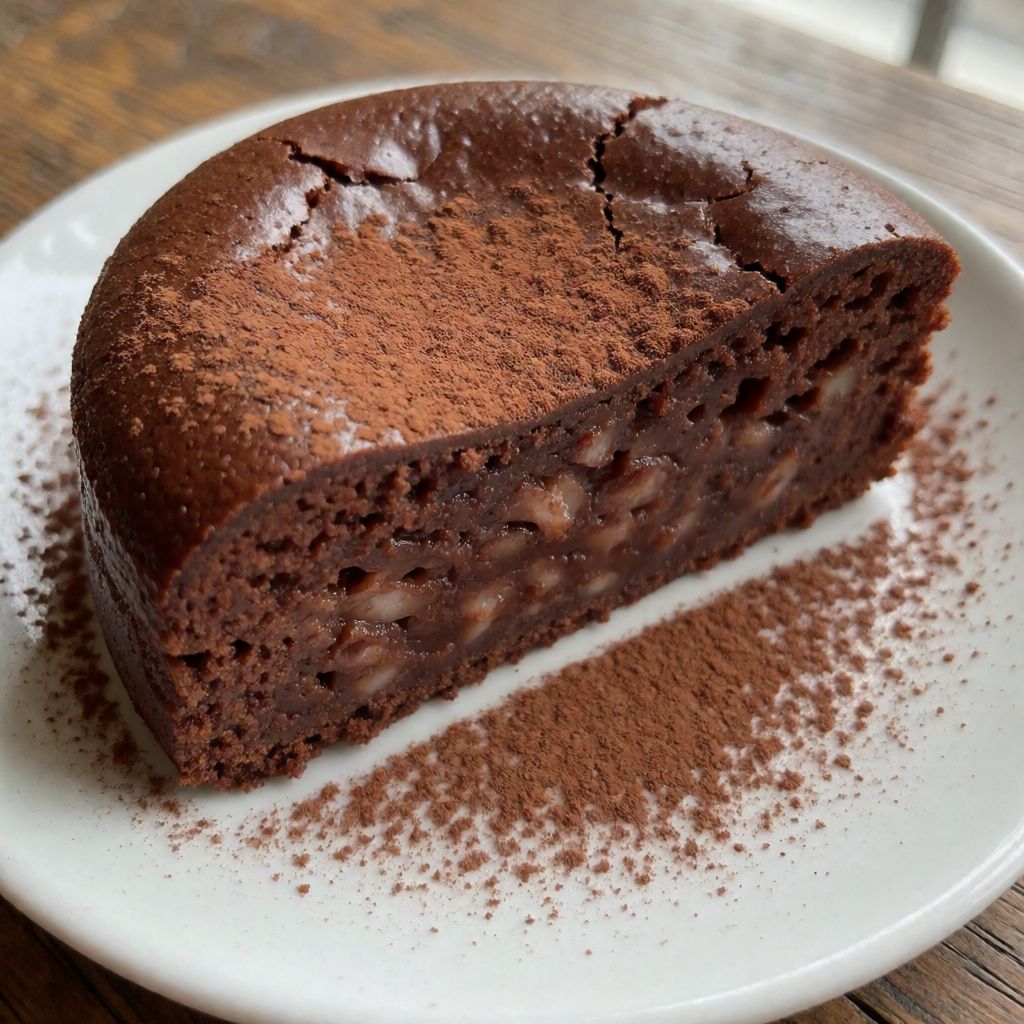
 AI photo
Rice and Chocolate Risotto Cake, Soft and Flourless
A soft, flourless risotto-style cake made with rice, milk and chocolate.
Labels are worked out automatically from the ingredients and can be wrong. Check the packaging if it matters to you.
Ingredients
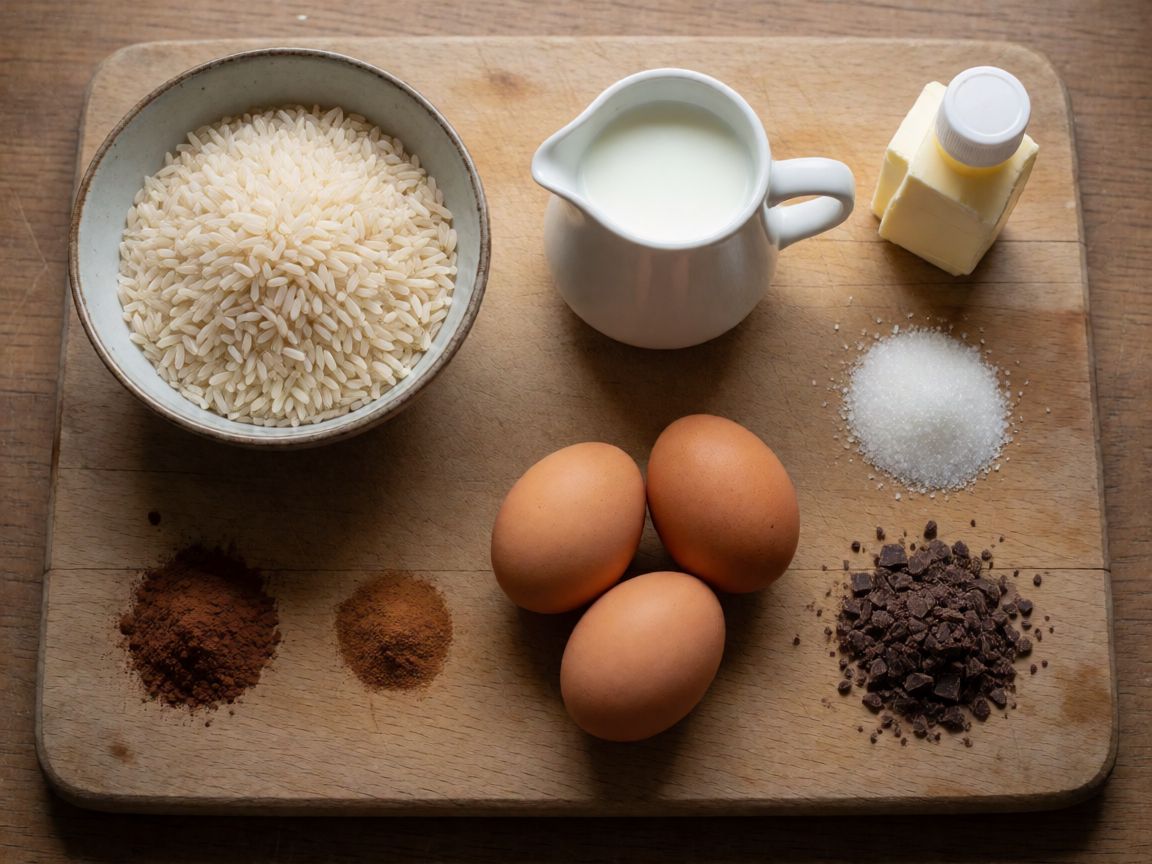
- 250 g Arborio rice
- 1 l Milk
- 80 g Sugar
- 50 g Butter
- 3 pcs Eggs
- 20 g Cocoa powder
- 1 tsp Cinnamon
- 120 g Dark chocolate
- 60 g Desiccated coconut optional





Steps
Heat the milk in a saucepan, add the rice, butter, sugar, cocoa powder and cinnamon.
Stir and cook over low heat until the milk is almost fully absorbed.
48 minIf using, add the desiccated coconut.
Transfer the mixture to a large bowl and let it cool.
Separate the egg whites from the yolks; beat the yolks and add them to the rice and milk mixture.
Add the finely chopped dark chocolate and mix well.
Separately whisk the egg whites to a stiff foam and fold them into the mixture.
Transfer the mixture into a buttered 22 cm tin and level it out.
Bake in a preheated fan oven at 170°C for about 30 minutes.
30 minCheck it is done with a wooden skewer.
This is rice pudding that grew up and decided it wanted to be a cake. No flour, no raising agent — the structure comes entirely from rice starch and whipped egg white, which is why the texture sits somewhere between a baked pudding and a dense mousse. Get that balance wrong and you either have soup in a tin or a hockey puck.
What decides it is the first 48 minutes, not the 30 in the oven. You're cooking the rice in milk the way you'd cook risotto in stock — low heat, patient stirring, until the grains have drunk up almost all the liquid and started to release their own starch back into it. That starch is your only binder. Rush this stage with higher heat and the milk scorches on the bottom before the rice has had time to swell and give up its starch — you'll taste burnt milk under the chocolate for the rest of the cake's life.
The egg whites are the other half of the mechanism, and they explain why this isn't just baked rice pudding. Whisked to a stiff foam and folded in gently, they trap air that the low oven heat sets before it can escape — that's your only lift. Beat them too loose, or stir rather than fold, and you knock the air back out, and the cake bakes flat and tight instead of lifted and soft in the middle.
Some say rice pudding and chocolate is an odd pairing — no, because rice itself is nearly flavourless, it's a blank page that takes milk, cocoa and cinnamon exactly like it takes nothing at all. The rice isn't the flavour here. It's the texture.
Arborio rice is doing a job here, not just filling space — it's a short, fat grain bred for exactly this kind of starch release, which is why risotto rice and rice pudding rice are so often the same bag. If you only have another short-grain pudding rice, pudding rice, or even sushi rice in the cupboard, it will behave close enough; what you want to avoid is a long-grain rice bred to stay separate and fluffy, because that rice fights the whole point of the dish, which is a creamy, bound mass, not individual grains.
The milk is your cooking liquid and your only moisture — whole milk, because the fat helps the rice cook into something silky rather than gluey, and because this is a cake with no cream, no oil, nothing else carrying richness. Skimmed milk will still cook the rice but the cake will taste thinner and drier, and in a flourless bake you feel every bit of missing fat.
Butter here is seasoning and lubrication for the pan more than it is structure — 50 g is not enough to build a cake on, it's there to round off the milk's edge and to stop the mixture gripping the tin. Any neutral fat with no smell of its own, a flavourless vegetable oil, could stand in at a pinch, though you lose a little of that buttered-pudding smell that's half the point of doing this at all.
The eggs are the actual architecture. Three eggs split in two directions: yolks go in early, loosening the cooled rice mixture and adding richness and colour; whites go in last, whipped and folded, and they are the only thing holding air in a cake with no flour and no baking powder. This is why step 7 matters more than any step involving heat — fold, don't stir, and get it into the tin and oven promptly, because whisked whites start deflating the moment they're made and every minute you dawdle is lift you don't get back.
Cocoa powder and dark chocolate are doing two different things, which is why the recipe uses both rather than doubling one. The cocoa dissolves into the milk early and colours and flavours the rice itself from the inside; the chopped dark chocolate goes in late, cold, in pieces, and survives the gentle baking as small pockets that haven't fully melted — that's your texture contrast, soft rice against a slightly firmer bite of chocolate. Use a dark chocolate you'd eat on its own, 60–70% is a sensible range; a chocolate that's mostly sugar will make the whole cake taste flatter and sweeter without adding anything back.
Cinnamon is there because rice and milk on their own are quiet, and a British tea-with-milk household already knows that milk puddings want something aromatic riding on top — this is the same instinct that puts nutmeg or cinnamon on a rice pudding from the Sunday oven. The desiccated coconut is genuinely optional and changes the dish more than its small weight suggests: it adds a slight chew and a toasted-sweet note once it's baked, so leave it out if you want a cleaner chocolate-and-rice flavour, add it if you want texture doing more work.
On patience: the 48 minutes of slow cooking is not a chore to get through before the "real" baking starts — it is the recipe. A domestic hob doesn't hold heat as evenly as a kazan or a proper range, so keep the heat low enough that you can walk away for thirty seconds without disaster, and stir back in when you return. The skewer check at the end exists because ovens — especially a fan oven that's slightly stronger or weaker than it claims — vary, and a cake with no flour to tell you by smell when it's set needs a more honest test than guessing by the clock.