
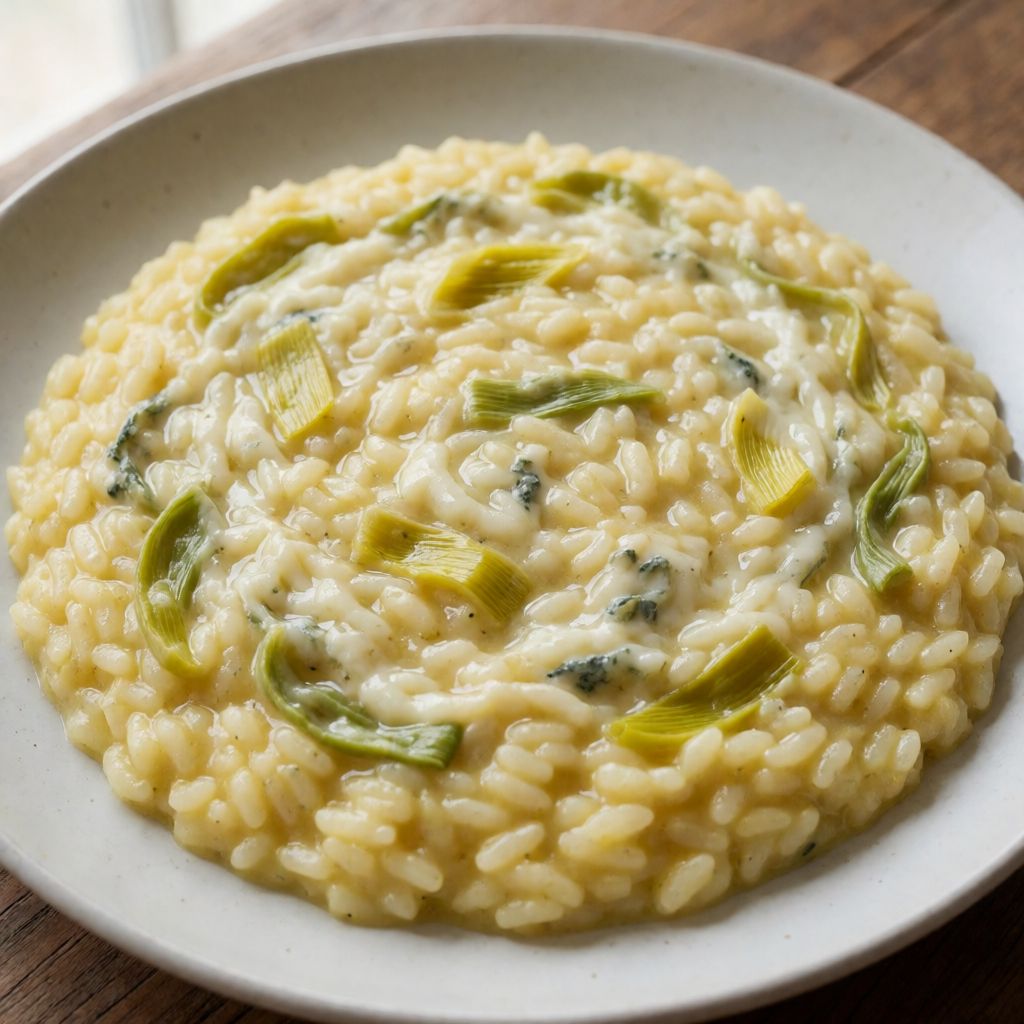
 AI photo
Risotto with Leek, Gorgonzola and Saffron
A creamy risotto with leek, Gorgonzola and a hint of saffron.
Labels are worked out automatically from the ingredients and can be wrong. Check the packaging if it matters to you.
Ingredients
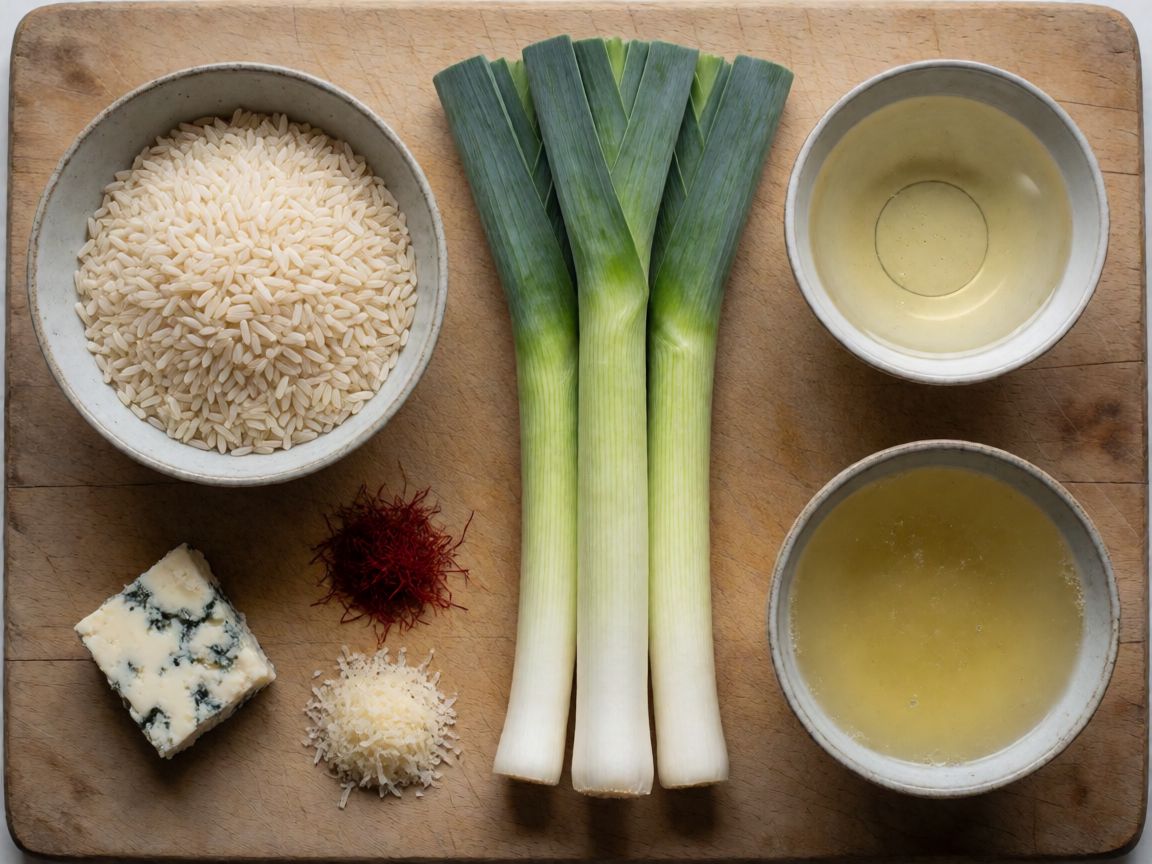
- 350 g Carnaroli rice
- 3 pcs Leek
- 1 pcs Saffron
- 2 tbsp Olive oil
- 8 tbsp White wine
- 1 l Stock
- 150 g Gorgonzola Dolce
- 1 tbsp Parmesan or Grana Padano
- Salt to taste
- Black pepper to taste










Steps
Sauté the leek in olive oil, add a little stock and simmer gently for 10 minutes.
10 minAdd the rice and toast it, then pour in the wine and let it evaporate completely.
Cook the risotto, gradually adding the stock, and stir in the saffron.
Season with salt, add the Gorgonzola in pieces, the Parmesan and ground black pepper, and stir until creamy.
Serve immediately.
This is a northern Italian rice dish built around one idea: you cook rice in liquid you add bit by bit, not all at once, so the grain releases its own starch into a sauce instead of just sitting in broth. Leek gives it a soft, oniony sweetness without the sharp bite of onion, saffron gives it colour and a dry, honeyed smell, and Gorgonzola stirred in at the very end turns the whole thing creamy without a drop of cream. What decides whether it works is not skill with a whisk — it's temperature discipline with the stock and your nerve to stop adding liquid before the rice is fully soft.
Carnaroli is the point here, not a detail. It has a thick starchy coat around a firmer core, so it can take twenty minutes of gradual cooking and still have bite in the middle when the outside has already dissolved into sauce. That's the texture risotto is chasing — soft shell, firm heart — and it's why you can't swap in basmati or jasmine rice and expect the same dish; those are built to stay separate, this one is built to merge.
Some say you must stir risotto without stopping for the whole twenty minutes, standing over the pan like it owes you money. No — because what matters is contact between grain and hot liquid, and movement at the right moments: right after you pour stock in, and near the end when the starch is thickening fast and wants to catch on the pan bottom. Walk off for a minute in the middle and nothing bad happens. Walk off at the very end and you'll have a scorched layer stuck to the metal.
Leek first, because it's doing a job onion usually does but gentler. Onion needs real heat to soften and sweeten, which risks colouring it before it's actually tender — leek softens at a lower, lazier heat and keeps its sweetness without turning bitter at the edges. The reason you simmer it in a little stock rather than just frying it is the same reason you don't want the rice going in on top of raw, half-cooked leek: you want a soft, almost melted base already in place so the rice isn't competing with a vegetable for cooking time. When buying leek, grit hides between the layers near the root end — slice it and rinse the rings loose in a bowl of water rather than just under the tap, because the usual defect in this dish isn't bad flavour, it's sand on your teeth from a leek that looked clean on the outside.
Saffron is there for smell and colour, not heat or bulk, and a pinch does the whole pot — this is the one ingredient where more is not better, it turns medicinal and bitter past a certain point. The usual mistake is boiling it hard, thinking that releases more colour; it doesn't, it just cooks off the volatile part that smells of anything at all, leaving you dye without perfume. Better to let it sit a minute in a spoonful of the warm stock before it goes in, so it opens up gently rather than getting thrown straight into a bubbling pan. If you have none, don't reach for turmeric as a stand-in — it'll give you the colour and none of the smell, which is most of the point. Leave it out instead and call the dish what it is: leek and gorgonzola risotto. Still works, just quieter.
The wine's job is acidity, not flavour — it's there to cut through the fat of the cheese later, and the alcohol has to actually cook off, which is why you wait for it to disappear rather than rushing the rice in on top of it still wet. Use anything dry and white you'd be happy drinking a small glass of; a wine that's sweet or flat won't bring the sharpness the dish needs at the finish. No wine in the house — a splash of stock with a squeeze of lemon added at the very end gets you closer to the same effect than leaving the step out altogether.
Stock needs to stay hot on the side the whole time, in a jug or small pan at a bare simmer, because tipping cold liquid onto rice that's midway through cooking drops the pan's temperature hard and stalls the starch release you're trying to build — you end up with grains cooked unevenly, soft outside and chalky inside instead of the other way round. A stock cube is a perfectly honest shortcut; just go lighter with salt later, since cubes are usually salted hard already and the cheese is salty too.
Gorgonzola Dolce, which is what's asked for here, is the young, soft, almost spreadable version — it melts at a gentle warmth and gives you that wave-like creaminess. Gorgonzola Piccante is older, firmer, sharper, and will work, but use less of it or the dish turns bitter and aggressive rather than rounded. Parmesan or Grana Padano at the end is seasoning more than cheese — it tightens the sauce and adds a different, nuttier salt note underneath the blue. If you've only got a wedge of cheddar in a British kitchen, it won't give you the same melt or tang, but it will at least add savouriness — better than nothing, honestly meant, not a real substitute.
On an ordinary gas or electric hob you don't need a special risotto pan — any wide, heavy-bottomed pan or deep sauté pan does the job, because what you actually need is a flat enough surface that the liquid you add spreads out and starts evaporating straight away rather than pooling deep in a narrower pot. Keep the heat low enough that the stock going in makes a gentle hiss, not a violent bubble — a hard boil cooks the outside of each grain before the inside's had a chance to absorb anything, which is the real cause of a risotto that's mushy outside and hard in the centre. And build in the patience from the start: this isn't a dish you can rush by turning the heat up, because starch needs time to leach out, not heat to force it out. Twenty, twenty-five minutes of attention, not hovering — that's the actual ingredient most recipes forget to list.