
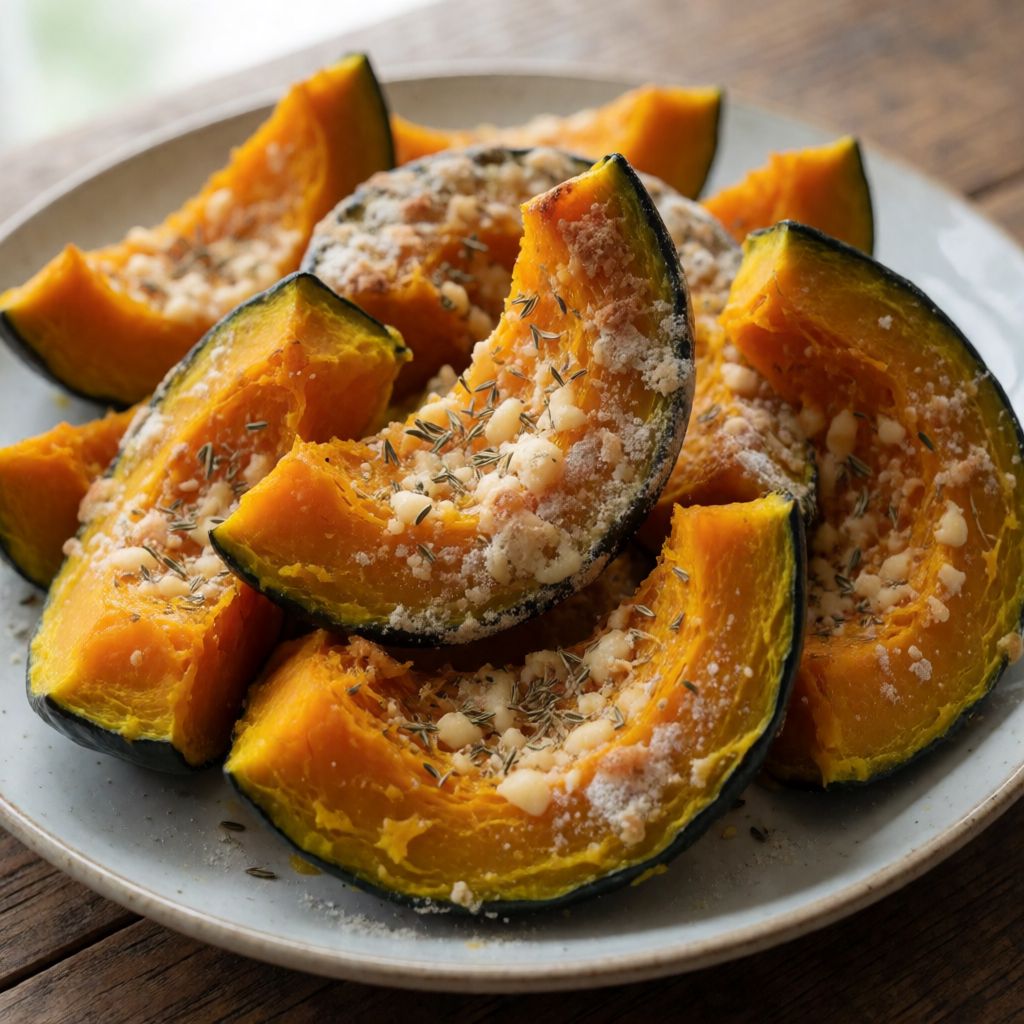
 AI photo
Baked Hokkaido Pumpkin
Golden Hokkaido pumpkin slices baked with a cheesy herb crust make a simple seasonal side dish.
Labels are worked out automatically from the ingredients and can be wrong. Check the packaging if it matters to you.
Ingredients
- 1 pcs Hokkaido pumpkin
- 2 tbsp Olive oil
- 4 tbsp Parmesan finely grated
- 1 tbsp Wholemeal flour or breadcrumbs
- 1 tsp Dried thyme
- Salt to taste
- Black pepper freshly ground, to taste
- 1 bunch Fresh thyme
- 1 tbsp Parmesan for serving, optional





Steps
Wash the pumpkin, cut it in half, scoop out the seeds, and slice into pieces about 1 cm thick.
In a bowl, mix the parmesan, wholemeal flour, thyme, salt, and pepper.
2 minBrush the Hokkaido pumpkin slices with the oil and coat both sides with the cheese mixture, then place them on a baking tray lined with parchment paper.
3 minBake in a preheated fan oven at 180°C for 25–30 minutes.
28 minIf you like, sprinkle with fresh parmesan and thyme before serving.
1 min
What was changed
The oven temperature was rounded to to match this market's display step.
This is not a soup, not a mash — it's pumpkin as a vegetable that keeps its shape, wearing a crust instead of swimming in cream. Thick slices go into a hot oven under a dry cheese coat, and what comes out sits somewhere between a roast potato and a gratin, but drier, more assertive — good next to a Sunday roast where it won't fight the gravy for territory, four portions off one pumpkin.
What decides if it works is the coating's two jobs. First it has to stick to flesh that is wet — pumpkin sheds water as it heats, like any squash. Second it has to turn into a crust, not a paste. Parmesan on its own does neither well: brushed straight onto bare flesh it slides off, and pushed hard by oven heat it just melts and scorches at the edges. The flour is there to drink up that moisture as it escapes, so the cheese has something dry to grip and brown on top of instead of dissolving into a film. Leave the flour out and you get soggy orange slices under a dusting of burnt cheese — that's the usual failure here, and now you know where it starts.
Thickness is doing work too. A centimetre — about a pound coin on its edge — is thin enough that heat reaches the middle before the crust goes from gold to black, and thick enough that the slice holds together on the way to a plate instead of collapsing under a fork. Cut it thinner and you'll have burnt cheese sitting on raw pumpkin in the same mouthful; cut it thicker and the crust is finished while the centre is still fighting you.
Doneness here is two things happening at once, not a number on a timer: a knife tip going into the thickest slice without pushing back, the way it does in a roast potato that's actually cooked through, and the crust turning from pale gold to a deeper amber right at the edges of the cheese. The 25–30 minutes is a floor, not a verdict — fan ovens run uneven, cooler near the door, and a slice at the edge of the tray can lag the one in the middle by several minutes. Check that edge slice before you trust the clock.
Hokkaido is the right pumpkin precisely because it's dense and comparatively dry-fleshed — that's what lets a slice hold its shape instead of slumping into the crust. If you can't find one, butternut stands in for firmness, but peel it first; its skin stays leathery no matter how long it bakes, unlike Hokkaido's. The round carving pumpkins sold whole in autumn are the wrong tool for this — bred to look good, not to be dense enough to slice and roast.
Parmesan earns its place through low moisture: that's what lets it crust and brown rather than ooze. Any hard, aged cheese that grates into a fine dry crumb will do the same job — pecorino, an aged gouda, a mature cheddar if that's what's open in the fridge. A young or soft cheese won't crust, it'll just run. The flour or breadcrumb isn't about flavour at all — the criterion is dry and starchy, able to take on water — so plain flour, wholemeal, or fine dry breadcrumbs are interchangeable; wholemeal just leaves a slightly nutty note that sits well with the thyme. The oil's job isn't taste either, it's contact: a thin film that lets the dry coating stick and spreads the oven's heat evenly across the surface, so you don't end up with patches of coating that never properly touch heat and never colour. Any oil with no smell of its own will do this — olive, but equally a light rapeseed or sunflower oil.
Thyme shows up twice because it has two different jobs. Dried thyme goes into the coating because it needs the whole bake to soften and give something back to the crust — thrown in fresh at that stage, in a hot oven, it would just scorch black and taste of ash. Fresh thyme goes on right at the end, off the heat, because its aromatic oil is exactly what burns off first in any oven — you want that smell reaching the plate, not the extractor.
Salt matters more than it looks like it should, because pumpkin is naturally sweet, and unseasoned sweetness reads as blandness rather than as sweetness — salt in the coating is what lets the sugar actually register when you bite into it.
And one thing that isn't on the ingredient list: patience for two or three minutes once the tray comes out, before it goes to the table. The crust keeps firming as it cools slightly from oven heat. Served the instant it's out, it's still a touch soft, and you'll think you undercooked it when you didn't — you just rushed the plate.