
 AI photo
Sacher Tart
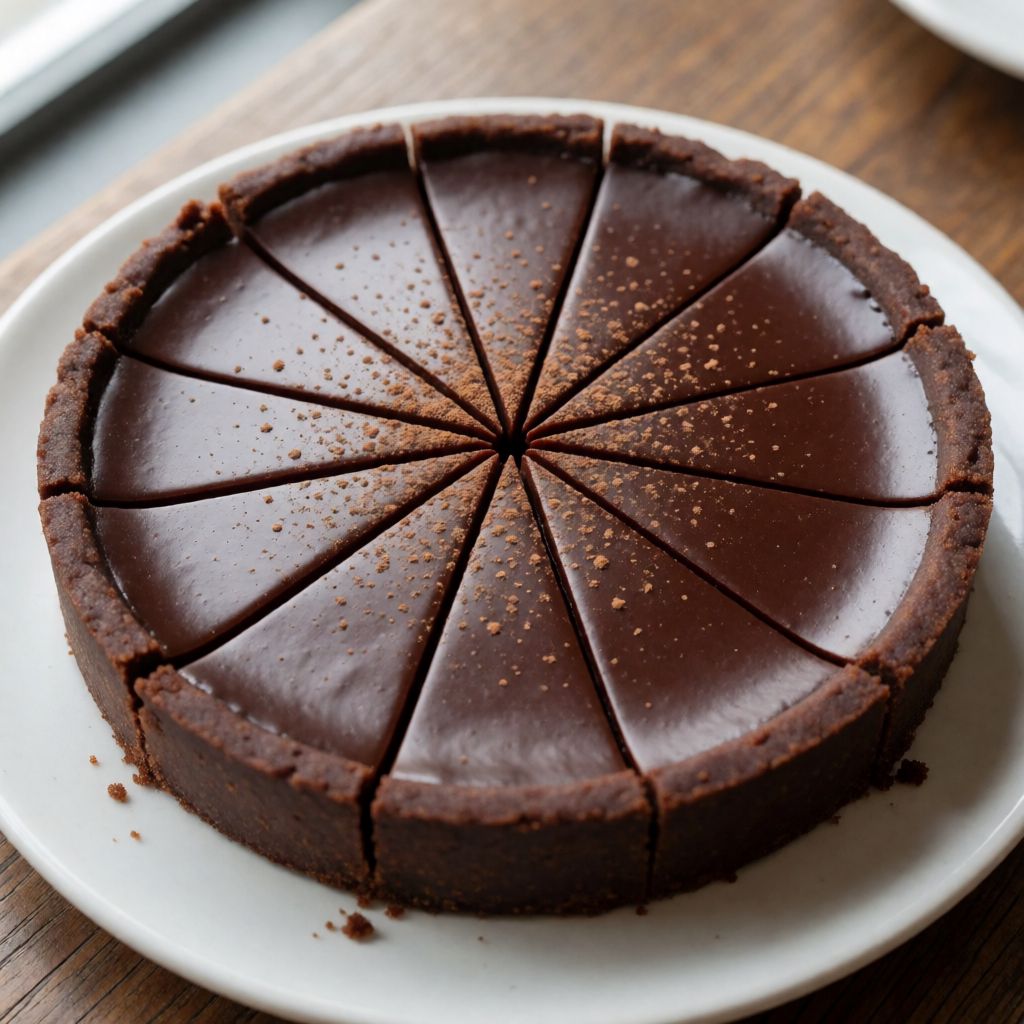
A chocolate pastry tart filled with apricot jam and a glossy chocolate ganache, finished with a lattice crust.
Labels are worked out automatically from the ingredients and can be wrong. Check the packaging if it matters to you.
Ingredients
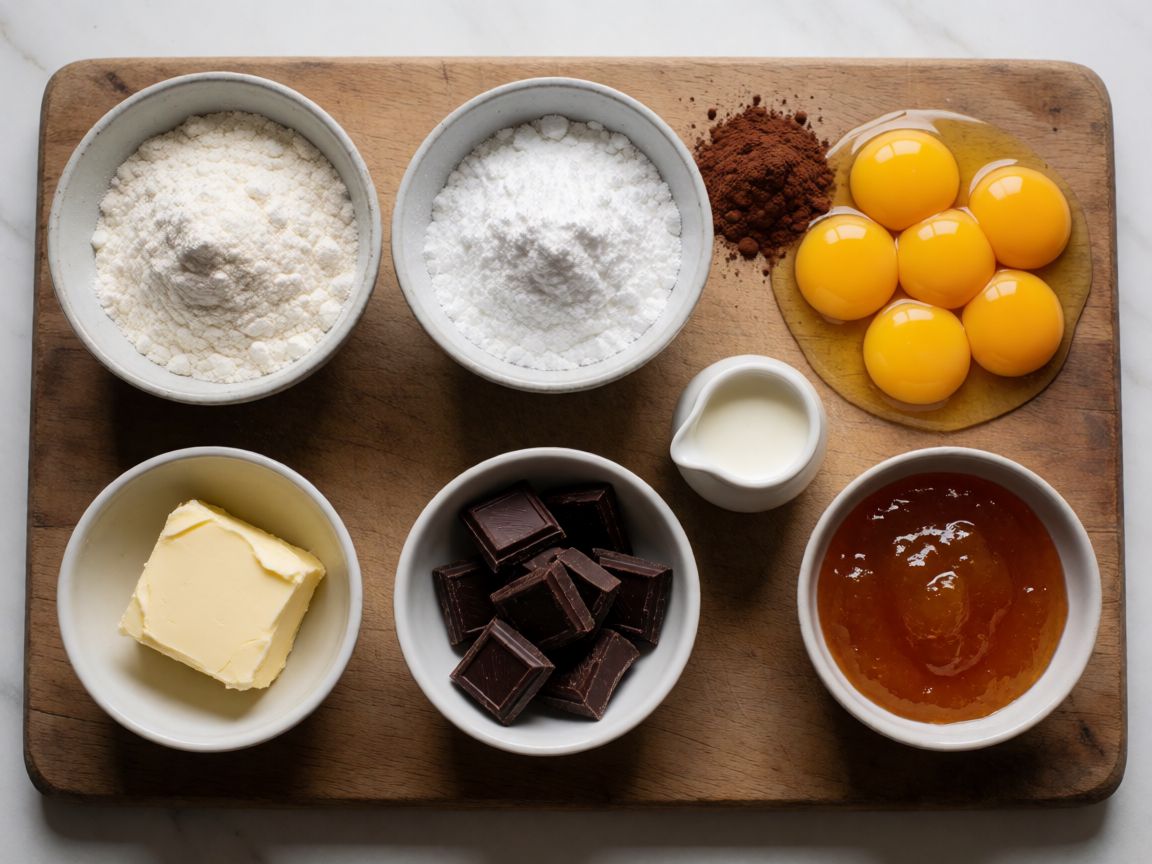
- 450 g Plain flour
- 200 g Icing sugar
- 30 g Cocoa powder
- 5 pcs Egg yolks
- 250 g Butter
- 1 pinch Salt
- 300 g Dark chocolate
- 150 ml Double cream unsweetened, for desserts
- 330 g Apricot jam








Steps
Sift the flour onto a work surface, add the icing sugar, cocoa powder, butter, egg yolks and salt.
Knead the dough by hand, gradually bringing in the flour, until a smooth ball forms.
Wrap the dough in cling film and chill in the fridge.
35 minBring the cream to the boil in a saucepan for the ganache.
Add the chopped chocolate and stir until melted.
Leave the ganache to cool to room temperature.
Take out the dough and roll it to a thickness of 5-6 mm.
Transfer the dough into the tin, press it against the edges, trim off the excess and prick with a fork.
Spread 2-3 tablespoons of apricot jam over the dough.
Pour the chocolate ganache over the top.
Chill in the fridge until the ganache sets.
20 minSpread the remaining apricot jam.
Roll out the leftover dough and cut strips for the lattice, arranging them on the tart.
Bake in a fan oven at 170°C for about 40 minutes.
40 minAlternatively, bake in a conventional oven at 180°C for 45-50 minutes.
45 min
Don't let the name fool you. Real Sachertorte is a sponge, split with apricot jam, poured over with a chocolate glaze that has to hit an exact temperature or it sets dull and cracks like old varnish — that's a hotel pastry chef's job, not a Sunday-afternoon one. This is a tart: a cocoa shortcrust shell, a layer of ganache set firm inside it, a lattice of the same dough laid over the top. Same flavours, a fraction of the fuss, and nothing here that a home oven can't manage.
What decides whether it works is two things only. First, the crust has to stay short — sandy, crumbly, snapping rather than bending — not turn into a tough cocoa biscuit. Second, the ganache has to set firm enough that a slice holds its edges and doesn't run. Everything else — the jam, the lattice, the exact minutes in the oven — is there to make those two things possible, not to show off.
A word on the name, since it causes more confusion than it should. Hotel Sacher and the Demel bakery in Vienna fought in court for decades over who owned the right to call a cake "the Original Sachertorte" — stamped in chocolate on top, no less. It's a trademark war, not a sacred text; the dish survived the lawyers fine, and so does this tart version, which borrows the flavours (chocolate, apricot, a short dark crust) and throws out the parts that need a thermometer and a pastry chef's wrist. Some say only the Vienna way counts. No — because even in Vienna there were two ways, suing each other.
Flour, here, just needs to be plain and unremarkable — low in the protein that makes gluten, so it won't fight you on shortness. Icing sugar isn't a fussy choice: it's ground fine enough to disappear into the butter instead of sitting as grit, which granulated sugar would do unless you beat it far longer than this dough wants. Cocoa powder gives colour and a dry, bitter edge — pick one that smells of cocoa and nothing else; a tin that smells musty or sweetish has gone stale and will flatten the whole crust's flavour. It is not the same job as the chocolate in the filling: cocoa powder has had its fat removed, chocolate hasn't, and that fat — cocoa butter — is what gives the ganache its body. Swap one for the other and you get either a greasy crust or a ganache that won't set.
Yolks only, no whites — whites bring water and a different protein, both of which push the dough back toward chewy. Butter should be the kind that's firm from the fridge but gives under a thumb after a few minutes on the counter; if you're substituting, the test is the same — any solid fat with that behaviour works, though a flavourless fat will leave you a crust with structure but no character, which rather defeats the point of making this at home instead of buying one.
For the ganache, cream and chocolate are an emulsion, not a mixture — boiling the cream and pouring it onto chopped chocolate melts the chocolate evenly and lets the fats bind together into something smooth rather than split and oily. Double cream is the right tool because its fat content is high enough to carry that much chocolate without breaking; anything much lighter risks a ganache that stays loose and won't hold a slice. Letting it cool to room temperature before it goes into the shell isn't optional — pour it hot and it melts the jam underneath into a thin, sliding layer, and softens the raw pastry edges before they've had any structure to resist it. Patience here is doing real work, not just filling time.
Apricot jam goes under the ganache for a reason beyond taste: it seals the pastry so the ganache's moisture doesn't soak straight into the crumb and turn the base soft before it's even baked. Its sharpness also cuts the flat sweetness of all that chocolate and sugar — dark chocolate on its own, against this much pastry, would just sit heavy. Any smooth, fairly tart jam does the same job; apricot is traditional in Vienna because apricots were the fruit that kept well there, preserved in sugar through winters when fresh fruit wasn't an option — habit born of a larder, not of magic. Sieve it first if yours is chunky; a lumpy jam layer makes the lattice sit unevenly and bakes patchy. This feeds eight comfortably as an after-dinner slice with tea — small portions, because it's rich enough that nobody's asking for seconds the size of the first.