
 AI photo
Saffron Buns
Soft saffron buns filled with a marzipan filling and topped with saffron icing and whipped cream.
Labels are worked out automatically from the ingredients and can be wrong. Check the packaging if it matters to you.
Ingredients
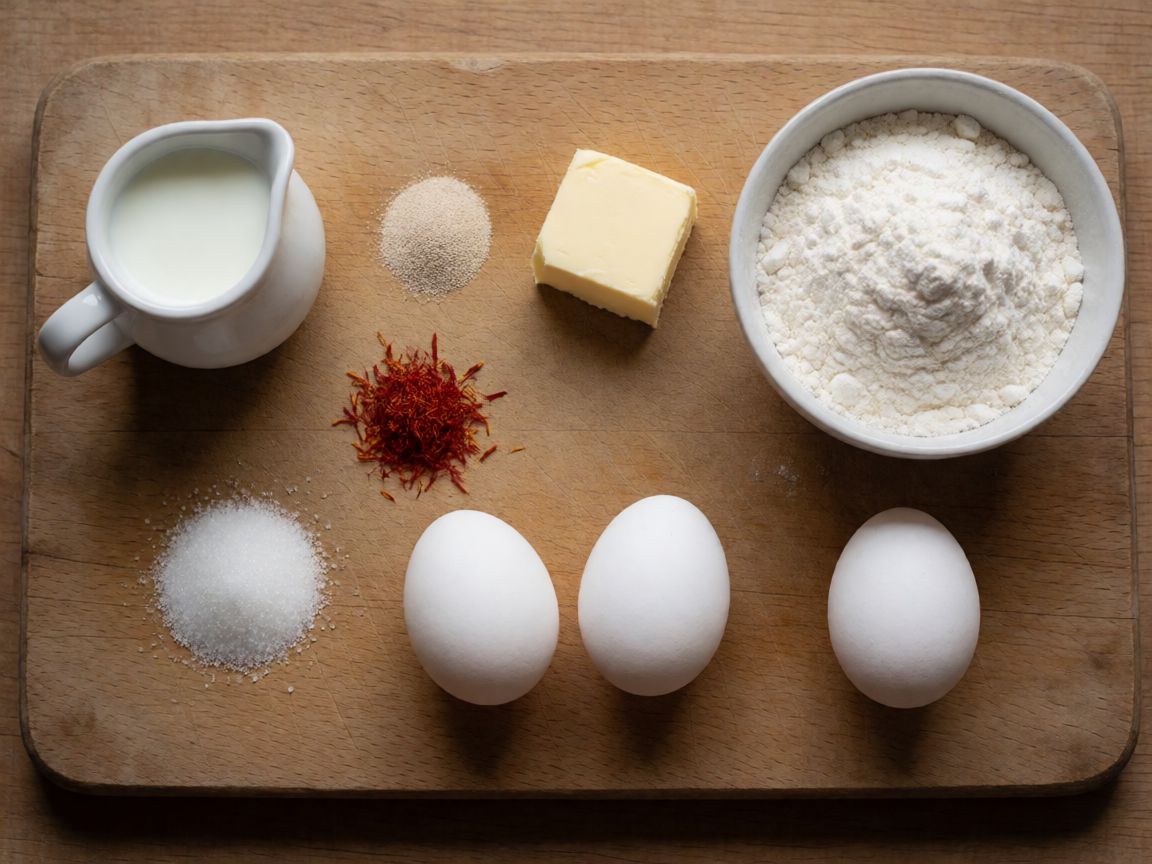
- 250 ml Milk
- 25 g Yeast
- 100 g Butter
- 1 pinch Saffron
- 50 g Caster sugar
- 2 pcs Eggs
- 450 g Plain flour
- 1 pinch Salt
- 1 pcs Egg for glazing
- 100 g icing sugar
- 1 pinch Saffron for the icing
- 1 tbsp Water
- 100 ml whipping cream











filling
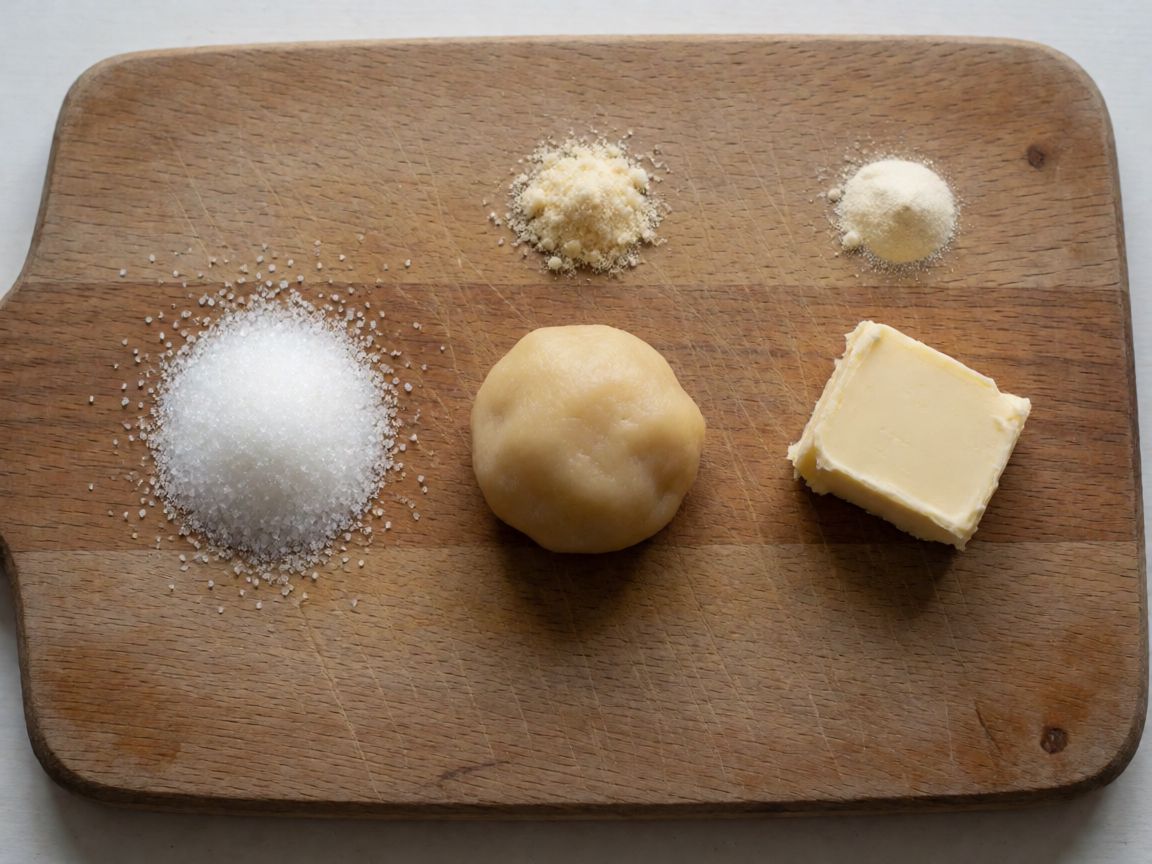
- 100 g Caster sugar
- 100 g Marzipan
- 100 g Butter softened
- 0.5 tsp vanilla powder

Steps
Stir the yeast and ground saffron into the milk, then add the sugar, salt, melted butter and eggs.
Mix well and gradually add the flour. Knead the dough thoroughly — it may be a little sticky, but don't add too much flour or the buns will turn out dry.
Cover the dough and let it rise for 1 1/2 hours.
For the filling, mix the sugar and marzipan, then quickly beat in the butter and vanilla with a mixer — the key is not to overmix.
Roll out the dough into a large square just over 1 cm thick and cut into roughly 15×15 cm squares. Place 1 tbsp of filling in each, fold the corners of the dough in and press the edges and base firmly together.
Place the buns seam-side down on a baking tray lined with baking paper and let them rise for another 30 minutes.
Brush with beaten egg and bake in a fan oven preheated to 175°C for about 15 minutes.
Let the buns cool on a wire rack, cut them in half, fill with whipped cream and decorate with saffron icing.
A saffron bun is a Lucia bun's cousin with ambitions — yeast dough gone gold with spice, stuffed with marzipan and butter, then split and filled with cream like it couldn't decide whether to be bread or cake. It's Swedish by birth, Christmas by tradition, but there's no rule here that says you can't make them in July. What decides whether they work is almost entirely about temperature and restraint: the dough's rise, the butter's warmth, and how little you touch the filling once the mixer's in it.
Saffron is the whole point and also the trap. People scatter it into hot milk expecting instant sunshine — no, because saffron needs time and a touch of grinding to give up its colour and perfume, not heat. Crush it first, even just between two spoons, and let it sit in the milk a few minutes before the yeast goes in. Dump the threads in whole and hot, and you'll get pale dough with the occasional bitter red fleck instead of an even gold.
The forming step is where most kitchens lose the bun before it's baked. These aren't the twisted S-shapes you'll see elsewhere — this version parcels the filling inside a square, corners folded up and pinched like a drawstring bag, seam underneath. That seam matters: it's not decoration, it's the only thing stopping marzipan and butter from leaking into a caramelised puddle on your tray during baking. Press it shut properly, with dry fingers, or the oven will find the weak spot for you.
Start with the milk. Warm, not hot — if you can hold your finger in it comfortably, the yeast will wake up rather than die in it. Yeast is a living thing, not a flavouring, and over 40-odd degrees it stops working rather than works faster; that's the whole mechanism behind "don't let the milk get too hot," not superstition. Full-fat milk gives the dough a softer crumb because of the fat; skimmed will work but the buns come out a touch leaner and chewier.
The fresh yeast here is 25g — a solid block, not the little sachets of dried stuff. If that's what's in your cupboard, use about a third of the weight, and dissolve it the same way in the warm milk rather than mixing it straight into flour; dried yeast is more concentrated, and using the fresh-yeast quantity will give you a dough that over-proofs and collapses under its own gas before it even reaches the oven.
Butter goes in melted, not solid — melted butter distributes evenly through a wet dough, while solid butter at this stage just sits in lumps that never fully work in by hand. The eggs do two jobs: enrich the dough so it stays soft for days rather than staling like plain bread, and add structure so the buns hold a shape under their own weight once filled. Plain flour, not strong bread flour — a dough this enriched with butter and egg doesn't need the extra gluten strength, and too much chew fights against the softness you're after in a bun meant to be pulled apart, not torn.
The kneading itself: stickiness here isn't a failure, it's correct. Enriched doughs stay tackier than a plain loaf because of the fat and egg coating the flour, and the instinct to keep adding flour until it feels "normal" is exactly how saffron buns end up dry and a bit sawdusty by the next day. Flour your hands, not the dough, and trust that a long knead will bring it together on its own.
For the filling — marzipan, sugar, soft butter, vanilla, beaten briefly. The "don't overmix" instruction isn't fussiness; overbeating warms the butter past the point where it holds air and shape, and the filling turns from a firm paste you can dollop into something runny that oozes out of every seam in the oven. If marzipan isn't something you keep in, ground almonds worked into a paste with a little sugar and a few drops of almond extract gets you close enough — the almond note matters more than the brand.
175°C fan is hot enough to set the crust and brown the egg wash before the filling inside has time to properly melt and escape — that's the real reason for a hotter, fanned oven rather than a slow one: speed protects the seam. Look for a deep gold, not pale blond, on top; pale means underbaked dough around a filling that's already hot. Let them cool properly before filling with cream — warm bun plus whipped cream is just a bun with a puddle inside it, because heat collapses whipped cream almost instantly.
This batch makes 14 — a reasonable Sunday-afternoon bake alongside the roast, enough for tea with the family and a few left for Monday, though they're at their best the day they're filled. The dough and the marzipan filling will both wait a day in the fridge if you want to split the work; the cream and icing, do fresh, right before serving. That part doesn't keep — and there's no fixing it once it's gone.