
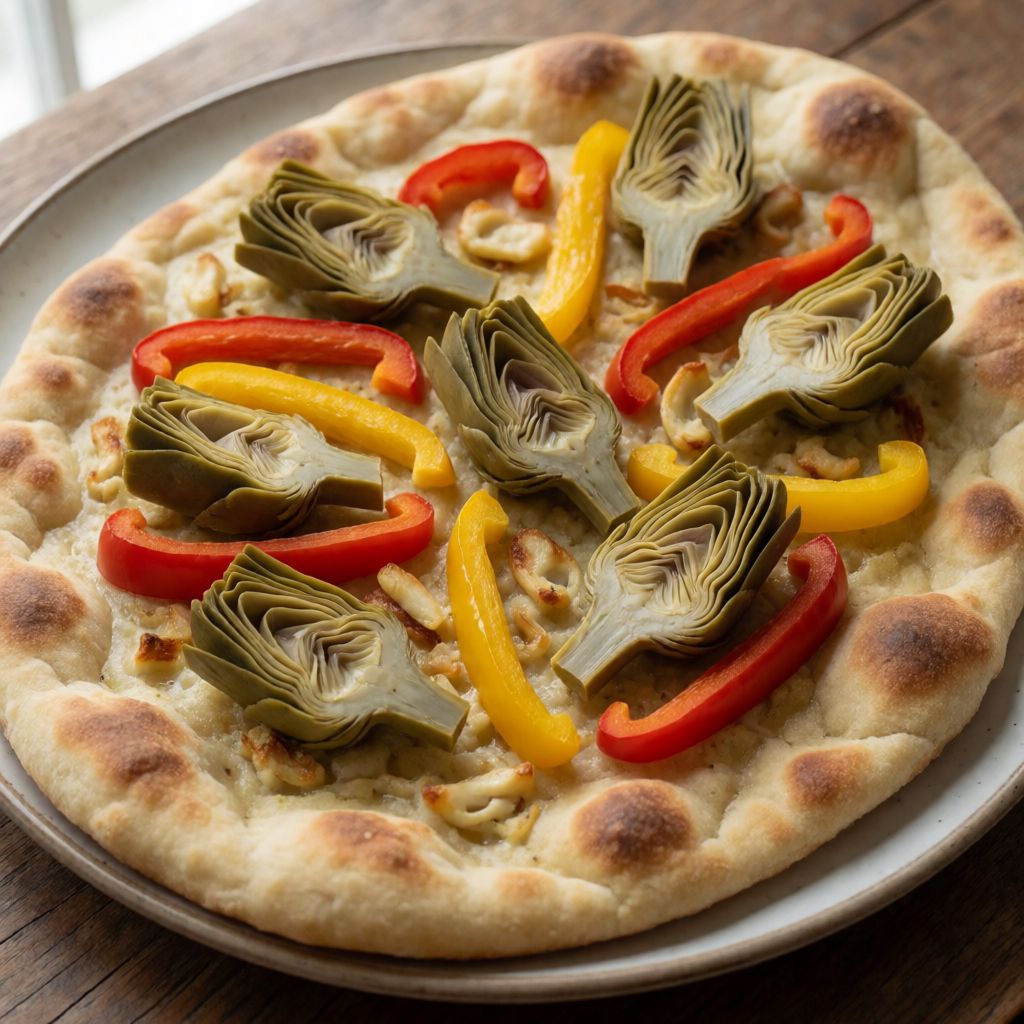
 AI photo
Savoury Vegetable Flatbread (Schiacciata)
A savoury flatbread baked with artichokes and peppers, a hearty vegetable side.
Labels are worked out automatically from the ingredients and can be wrong. Check the packaging if it matters to you.
Ingredients
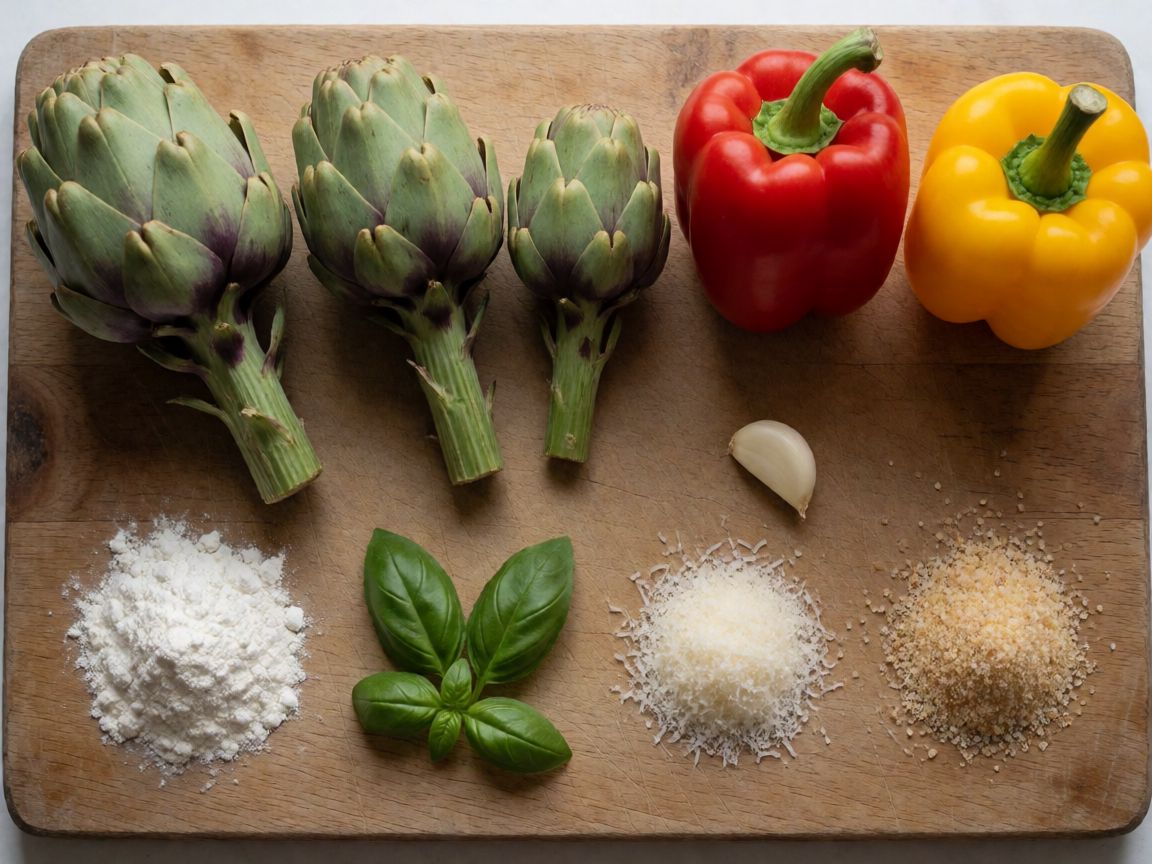
- 4 pcs Artichoke
- 2 pcs Bell Pepper
- 1 clove Garlic
- 300 ml Water
- 50 ml Olive Oil
- 200 g Plain Flour
- 50 g Parmesan or Grana Padano
- Salt to taste
- Black Pepper to taste
- Basil to taste
- Olive Oil to taste
- Breadcrumbs to taste, dried











Steps
Clean the artichokes, removing the tough outer leaves and the tip of the stem, and slice thinly.
In a pan, sauté the garlic in olive oil, add the artichokes and cook covered over medium-low heat until tender.
30 minRoast the whole bell pepper in the oven at 200°C, then cut into strips.
30 minRoughly chop the artichokes and combine with the pepper.
Tip the flour into a bowl, add the Parmesan, salt and black pepper. Gradually pour in the water and olive oil, mixing until smooth.
Add the vegetables to the dough and mix well, then add the chopped basil.
Spread the dough onto baking parchment in a 30x40 cm tin, level it, sprinkle with breadcrumbs and drizzle with olive oil.
Bake at 200°C using the fan setting.
40 minRemove from the oven and serve hot.
Forget what the name promises. This isn't a risen bread you tear and dunk in oil — it's a thick, savoury batter-cake, closer to a vegetable-studded Yorkshire pudding than to focaccia. No yeast, no proving, no kneading. The flour here is a binder for artichokes and peppers, not the main event. That's the whole logic of a schiacciata made like this: the vegetables are the filling of a pie that has decided it doesn't need a crust.
What decides whether it works is moisture, twice over. First in the artichokes: braised covered until a slice bends without resistance rather than stays rigid — that's the tell, not a clock. Covering the pan matters because artichokes are mostly water held in fibrous walls; steam under the lid breaks those walls down gently, where an open pan would just dry and scorch the cut edges before the inside softens. Second in the batter: it has to pour, not spread like dough, because this isn't dough — it's a thin flour-and-water mix carrying solids, and if it's too thick it bakes into something rubbery rather than setting into a tender sheet.
Some say artichokes need lemon water or they'll turn grey and bitter — true for raw ones held before cooking, irrelevant once they're already in the pan with garlic and oil doing their job. You don't need the lemon bowl ritual here; you need a knife that's quick and a pan that's hot before the slices go in.
Artichoke: buy it tight and heavy, leaves closed like a fist — an open, splayed one has started drying out and will give you stringy, bitter cores no amount of braising fixes. If fresh artichokes feel like too much faff for a Tuesday — and trimming four of them properly is real work, not two minutes — jarred artichoke hearts in oil, drained and sliced, get you most of the way there with none of the trimming; you lose a little of the earthy bite but gain your evening back.
Bell pepper: any colour works, but red and yellow roast sweeter than green, which stays more vegetal and slightly bitter under heat. The point of roasting whole rather than sliced is surface-to-core ratio — a whole pepper chars on the outside while the inside steams itself soft in its own skin, which is also why you don't need foil or a lid for this step; the skin is the lid.
Parmesan or Grana Padano: this isn't garnish, it's seasoning and structure both — the salt and the dried, grainy texture tighten the batter slightly as it bakes, the way cheese does in a quiche filling. Any hard, well-aged grating cheese with a similar dry crumble will do the job; what won't do it is a soft or young cheese, which brings water instead of taking it away, and you've already got enough water to manage.
Flour: plain flour, nothing self-raising — there's no leavening wanted here, because this isn't meant to rise, it's meant to set, like a savoury clafoutis. If you only have strong bread flour in the cupboard, it'll work, just expect a slightly chewier bite from the extra gluten; nothing to lose sleep over.
Olive oil, twice over — once to soften the garlic and artichoke, once drizzled over the top before baking. The second one isn't decoration either: a dry breadcrumb top left bone-dry in a 200°C fan oven will toast too fast and taste of nothing but burnt crumb; the oil lets it colour slowly and crisp rather than scorch, the same reason you oil the top of a gratin.
On tin and oven: 30x40cm is a standard UK roasting tin size, so you're not short of kit here — line it properly, because this batter is wet enough to find every gap in a tin that isn't. Fan ovens run a touch fiercer and more even than conventional, which is presumably why the recipe specifies it; if yours doesn't have a fan setting, nudge up 10-20°C and keep an eye on the top rather than trusting the clock, because the real sign of done is a top that's gone from pale and wet-looking to matte gold and firm when you press it, not a timer going off.
And patience, properly — the artichokes want their full half hour low and slow before you even think about the batter; rush that stage and you're folding crunchy, raw-tasting slivers into your bake, and no amount of cheese covers for that later.