
 AI photo
Semifreddo with Hazelnut Wafers
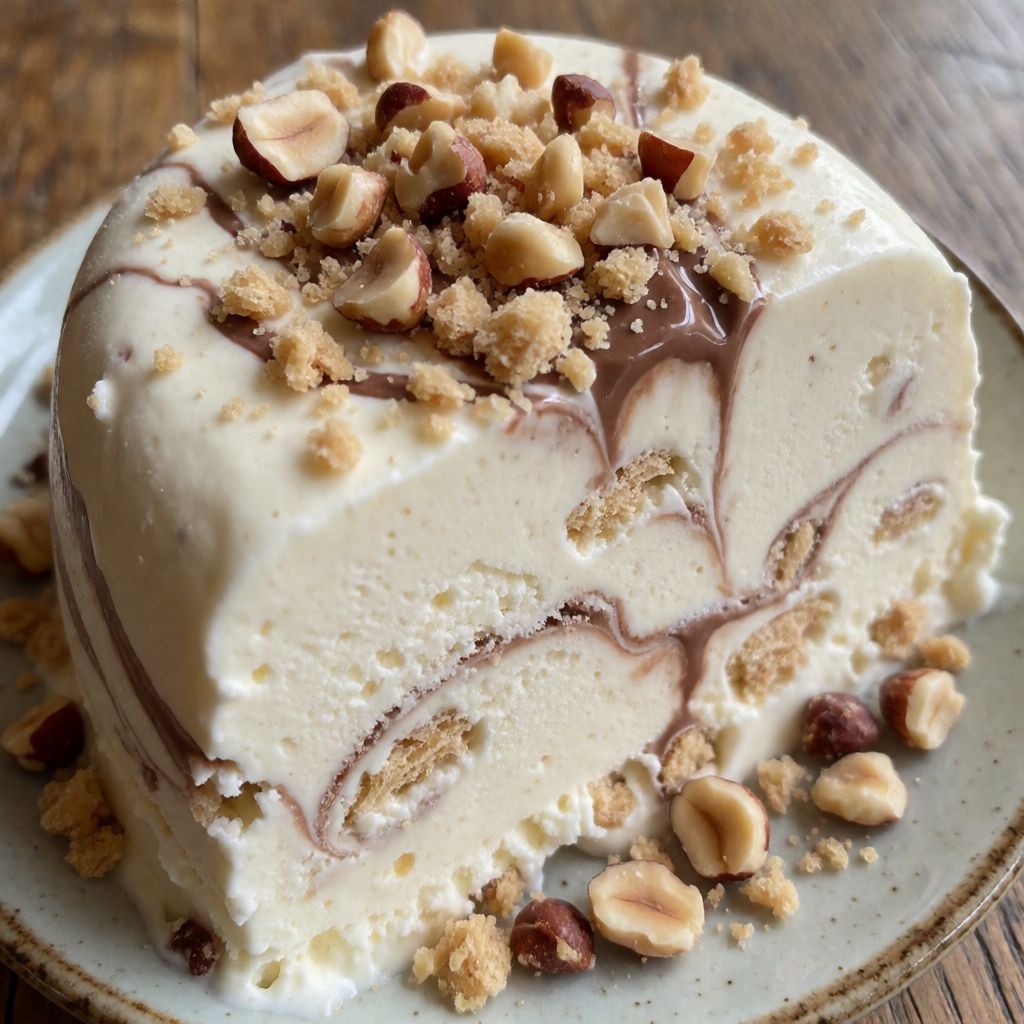
A frozen semifreddo dessert layered with hazelnut wafers, a ricotta cream, condensed milk and Nutella.
Labels are worked out automatically from the ingredients and can be wrong. Check the packaging if it matters to you.
Ingredients
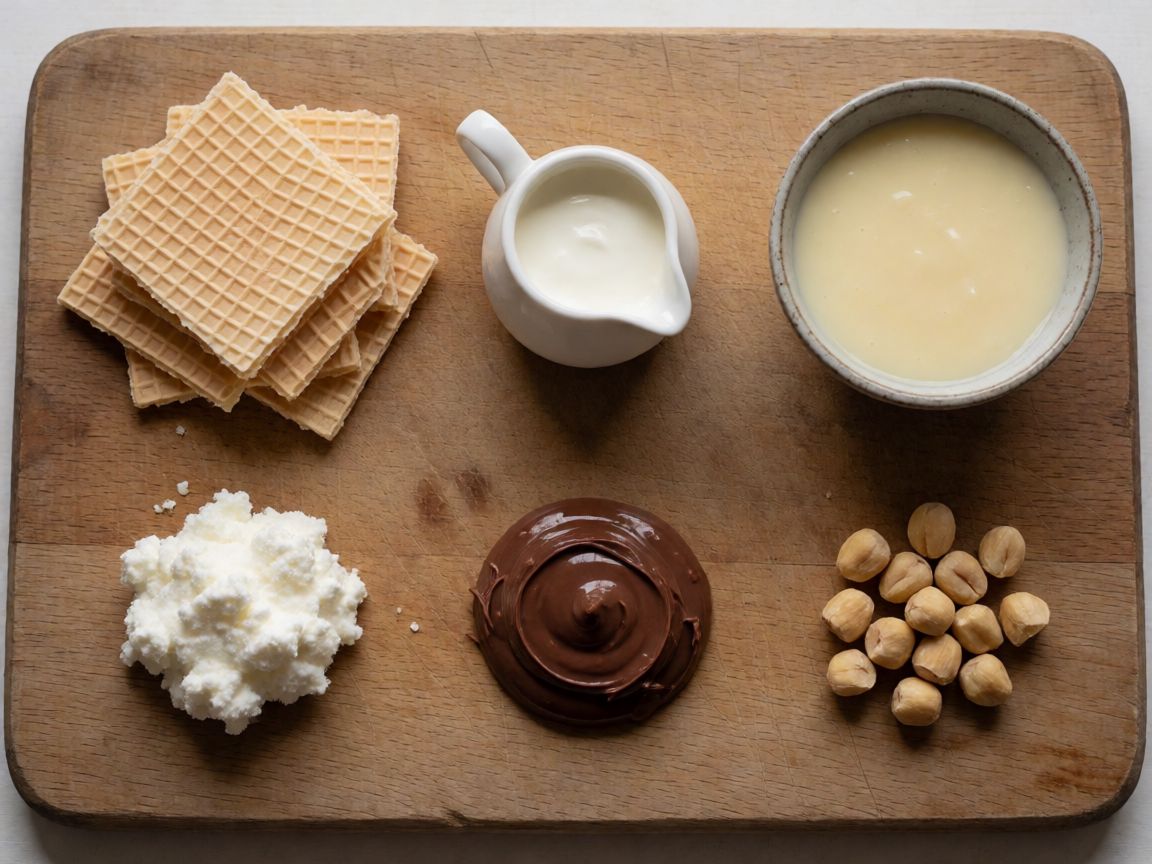
- 350 g Hazelnut Wafers
- 200 ml Double Cream
- 300 g Condensed Milk
- 250 g Ricotta
- Nutella to taste
- Chopped Hazelnuts to taste






Steps
In a bowl, combine the ricotta and condensed milk and beat with a mixer until smooth and creamy.
In a separate bowl, whip the cream until thick, then gently fold it into the creamy mixture.
Line the base and sides of a loaf tin with cling film.
Arrange a layer of hazelnut wafers in the base of the tin and pour in half of the cream.
Repeat the layers: add more wafers and pour in the remaining cream.
Cover the top with another layer of wafers.
Place the tin in the freezer.
240 minTurn the tin out onto a plate and remove the cling film.
Decorate the semifreddo with Nutella, chopped hazelnuts and wafers.
Semifreddo means "half-cold" — not an ice cream, whatever people call it. Real ice cream needs a machine churning as it freezes, breaking ice crystals as they form; your freezer at home just sits there, so without churning you'd get a flavoured brick. This gets round that with whipped cream — air trapped in fat — plus the richness of ricotta and condensed milk, which together keep the mixture soft and mousse-like even at freezer temperature. That's the whole trick, and it's why the whipping stage matters more than any single step on the list.
Whip the cream to the point where it holds a soft trail off the whisk but still looks glossy, not dry. Underwhip and there's no air structure to protect against ice crystals — you'll get a hard block. Overwhip and you've started making butter — fat separates, the texture turns short once folded in. Fold, don't stir: folding keeps the air you built; a confident stir punches it straight back out, and the semifreddo sets heavier than it should.
The wafers aren't a biscuit base in the usual sense — nothing here gets baked. Stacked dry between layers of cold cream, they do two jobs: give you something to bite against in a dish that's otherwise all give, and quietly absorb moisture overnight so the loaf holds together in slices rather than sliding apart. Wrap the tin tightly in cling film before it goes in — not only for turning it out cleanly, but because a loose wrap lets the surface dry out against moving freezer air, which is freezer burn, not spoilage, but it tastes of nothing you want.
Ricotta beaten with condensed milk is doing the job classic semifreddo gives to a cooked sugar syrup whisked into egg yolks — a pâte à bombe, in the old kitchens' language, stabilised by sugar cooked to soft-ball stage. That takes a thermometer, a steady hand, and raw yolks you then have to trust. Condensed milk is milk and sugar already cooked down together in a tin, cheaply, by somebody else, decades ago — precisely so a household without a gelato machine or patience for sugar syrup could get a stable, sweet, freeze-soft base from one tin. Ricotta supplies the fat and a little lactic tang that stops the whole thing tasting only of condensed milk. Buy a fresh, soft, slightly damp ricotta, not the dry crumbly sort sold for baking, and if yours is lumpy, push it through a sieve before beating — the lumps survive right into the frozen slice otherwise. No ricotta in the shop: mascarpone works, richer and without the tang, so add a squeeze of lemon if you miss it.
Double cream is the one non-negotiable ingredient — judge it by fat percentage, not the label: something around 48% fat whips into a stable foam that survives folding. Lower-fat whipping cream collapses faster once mixed in; single cream won't whip to a peak at all. Short of double cream, a lightly whipped full-fat crème fraîche does something similar, though it brings more sourness than you may want in a sweet pudding.
Hazelnut wafers — the layered, filled kind, not a plain biscuit — give a double texture: crisp going in, softened almost to cake by the time it comes out, from sitting overnight against the cream. Any thin wafer biscuit does the same job if you spread a little Nutella between the layers yourself to stand in for the filling you're missing. A digestive won't substitute — too dense, it stays hard rather than yielding, and you'll crack the loaf trying to slice through it.
Nutella and chopped hazelnuts at the end are decoration, not structure. Any hazelnut-cocoa spread of similar pourable consistency will do — warm it slightly if it's gone stiff in the cupboard, so it drizzles rather than sits in a clump.
One myth worth naming here: people assume anything whipped with cream and put in the freezer is "ice cream," and that if it turns out hard and icy, you simply didn't freeze it long enough. No — a semifreddo that goes hard was failed at the whipping or folding stage, not the freezing stage. The freezer only locks in whatever structure you gave it; it can't build one for you.
For eight, a standard loaf tin is the right size — the slices come out thin because the dish is rich, not because the tin is mean. Line it with cling film leaving a good overhang at the sides; that overhang becomes your handle for turning the loaf out cleanly later, instead of fighting it free with a knife.