
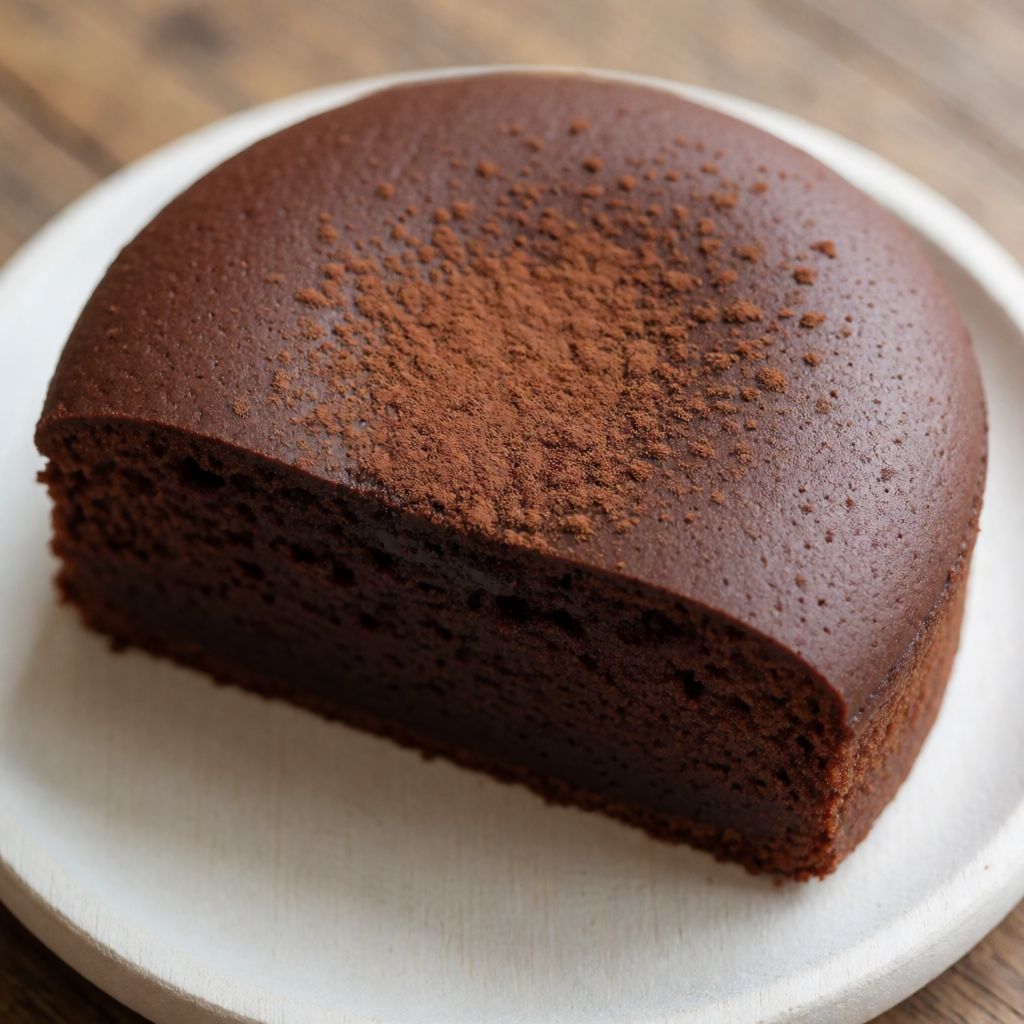
 AI photo
Eggless Chocolate Cake
A rich, eggless chocolate cake made with cocoa and melted dark chocolate, finished with a dusting of icing sugar.
Labels are worked out automatically from the ingredients and can be wrong. Check the packaging if it matters to you.
Ingredients
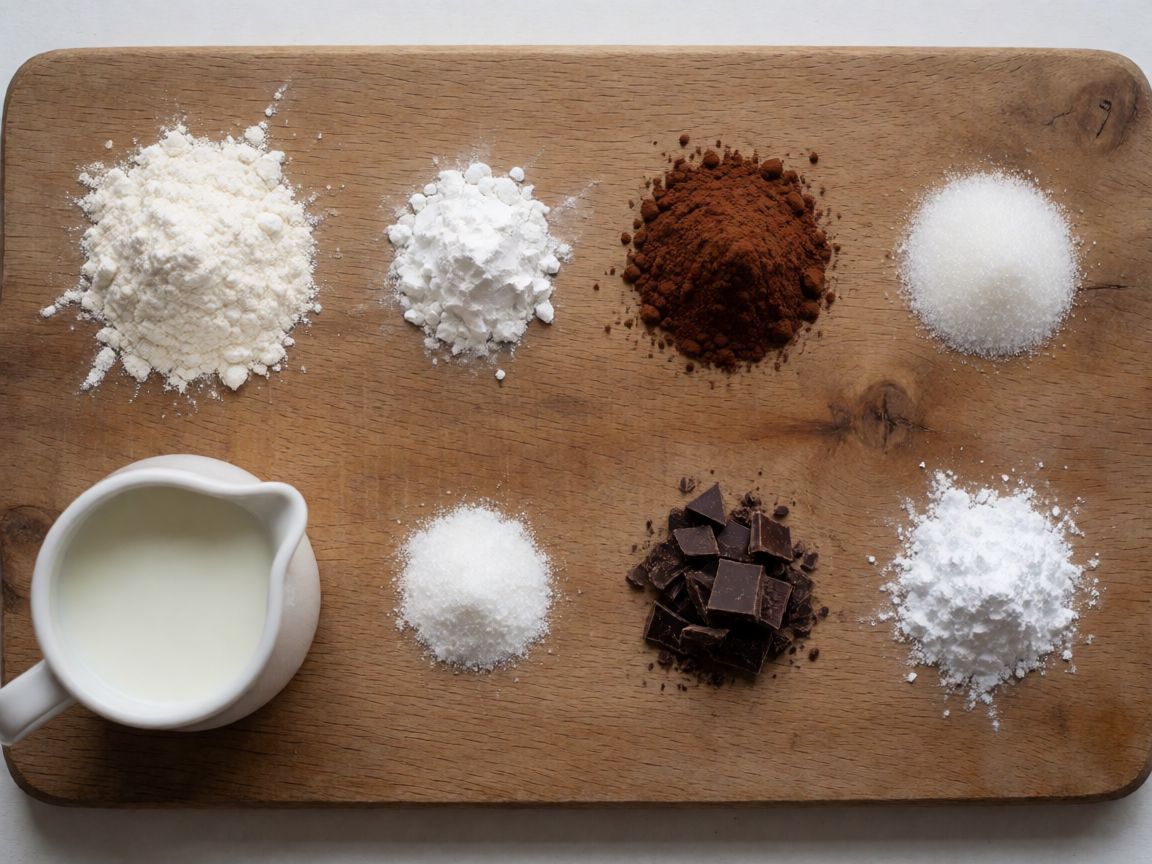
- 150 g Plain Flour
- 50 g Potato Starch
- 60 g Cocoa Powder
- 160 g Caster Sugar
- 15 g Baking Powder
- 40 g Vegetable Oil
- 400 ml Milk
- 150 g Dark Chocolate
- Icing Sugar to taste









Steps
Pour the milk into a saucepan and bring to the boil, then add the dark chocolate and melt it.
Remove from the heat and leave to cool.
In a large bowl, combine the dry ingredients: flour, potato starch, cocoa powder, sugar and baking powder.
Gradually pour in the melted chocolate mixture and whisk vigorously until smooth.
Add the vegetable oil and mix well.
Butter and flour a 22 cm tin, then pour in the batter.
Bake in a preheated fan oven at 170°C for 35–40 minutes.
40 minAlternatively, bake in a conventional oven at 180°C for about 40 minutes.
40 minCheck it's done with a skewer.
Leave to cool, then dust with icing sugar.
This is a chocolate cake with no egg in it at all — and that's not a workaround, it's a small but real British tradition. During rationing, eggs were scarce and precious, so bakers learned to build a cake's structure from what was on hand: flour, starch, milk, and whatever raising agent they had. This recipe is a direct descendant of that thinking, not a modern diet trick. Nobody will ask where the eggs went, because nothing here is missing a job — everything has simply been reassigned.
Some say a cake needs egg to hold together — no, because what egg actually does is coagulate and trap air as it heats. Here that job is split between two things: potato starch, which swells and sets as it cooks in the hot milk, and baking powder, which does the lifting on its own, chemically, no whisking required. That's why the order in the recipe is not negotiable — hot chocolate milk goes into the dry mix, not the other way round, and the dry mix already has the starch and the raising agent sitting together, waiting.
What actually decides whether this cake works is a step that looks like nothing: letting the melted chocolate milk cool down before you pour it over the flour and baking powder. Baking powder starts reacting the moment it meets liquid and warmth. Pour it in while the milk is still near boiling and you waste half your lift before the tin ever sees the oven — the cake comes out dense and low, and people will blame the recipe instead of the heat. Let it drop to just-warm, pour, whisk, and all that gas gets saved for where it matters.
Flour and potato starch do different jobs, and that's worth separating in your head. Flour gives you some gluten, enough to hold a crumb together under its own weight. Potato starch has none of that — its whole purpose is to swell when it hits the hot milk and chocolate and then set as it cools, giving the cake a finer, almost silky crumb instead of a bready one. If you've got no potato starch, cornflour does the same swelling trick; just know cornflour sets slightly firmer, so the crumb will be a touch denser, not a disaster.
Cocoa powder and the dark chocolate bar are not interchangeable, they're a team: cocoa gives you the deep, slightly bitter backbone and most of the colour, cheaply, because cocoa solids cost far less than a chocolate bar's worth of cocoa butter. The chocolate itself brings fat and sugar into the mix in a form that melts smooth rather than clumps dry — that's what gives the finished crumb its richness rather than just its flavour. Use something around 55–70% cocoa solids; much higher and the cake turns bitter and dry, much lower and you're really just adding sugar with a cocoa label on it.
Caster sugar is specified for a reason beyond habit — it's fine enough to dissolve straight into the hot milk and melted chocolate rather than sitting gritty at the bottom of the bowl. Granulated will work if that's all you have, it just needs a longer, more patient stir while the liquid is still hot enough to carry it.
Fifteen grams of baking powder is a generous dose for this amount of flour, and it has to be, because it's doing the entire lifting job alone with no help from whipped egg white. Check the date on the tin before you start — baking powder that's been open a year loses its fizz quietly, with no smell or taste to warn you, and the only sign you get is a flat cake and a wasted afternoon.
Vegetable oil instead of butter is a texture decision, not a cost one. Butter firms up as it cools, which is lovely in a roast's gravy but turns a cake crumb tight and a bit dry once it's off the heat. Oil stays liquid at room temperature, so the crumb stays soft the next day too — use any oil with no smell of its own, sunflower or rapeseed, not olive, which will fight the chocolate.
Milk's fat content matters more than the recipe lets on — whole milk gives you a rounder, slightly richer result, because that fat is doing real work melting the chocolate smoothly. Semi-skimmed will still work, the cake will just taste a shade thinner. And the icing sugar at the end wants a cold cake under it, not a warm one — dust it onto heat and it half-melts into damp patches instead of sitting as a clean white layer. That's patience doing quiet, unglamorous work: ten more minutes of waiting is the whole difference between a dusted cake and a streaky one.