
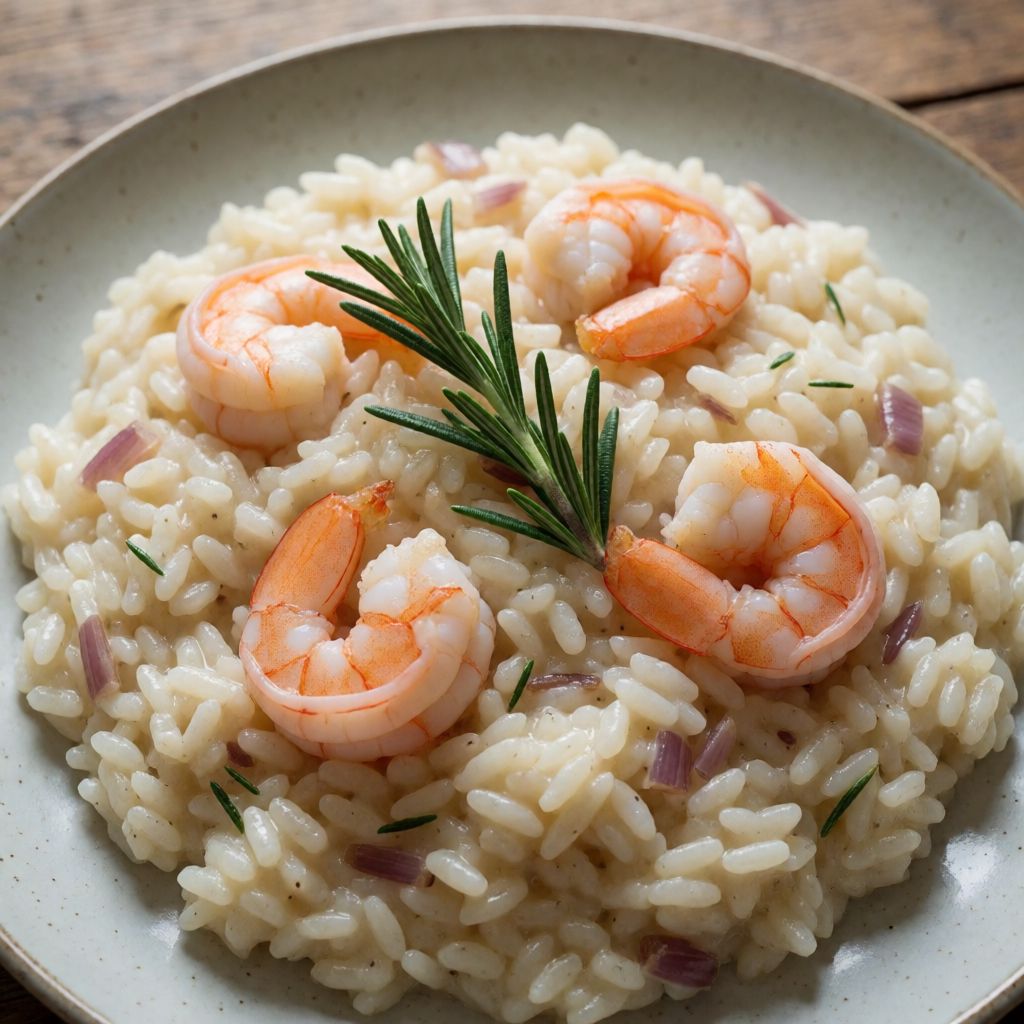
 AI photo
Prawn and Rosemary Risotto
A creamy risotto with prawns and rosemary, finished with Parmesan and butter.
Labels are worked out automatically from the ingredients and can be wrong. Check the packaging if it matters to you.
Ingredients
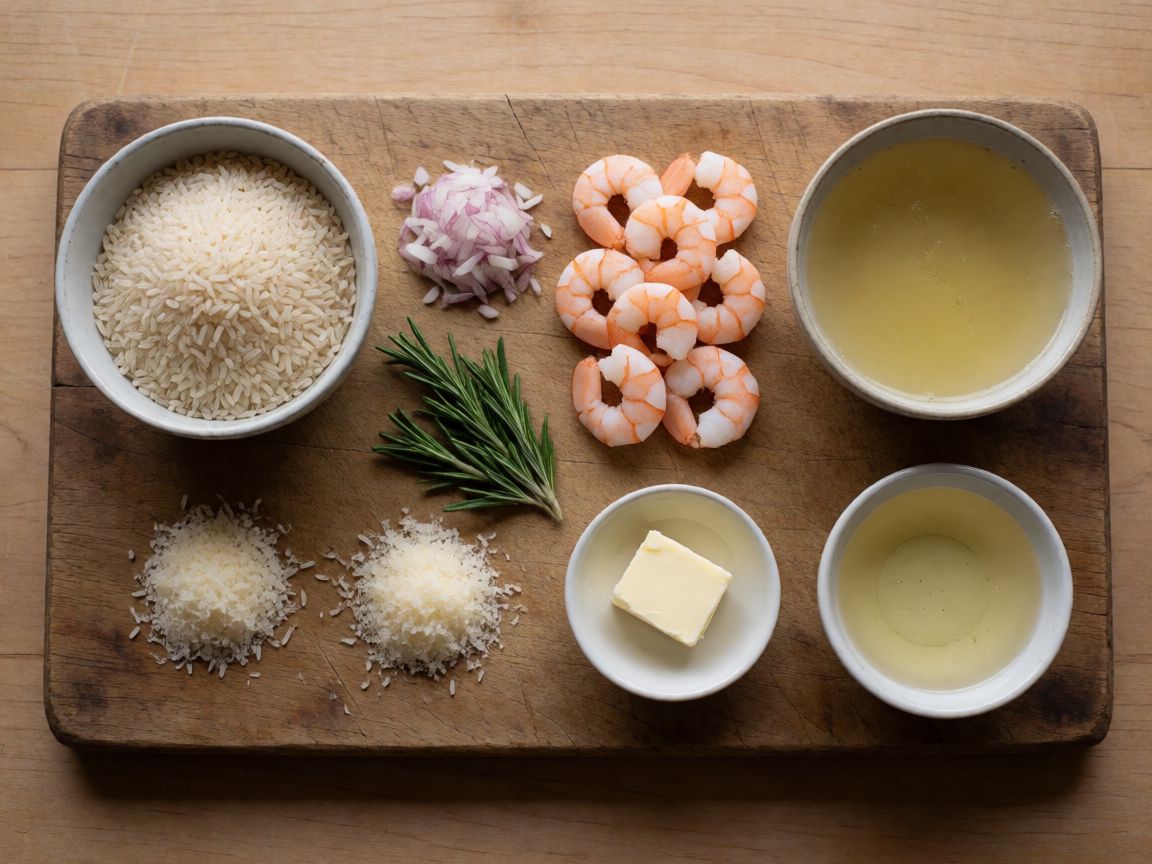
- 150 g Risotto Rice
- 20 g Shallot
- 6 pcs Prawns
- Rosemary to taste
- Vegetable Stock or Fish Fumet to taste
- 8 tbsp White Wine
- Salt to taste
- Parmesan to taste
- 20 g Butter
- Olive Oil to taste










Steps
Pour the olive oil into a pan and sauté the chopped shallot.
2 minAdd the rice and sauté for a few minutes until the grains turn translucent.
3 minPour in the white wine and let it evaporate completely.
3 minGradually add the hot vegetable stock or fish fumet, continuing to cook.
15 minClean the prawns, cut them into pieces and add to the rice with salt and rosemary. Doneness: 63°C at the thickest point.
4 minStir the rice with the Parmesan and butter until smooth.
2 minDivide the risotto onto plates, drizzle with olive oil and serve.
1 min
Risotto is not a rice dish, it's a technique for pulling starch out of rice and turning it into its own sauce. Nothing added makes it creamy — no cream, no flour, just the rice bullied slowly into releasing what's inside it. That's the whole mechanism, and everything else in this list exists to support or season that one process.
Three things decide whether it works. First, the rice gets a dry toast in fat before any liquid touches it — not to cook it, but to seal the outside of the grain so it holds its shape and releases starch at a controlled rate instead of collapsing into porridge. Second, the stock goes in hot, a little at a time, because cold liquid shocks the grain and gives you rice that's cooked on the outside and chalky in the middle — you're managing a steady simmer, not drowning the pan. Third, the butter and Parmesan go in at the end, off the heat, beaten in rather than melted in — this is called mantecatura, and it's an emulsion, not a melt. Do it over flame and the fat separates instead of binding; you get grease on rice instead of sauce.
Some say risotto needs constant stirring from start to finish, like a devotion. No — stirring matters at two moments: right after the stock hits the pan, to stop grains sticking to the base, and at the very end, to beat the butter and cheese into cream. In between, let it simmer, check it, nudge it. Constant stirring just tires your arm and knocks the grains about more than they need.
On the rice: you want a variety bred to hold starch on the outside and structure in the centre — Arborio is the one most shops stock, Carnaroli is the sturdier, more forgiving cousin if you can find it, Vialone Nano cooks faster and looser. Don't rinse it before cooking, whatever anyone tells you — the starch on the surface is the entire point, washing it away is washing away your sauce before you've started.
Shallot rather than onion isn't fussiness — it's milder and sweeter, and it melts into the base instead of announcing itself over the delicate prawn and rosemary. If you've only got onion, use less of it and give it longer over gentle heat so it softens without browning; browning here means bitterness fighting the seafood later.
The wine's job is acid, not flavour for its own sake — it cuts the richness the butter and Parmesan will bring at the end, and letting it fully evaporate (you'll see the liquid vanish and smell it stop smelling sharply of alcohol) matters because wine that doesn't cook off leaves the dish tasting raw and sour instead of bright. No wine in the cupboard — fine, use a splash of water with a squeeze of lemon; you're after the acidity, not the grape.
Stock: proper stock, warmed through before it goes anywhere near the pan, gives you a cleaner, rounder dish than a cube dissolved in a jug of boiling water, but a decent stock cube is not a crime — risotto was built as a way to use what the kitchen had, not a shrine to homemade everything. A fish fumet (a light stock simmered briefly from fish bones or prawn shells) earns its place here because it echoes the prawns rather than fighting them; vegetable stock is the honest, simpler cousin.
Rosemary is woody and strong — a little goes further than you'd think, and whole sprigs removed before serving are kinder than finely chopped needles, which turn sharp and splintery between your teeth. Parmesan should be a hard cheese that melts smoothly rather than seizing — grana padano works the same way if that's what's on the shelf. Butter: unsalted if you can, since you're already salting the dish and it's easier to control from zero than to fix an oversalted one. For the olive oil, in the sauté you want something without a strong character of its own, since its job is just to carry heat to the shallot — any plain vegetable or sunflower oil does that fine. For the final drizzle, though, use an olive oil you'd actually taste on its own, because there it's not carrying heat, it's finishing the plate.
And patience is the one ingredient not on the list, but it's doing most of the work. Risotto rewards someone standing at the hob, watching how the liquid behaves, rather than someone setting a timer and walking off. A wide pan on a domestic hob heats less evenly than professional equipment — turn the pan occasionally, or shift it slightly off-centre on the ring, so one side of the rice isn't quietly overcooking while the other waits its turn.