
 AI photo
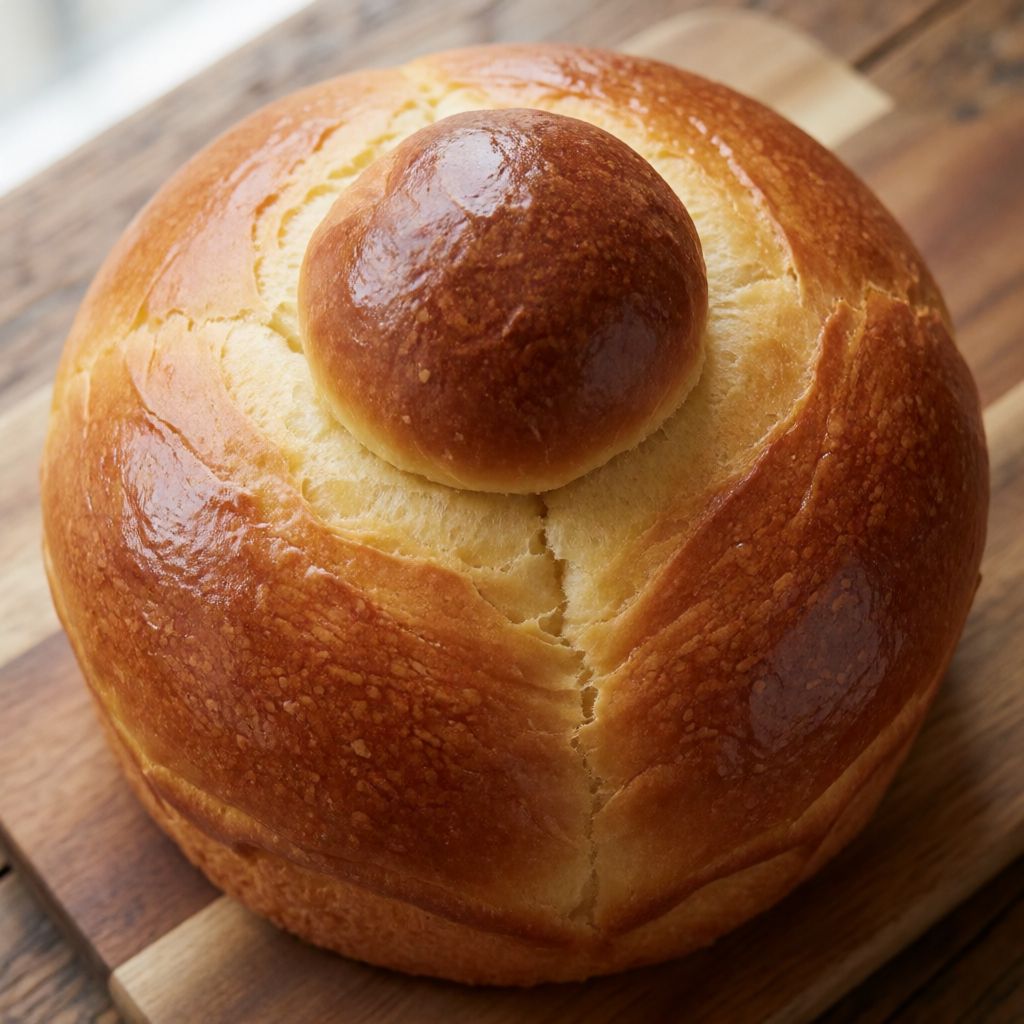
Sicilian Brioche with a Topknot (Brioscia con il Tuppo)
A Sicilian brioche with its characteristic little topknot, traditionally served alongside ice cream or granita.
Labels are worked out automatically from the ingredients and can be wrong. Check the packaging if it matters to you.
Ingredients
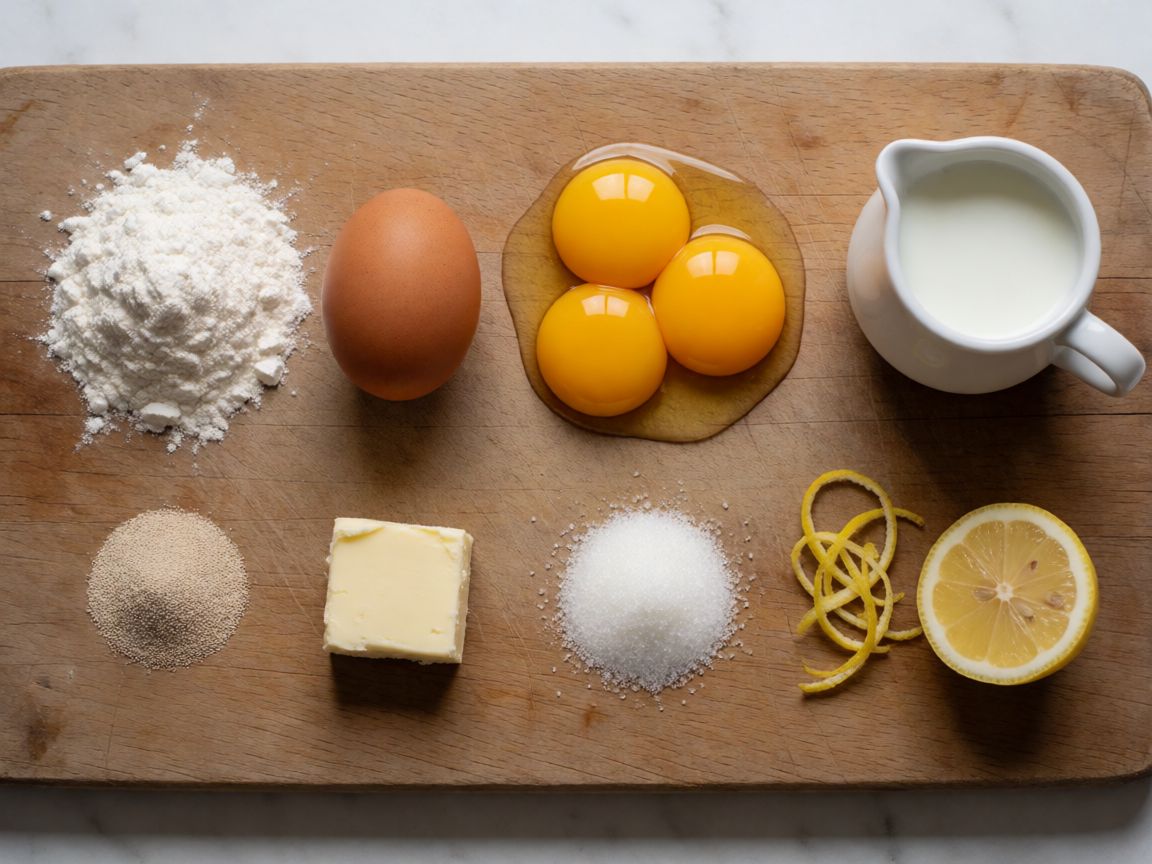
- 600 g Strong white bread flour
- 1 pcs Eggs
- 4 pcs Egg yolk 3 for the dough, 1 for brushing
- 170 ml Milk
- 1 pinch Salt
- 25 g Fresh yeast or 8 g dried yeast
- 80 g Butter softened
- 100 g Caster sugar
- 1/2 pcs Lemon zest
- 1/2 pcs Orange zest








Steps
On a work surface, sift the strong white bread flour into a mound, make a well in the centre and add the egg, three yolks and the salt.
Start kneading by hand, then add the yeast and the milk.
Grate the zest of half a lemon and half an orange, then add the softened butter and the caster sugar.
Knead the dough vigorously until the surface becomes smooth and even.
Transfer the dough to a bowl, cover with cling film and leave to rise in a warm place until almost doubled in size.
Divide the dough into pieces of 100–120 g each, keeping back a little dough for the topknots.
Shape the pieces into balls and place them on a baking tray lined with baking paper.
From the remaining dough, shape small balls weighing about 20 g each for the topknots.
Attach the topknots to the bases, brushing the joint with water, cover with film and leave to rise again.
Brush the brioches with egg yolk and bake in an oven preheated to 170°C with fan assistance.
15 minServe the Sicilian brioches with ice cream or granita.
This is brioscia col tuppo — the Sicilian breakfast roll with its own little topknot on top, built for one job: holding granita or ice cream without turning to paste in your hand. The tuppo isn't decoration. It's a handle. You tear it off first, dip it in, and eat the base like a cup. Lose the shape and you lose the point of the bread.
What decides whether it works is the dough's temper, not the recipe's numbers. Butter, egg yolks, sugar and citrus zest are all things that slow yeast down — fat coats the gluten strands, sugar pulls water away from the yeast cells by osmosis. So this dough rises slower and needs patience, not heat. Some say you can rush a rich dough by cranking up the warmth — no, because above a certain point you kill the yeast's own enzymes before the gluten's had time to stretch, and you get a roll that's dense in the middle with a blown-out crust.
The other thing that decides it is how you knead. "Vigorously" here means something real: egg-yolk-and-butter dough is slack and sticky, and it only becomes workable once the gluten develops enough to trap the fat instead of sliding around it. On a UK worktop that's slapping and folding by hand for longer than feels sensible, not a gentle few turns — you're building structure, not just mixing.
The topknot itself is attached with water, not more dough, because dough-to-dough with no moisture bridge just sits there and splits apart in the oven as the base expands and the knot doesn't move with it.
Flour first: "strong white bread flour" is specified because this dough needs gluten to hold all that fat and sugar up — a soft cake or plain flour hasn't got the protein to do it, and your rolls will spread flat instead of holding a dome. If you only have plain flour, add a spoonful of vital wheat gluten if you can find it, or accept a flatter, denser roll — it won't be a failure, just a different bread.
Yeast: fresh yeast (25 g) versus dried (8 g) isn't a rounding error, it's roughly a 3:1 ratio by weight because fresh yeast is mostly water. If you're using a UK supermarket sachet of dried yeast (usually 7 g), that's close enough — don't double it "to be safe," because too much yeast gives you a sour, boozy smell from the dough outrunning its own food supply, not a faster rise.
The egg and three extra yolks aren't there for protein, they're there for colour and tenderness — yolks carry fat and emulsify it into the dough, which is why this crumb is soft and almost cake-like rather than chewy like a plain bread roll. If you're short a yolk or two, make it up with a splash more milk; don't skip them, the structure needs that fat distributed, not just sitting on top as butter.
Butter should be genuinely soft — not melted, not fridge-cold — because cold butter won't incorporate and just smears in lumps, leaving pockets that bake into greasy holes; melted butter drowns the gluten before it's had a chance to form. Any neutral, flavourless fat with a similar soft consistency can stand in, but butter's own mild flavour is doing real work here against the sugar and citrus, so don't reach for olive oil.
Sugar and the lemon and orange zest are the flavour signature of this bread and also, usefully, a mild preservative — sugar holds onto water, which is part of why briocce stay soft for a day or two rather than going stale by evening. Zest only, not juice: juice adds acid and liquid that throw off the dough's hydration and can slacken the gluten you just built up. Grate it fine, from unwaxed fruit if you can, because wax doesn't melt away in a 170°C oven, it just sits there.
Dividing the dough into 100–120 g pieces matters because this is a personal-size bread — not for slicing and sharing, each person gets their own roll with its own topknot. The 20 g topknot is proportionate for a reason: too big and it tips over or bakes slower than the base and comes out pale; too small and it burns before the base is set, because a smaller mass loses moisture and browns faster under the same heat.
On baking: 170°C with fan is a gentler, more even heat than a static oven at the same number — the fan keeps the air moving round each roll so they colour evenly without needing a higher setting that would crisp the outside before the rich, slow dough inside is properly cooked through. Fifteen minutes is where you start looking, not where you stop — go by colour. You want a deep gold, the kind that smells of butter and orange zest together, not a pale bread-roll beige. Egg yolk brushed on before baking is what gives you that colour and shine; brush gently so you don't push the fragile risen dough down and deflate the second rise you just waited for.