
 AI photo
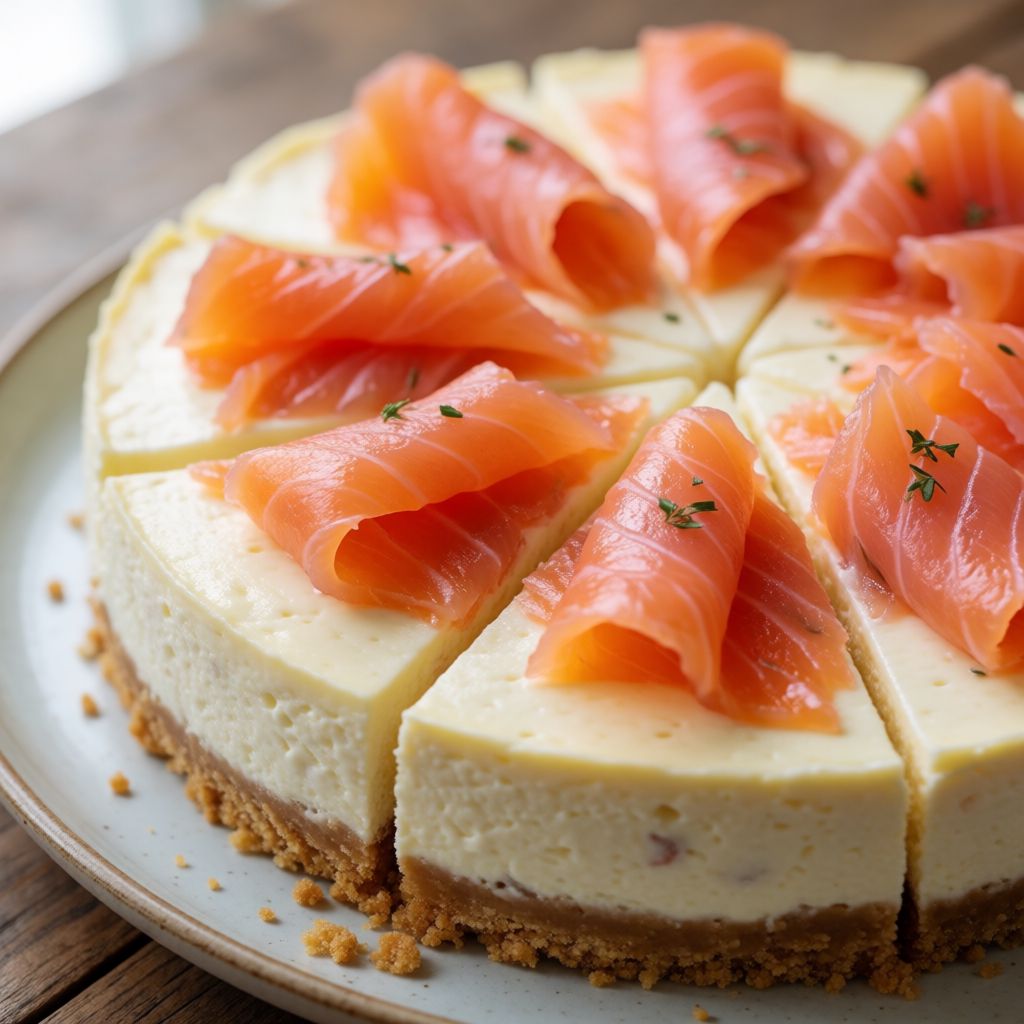
Smoked Salmon Cheesecake
A savoury no-bake cheesecake with cream cheese, ricotta and smoked salmon.
Labels are worked out automatically from the ingredients and can be wrong. Check the packaging if it matters to you.
Ingredients
- 180 g Crackers
- 80 g Butter melted
- 500 g Cream cheese
- 200 g Ricotta
- 45 g Double cream
- 10 g Gelatine
- 1 bunch Chives to taste
- 90 g Smoked salmon
- Salt to taste
- Black pepper to taste
- Nutmeg to taste











Steps
Crush the crackers, add the melted butter and mix to an even crumb.
Press the crumb into a tin, level the base and chill in the fridge.
Soak the gelatine in cold water.
10 minCombine the ricotta, cream cheese and chopped chives, add salt, pepper and nutmeg, and mix.
Squeeze out the gelatine and add it to the warmed double cream, pour into the cheese mixture and mix.
Add the smoked salmon, cut into small pieces, and mix.
Spoon the filling onto the base and smooth it out.
Chill the cheesecake in the fridge.
360 minRemove the cheesecake from the tin, garnish with chives and serve.
This isn't a cheesecake in the oven sense at all — nothing here ever sees heat except melted butter and warmed cream. What you're building is a cold-set terrine with a biscuit base: a crumb that holds its shape because butter solidifies again once chilled, and a filling that holds its shape because gelatine sets it like a very soft jelly. No eggs, no baking, no water bath — the whole dish stands or falls on two things only: how firmly that base is pressed, and how well the gelatine is bloomed and dissolved.
Some say cheesecake needs an oven to "set properly" — no, because the only thing setting this one is gelatine finding enough liquid to dissolve in and enough cold to gel in. Baked cheesecake sets by cooking egg proteins; this one sets by a completely different mechanism, and that's exactly why it can be made in a kitchen with no intention of turning the oven on. Don't confuse the two logics or you'll start worrying about things that don't apply here — oven temperature, cracking tops, water baths. None of that exists in this recipe.
What decides whether it works is patience in two specific places: giving the gelatine its full soak so it swells evenly rather than dissolving in lumps and streaks, and giving the finished cheesecake its full six hours in the fridge, not forty minutes because you're hungry. Cut it early and it slumps on the plate instead of holding a clean edge — that's not a recipe fault, that's gelatine that hasn't finished linking up yet.
Crackers and butter: this is just a cold-set pastry base, and it's really the same economics as a Scottish oatcake crust or a digestive biscuit base you'll already know from any no-bake pud — crush something dry and starchy, bind it with fat, press hard, chill. The pressing matters more than people think. A loose crumb base crumbles when you slice it because there isn't enough melted butter gripping every piece; press it down properly, right into the corners, so the butter has even contact everywhere, then let the fridge firm that butter back into a solid before you load weight on top of it. Any plain, neutral biscuit works here — you don't need a named cracker, you need something without a strong flavour of its own and with enough starch to crumb finely. Digestives, water biscuits, even a dry cream cracker — the test is "does it crush to even crumb without turning to paste."
Cream cheese and ricotta together: two different textures doing one job. Cream cheese brings the tight, dense set; ricotta brings looseness and a slight grain, and it also cuts the sheer fat weight of an all-cream-cheese filling so it doesn't eat heavy. If you've only got cream cheese, use it alone and expect a denser, richer result — not wrong, just a different character. Ricotta should be drained if it's sitting in liquid, or you're adding water to a mixture that's trying to set with a fixed amount of gelatine, and that water doesn't help the set, it fights it.
Gelatine: this is the one ingredient in the whole dish where precision actually matters, because it's the only thing here making a structure. Soak it in cold water first — not warm, not hot — because gelatine sheets or powder need to swell slowly and absorb water gently; drop it straight into hot liquid and the outside seizes before the inside's had a chance to hydrate, and you get little rubbery bits suspended in your filling instead of an even set. Squeeze it out, then dissolve it into the warmed double cream — warmed, not boiled, just enough heat to carry it into solution — and get it into the rest of the mixture while it's still liquid, because gelatine starts linking up again as soon as it cools, and you don't want it setting in the saucepan. If you can't get gelatine — this happens, vegetarians ask for it often — agar will set a cold filling too, but it sets firmer and doesn't melt at room temperature the way gelatine does, so the cheesecake will have a cleaner, almost rubbery-at-the-edge bite rather than the soft give gelatine gives you. Not a straight swap, a different texture.
Smoked salmon: added raw, right at the end, cut small so it distributes rather than sitting in slabs. Buy it for flavour, not for show — off-cuts or trimmings do exactly the same job here as the neat sliced sort, for less money, because you're chopping it anyway. Chives go in for the same reason onion would go into a savoury filling elsewhere — a sharp green note cutting through all that cream cheese and butter, so don't skip them for "just herbs," they're doing real work against the richness.
Nutmeg, salt, pepper: taste as you go here, because cream cheese batches vary in how much salt they already carry, and over-salting a no-cook filling can't be fixed by further cooking it out the way you might rescue a sauce. A small grate of nutmeg against the fish and cream is an old trick — nutmeg against dairy goes back centuries in British kitchens, it's why it sits in your white sauce and your bread sauce too, cutting the flatness of cream with something warm and slightly bitter.
On the UK kitchen itself: you don't need a springform tin with a kazan's precision — any loose-based tin or even a lined dish you can turn out onto a board will do, since nothing here is baked onto the sides. Six hours in the fridge is a real six hours, not a guideline — do it the night before a Sunday lunch, treat it the way you'd treat marinating a roast, set it going and leave it, because checking on gelatine doesn't speed it up, it only lets heat in from the open fridge door.