
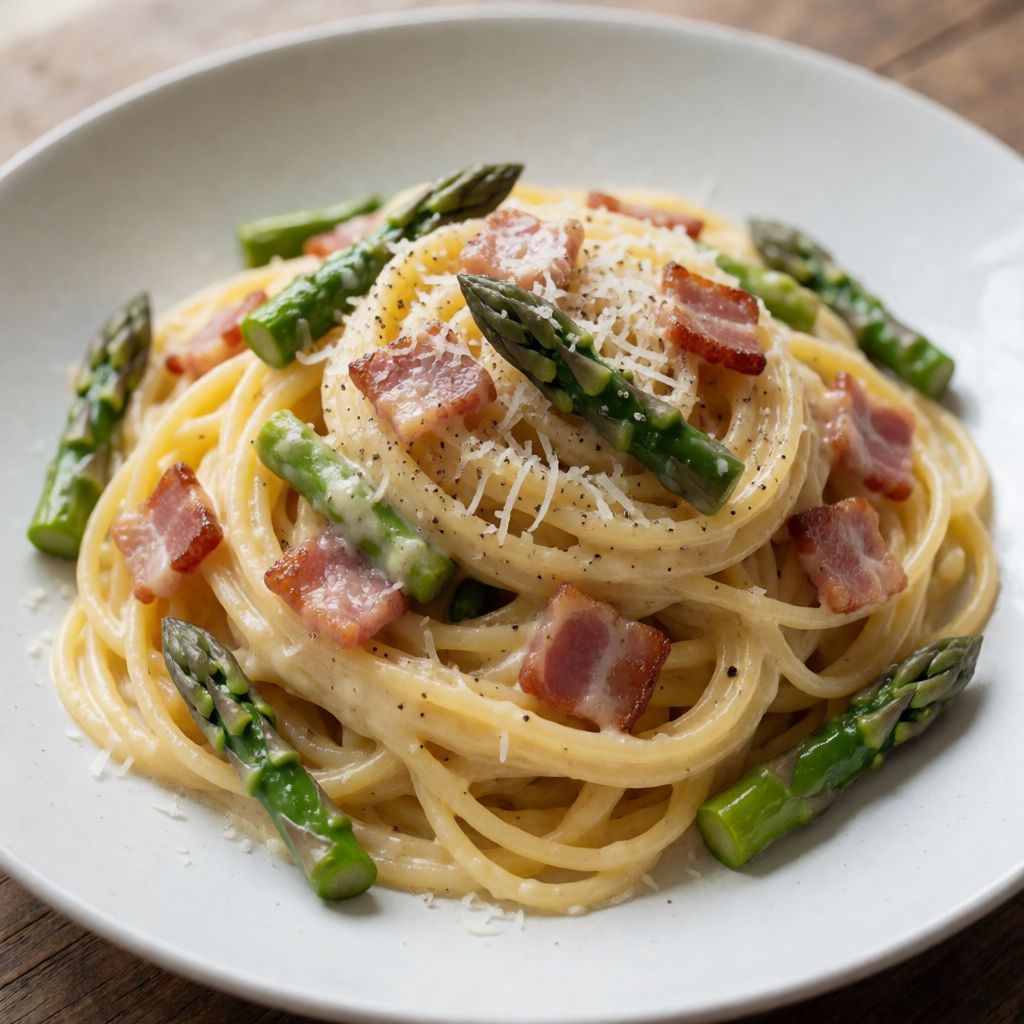
 AI photo
Spaghetti Carbonara with Asparagus and Bacon
A creamy spaghetti carbonara with asparagus and crispy bacon, tossed in a silky egg and pecorino sauce.
Labels are worked out automatically from the ingredients and can be wrong. Check the packaging if it matters to you.
Ingredients








Steps
Heat the olive oil and fry the bacon until crispy.
Add the asparagus, sliced into rounds, and cook over low heat for 8 minutes.
8 minCook the spaghetti in salted boiling water until al dente.
Whisk the egg yolks with pecorino, parsley and black pepper.
Add the pasta to the pan with the asparagus and bacon.
Toss everything together, pouring in the egg mixture to form a creamy sauce.
Serve, sprinkled with pecorino to taste.
This is carbonara with two borrowed guests — asparagus for crunch, bacon standing in for guanciale. What decides whether it works isn't the asparagus, it's the egg. Carbonara lives or dies on one single fact: egg yolk sets around 70°C and scrambles not far above that. Your pasta, straight out of the pot, sits around 90-something. So the sauce is never cooked on the hob — it's cooked by the heat already stored in the pasta and the pan, off the flame, with you stirring like you mean it. Some say carbonara needs cream to be silky. No — because cream is there to cover for an egg that's about to turn into scrambled egg confetti. Get the heat management right and you don't need cream; the yolk, the starchy pasta water and the cheese fat do the emulsifying on their own.
The asparagus is the easy part, and also where people rush. Low heat, eight minutes, is there so the asparagus softens from the outside while keeping a bit of bite in the middle — the stalk should bend before it snaps, not go grey and collapse. Push the heat up to hurry it and you get asparagus that's cooked on the outside and raw-crunchy in the core, or the reverse if you walk away. Bacon first, rendering its fat, is what the asparagus actually cooks in — no extra butter, no cream, just pork fat doing the work it's always done in this dish.
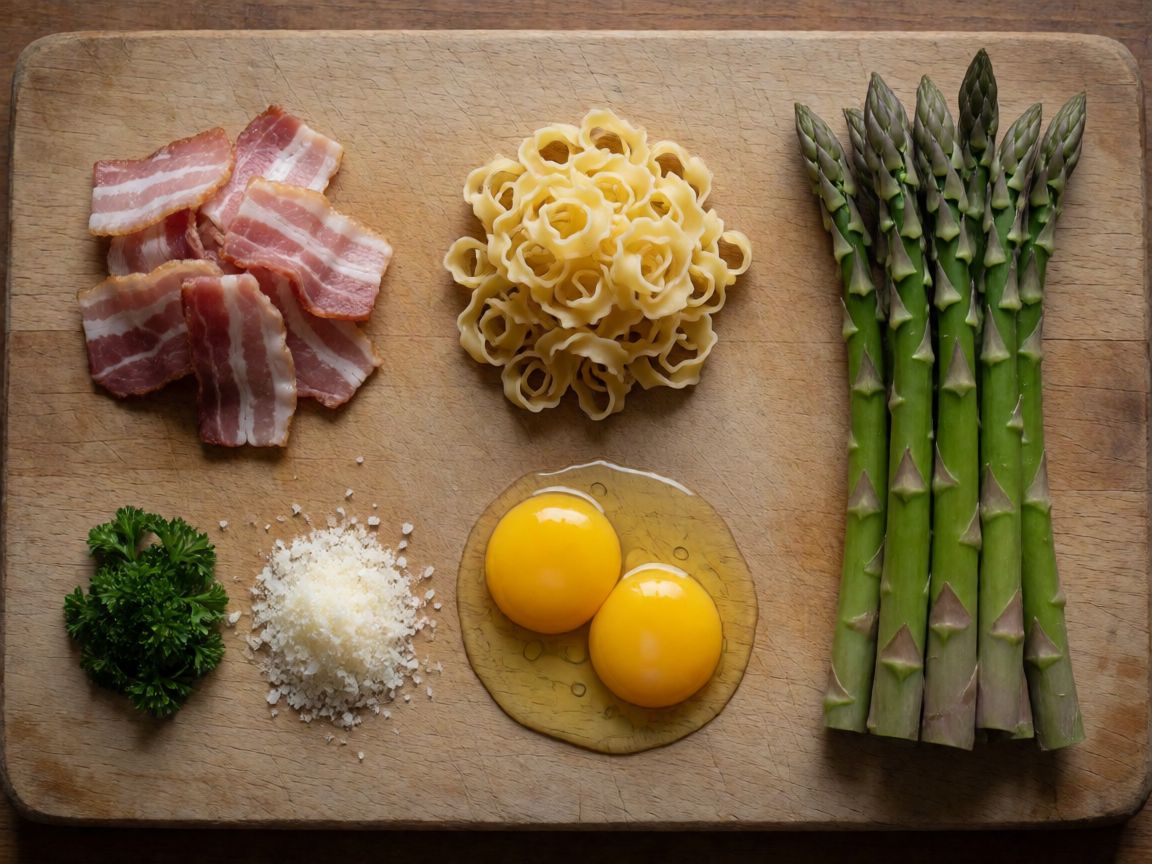
Bacon stands in for guanciale here, and that's a fair swap, not a cheat. Guanciale is cured pork jowl — mostly fat, a little meat, and expensive or simply unavailable in most British shops. What you need from it is fat that renders slowly and carries flavour, not smoke. UK streaky bacon, with its visible fat seams, does that job. Back bacon, being leaner, will leave you short on fat and you'll end up adding oil to compensate, which dilutes the flavour instead of concentrating it. If you can get unsmoked streaky, or pancetta from a deli counter, better — the point of guanciale was never smokiness, it was fat and cure, and bacon's smoke is a British habit layered on top, not a flaw to fight, just know it changes the taste a touch.
The olive oil in step one is not for flavour — it's just there so the pan isn't bone dry before the bacon starts giving up its own fat, protecting against a scorched first thirty seconds. Any neutral oil would do the same mechanical job; olive oil is there because it's already in the cupboard, not because the dish needs its taste.
Egg yolks only, not whole eggs, because the white is mostly water, and water is exactly what turns your sauce from a coating into a puddle, or worse, boils into little white threads before the yolk even has a chance to thicken. Two yolks for four hundred grams of pasta and four people is a lean ratio — this isn't custard, it's a glaze, so don't reach for more eggs thinking it'll be richer; it'll just be wetter.
Pecorino Romano is salty and sharp because it's a hard sheep's cheese, aged, made in a part of Italy where sheep outnumbered cows and salt was the cheap way to preserve a cheese through a hot summer — that's the whole story, no magic, just geography and economics. If you can't find it, Parmesan works as a substitute on one condition: taste before you add more salt to the pasta water, because Parmesan is milder and you'll undersalt the dish if you treat it the same as pecorino. The criterion for any cheese you use here is simple — hard, aged, salty enough to season the sauce by itself, not a soft or mild cheese that just melts into string.
Parsley and black pepper aren't decoration. The pepper, cracked just before serving, is there because carbonara's whole seasoning logic in Rome was built around pepper doing a job salt alone couldn't — cutting the fat on the tongue. Pre-ground pepper has already lost the oils that do that cutting, so it sits there looking like pepper and tasting like dust. Parsley at the end gives the whole thing a flash of something green and fresh against all that fat and cheese — leave it out if you must, but don't swap in dried parsley, which brings colour without the bite that's the actual point of it.