
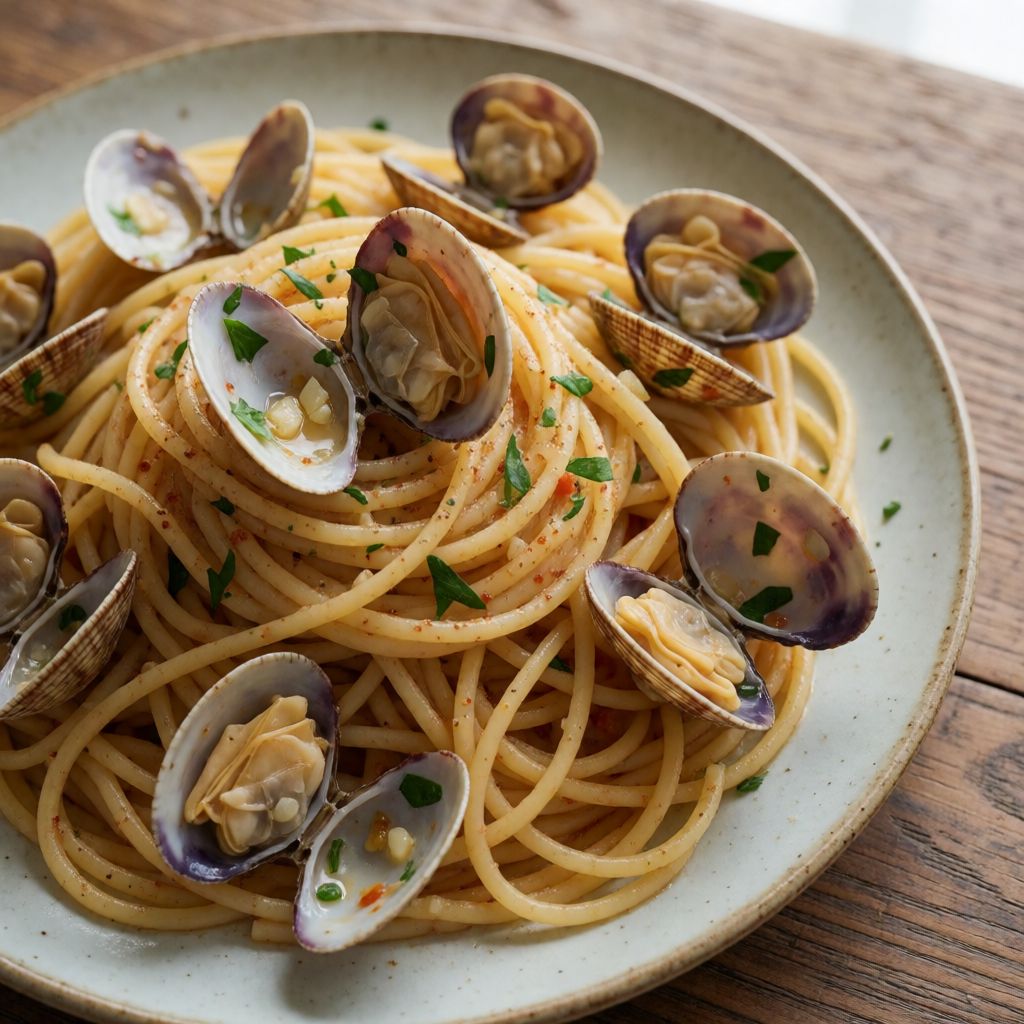
 AI photo
Spaghetti with Clams... the emergency version!
A quick spaghetti with clams and tomato sauce, ready in under thirty minutes for a busy weeknight.
Labels are worked out automatically from the ingredients and can be wrong. Check the packaging if it matters to you.
Ingredients
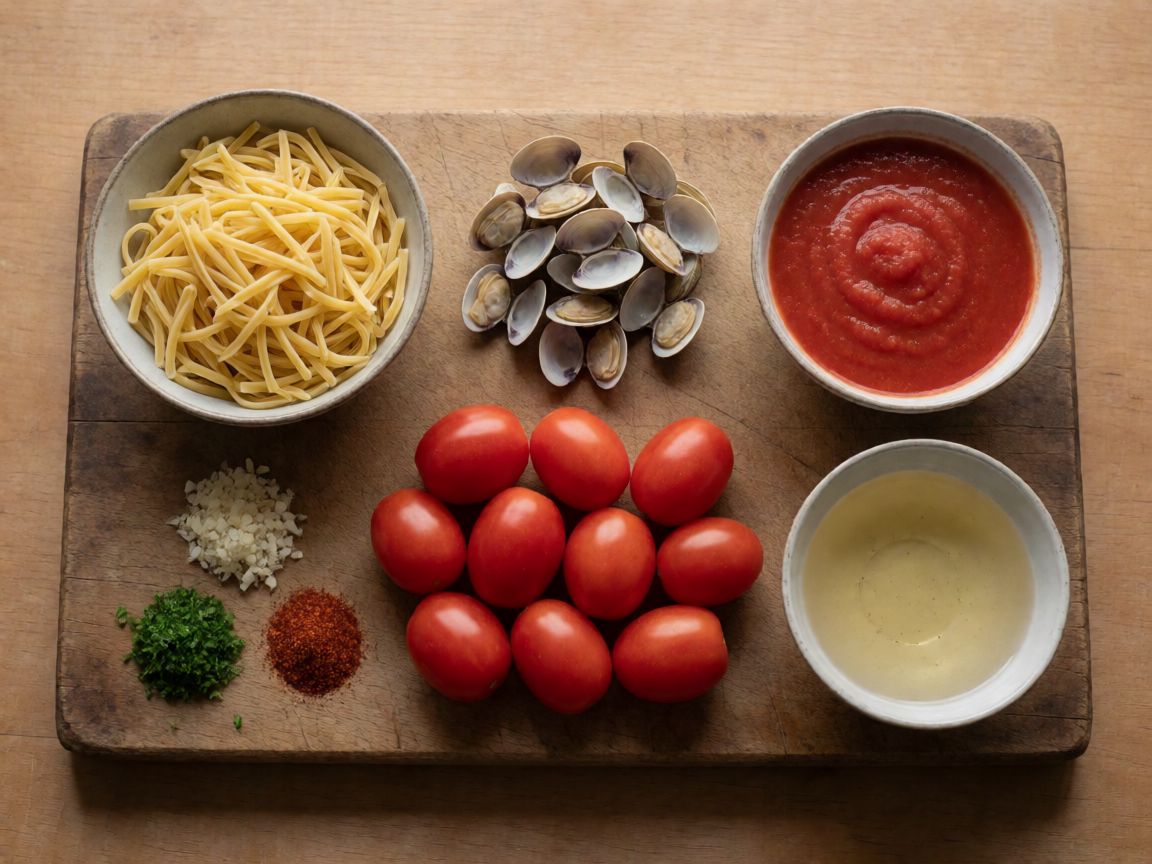
- 400 g Spaghetti
- 200 g Clams
- Garlic to taste
- Parsley to taste
- Chilli powder to taste
- 10 pcs Tomatoes preferably datterino tomatoes
- 200 g Tomato passata
- White wine to taste
- Salt to taste
- Olive oil to taste










Steps
In a pan, fry chopped garlic, parsley and chilli powder in 2 tbsp of olive oil.
Add the thawed clams, having first drained them and set aside their liquid.
Pour in the strained clam liquid, add 100 ml of white wine and let it evaporate.
Roughly crush the tomatoes by hand and add them together with the tomato passata.
Season with salt to taste and cook over low heat for about 10 minutes.
10 minMeanwhile, cook the spaghetti in a large pot of salted water until al dente, then drain.
Transfer the pasta to a serving bowl, toss with the prepared sauce, sprinkle with chopped parsley and serve.
This is spaghetti alle vongole with the shell taken out of the equation — frozen, already-opened clams standing in for the live ones you'd normally buy that morning and purge in salted water for an hour. Call it emergency because that's exactly what it is: Tuesday evening, no time to fuss with sand and shells, but you still want the dish to taste like the sea, not like tinned soup with pasta in it.
What decides whether it works has nothing to do with how fancy your clams are. It's three small things: whether the garlic in the oil goes gold or goes bitter, whether the clams spend ten minutes warming through in a gentle sauce or ten minutes boiling into rubber, and whether what ends up on the pasta is a sauce — thick enough to cling to the spaghetti — or a thin tomato soup the noodles are just swimming in.
The garlic, parsley and chilli go into the oil first, before anything wet touches the pan, because that's the only way they actually flavour the oil instead of just sitting in liquid raw. Skip this and you get garlic taste floating on top of the sauce instead of running through it — the difference between seasoning and garnish.
Some say frozen clams can't make a real vongole, that you need the shells clacking in the pan for it to count. No — the shell is theatre for the eye and the ear, nothing more. The flavour lives in the liquid the clam gives off when it's heated, and frozen clams give you that liquid just as honestly, already shelled and already purged of grit, which is precisely the labour that makes a fresh clam dish a weekend project and not a Tuesday one.
Start with the clams. Frozen, pre-cooked, pre-shelled ones are sold wet in their own small amount of liquor — that's not packing juice to be tipped away, that's the stock of the dish. Drain it off before the clams go into the hot oil, because if it hits the pan with them it dilutes the fry and you lose the gold-not-bitter stage of the garlic before it's even started. Keep that liquid aside and bring it back with the wine a moment later, once the pan has a base worth seasoning. That order is the whole trick: infuse the fat first, concentrate the liquid second.
Garlic, parsley, chilli — "to taste" sounds vague but the test is simple: enough garlic that you can smell it across the kitchen within thirty seconds, enough chilli that it warms the back of the throat without announcing itself, enough parsley, stems included at this stage, to give the oil a green smell rather than just a garlic one. If you've only got a fresh chilli and not powder, that's fine — the criterion is heat without a raw, grassy bite, so deseed it and chop it fine rather than tossing in a whole one.
The wine's job is to deglaze whatever's stuck to the pan and to cook off its own raw alcohol smell while it's at it — that's why it gets a minute to reduce before the tomatoes go in, not a minute and a half, not a precise science, just long enough that it stops smelling like wine and starts smelling like sauce. Any dry white does this; a dry vermouth does it too, and in a genuine emergency a splash of lemon juice loosened with a little water will give you the acid, if not quite the same perfume.
Datterino tomatoes are chosen for being small, thin-skinned and sweet, so crushing them by hand actually works — a knife would just slide off a tomato this soft, and a food processor would turn them to mush, losing the torn, uneven texture that gives the finished sauce something to bite into. If your UK shop hasn't got datterino, cherry tomatoes on the vine are the honest substitute — same criterion, small and sweet with little water to boil off, which is also why a big beef tomato is the wrong choice here: too much water, too long to cook it down, and you'd be waiting far longer than ten minutes.
Low heat for those ten minutes means the surface of the sauce should do no more than tremble, never roll at a boil — that's what keeps the clams from seizing up and turning to little pencil erasers. Ten minutes is where to start checking, not where to stop: you're done when the sauce has gone from loose and separated to glossy and coating the back of a spoon, and the clams look plump rather than shrunk in on themselves. That's patience doing its one job here — not a long one, but a real one, and skipping it is the actual cause of watery sauce and tough clams, not the fact that you started from frozen.
For the oil, any neutral olive oil does — you're not looking for one with a strong peppery finish that competes with the garlic and chilli you're about to fry in it; save the good extra virgin for drizzling raw at the end if you've got some. And don't go hunting for a kazan or a sauté pan with a lid for this: a wide ordinary frying pan from a British kitchen cupboard does the job, because the whole point of the dish is a shallow, fast reduction, not a slow braise — a lid you don't have isn't a problem you need to solve.