
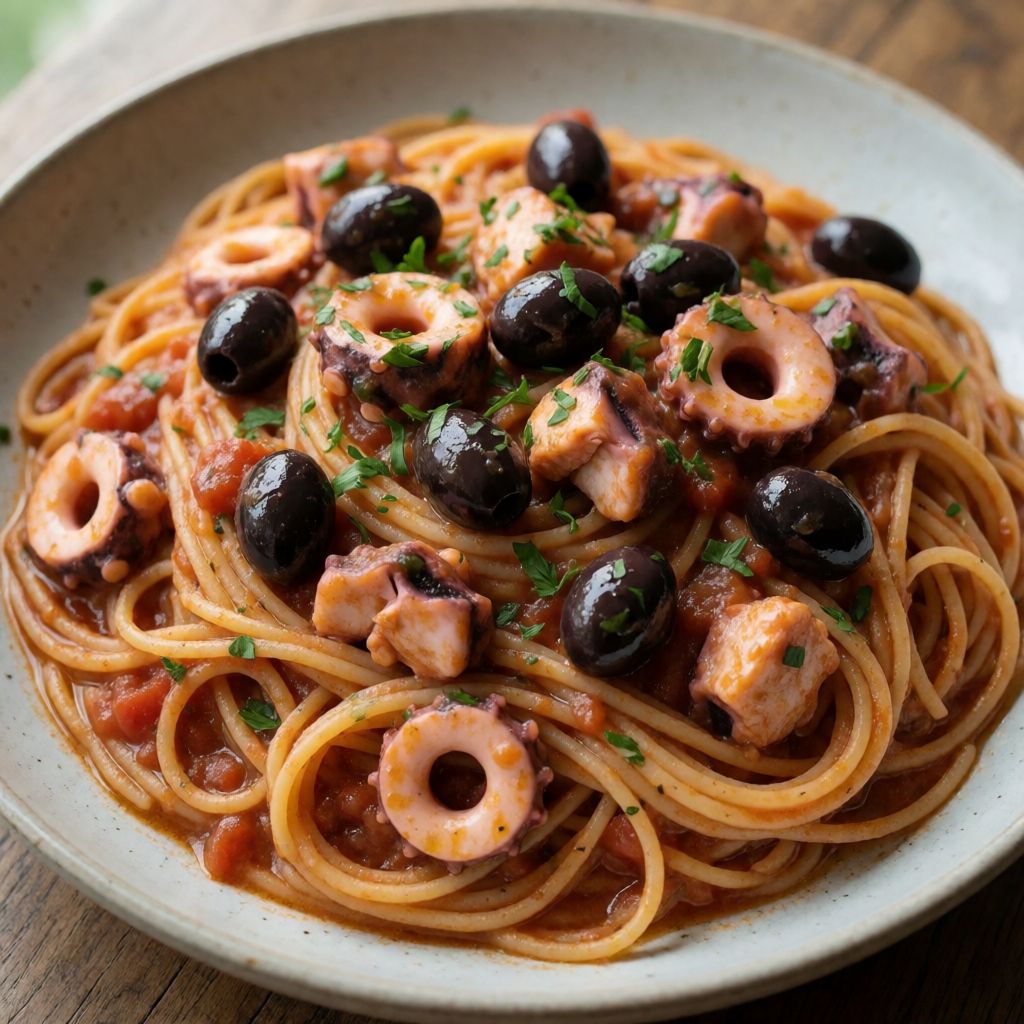
 AI photo
Spaghettini with Octopus and Olives
A simple seafood pasta: tender octopus simmered with tomato, olives and white wine, tossed with spaghettini.
Labels are worked out automatically from the ingredients and can be wrong. Check the packaging if it matters to you.
Ingredients
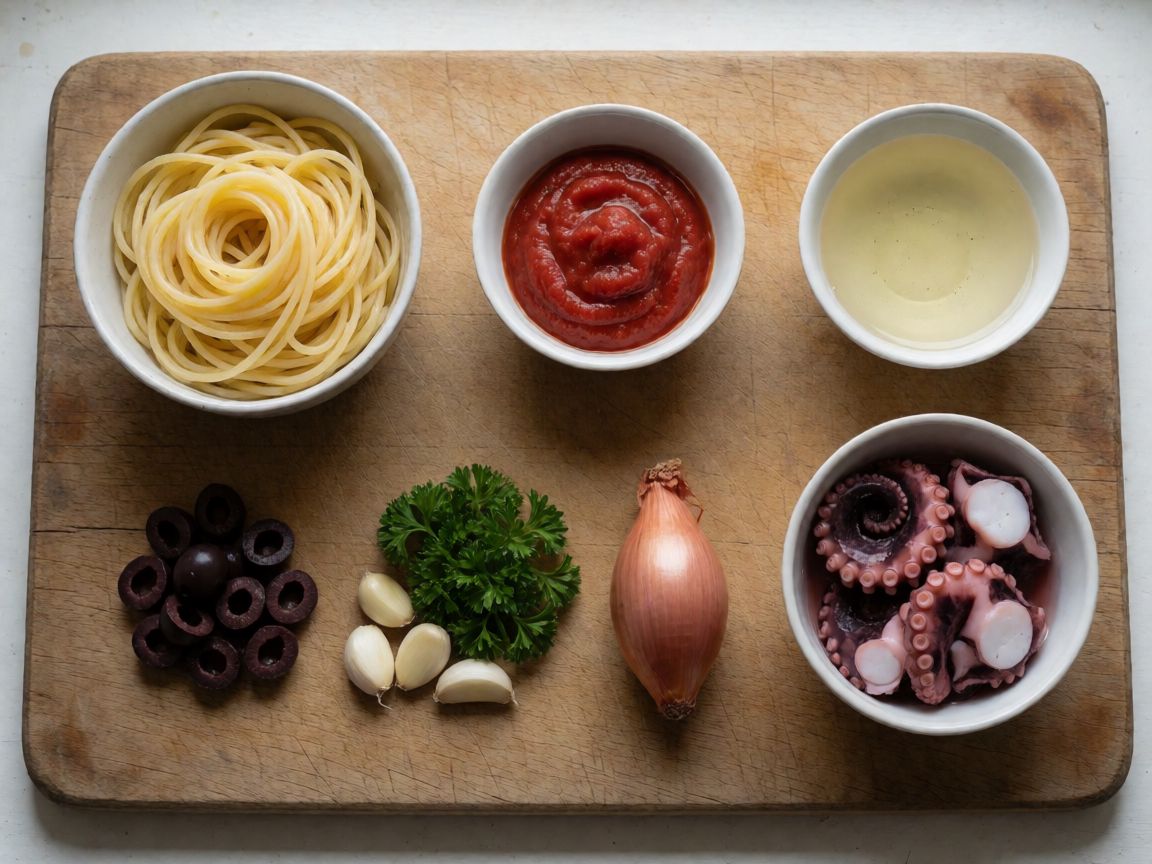
- 400 g Spaghettini
- 200 g Tomato passata
- 1 tbsp Pitted black olives in oil, pitted
- Garlic to taste
- Parsley to taste
- 2 tbsp Olive oil
- 120 ml White wine
- Salt to taste
- Black pepper to taste
- 500 g Octopus cleaned
- 1 pcs Shallot










Steps
Boil the cleaned octopus in water acidulated with white wine.
20 minDrain the octopus and let it cool.
Heat the olive oil and fry the finely chopped shallot together with the garlic and parsley.
Add the octopus, pour in the white wine and let it evaporate.
Pour in the tomato passata, add the pitted olives in oil, salt and pepper, and simmer gently.
10 minCook the spaghettini in salted water until al dente.
Drain the spaghettini and toss with the finished sauce, sprinkle with parsley and serve.
Octopus with tomato and olives over thin spaghetti is a dish built on one fact: octopus is a muscle that works constantly, swimming and gripping rock, and that makes it tough unless you handle the toughness directly rather than fight it with heat alone. The whole recipe is a negotiation with collagen, not a race against the clock.
What decides whether this works is the boil before the sauce even starts. You poach the octopus in water with wine in it until the flesh gives rather than resists — a skewer or knife tip should slide in without you having to lean on it, and a tentacle should bend like a thick rubber band, not splinter. That's the real test, not a timer. Collagen needs sustained gentle heat to turn to gelatine; rush it and you get rubber, because the proteins have seized and tightened before they've had time to relax.
The sauce that follows is short and almost incidental — shallot and garlic softened in oil, the cooked octopus warmed through, a slug of wine burned off, then tomato and olives simmered just long enough to thicken and salt the octopus's blandness. The olives aren't garnish; their brine does the seasoning work that the octopus, having given up its flavour to the poaching water, badly needs.
Some say octopus must be beaten against a rock or frozen and thawed to tenderise it. No — what actually tenderises it is time in liquid at a heat that never reaches a hard boil. The beating and freezing are just older ways of achieving the same breakdown before reliable stoves and freezers made "cook it properly and slowly" the easier option.
Octopus: buy it already cleaned, as the recipe assumes — gutted, beak out, skin and suckers left on, because that skin holds flavour and the dish needs the colour it gives the sauce. Fresh or previously frozen both work; in fact a spell in the freezer does some of the tenderising for you by rupturing muscle fibres, which is the one grain of truth inside the rock-beating myth. On a British fishmonger's counter you're more likely to find it frozen than fresh, and that's fine — thaw it slowly in the fridge, don't rush it under a tap, or you lose liquid and flavour with it. Squid is not a real substitute here; it cooks in minutes, not tens of minutes, and will fall apart long before it gives up the same depth.
The wine in the poaching water isn't for flavour so much as for the acid — a mild acid helps relax the muscle alongside the heat, the same principle as marinating meat, just gentler. White wine is traditional because it's what a coastal Italian kitchen had open; any dry, unsweetened wine works, and if you don't drink wine, a splash of white wine vinegar diluted well in the water does the same acidifying job without the flavour weight.
Tomato passata is sieved raw tomato, nothing more — no basil, no added salt, no cooking down. If your supermarket shelf only has tinned chopped tomatoes, blitz them smooth and you've made passata. Don't reach for a jarred pasta sauce instead; it's already seasoned and thickened for a different dish and will fight the olives instead of supporting them.
Olives in oil, pitted, are specified rather than olives in brine because the oil carries less sharp acidity and more of the olive's own fat-soluble flavour into the sauce — brined olives will work, just rinse them first or the dish turns sour rather than savoury. Black, not green: green olives are picked underripe and bring a harder, more bitter edge that doesn't sit well against octopus's sweetness.
Shallot rather than onion is really about scale and gentleness: one shallot for four people is the right amount of sharpness without the heat it'd take to properly soften a whole onion down, and shallot turns silky faster, which matters on a domestic hob where you're working with a wide frying pan, not a wide shallow pan with the steady, even heat of a professional burner.
Olive oil here is doing a plain job — carrying heat to the shallot and garlic without burning before they soften — so use any oil with no smell of its own strong enough to compete with the sauce; a light, ordinary olive oil, not an aggressive extra virgin you'd drizzle raw on bread, since heat burns off its character anyway and you'd be wasting the good stuff.
Spaghettini — thinner than standard spaghetti — is chosen because a thin strand carries a thin, oily, loose sauce like this one better than a fat strand would; a thick noodle would leave you with sauce pooled at the bottom of the bowl instead of clinging. If you only have regular spaghetti, it'll still work, just expect the sauce to coat it a little less evenly.
Salt the pasta water properly and taste the sauce before you combine them — the octopus itself brings almost no seasoning, it's a blank canvas, and the olives and salt are what make the dish taste of something rather than just texture. This isn't a dish you can speed up by turning the heat up under the octopus. The thirty minutes before the sauce even begins is the actual recipe; everything after is quick because the hard patience was already spent.