
 AI photo
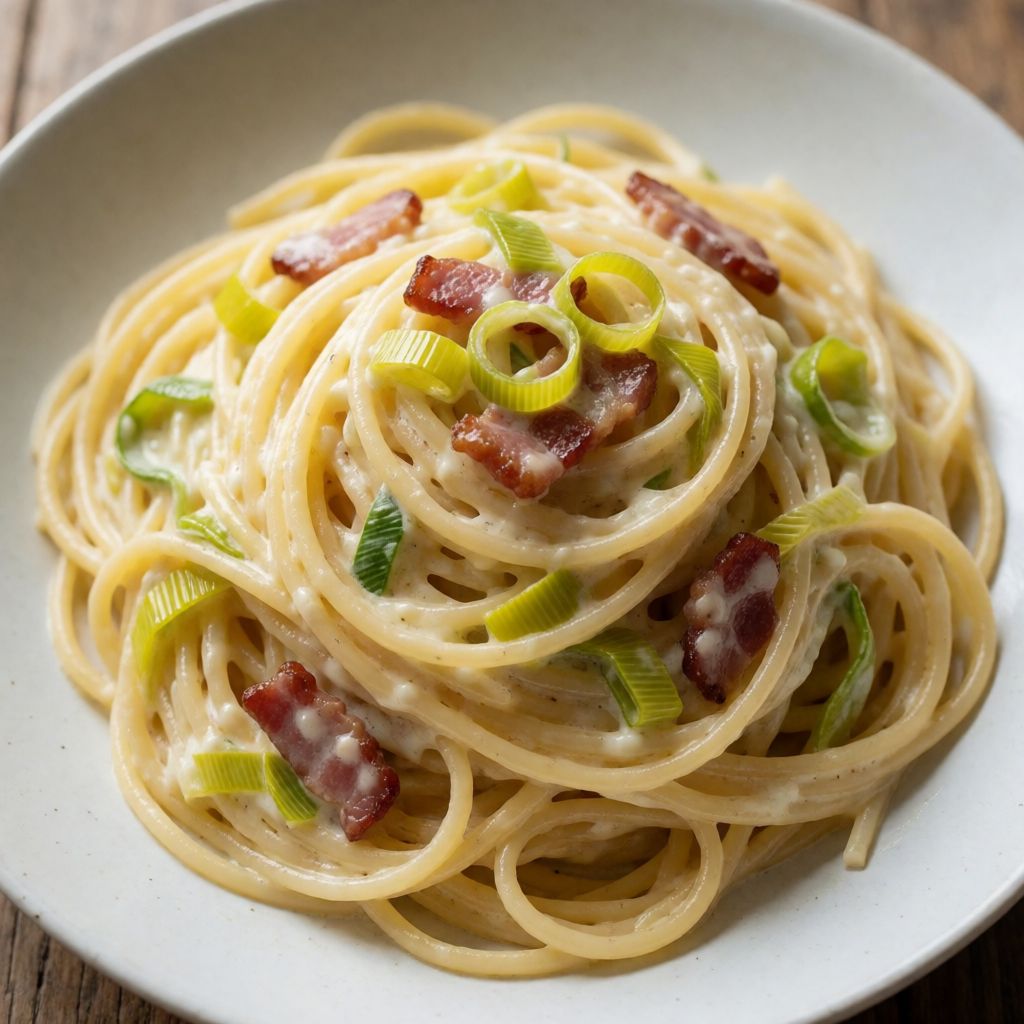
Spaghetti with Smoked Pancetta and Leek
A comforting pasta dish of spaghetti with crispy smoked pancetta, sweet leeks and a creamy ricotta sauce.
Labels are worked out automatically from the ingredients and can be wrong. Check the packaging if it matters to you.
Ingredients
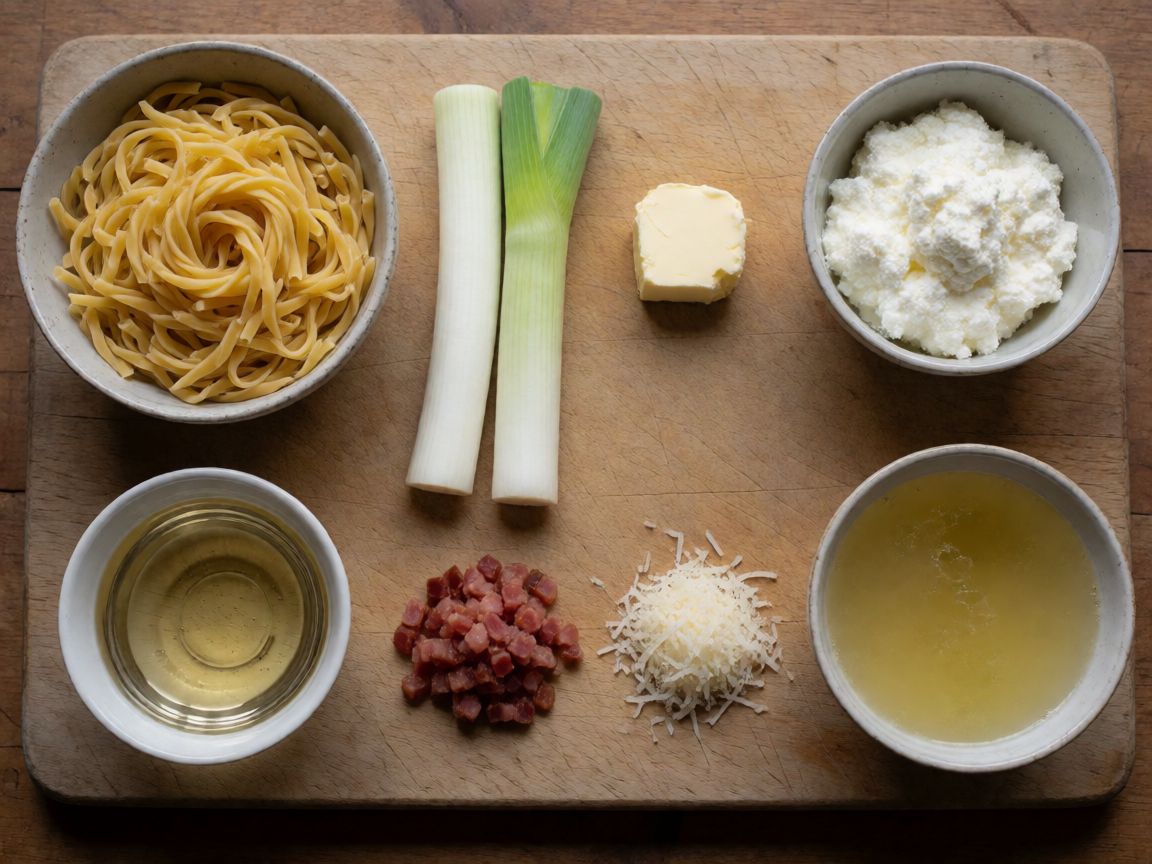
- 400 g Spaghetti
- 2 pcs Leek white part only
- 20 g Butter
- 200 g Ricotta
- 150 g Smoked pancetta diced
- Salt to taste
- Black pepper to taste
- Parmesan to taste
- 8 tbsp White wine
- 1 pcs Vegetable stock about one ladleful









Steps
Melt the butter, add the pancetta and fry until golden (internal temperature 70°C). Pour in the wine and let it evaporate.
Add the sliced leek and cook over low heat for 10 minutes, gradually adding the vegetable stock.
10 minCook the spaghetti in plenty of salted boiling water. Mix the ricotta with some of the pasta cooking water until smooth and creamy.
Drain the pasta when al dente and transfer it to the pan together with the ricotta cream.
Toss everything together, then sprinkle with parmesan and freshly ground black pepper.
Serve immediately.
This is pasta dressed in rendered smoked fat, not in a sauce you cook separately. Everything that makes it taste of something comes out of the pancetta while it fries — the smoke, the salt, the fat that later carries the leek and coats the spaghetti. Take that step lightly and you get boiled bacon bits sitting on noodles. Take it seriously and you get a dish that tastes richer than its ingredient list suggests.
Three things decide whether it works. First, whether the pancetta actually renders — fat leaving the meat and pooling in the pan, not just the dice going grey. The recipe gives you a real number for this, 70°C inside the pancetta: that's not a food-safety line, the meat is cured and smoked already, it's the point at which the fat has let go and the meat is still moist, not shoe leather. Second, whether the leek goes soft and sweet rather than catching and turning bitter — that's a low, almost lazy heat, with stock added bit by bit so the pan never goes dry and starts frying instead of steaming. Third, whether the ricotta turns into a cream or stays a lump of curd sitting on your spaghetti.
Some people reach for double cream when they want a pasta sauce to look glossy — no, you don't need it here, and it would be the wrong move. The starch in the pasta water, whisked into the ricotta, is what turns a dry cheese into something that clings to the strand. Cream on top of that would just mute the smoke you worked to get into the pan in the first place.
Pancetta, smoked and diced, is the engine of the dish — it's cured meat with a generous seam of fat, and that fat is what you're actually after. The smoke is the flavour you can't get any other way short of smoking something yourself, so don't swap it for plain bacon if you can help it. If pancetta isn't in your shop, smoked bacon lardons — sold ready-diced in most UK supermarkets for exactly this kind of thing — do the same job, because the mechanism is identical: smoked, salted fat that renders when it hits heat.
Leek, white part only, because the green part is where the fibre and the bitterness live — fine in a stock, wrong here. The white sweetens as it softens; that's why it goes in low and slow with stock added gradually rather than all at once, which would just boil it instead of letting it braise in the fat. If you're out of leek, the white of a bunch of spring onions will get you something close, though leek's particular sweetness is its own thing and won't fully translate.
Butter at the start is there to carry the first bit of heat gently and add its own flavour on top of the pancetta's — any oil with no smell of its own would work instead if you want to drop the dairy, sunflower oil being the obvious one in a British kitchen. The white wine isn't decoration: it deglazes the browned bits stuck to the pan after the pancetta fries, and its acidity cuts through what is, let's be honest, a fairly fatty start to a meal. No wine in the house — a splash of the vegetable stock with a squeeze of lemon does roughly the same lifting job, just without the aroma.
Ricotta is a fresh, unaged, barely salted curd cheese — on its own it's grainy and a bit chalky, which is exactly why it gets loosened with starchy pasta water rather than used straight from the tub. If ricotta isn't available, cottage cheese blitzed smooth, or mascarpone thinned with a bit more pasta water than usual, will get you into the same territory, though mascarpone pulls the dish richer and sweeter than ricotta does.
Parmesan at the end is salt and age doing the final seasoning job that nothing earlier in the pan could — don't add it while the pan's still hot over the flame, or it just melts into strings instead of dusting the surface. Pecorino, being sharper and saltier, works too if that's what's in the fridge, just go lighter with it.
This whole combination — cured pork fat, a garden vegetable, a soft cheese that would otherwise go to waste quickly — is the kind of pairing that comes from using what's cheap and on hand, not from any grand culinary idea. It sits in the same logic as frying your Sunday roast potatoes in the dripping: fat that's already paid for doing a second job. A wide frying pan on a normal hob handles every step here without trouble — there's no moment in this recipe that actually asks for a kazan or anything you don't already own.