
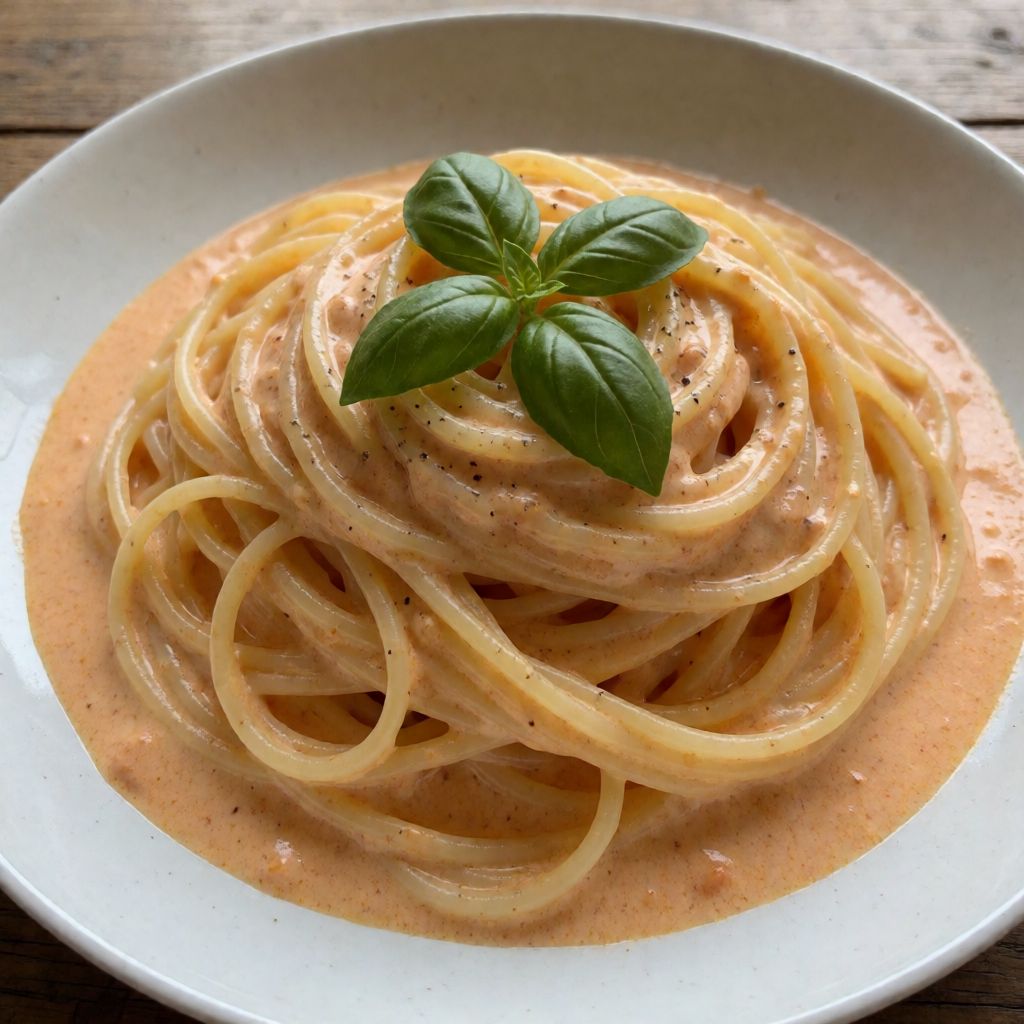
 AI photo
Spaghetti with Red Pepper and Cream Cheese Sauce
A simple spaghetti dish with a creamy red pepper and cream cheese sauce, finished with parmesan and black pepper.
Labels are worked out automatically from the ingredients and can be wrong. Check the packaging if it matters to you.
Ingredients
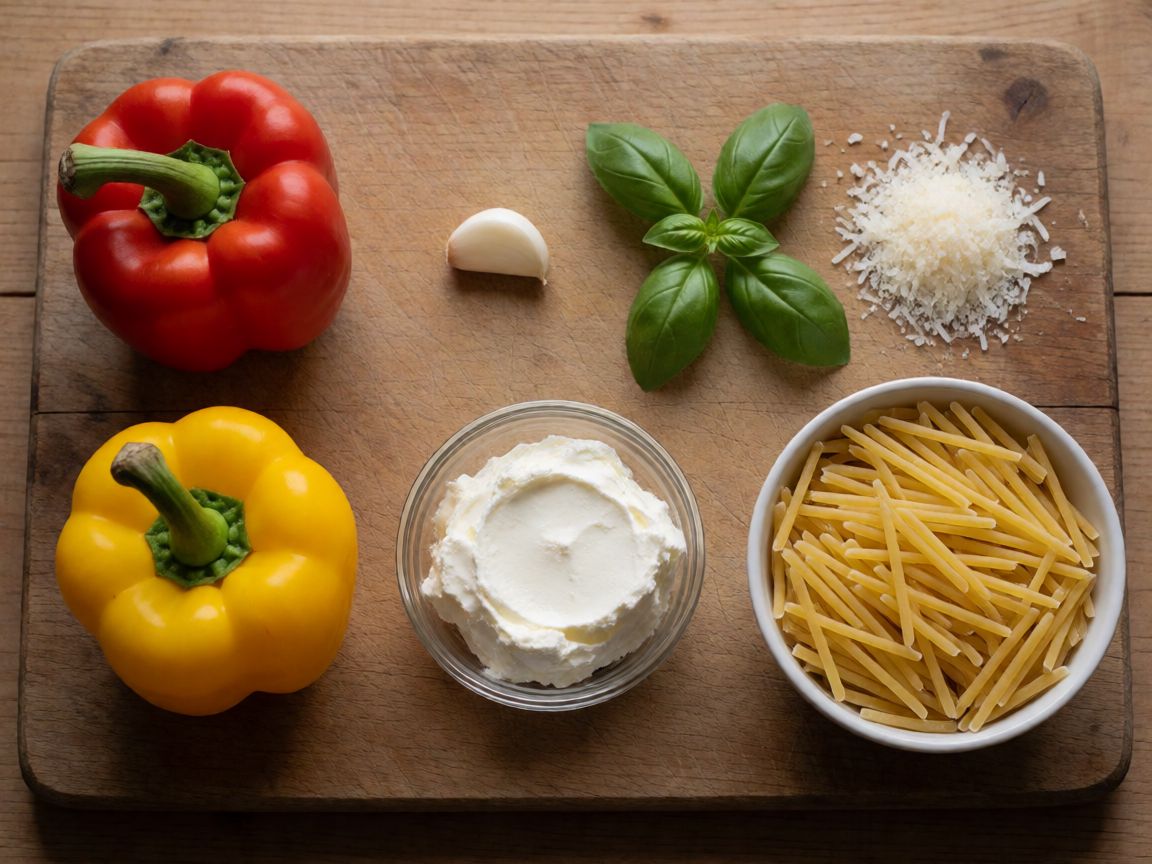
- 2 pcs Red Pepper
- 1 clove Garlic
- 200 g Cream Cheese
- Salt to taste
- Black Pepper to taste
- Basil to taste
- 3 tbsp Olive Oil
- 1 tbsp Parmesan
- 400 g Spaghetti









Steps
In a frying pan, sauté the garlic in the olive oil and remove it as soon as it turns golden.
Add the red peppers and cook over low heat for a few minutes with a small glass of water.
Let the peppers cool.
Cook the spaghetti in a large pot of salted water.
In a blender, blitz the basil with a pinch of salt, then add the peppers and cream cheese and blitz until smooth.
Pour in the olive oil and mix the sauce once more.
Drain the pasta al dente, toss with the sauce, and sprinkle with parmesan and black pepper.
This is not a tomato sauce wearing a disguise. It is a cold-blended pepper and cream cheese paste, warmed through only by the heat left in the pasta itself — that is the whole trick of the dish, and once you see it, the steps stop looking random.
Two things decide whether it works. First, how far the peppers actually collapse while they cook — not blister, not char, collapse, skin loosening and flesh going soft enough that a spoon meets no resistance. Second, the temperature of those peppers the moment they meet the cream cheese. Blend them hot and the cheese's fat structure breaks under the heat — you get an oily, grainy sauce instead of a silky one. That cooling step everyone is tempted to skip is the one that actually saves the dish.
The garlic matters too, but only briefly. It goes in to lend the oil its smell, then comes out before it browns past gold. Some think leaving a whole clove in the pan adds more flavour over time — no, because a clove left too long turns bitter and that bitterness travels into everything the oil touches afterwards. Gold, out, done.
The times given — fifteen minutes prep, twenty-five to cook — are a floor, not a clock to watch. The peppers tell you when they're ready by going soft under light pressure; the pasta tells you by resisting your teeth just slightly. Trust those over a timer.
Peppers: choose the heaviest ones for their size, thick-walled, properly red rather than red-and-green — sweetness here comes from ripeness, not from a particular variety. The small glass of water in the pan isn't padding; it turns the cooking into a gentle steam-braise rather than a fry, so the flesh softens all the way through before the sugars have any chance to catch and turn bitter. That's why the heat stays low — high heat would brown the outside before the inside gives up. If you only have jarred roasted peppers, use them, but skip the sauté step entirely and just warm them briefly — they're already collapsed, cooking them again only dries them out.
Garlic: one clove, used purely as a flavouring for the oil, then discarded. If you have none, garlic powder stirred into the oil off the heat gets you close, though you lose the rounder, less sharp smell that comes from infusing rather than powdering. Don't double the clove thinking more is better — more garlic in a short infusion just means more raw bite, not more depth.
Cream cheese: this is standing in for a béchamel or a long cream reduction, and it's a reasonable swap because it already carries the fat and body those would take time to build. The criterion is plain and full-fat — a tub of the ordinary sandwich-spread kind works fine, the kind most UK fridges already have a tub of. Light or low-fat versions have less fat holding the emulsion together, and that's exactly what splits under heat; avoid them here even though the label makes them look like the sensible choice.
Basil: blitzed first, on its own, with a pinch of salt — the salt helps break the leaf cells open so you actually get the oil out of them rather than just chopped green flecks. It goes in raw and stays raw, because basil's aroma is volatile — cook it and you're smelling mostly what's left after the good part has already left the pan. No basil, no real basil flavour to borrow; parsley gives you green and fresh but a different dish, and dried basil won't wake up the way fresh does in a cold blend.
Olive oil does two separate jobs and that's worth noticing. First use: carrying garlic flavour into the peppers, where a little heat is fine. Second use: stirred raw into the finished sauce, where its job is gloss and a fruity edge you'd cook straight out of it if it went anywhere near the pan again. For the first job any oil with no smell of its own will do if flavour isn't the point — sunflower, for instance. For the second, use an olive oil you'd be happy to taste neat, because here you will.
Parmesan: one tablespoon is seasoning, not structure — it's there to salt and sharpen the top of the dish, not to thicken anything. Any hard, aged cheese covers the job; a strong cheddar will do it if that's what's in the fridge, though it pulls the flavour toward something less Italian and more British teatime, which isn't a crime.
Spaghetti: cooked separately in its own pot, which matters more than it looks. The pasta comes out properly hot, and that heat is the only heat the finished sauce gets — it loosens the cold pepper-cheese paste into something that coats the strands without ever being cooked itself. That's the quiet patience in this recipe: you wait for the peppers to cool, then you let the pasta's own heat do the warming later. Rush the first wait and the second step can't save you.