
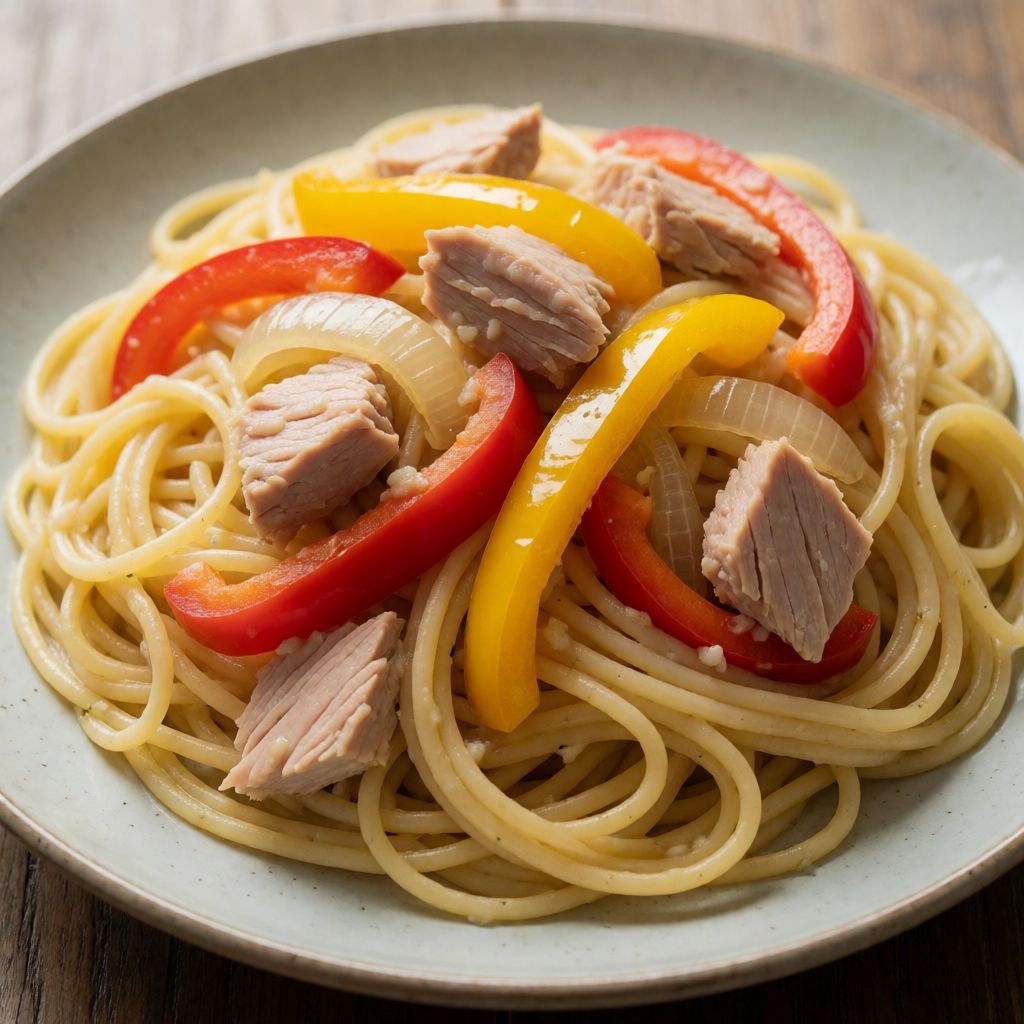
 AI photo
Spaghetti with Tuna, Bell Pepper and Basil
A quick pasta of tuna, sweet bell pepper, cherry tomatoes and basil, finished with a little chilli.
Labels are worked out automatically from the ingredients and can be wrong. Check the packaging if it matters to you.
Ingredients
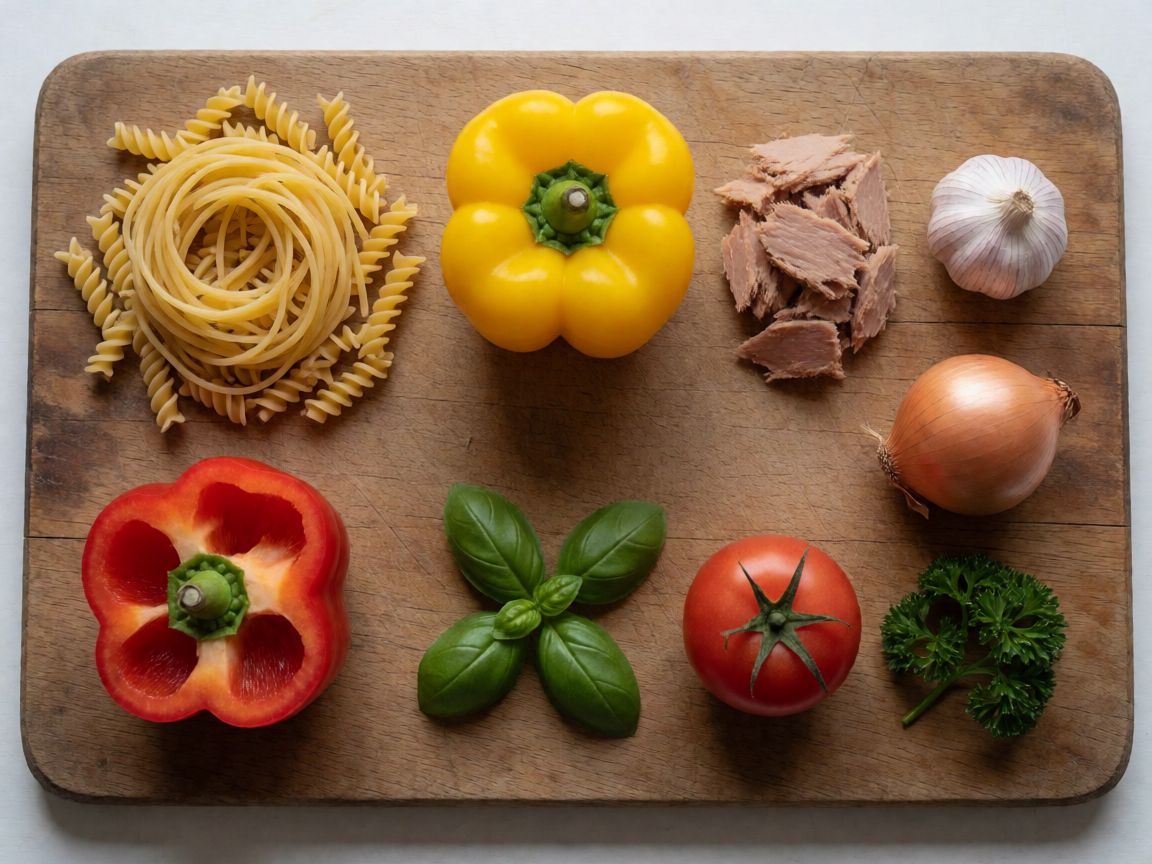
- 350 g spaghetti or linguine
- 2 pcs bell pepper
- 120 g canned tuna
- 1 clove garlic
- 1 pcs onion
- 1 bunch basil to taste
- 200 g cherry tomatoes
- 2 tbsp olive oil to taste
- 1 bunch parsley to taste
- 1 pinch chilli flakes to taste
- 1 pinch salt to taste











Steps
Wash and dry the bell pepper, cut into strips, and thinly slice the garlic.
In a large pan, sauté the onion and garlic in 2 tbsp olive oil.
Add the bell pepper and simmer, adding a ladle of warm water as needed.
Wash and dry the cherry tomatoes, cut into wedges, and add to the pan.
Cook covered.
15 minSeason with salt and crumble in the chilli flakes.
Cook the pasta in plenty of salted water until al dente, drain and toss into the pan with the sauce.
Add the drained, flaked tuna, chopped basil and chopped parsley.
This is a sauce built on braised pepper, not on tomato — the tomato is there to add juice and a little acid at the end, not to carry the dish. That order matters. Bell pepper is mostly water and cellulose; it needs real time over gentle heat to break down into something soft and sweet, almost jammy. Rush it and you get crunchy ribbons sitting stubbornly in a thin, separate liquid — pepper and sauce as two different things on the same plate instead of one.
The tuna is not the star either. It's canned, it's already cooked, and its only job is to be flaked in at the end and warmed through, not simmered — simmer it and the flakes turn to dry grit and the oil it sits in (or the tuna's own moisture) gets squeezed out and lost in the pan. So the whole architecture is: pepper does the long slow work, tomato arrives late for brightness, tuna arrives last for texture, and pasta is the thing that ties it together with a splash of its own starchy water.
What decides whether it works is patience with the pepper and restraint with the tuna. Everything else — garlic, basil, chilli — is seasoning, adjustable to your own tongue, not structural.
Start with the onion and garlic in the oil, low enough that they turn translucent and then pale gold, never brown — brown garlic is bitter garlic, and there's no saving a sauce once that bitterness is in. On a domestic hob "sauté" just means: enough heat that things sizzle quietly, not enough that they catch. If your pan runs hot in patches, move the onion around rather than trusting the heat to behave.
Then the pepper, and this is where the ladle of warm water earns its place. Some people think you can just fry pepper strips until they're soft. You can't, not really — they'll char on the surface before the inside gives up its structure, because pepper skin is tougher than the flesh under it. Adding water and covering turns the pan into a small steam-braise: the pepper softens from moisture and gentle heat, not from scorching. Add the water a little at a time, only when the pan looks dry — you're not making soup, you're stopping the pan from going dry and bitter.
The cherry tomatoes go in whole-cut, skin on, and the covered simmer (that 15 minutes is a floor, not a clock — stop timing it and start looking: the pepper should bend, not snap, and the tomato wedges should have mostly collapsed into the liquid around them, no longer holding their shape). If your pepper is still stiff at 15 minutes, leave it another five. Nobody's checking.
Canned tuna: buy it in oil if you can, because that oil carries flavour the dry-packed version simply doesn't have — drain it, but don't scrub the tuna clean of it. If all you have is tuna in water, add a touch more olive oil at the end to replace what's missing; otherwise the dish tastes thin. Flake it with a fork, don't chop it — flaking keeps the texture loose, which is what you want folding through pasta.
Basil and parsley are added raw, off the heat or close to it, because basil cooked for any length of time turns grey-green and loses the smell that's its whole reason for being there. Chop them at the last minute, not in advance — basil especially bruises and blackens if you let cut leaves sit around.
For the pasta itself, the only rule that matters is salt the water properly and don't overcook it — spaghetti or linguine both work because this is a loose, chunky sauce that clings rather than coats, so a flat ribbon or a round strand suits it equally. Keep a cup of the pasta water back before you drain; if the sauce looks tight or stiff once the pasta goes in, a splash of that water loosens it without watering down the flavour, because it's salted and starchy rather than just wet.