
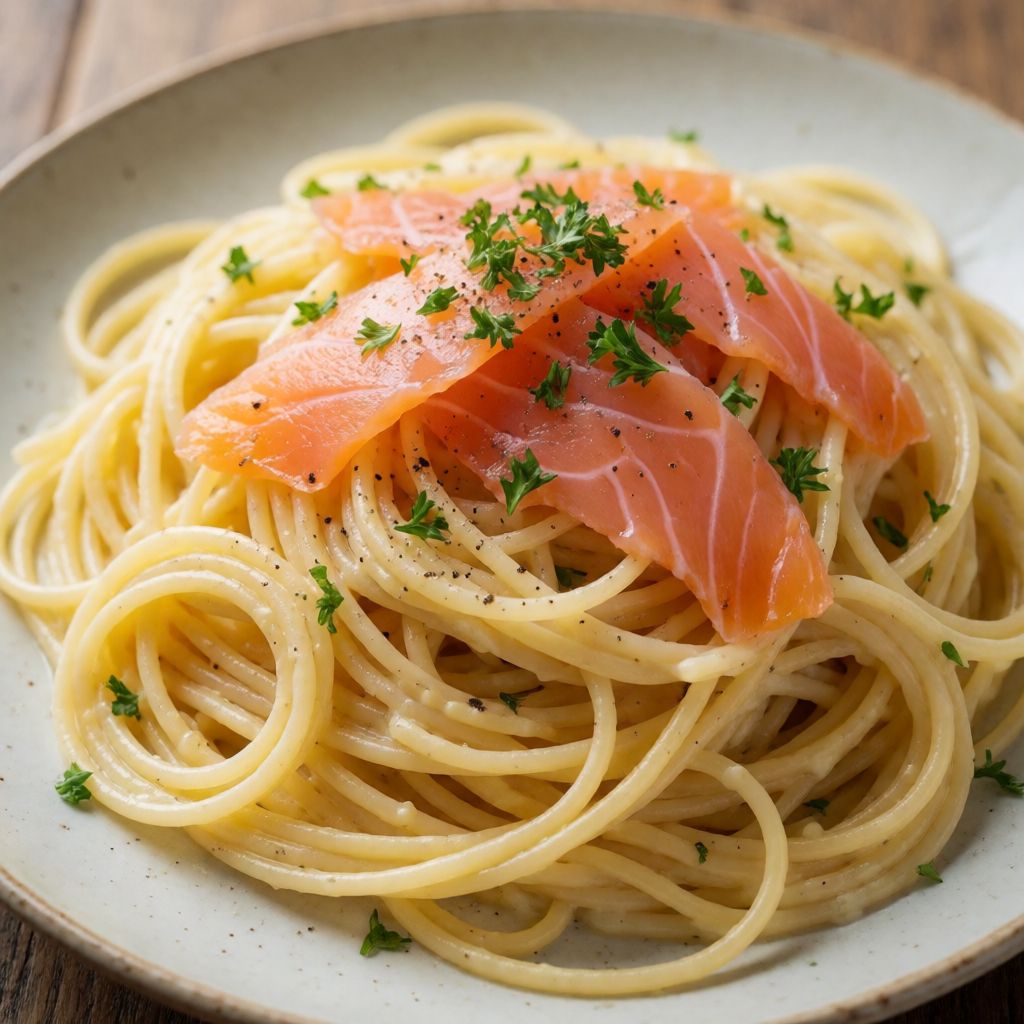
 AI photo
Spaghetti with Lemon and Smoked Salmon
A bright pasta dish of spaghetti tossed with lemon, butter and smoked salmon.
Labels are worked out automatically from the ingredients and can be wrong. Check the packaging if it matters to you.
Ingredients
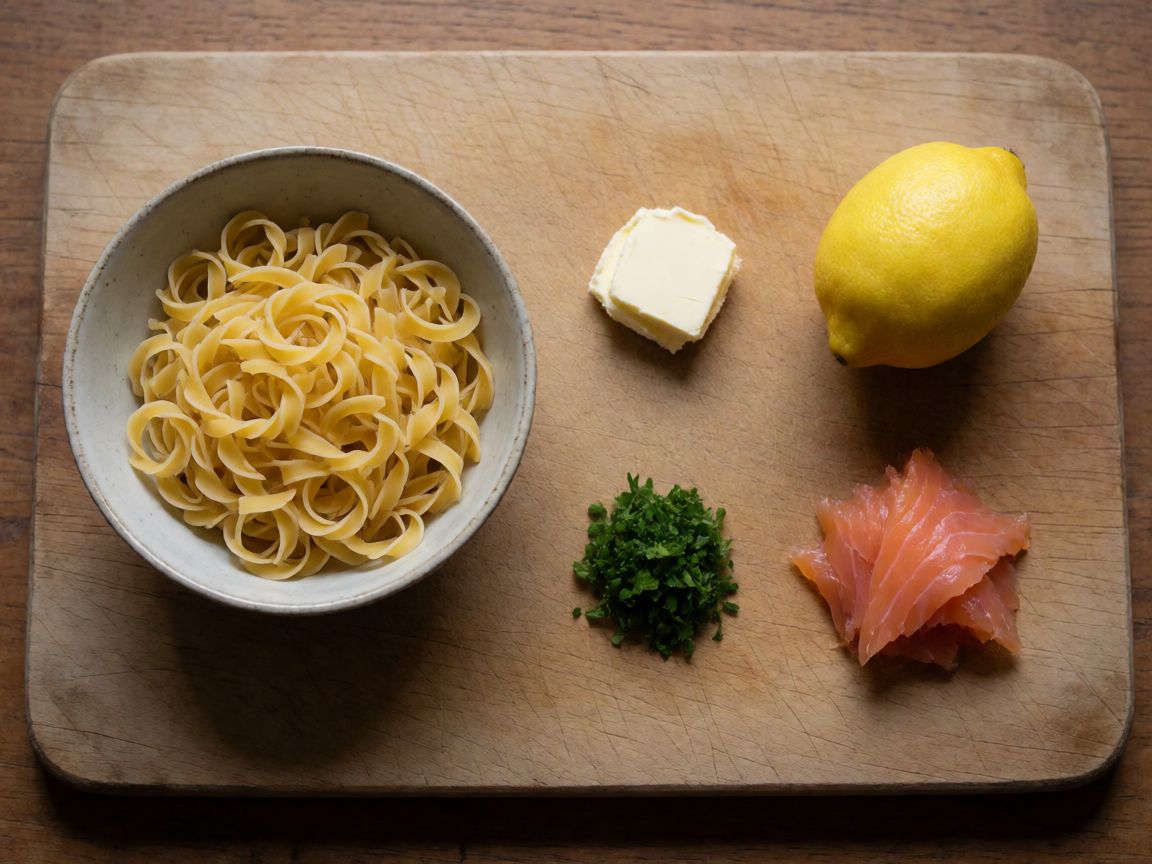
- 400 g Pasta
- 1 pcs Lemon
- 50 g Butter
- Parsley to taste
- Salt to taste
- Black Pepper to taste
- 200 g Smoked Salmon







Steps
Zest the lemon and squeeze out its juice.
Boil the spaghetti in water until al dente.
In a pan, melt the butter, add the lemon zest and pour in the lemon juice.
Drain the cooked pasta and transfer it to the pan.
Fry the pasta together with the smoked salmon, cut into thin strips.
Add black pepper and generously sprinkle with parsley, then serve.
This isn't a sauce dish — it's a two-minute marriage in the pan, and the whole thing hinges on one fact: smoked salmon is already cooked. Properly cooked, by smoke and salt, days before it reached your kitchen. So "frying" it here isn't cooking it — it's warming it just enough to let its fat soften into the butter, and a minute too long turns silk into shoe leather. That's the one failure point in this whole dish, and it's worth naming before anything else.
The second thing that decides it is the lemon. Not the juice — the zest. Zest is where the oil lives, the stuff that smells like lemon before it tastes sour. Juice gives you acid, which cuts the richness of butter and salmon fat; zest gives you perfume, which is the whole reason this dish smells like something rather than just tasting of salt and fat. Skip the zest and you've made a buttery salmon pasta with a squeeze of lemon on it — fine, but not this.
Some say you shouldn't put dairy with fish, that it's a rule, somewhere. No — because that's a rule from a different kitchen, invented to protect delicate white fish from heavy cream sauces drowning it out. Smoked salmon is already bold, already fatty, already seasoned by smoke. Butter doesn't fight it — butter is just the medium that carries lemon oil onto hot pasta so it coats every strand instead of sitting in a puddle at the bottom of the bowl.
Pasta: 400 g for four is modest by Italian households' own habit of over-ordering — but this isn't a dish you want swimming in starch and short on topping, so it's correctly measured. Use a long shape — spaghetti, linguine, even tagliatelle — anything that gives the lemon butter surface area to cling to. Short pasta works too, but you lose the trick of twirling zest and salmon strips together on a fork, which is half the pleasure.
Lemon: one fruit does two jobs, so buy it unwaxed if you can, because you're eating the skin. Supermarket lemons are often waxed for shine and shelf life — a habit left over from export logistics, not flavour — and that wax carries a faint soapy taste into your zest if you don't scrub it first under hot water. If zesting feels fiddly, a fine grater or the smallest holes on a box grater will do; just stop before you hit the white pith, which is bitter and brings nothing useful.
Butter: 50 g, and its only job is to be a neutral, rich carrier — melted gently, not browned, because browned butter brings a nutty taste that competes with the lemon instead of supporting it. If you're out of butter, a oil with no smell of its own — a mild olive oil, for instance — will carry the zest just as well, though you lose the gloss and the slight sweetness butter gives against the salt of the fish.
Smoked salmon: 200 g, cut into thin strips so it distributes rather than sitting in one lump on top. Cold-smoked is traditional here — silky, barely warmed by the smoking process itself, which is exactly why it can't take much heat in your pan. If what's in your fridge is hot-smoked salmon instead — firmer, flakier, cooked through already by the smoking heat — treat it even more gently, since it has no fat reserve left to protect it from drying out further.
Parsley and black pepper: pepper for a short, clean heat that lemon alone can't give; parsley for green freshness against all that richness and smoke. Generous, the recipe says — and it's right to say so, because a small pinch disappears into butter and fish and you won't taste it at all.
On a British hob, this is a quick two-pan job: a pot at a proper boil for the pasta, and a wide frying pan standing by on a flame just enough to melt butter without browning it — you want to see it go glossy and loosen, not foam and spit. There's no roasting, no resting, no long simmer here to disguise mistakes. Patience in this dish isn't about time; it's about resisting the urge to put the salmon in too early or leave it in too long once the hot pasta is tossed through.