
 AI photo
Spinach Dumplings (Canederli)
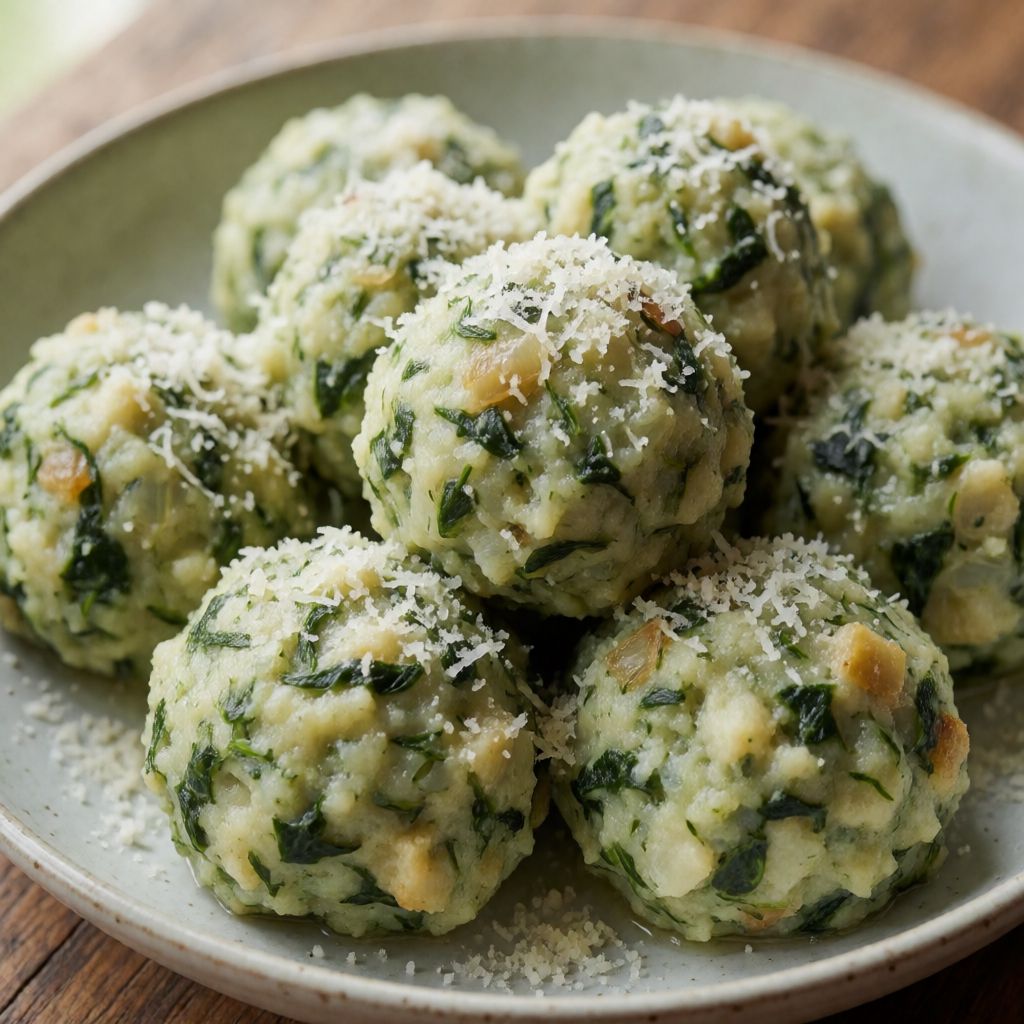
Soft bread and spinach dumplings, finished with melted butter and Parmesan.
Labels are worked out automatically from the ingredients and can be wrong. Check the packaging if it matters to you.
Ingredients
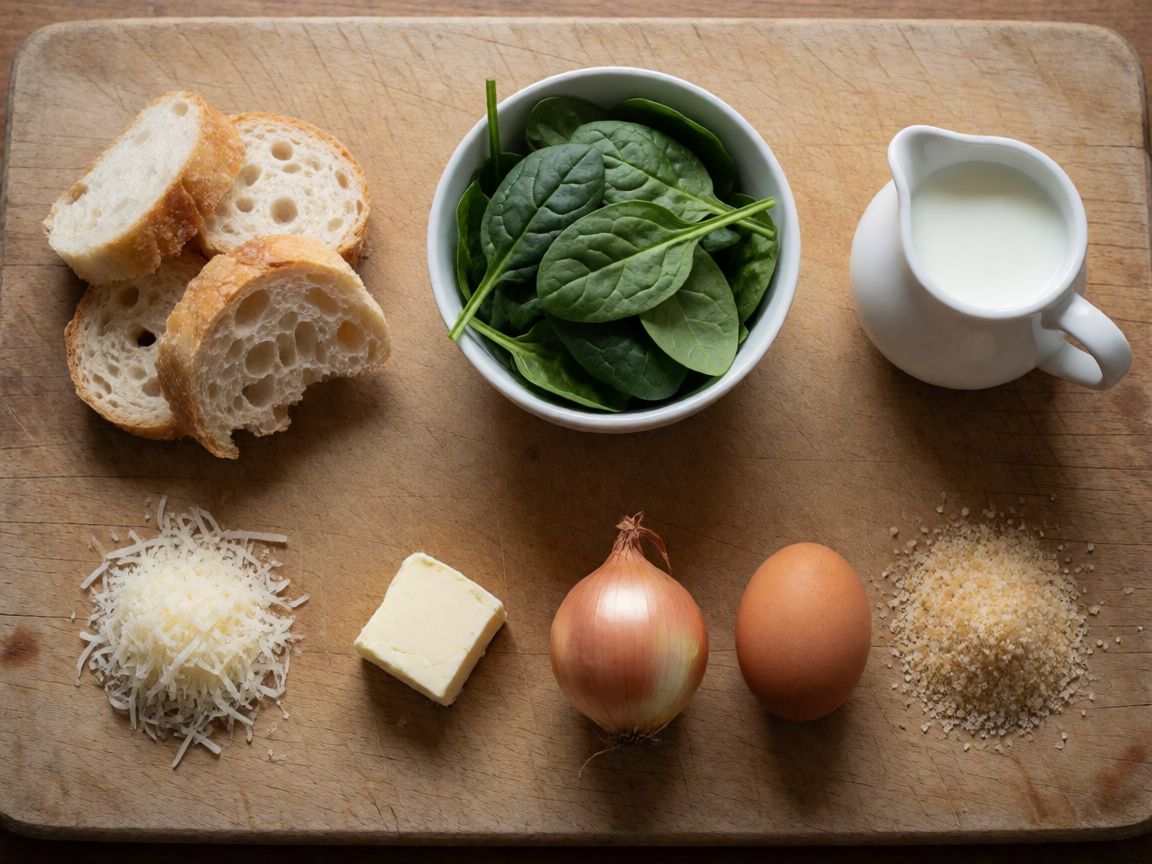
- 250 g Stale bread
- 700 g Spinach
- 130 g Parmesan grated
- 250 ml Milk
- 100 g Butter
- 1 pcs Onion
- 1 pcs Eggs
- Salt to taste
- Black pepper to taste
- Breadcrumbs to taste, dried
- 2 tbsp Plain flour
- Sage to taste











Steps
Wash the spinach thoroughly and boil it in lightly salted water, or steam it.
Cut the stale bread into small cubes and soak it in the milk.
Let the spinach cool, squeeze out excess water and chop it finely with a knife.
Finely chop the onion and fry it in butter in a large pan until golden.
Add the spinach and fry for a few minutes, then season with salt and black pepper.
Take the pan off the heat and let it cool slightly.
In a bowl, beat the egg, then add the spinach, the bread soaked in milk, the flour and the breadcrumbs.
Mix until you get a soft but not too wet dough.
Shape the dough into dumplings about the size of a small orange.
Bring a large pot of water to the boil, salt it and drop in 3-4 dumplings at a time.
Cook the dumplings, lifting them out with a slotted spoon 10-15 minutes after they float.
15 minTransfer the cooked dumplings to a plate and dress with melted butter and Parmesan.
Canederli are what the mountains do with bread that's gone past its best and spinach that needs using up — a dumpling built on the logic of not wasting anything, from a part of Italy (South Tyrol) that's really more Austrian in its kitchen habits than Italian. Stale bread isn't a compromise here; it's the structure. Fresh bread turns to paste the moment it meets milk and egg. Stale bread has already lost moisture, so it drinks the milk without collapsing, and that's what holds the dumpling together instead of letting it dissolve into the pot.
What decides whether this works is the moisture balance, not any particular step. Too much liquid in the spinach, too much milk left in the bread, and the dough won't hold its shape — it'll weep and spread the moment it hits boiling water. So squeezing the spinach hard after cooking isn't fussiness, it's the one move that prevents the dumpling falling apart. The flour and breadcrumbs at the end are adjusters, not fixed quantities — you add them until the dough stops being sticky and starts being shapeable, somewhere around a soft, slightly tacky ball that holds together in your palm.
Size matters more than the recipe lets on. "Small orange" isn't decorative language — it's telling you the dumpling needs enough mass to survive a rolling boil without breaking apart, but not so much that the inside stays wet while the outside is done. Too small and they overcook and go dense; too big and the centre never quite sets.
The bread is the skeleton, so don't reach for anything soft and squishy. You want a loaf that's actually gone firm and a bit dry — a few days old, crust and all, cut into small cubes. If your only bread is fresh, don't skip the staling: slice it and leave it out on a rack for a day, or dry it briefly in a low oven, because fresh bread has too much water already in it and will turn the dough to glue. In the UK you've got sourdough, a stale white sandwich loaf, even leftover crusty rolls from the Sunday roast — anything with an open, bready crumb works, as long as it's dried out rather than enriched or sweet.
Spinach does two jobs: flavour and colour, and both depend on getting the water out. Boiled or steamed spinach collapses to almost nothing and holds a shocking amount of water in its cell walls — squeeze it properly, with real pressure, in a clean tea towel or your fists over the sink, until it stops dripping. Skip this and you're adding liquid back into a dough that's trying to set; that's the single most common reason canederli fall apart in the pot. Frozen spinach, thawed and squeezed the same way, does the job fine — it's already been through a freeze-thaw that breaks the cells down, so if anything it's easier to dry out than fresh leaves.
Parmesan here isn't a garnish, it's doing salt and savour at once — a hard, aged grating cheese with no added moisture, so it won't loosen the dough the way a soft cheese would. Any firm, well-aged hard cheese that grates to a powder rather than a paste will stand in for it; a mature cheddar won't give the same note but won't wreck the structure either, which matters more than purists will admit.
The onion fried in butter until it turns from pale gold toward a deeper amber isn't there for bulk — it's there because raw onion in a dumpling dough stays sharp and watery, while cooked-down onion turns sweet and loses its moisture into the pan rather than into your dough later. Butter rather than a neutral oil is doing double duty: flavour now, and it's the same fat you'll melt over the finished dumplings, so the dish tastes of one thing from start to finish rather than two different fats arguing with each other.
The egg and flour are binders, and the breadcrumbs are the fine-tuning knob — if your dough feels wet after mixing, add dried breadcrumbs a spoonful at a time rather than dumping in more flour, because flour taken too far turns the inside gluey when boiled, while breadcrumbs just soak up stray moisture without changing the texture much. This is a dough you adjust by feel, not by finishing a measured amount — the 2 tablespoons of flour is a starting point, not a rule.
On cooking: a wide domestic pan stands in fine for the pot here — you don't need a kazan-sized vessel, you need enough water that dropping in three or four dumplings doesn't crash the boil to a stop. That's also why you cook them in small batches rather than all at once — overcrowd the pan and the water temperature drops, the dumplings sit in lukewarm liquid instead of a steady boil, and they start shedding their outer layer into the water instead of sealing it. The float is the real signal, not a clock — a dumpling that's cooked through loses enough density to rise, and from that point you're finishing the centre, not starting the cooking. Fifteen minutes after float is your lower bound; if in doubt, break one open — it should be set all the way through, not pasty in the middle. And have patience with the squeezing, the frying, the resting of the dough before you shape it — rushing any one of those is where this recipe actually fails, not in the boiling.