
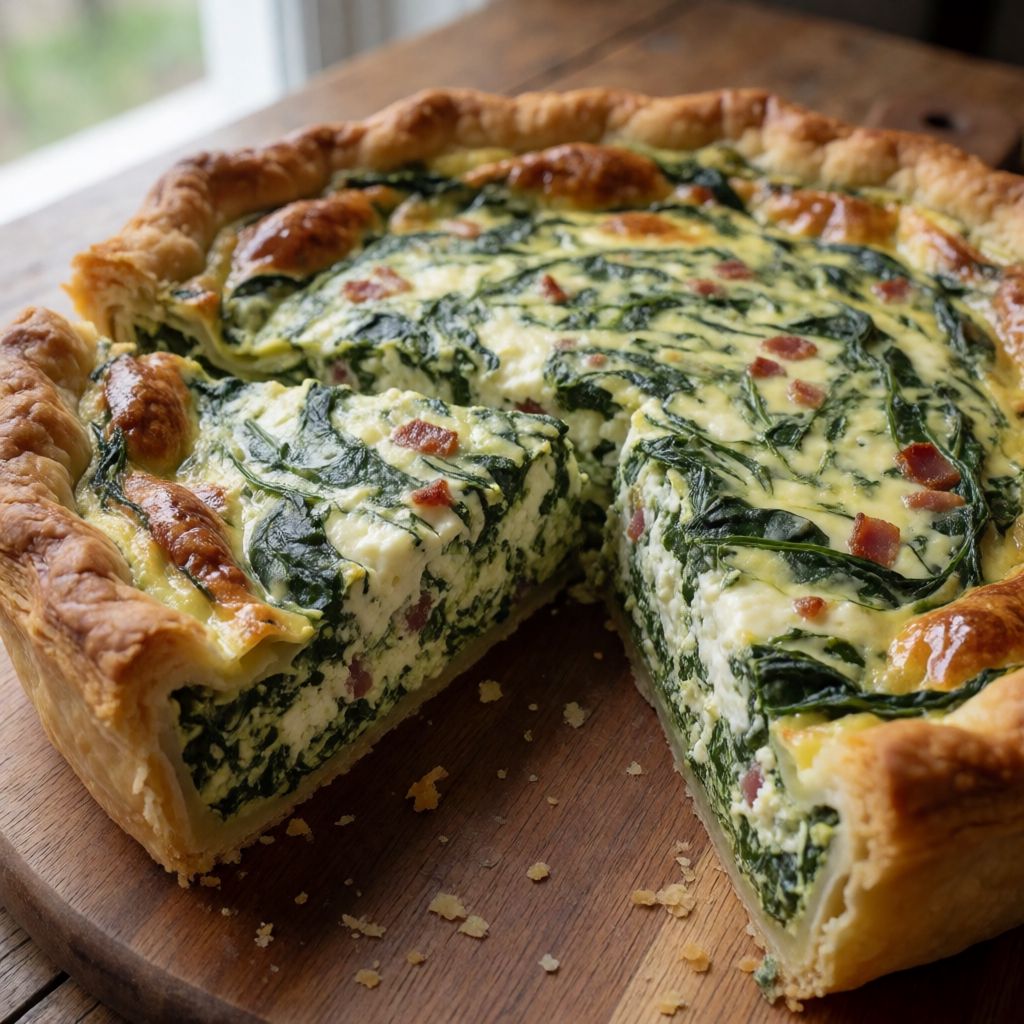
 AI photo
Spinach and Ricotta Pie
A savoury shortcrust pie filled with spinach, ricotta, egg, pancetta and parmesan.
Labels are worked out automatically from the ingredients and can be wrong. Check the packaging if it matters to you.
Ingredients
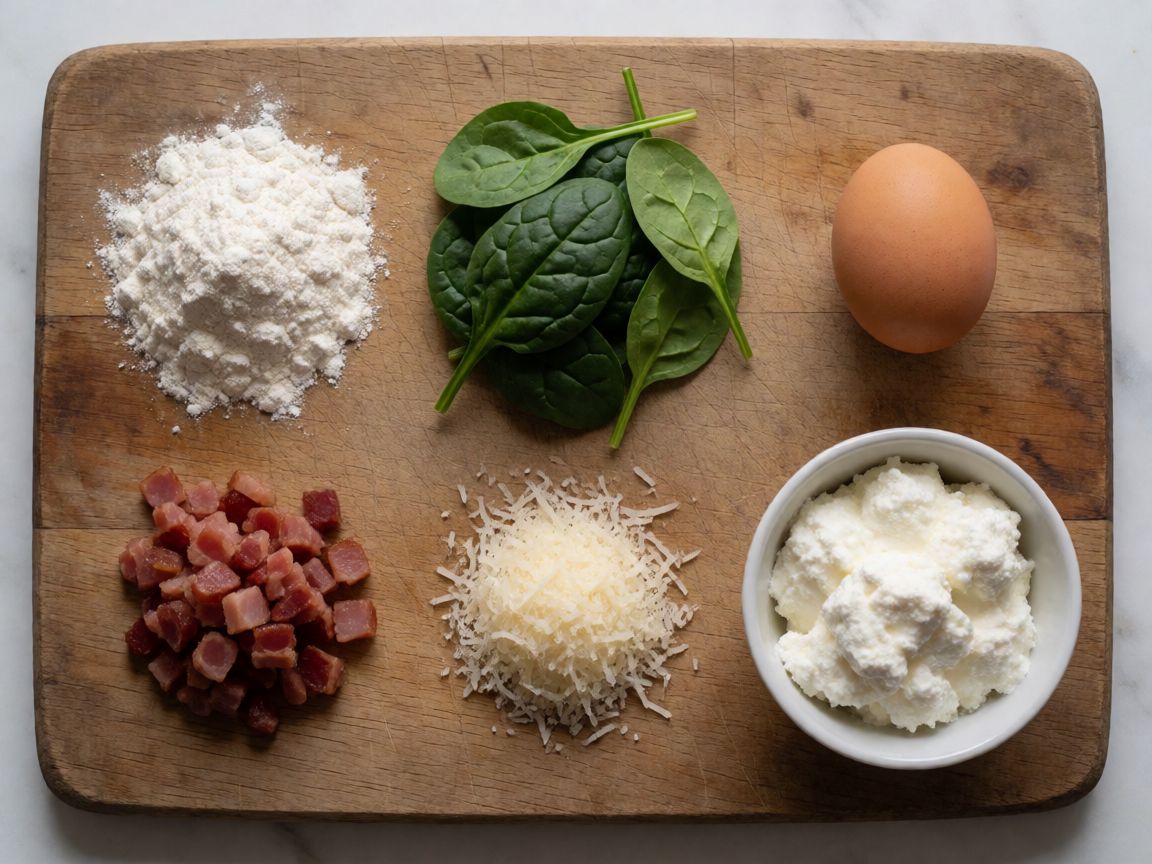










Steps
Wash the spinach thoroughly, removing any soil and debris, and let it dry on a clean tea towel.
Make the shortcrust pastry: in a mixer, combine the flour with the olive oil until the mixture is even and slightly grainy.
Add the water and mix until the dough comes together into a ball.
Transfer the dough to a work surface, dust with a little flour and knead until smooth and firm.
Wrap the dough in cling film and leave it in the fridge.
Place the chilled dough on baking parchment and roll it out with a rolling pin, covering it with another sheet on top.
Sauté the spinach in olive oil or steam it, then drain off any excess liquid thoroughly.
Add salt, pepper, ricotta, egg, pancetta and parmesan to the spinach and mix thoroughly.
Line a baking tin with the dough, letting the edges overhang the tin.
Bake in a preheated oven at 180°C until the pastry is golden.
60 min
This is an olive oil shortcrust wrapped round a wet filling — spinach, ricotta, egg, pancetta, parmesan — and the whole thing lives or dies on moisture management, not on the oven.
The pastry here isn't the buttery, flaky kind you'd use for a Sunday pie top. It's made with olive oil instead of butter, which changes what you're building. Butter gives you layers because it's solid and melts in the oven, pushing steam between sheets of dough — that's where flakiness comes from. Olive oil is already liquid at room temperature, so it coats the flour differently: you get a short, sandy, biscuit-like crust that holds its shape rather than shattering. This is Mediterranean kitchen economics — olive oil was what was in the house, butter wasn't always affordable or even stocked, so the dough adapted to the pantry, not the other way round.
What decides whether this pie works is step 7, and it's the step people skip because it feels fussy: squeezing the liquid out of the cooked spinach. Spinach is almost entirely water. Cook it and that water comes out whether you want it to or not. If it goes into the filling, it has nowhere to go but into your pastry base during baking, and a wet base doesn't crisp — it steams from underneath while the top browns, so you end up with a soggy bottom and a lid that looks done but isn't supporting anything. Some say a pie like this is naturally a bit damp in the middle — no, it's damp because the spinach wasn't wrung out properly.
On the flour: plain flour, not strong bread flour. You want some structure but not chew — this isn't bread, it's a vessel for filling. Too much gluten development and the crust turns tough and pulls back when you try to roll it; that's also why you rest the dough in the fridge before rolling, not for flavour, but to let the gluten relax so it doesn't fight you and shrink back on the tin.
Olive oil: use one with no strong personality for the dough — flavourless or very mild, because a peppery, grassy extra virgin will fight the filling and taste bitter once baked. Any neutral vegetable or sunflower oil will do the structural job if that's what's in your cupboard, you just lose the slight savoury note. Save the good peppery oil, if you have one, for sautéing the spinach, where its flavour actually gets to shine instead of being baked flat.
Spinach: fresh, washed properly — step 1 isn't decoration, spinach grows low and close to soil and grit hides in the curled leaves; biting grit is the fastest way to ruin trust in a dish. Frozen spinach works as a substitute and is arguably easier here, because it's already been through its water-release stage once — just thaw it fully and still squeeze it, you'll be surprised how much liquid frozen spinach still holds.
Ricotta: proper ricotta is a whey cheese, light and slightly grainy, not a cream cheese. If yours is watery — cheap supermarket tubs sometimes are — drain it in a sieve for a bit before mixing, for the same reason you dry the spinach: excess liquid is the enemy of a crisp base. No ricotta in the house? Cottage cheese blitzed smooth, or a mild curd cheese, gets you close enough; you're after mild, soft-curd, not sharp.
Pancetta and parmesan: these are the seasoning engine, not bulk. Pancetta gives salt-cured fat and a little smoke-adjacent savouriness; if you don't have it, a few rashers of streaky bacon, chopped and dry-fried till the fat renders, does the same job — British bacon is saltier and leaner, so taste before adding extra salt. Parmesan brings umami and more salt again — a hard, aged cheese like a mature cheddar or pecorino substitutes fine in a pinch, same principle: hard, aged, salty.
On the heat: 180°C is a moderate domestic oven setting, nothing dramatic — it's hot enough to set the egg custard inside and colour the pastry, but gentle enough that the filling cooks through before the crust burns. The hour given is a lower bound, not a deadline — judge it by the pastry's edges, which should go from pale and raw-looking to an even gold, and by the filling, which should look set rather than wobbling like liquid when you nudge the tin. A glass or metal tin, whatever you've got, works — just know a dark metal tin browns the base faster than a pale ceramic one, so watch the underside if you can lift a corner and check.