
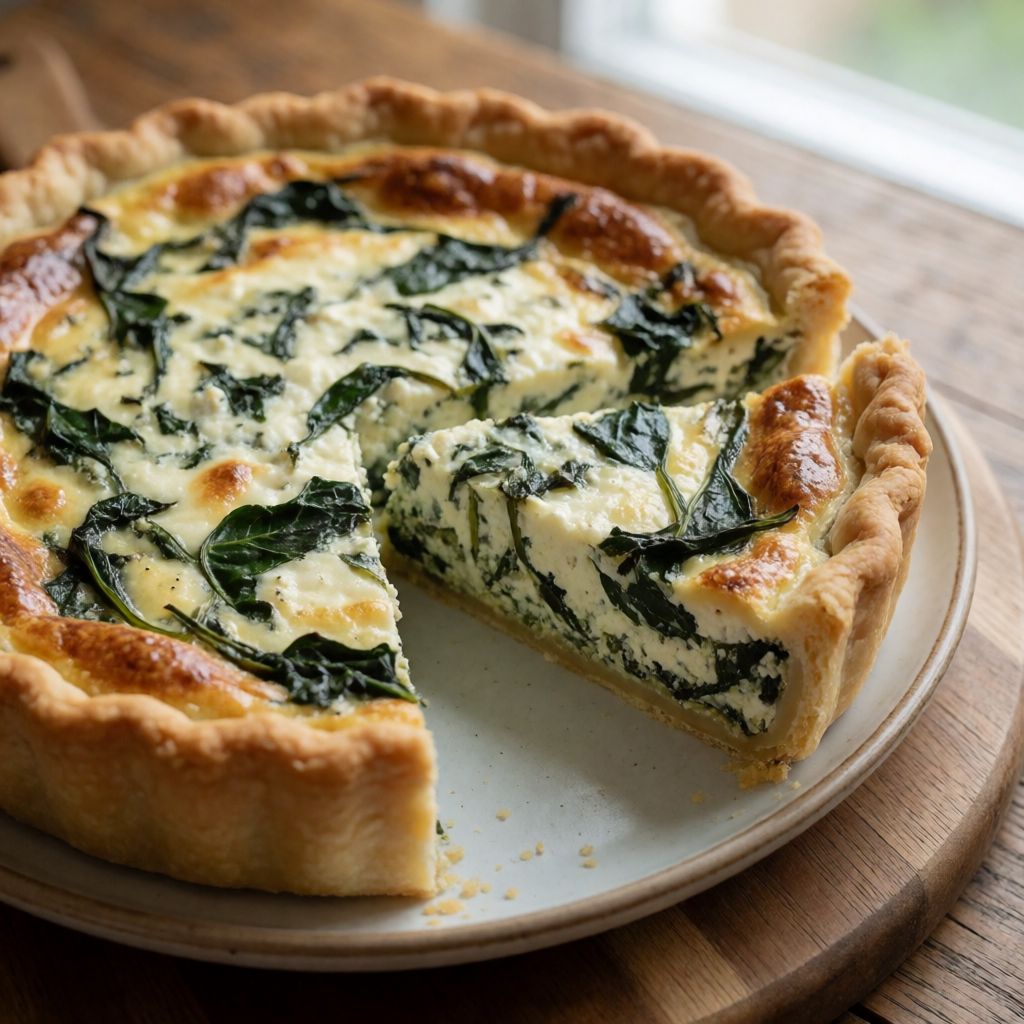
 AI photo
Greens and Ricotta Pie
A simple savoury pie filled with ricotta and a mix of leafy greens, baked in a shortcrust pastry case.
Labels are worked out automatically from the ingredients and can be wrong. Check the packaging if it matters to you.
Ingredients
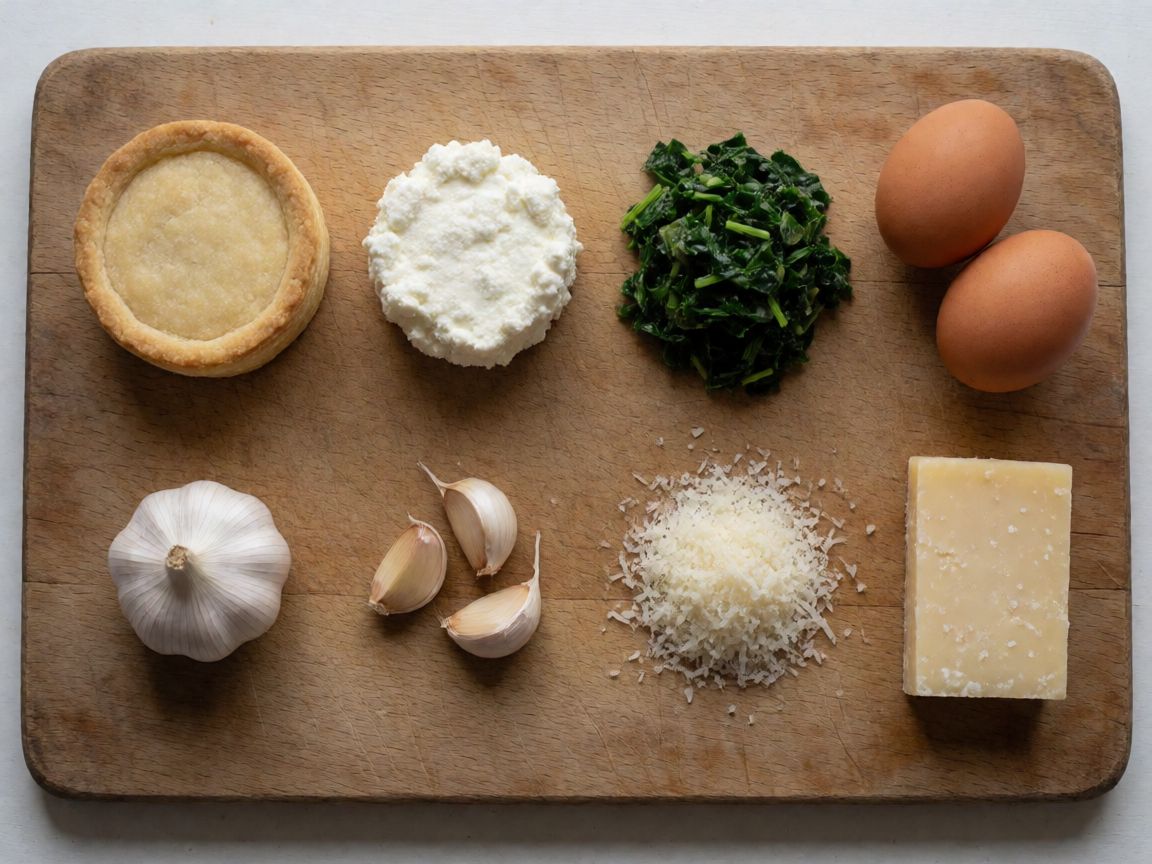
- 1 pcs Shortcrust pastry
- 200 g Ricotta well drained
- 300 g Mixed fresh greens spinach, chicory and chard
- 1 clove Garlic
- 2 tbsp Olive oil
- Salt to taste
- Black pepper to taste
- 4 pcs Eggs
- 1 tbsp Parmesan
- 100 g Pecorino









Steps
Heat the olive oil with the garlic in a pan and sauté the mixed greens, seasoning with salt and pepper to taste.
In a bowl, beat the eggs with the pecorino, add a pinch of black pepper and salt to taste.
Add the well-drained ricotta and the sautéed greens, and mix thoroughly.
Line a baking tin with baking paper, lay in the shortcrust pastry and prick the base with a fork.
Spoon in the filling, level it off, fold the pastry edges over and sprinkle the surface with parmesan.
Bake in an oven preheated to 200°C for 25 minutes.
25 min
This isn't a quiche, even though it looks like one from across the kitchen. A quiche is built on cream and a custard that's mostly egg. Here the egg is just the glue — most of the body comes from ricotta and a fistful of greens that have been cooked down until they stop being watery vegetables and start being filling. Think of it as a spring clear-out pie: whatever leafy things are going soft in the salad drawer, cooked hard enough to give up their water, then locked into a cheese-and-egg set inside pastry that's doing a supporting job, not a starring one.
Everything that can go wrong here goes wrong through water. Ricotta sold in tubs sits in its own whey — skip the draining and that whey has nowhere to go but down, straight into your pastry base, and you get what people here rightly call a soggy bottom. No judges with clipboards watching, but the enemy is the same one. Same logic with the greens: spinach, chicory and chard are mostly water held up by not much fibre. Thrown in raw, they'd weep into the filling as it bakes and you'd end up with egg custard afloat in vegetable juice instead of bound to it. Sautéing first isn't a flourish — it's the one step that drives that water out before it can do damage, while you're still in control of it, in a pan, rather than trapped in an oven where you're not.
Ricotta: the job is body and a mild dairy backdrop for everything sharper around it. Good ricotta is one you can stand a spoon in, not pour. If yours is wet from the tub, tip it into a sieve lined with a clean tea towel or kitchen paper, weight it lightly, and leave it — this takes patience, not skill, and there's no shortcut that doesn't show up later as a wet base. Standing in for ricotta: any soft, fresh, low-salt curd cheese works on the same principle — cottage cheese pushed through a sieve, or curd cheese sold for cheesecake — as long as it's drained to the same stiffness, not whatever it comes out of the tub as.
The greens are named as a trio — spinach, chicory, chard — but the actual criterion is leaf with enough fibre to hold its shape once wilted, not leaf that collapses into slime. That rules lettuce out and lets in kale, spring greens, beet tops, even the tougher outer leaves of a cabbage shredded fine. Chard stalks, if yours come with them, are worth chopping small and starting in the pan a minute before the leaves — they're basically celery in disguise and need the head start, or they stay raw-crunchy inside a cooked filling.
Garlic goes in with the oil cold and heats with it, which is the whole point — it's there to flavour the oil, not to fry on its own account. Let it sit in hot oil alone for too long and it burns before the greens are even in the pan, turning bitter in a way that doesn't cook out later; if that happens, the honest fix is to start again, not to push on. Olive oil is named because it's the oil with enough of its own character to be worth mentioning; the rule behind it is any oil without a competing smell of its own — a neutral sunflower or rapeseed will do the mechanical job, you'll just lose the particular savour olive oil brings.
The two cheeses aren't interchangeable with each other even though both are hard and grateable. Pecorino, worked into the egg mixture itself, is sheep's milk and salty — it's doing seasoning as much as flavour, which is why there's no extra salt specified for the filling beyond taste: the pecorino is half the salt. Parmesan goes on top, dry, right before the oven, because its job there is different — to toast on the surface and give you that darker, nuttier crust at the edges that tells you the top has had enough heat. If you've only got one hard cheese in the house, use it for both jobs rather than leaving either out; you'll lose the contrast, not the structure.
Four eggs for 300g of greens and 200g of ricotta is a ratio worth noticing: this is a lean custard compared to a quiche's cream-heavy one, which is exactly why it bakes fast and firm rather than slow and silky. Don't be tempted to add cream to make it richer — you'd be building a different dish and fighting the 200°C bake, which is calibrated for a custard this lean, not a heavier one that needs longer, gentler heat to set without curdling.
The pastry itself: shortcrust bought ready-made is not a compromise here, it's the practical choice in most ordinary kitchens, and nobody making this at home is expected to have blocked time for making their own. The fork-pricked base matters because trapped steam under an unpricked sheet of pastry will push the base up in bubbles as it bakes, lifting it clear of the tin in patches — those holes just let steam escape instead of lifting the floor of your pie. Folding the edges over the filling, rather than trimming them off, is the economical, old habit of a dish with roots in using up both garden greens and pastry scraps efficiently — nothing wasted, and it gives you a rim that browns harder than the lid, which is no bad thing to bite into.