
 AI photo
Strawberry Cake
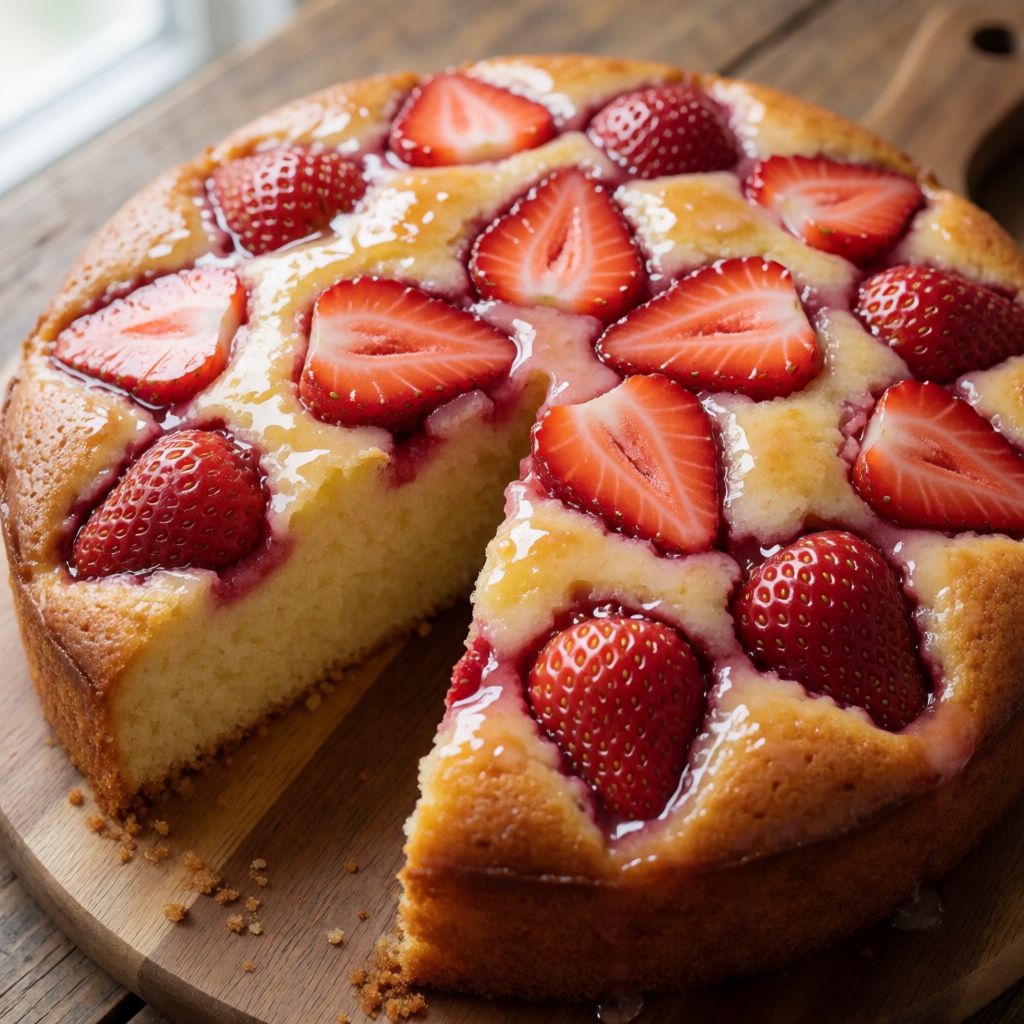
A buttery cake studded with fresh strawberries and almonds, finished with a sprinkle of flaked almonds.
Labels are worked out automatically from the ingredients and can be wrong. Check the packaging if it matters to you.
Ingredients
- 220 g Plain flour
- 1 pinch Salt
- 10 g Baking powder
- 120 g Caster sugar
- 130 g Butter room temperature
- 3 pcs Eggs
- 2 tbsp Rum optional
- 350 g Strawberries
- 40 g Almonds
- 2 tbsp Flaked almonds









Steps
Rinse and dry the strawberries; cut 250 g into small cubes and 100 g into wedges.
Finely chop the almonds and mix them with the flour, salt and baking powder in a bowl.
Beat the room-temperature butter with the caster sugar using a mixer until light and fluffy.
5 minAdd the eggs one at a time, continuing to beat, and work for another 5 minutes.
5 minAdd the rum and the dry ingredients a little at a time, mixing on low speed with the mixer or a spatula.
Add the cubed strawberries and fold in with a spatula.
Pour the batter into a buttered loaf tin, arrange the strawberry wedges on top and sprinkle with flaked almonds.
Bake in a preheated oven at 180°C for 50 minutes.
50 minLower the temperature to 160°C and bake for another 10 minutes.
10 minLet the cake cool before removing it from the tin and serving.
This is a loaf cake, not a sponge — the kind that stands up to a slice of butter and a cup of tea rather than melting on the tongue. The strawberries do two jobs: cubed and folded in, they turn to little pockets of jam inside the crumb; laid in wedges on top, they roast and concentrate, giving you a shiny, slightly chewy cap instead of a bare crust. Whether it works comes down to one thing — how much water the fruit brings in, and whether your batter is strong enough to hold its shape around it.
That's why the butter-and-sugar beating at the start isn't decoration. You're not just "creaming" because a recipe says so — you're trapping air in tiny pockets around sugar crystals, and that air is most of your rise, since this cake has only a modest 10 g of baking powder for 220 g of flour. Skimp on that beating and the crumb goes dense and wet under the weight of 350 g of fresh strawberries, because there's no structure left to carry them.
Some say strawberries always "sink" in cake batter, so why bother. No — they sink when the batter is thin and runny. Here the batter is deliberately heavy with butter and ground almonds, thick enough that cubed fruit hangs suspended instead of dropping to the bottom. That's the whole point of a loaf-style crumb over a lighter sponge.
Flour and baking powder are the frame. 10 g of baking powder for 220 g of flour is on the stronger side — it's doing real lifting work alongside the beaten butter, because this batter carries a lot of dead weight: fruit, nuts, butter. Don't halve the baking powder thinking it's "just for insurance"; here it's load-bearing. If you're out, there's no honest substitute that behaves the same — self-raising flour plus less additional powder is the nearest fix, but adjust by feel, not by faith.
Butter at room temperature is non-negotiable, and this is where most mistakes happen before the oven's even on. Cold butter won't trap air when beaten — it just gets mashed, and you lose the aeration that's substituting for a proper sponge-cake method. If you forgot to take it out, cut it into small pieces; it warms faster in pieces than as one block, no microwave shortcuts that half-melt it, because melted butter beaten with sugar gives you a greasy slick instead of a fluffy paste.
The almonds — 40 g ground into the dry mix — aren't there for almond flavour so much as for what they do structurally: they soak up moisture from the strawberries and add a little fat, which keeps the inside of the cake from turning gluey around the fruit pockets. If you have no almonds, any ground nut with a mild flavour does the same absorbing job — hazelnuts work, walnuts will push the flavour further than you might want. Skipping nuts entirely and just adding more flour is possible, but you lose some richness and the cake dries out faster, since flour alone doesn't carry fat the way ground nuts do.
Strawberries: 350 g split two ways is the right ratio for a standard loaf tin — too much more fruit and the batter can't hold its shape around it, not because of weight exactly but because of the water the fruit releases as it bakes. This is also why you dry them properly after rinsing; wet strawberries straight into cubed fruit add extra moisture you haven't accounted for, and that's the usual cause of a soggy band through the middle of a strawberry cake, not "too much fruit" as people often assume.
Rum is there the way rum often is in home baking — not for a boozy hit but to round off sweetness and perfume the crumb slightly, since alcohol carries flavour compounds that water and sugar alone don't. It's genuinely optional; leave it out and you lose a faint warmth, nothing structural.
In a British kitchen this one behaves well: a loaf tin is standard kit here already, so no borrowing or adapting needed. The two-stage bake matters more on a typical domestic fan oven than people think — ovens here often run a touch hot and uneven at the back, so rotate the tin halfway if your oven has hot spots, and trust the colour of the top and a skewer coming out clean over the clock. And let it cool properly in the tin before turning it out — this isn't patience for patience's sake, it's because a warm loaf full of soft-baked fruit will break apart if you rush it out onto a plate; the crumb needs the cooling time to set around the strawberry pockets.