
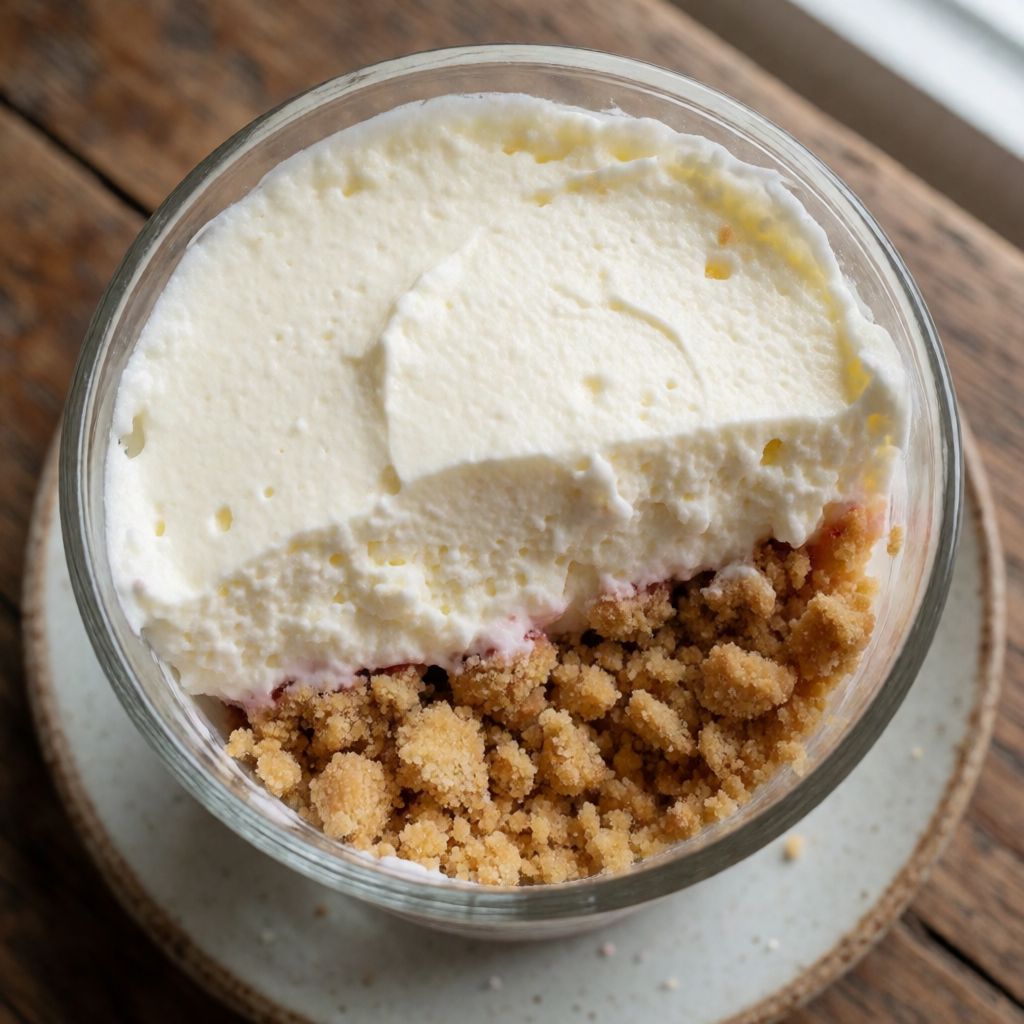
 AI photo
Strawberry Cheesecake in a Glass
A light no-bake strawberry cheesecake layered in glasses.
Labels are worked out automatically from the ingredients and can be wrong. Check the packaging if it matters to you.
Ingredients
- 40 g Digestive biscuits
- 2 tbsp Butter softened
- 125 g Cream cheese
- 200 g Greek yoghurt
- 100 g Honey
- 1 tbsp Lemon juice
- 1 pcs Vanilla pod
- 200 g Strawberries
- 1 tbsp Caster sugar
- 1 tbsp Water










Steps
Crush the digestive biscuits with the softened butter into crumbs and divide between the glasses.
Combine the cream cheese and Greek yoghurt, and whisk, gradually adding the honey, lemon juice and vanilla seeds.
Keep whisking until the cream is smooth and creamy.
Fill the glasses with the cream and place in the fridge.
120 minWash the strawberries, pat dry and cut into wedges.
Cook half of the strawberries in a small pan with the water and sugar until soft.
Spoon the strawberry mixture over the cream in each glass and decorate with fresh strawberries.
Put the glasses in the fridge and serve well chilled.
This isn't a cheesecake in the oven-and-prayer sense. No baking, no water bath, no cracked top to worry about — it's a cold-set cream built in a glass, which means the whole dish lives or dies on two things: whether your cream actually sets, and whether the layers stay distinct instead of sliding into mush.
The base is just crushed biscuit held together by butter — not baked, not pressed hard, just enough fat to glue crumbs into a layer that doesn't float up when you spoon cream on top. Digestives work because they're already dry and a bit sandy; a wetter biscuit turns to paste.
The cream sets not because it's cold, but because cream cheese and strained yoghurt are naturally thick — fridge time firms them further, it doesn't create structure from nothing. This is the bit people get wrong: some say you need gelatine for a "proper" set cheesecake cream. No — you need high-fat, low-water dairy. Add gelatine and you've made a panna cotta wearing a cheesecake's name.
The strawberry topping does two jobs: half the berries get cooked down into a loose, glossy compote that won't just sit on the surface, the other half stay raw and fresh so you get texture contrast — soft against sliced — on the spoon.
Start with the biscuits. Digestives are mildly sweet and slightly salty, with enough bran in them to stay a bit gritty rather than turning to flour-dust when crushed — that grit is what gives you "biscuit base" texture rather than "wet sand." If you haven't got digestives, use any plain, dry biscuit — Hobnobs, graham crackers, even ginger nuts if you want a spiced edge. Avoid anything with a cream filling; the extra fat and sugar in it will fight with the butter and make the crumb slump instead of holding a shape in the glass.
The butter here is a binder, not a flavour. Two tablespoons, softened — not melted — because melted butter soaks the crumbs unevenly and some will stay dry and loose while others turn greasy. Softened butter coats every crumb the same amount. Any flavourless fat does the same job; butter just also brings a little richness that suits a dairy pudding.
Cream cheese is the backbone of the cream. It's cultured and strained, so it's already thick before you touch it — this is why no gelatine or cornflour is needed. Full-fat is not optional here in the way it sometimes is elsewhere: low-fat cream cheese carries more water, and that water is exactly what stops your cream from holding a clean edge against the glass. Greek yoghurt is doing a similar job — it's strained, so it's dense, and it also cuts the richness of the cream cheese with a clean sourness. Don't swap in regular yoghurt; it's thinner and wetter, and your "cream" will be closer to a drink.
Honey, lemon juice and vanilla aren't just flavour additions — they're balancing the tang. Cream cheese and Greek yoghurt together are quite sharp; honey rounds it, lemon juice sharpens it back up just enough to stop it being flat-sweet, and vanilla seeds (scraped from the pod, not the whole pod) add a background warmth that makes the whole thing taste "finished" rather than "dairy and sugar." If you don't have a vanilla pod, use a good vanilla extract — a small amount, added at the same stage, after the honey, so you can taste as you go rather than guessing.
The strawberries: splitting them is the whole trick. Cooking half with a spoon of water and a spoon of sugar draws out their juice and softens them into something saucy — this is what makes the topping sit and spread rather than roll off in slices. You're not looking for a jammy reduction, just soft enough that a strawberry wedge collapses slightly when pressed with the back of a spoon — that's your doneness cue, not a clock. The raw half stays for bite and for colour; cooked strawberry alone looks tired in a glass, red going brownish, and you lose the point of using fresh fruit at all.
On patience: the two hours in the fridge is not padding, it's the recipe. This is a British kitchen, a fridge you already trust for keeping milk fresh and butter firm — use that same cold to do the actual cooking here. Pull it out early and you'll get a spoonable cream that's really still a sauce; the top layer needs that full chill to hold its edge when you cut into it with a spoon in front of someone. Make it the morning of, not the hour before.