
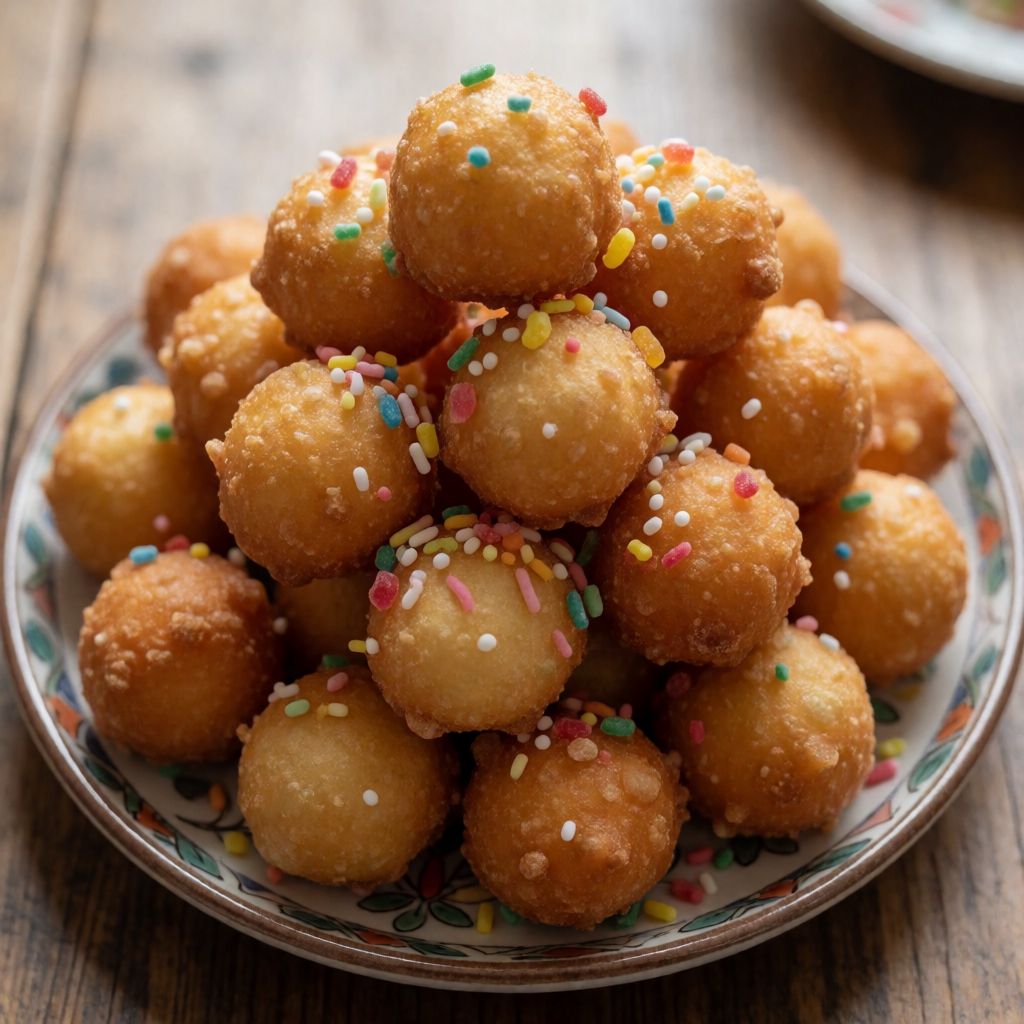
 AI photo
Struffoli
A traditional Neapolitan dessert of fried dough balls coated in honey, enjoyed especially at Christmas.
Labels are worked out automatically from the ingredients and can be wrong. Check the packaging if it matters to you.
Ingredients
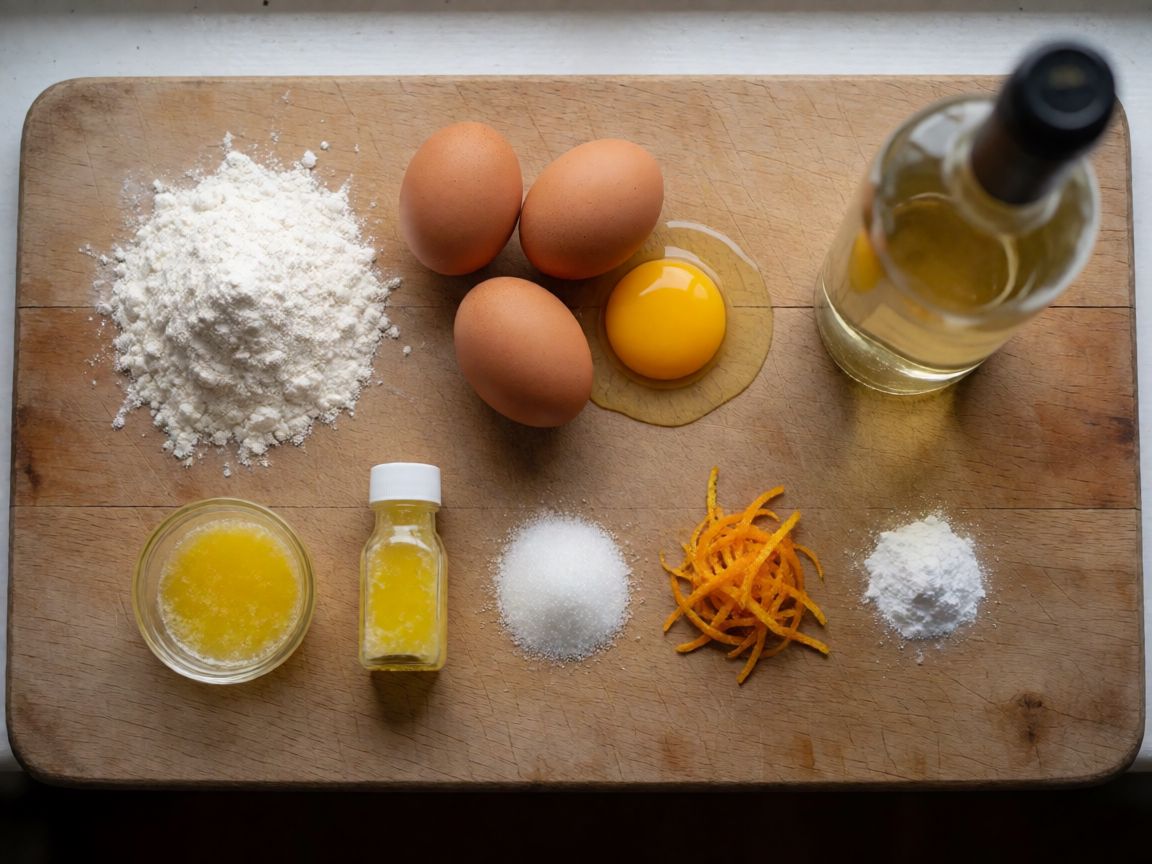
- 450 g Plain flour
- 3 pcs Eggs
- 1 pcs Egg yolk
- pinch Salt a pinch
- 70 g Butter melted
- 50 g Caster sugar
- pcs Orange zest from 1/2 an orange
- 30 ml White wine or anise liqueur
- 16 g Baking powder optional
- ml Peanut oil to taste, for frying
- 200 g Honey
- pinch Hundreds and thousands to taste
- pinch Mixed candied peel to taste
- pcs Glacé cherries a few, for decoration







Steps
Pile the flour on a work surface, make a well in the centre and add the melted butter, eggs and egg yolk.
Add a pinch of salt and the baking powder, work the eggs and butter together with your fingers, then add the caster sugar and white wine.
Flavour with the orange zest and knead the dough, gradually adding flour until smooth.
Cover the dough with cling film and leave to rest in the fridge.
30 minShape the dough into cylinders about 1 cm thick and cut into pieces about 1 cm wide.
Heat the peanut oil in a deep pan and fry the struffoli in small batches until golden.
Lift the cooked struffoli out with a slotted spoon and place on a tray lined with paper towel.
Separately, melt the honey in a pan and add the fried struffoli, mixing well.
Sprinkle with hundreds and thousands and mixed candied peel.
Transfer the still-warm struffoli to a serving plate, shaping into a crown if you like.
Decorate with glacé cherries and extra sweet decorations, then serve.
Struffoli is a pile of fried dough pebbles, each the size of a small olive, glued together with hot honey into a sticky, crunchy heap. It's a Neapolitan Christmas thing, not a Sunday-roast thing, and it behaves nothing like a biscuit or a cake — it's closer to a savoury dish in technique: you fry, you glaze, you shape, and the whole business of "baking" barely enters it.
What decides whether it works is two separate moments, not one. First: the fry. You want the little dough balls to puff and go gold evenly, which means the oil has to be hot enough that the dough starts cooking the instant it goes in, not slowly warming through and drinking oil like a sponge. Second: the glaze. The honey has to be just loose and hot enough to coat, not so hot it scorches and turns bitter, and it has to meet the fried pieces while they're still warm — cold struffoli and lukewarm honey will sit next to each other politely and never actually bond.
Some say struffoli should be chewy, almost bread-like in the centre. No — that's usually a sign the pieces were cut too thick or the oil wasn't hot enough, so they cooked through slowly and dried rather than puffing. Done right, each piece is a thin crisp shell with barely anything inside — you're eating crunch and honey, not dough.
Patience is the real ingredient here, more than the orange zest or the liqueur. The dough rest in the fridge isn't decoration — it lets the gluten you just built by kneading relax, so when you roll your cylinders they don't spring back short and fat. Skip it and you fight the dough the whole way through shaping.
On the oil: peanut oil is specified because it has almost no flavour of its own and carries heat steadily — what you actually need is any oil that's neutral-smelling and stable at a fry temperature, which in a UK kitchen means a bottle of plain vegetable or sunflower oil from the cupboard does the job just as well. You're not after the oil's taste; you're after it doing nothing except cooking the dough.
There's no stated temperature, so go by what you can see and hear: drop a small bit of dough in, and it should hiss and start bubbling around the edges straight away, rising toward the surface within a few seconds, not sinking and sitting. If it browns almost immediately and the inside's raw, the oil's too hot — pull it back. If the dough just sits there greying slowly, it's too cool, and that's the fault that leads to greasy, chewy struffoli rather than crisp ones. A deep pan rather than a wide one here matters — you want enough oil depth that the pieces float and turn rather than scrape the bottom of a shallow puddle.
The eggs and yolk do the binding and richness that water alone couldn't; the extra yolk is there for a slightly firmer, less eggy-tasting dough than three whole eggs would give. The butter, melted rather than cold and cubed, is mixed in like you're making pastry by hand rather than creaming — it coats the flour early so the dough stays short rather than tough. Baking powder is marked optional because this isn't meant to rise much — it's fried dough, not a bun — but a little gives the pieces a touch more lift and air inside the shell.
White wine or anise liqueur is doing two things at once: thinning the dough slightly so it's workable, and giving a background flavour that's traditional in Naples for Christmas because anise liqueurs were what was on the shelf. If you've got neither, any dry, unsweetened spirit or even a splash of water with a drop of vanilla will get the dough to the right consistency — you're substituting for texture and a faint aromatic note, not for anything structural.
Orange zest wants to come from the orange itself, not a jar — the oils in fresh zest are what carry the scent, and they fade fast once grated, so do it close to when you're mixing the dough rather than ahead of time.
On the honey: melt it gently just until it loosens and runs, not until it's bubbling hard — honey scorches quickly once it gets going, and burnt honey tastes bitter in a way you can't fix by adding more sugar. Mix the fried pieces through it while both are still warm, because honey stiffens as it cools and loses its grip. The hundreds and thousands, candied peel and glacé cherries are there for colour and crunch contrast, not flavour load-bearing — use what you've got, including other small coloured sprinkles from the baking aisle, since none of it changes the mechanics of the dish.
Eight people from this amount sounds generous until you remember struffoli is a few pieces each with your tea, not a dessert course on its own plate — it's built to sit on the table over an afternoon, not to be portioned out at the end of a roast.