
 AI photo
Stuffed Meat Roll
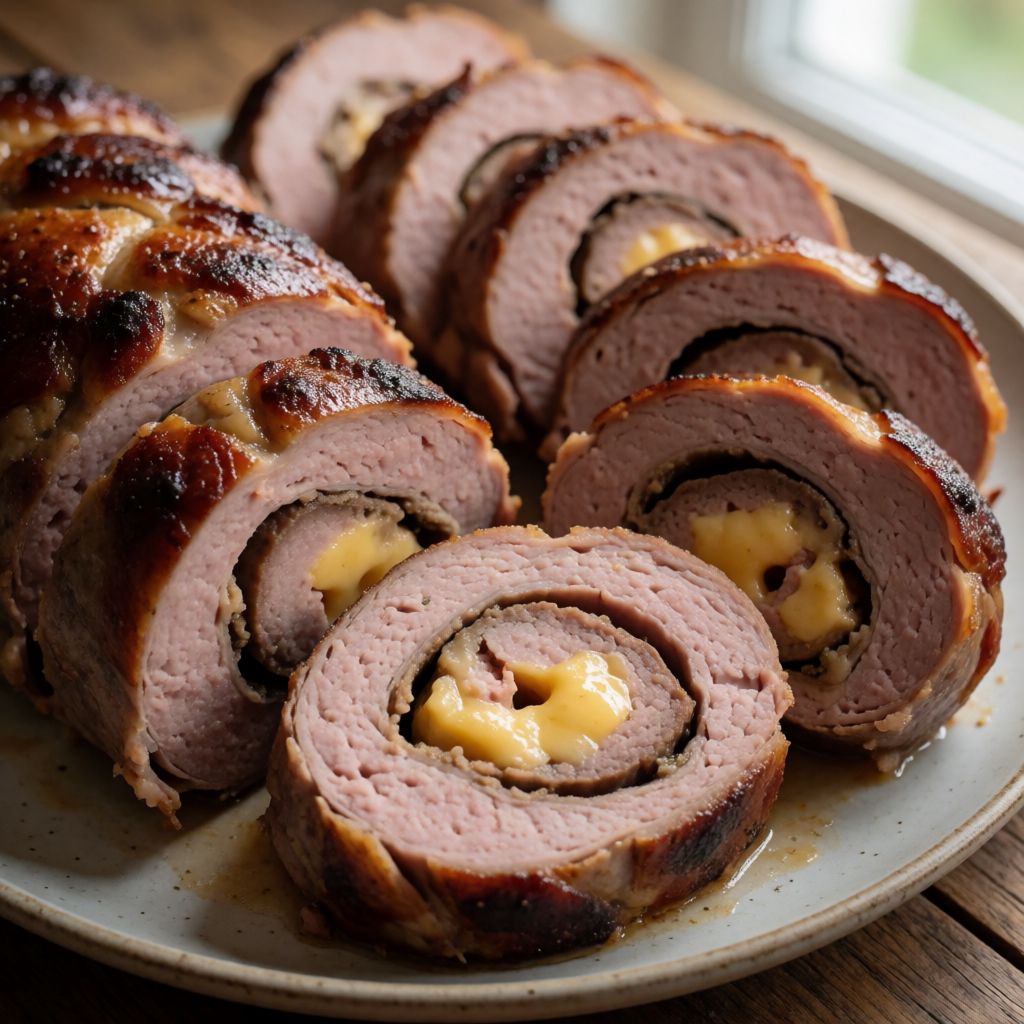
A savoury meatloaf rolled with ham, cheese and spinach, served sliced.
Labels are worked out automatically from the ingredients and can be wrong. Check the packaging if it matters to you.
Ingredients
- 500 g Mixed beef and pork mince
- 150 g Ham
- 70 g Parmesan
- 400 g Fontina
- Salt to taste
- Black pepper to taste
- 1 pcs Egg
- 300 g Cooked spinach
- 2 clove Garlic
- 2-3 pcs Rosemary
- 200 ml White wine











Steps
Boil the spinach for a few minutes in salted water, drain and set aside.
In a bowl combine the mince with the ham, Parmesan, salt, black pepper and egg, and mix thoroughly by hand.
Spread the meat mixture onto baking paper, shaping it into a rectangle.
Lay the spinach over it, then strips of Fontina on top.
Roll up the loaf using the paper, pressing firmly and twisting the ends closed.
Transfer the roll to a baking dish, add the rosemary and garlic, and pour in the white wine.
Bake in the oven at 180°C for 30-35 minutes, checking with a thermometer that the inside reaches 71°C.
33 minSlice the roll and serve.
This is a meatloaf that thinks it's a Sunday roast's smarter cousin — same idea of "big piece of meat, everyone gets a slice," but with a spinach and melting Fontina centre instead of just gravy on the side. What decides whether it works isn't the mixing or the rolling, it's what happens to that cheese core while the outside firms up. You want the middle to go soft and pulling, not swimming — if Fontina leaks out into a puddle in the dish, the roll has gone past the point where the cheese still holds shape, and you've traded a sliceable loaf for a sad grey log with a cheese moat.
The real test of doneness here is not the clock, it's the thermometer, and that's not me being fussy — minced meat is the one place where "it looks cooked" genuinely lies to you. A pale, firm-looking mince can still harbour bacteria in the dense centre of a thick roll, because heat travels slowly through packed meat and even slower through a pocket of melting cheese acting as insulation. 71°C in the middle is the actual finish line; 30-35 minutes in the oven is just the rough map to get you there, not the destination itself.
The mince itself — beef and pork together — isn't tradition for tradition's sake, it's balance. Pure beef mince dries out and crumbles when baked this long in a plain dish with no fat basting it; pork brings the fat that keeps the loaf from tasting like cardboard by the time it hits 71°C inside. If you only have beef, use a fattier cut (not the lean "extra lean" labelled mince) or mix in a spoon of oil — anything to replace what the pork was doing.
The ham and Parmesan folded into the mince aren't filler, they're seasoning carried by salt that's already in them, so go lighter with your own salt than instinct tells you — taste the raw mixture (yes, really, a pinch) before you add more. The egg is the glue: without it the mince stays a pile of strands that falls apart the second you try to roll it, because mince has no natural binding protein network the way a steak does once it's been cut from whole muscle.
Spinach goes in pre-boiled and drained hard, not raw and not wet — raw spinach releases water as it cooks, and that water has nowhere to go once it's sealed inside a meat roll, so it pools and turns your firm slice into something that weeps liquid onto the plate. Squeeze it properly, more than you think you need to. If spinach isn't to hand, any sturdy cooked green that holds its shape works — chard, kale — anything leafy that doesn't disintegrate to mush.
Fontina is chosen for how it melts: it goes properly fluid and stringy rather than just softening at the edges, which is the whole point of the middle layer. Any semi-soft cheese that melts loose rather than staying rubbery will do — a young Gouda, a mild Taleggio if you want more bite, even mozzarella in a pinch, though mozzarella gives you stretch rather than richness. Parmesan can't replace it here; Parmesan's job is seasoning the mince, not melting into a pool.
The white wine in the dish is doing the job your kazan would do with its curved sides and tight lid — keeping moisture circulating around the roll on an ordinary flat hob oven, where a wide shallow tray otherwise lets everything dry at the edges before the centre's near done. You don't need an expensive bottle; anything dry and not sweet, the kind you wouldn't mind a small glass of with dinner, works, because it's there for acidity and steam, not for flavour you're meant to taste directly.
Garlic and rosemary sit in the wine rather than in the mince, and that's deliberate — tucked whole into the liquid, they perfume the steam and the baste rather than turning into raw bitter chunks baked straight into meat. If rosemary isn't in the cupboard, thyme does the same job of standing up to long oven heat without going bitter the way soft herbs like basil would.
Last thing, and it's the one people skip: let the roll rest a few minutes once it's out, before you slice it. Cut it straight from the oven and the Fontina runs everywhere, because it's still fully liquid; a short rest lets it firm just enough to stay put in the slice rather than pooling onto the board. Patience here isn't optional — it's the difference between a clean slice and a mess that still tastes fine but looks like it lost a fight.