
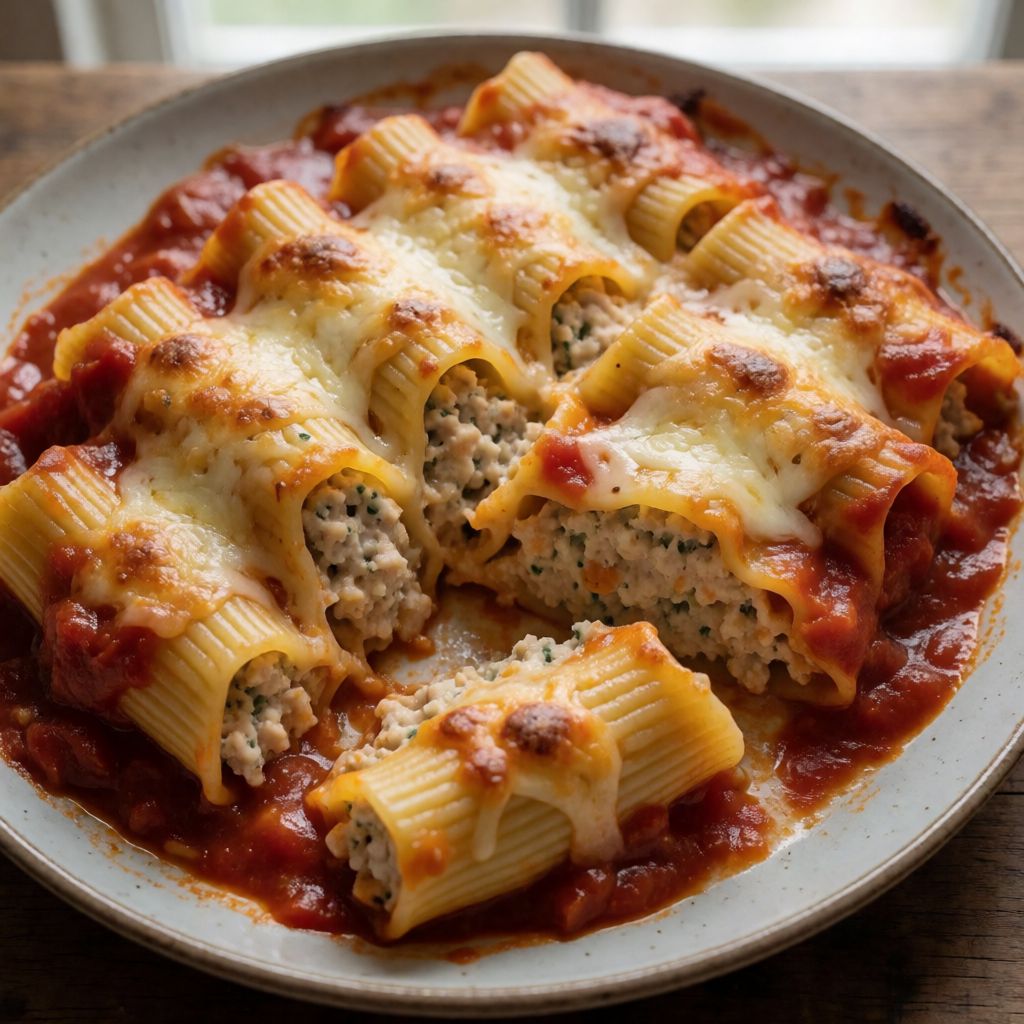
 AI photo
Stuffed Calabrian-Style Baked Pasta
A hearty baked pasta filled with meatballs, boiled eggs, cheese and spicy sausage, inspired by Calabrian home cooking.
Labels are worked out automatically from the ingredients and can be wrong. Check the packaging if it matters to you.
Ingredients
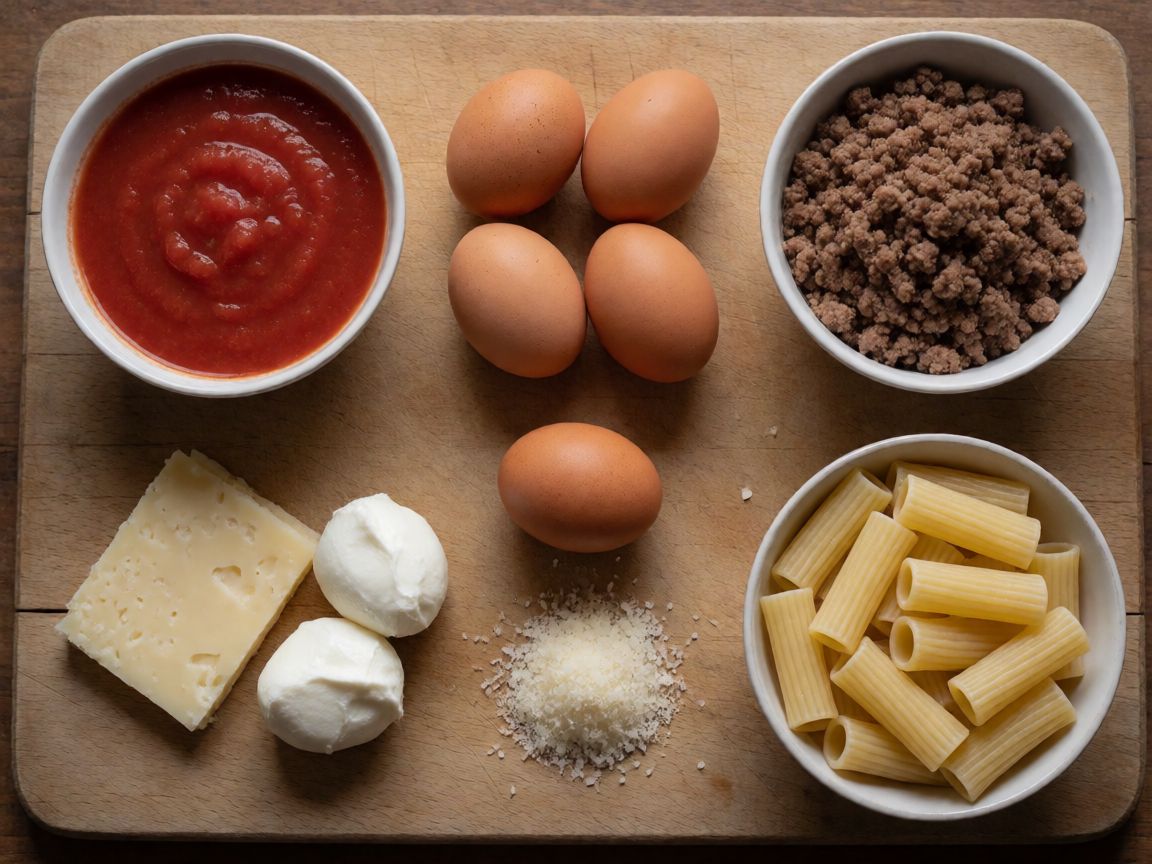
- 1 can tomato passata
- 4 pcs boiled eggs cooked
- 200 g mixed minced veal and pork
- 1 pcs egg
- 100 g provolone
- 2 pcs mozzarella
- Parmesan to taste
- 500 g rigatoni
- salt to taste
- oregano to taste
- 1 bunch basil
- olive oil
- 1 bunch fresh herbs
- 1 tbsp breadcrumbs a small amount, dried
- 1 tbsp water a small amount
- 1 pcs spicy sausage














Steps
Put the tomato passata with oil, salt, oregano and basil into a saucepan and leave to simmer.
Prepare meatballs from the minced meat, Parmesan, salt, chopped parsley, egg, breadcrumbs and water.
Add the meatballs to the sauce and cook until done: 71°C inside.
Boil the rigatoni, drain, and toss with the sauce and Parmesan.
Spread half the pasta in a baking dish and fill with mozzarella, provolone, meatballs, boiled eggs, spicy sausage and Parmesan.
Cover with the remaining pasta and sauce.
Sprinkle with Parmesan and bake at 180°C for 30 minutes.
30 minLet cool and serve.
This is a Casatiello cousin wearing a Sunday-roast coat — pasta al forno built the way southern Italians built big dishes for a big family sitting around one table with nothing to lose: cook three different things separately, bury them all inside pasta, bake until the house smells like someone's grandmother. The whole dish is an argument against the idea that "baked pasta" means tipping a jar of sauce over boiled rigatoni and shoving it in the oven. Here the pasta is a container, not the point.
What decides whether it works is restraint at three separate moments, not one grand finale. The sauce has to be a real sauce — simmered long enough that the tomato stops tasting like a tin and starts tasting like itself, which you'll know by smell before you know by taste: raw tomato is sharp and flat, cooked tomato rounds out and goes sweet underneath. The meatballs have to actually be cooked through — not "browned, looks done," but checked, because meat hiding inside baked pasta is the one thing in this dish you can't see failing until someone bites into it. And the layering has to leave air pockets of cheese and sausage, not a solid brick, or you've made a tomato-flavoured doorstop.
Passata is the base because it's already strained and cooked once — a shortcut invented by people who didn't have three hours to pass fresh tomatoes through a food mill every week, not a compromise. If you only have whole tinned tomatoes, blitz and strain them; the dish doesn't want seeds and skin interrupting the sauce. Basil goes in with the simmer, not as garnish at the end, because its oil needs gentle heat to open up — thrown on raw at the finish it just tastes like cut grass.
The meatballs: veal and pork mixed because pork alone can turn dense and fatty when baked twice (once as a meatball, once in the oven), while veal alone goes dry under that much heat. The mix gives you fat for moisture and lean for structure. Breadcrumbs and a spoon of water aren't filler — they're there to stop the meatball from shrinking into a hard pebble as the proteins tighten; without that moisture bank the meatball squeezes itself dry in the sauce. One egg binds it so it survives being moved from pan to dish to oven without falling apart. Checking for 71°C with a thermometer isn't fussy modern paranoia — it's the only honest answer to "is it done," because colour lies on small meatballs and nobody wants to find out by cutting one of four open and hoping the rest match.
Provolone and mozzarella do different jobs: mozzarella melts wet and stringy, giving you that pull; provolone is firmer and sharper, holding some shape and bringing a flavour mozzarella doesn't have on its own. Use mozzarella fior di latte, not fresh buffalo mozzarella in liquid — the wet kind will leak and turn your baking dish into a shallow lake. If you can't get provolone, a firm, mild Italian-style cheese with some bite works; a sharp English cheddar will overpower everything else and turn the whole dish a different colour of flavour entirely.
The boiled eggs and spicy sausage are the Calabrian signature — eggs for a soft, cooling contrast against all that tomato and meat, sausage for the chilli heat Calabria is known for economically as much as culinarily: it was a way to preserve pork through the year in a region without much refrigeration, and the heat helped mask whatever the curing process didn't quite manage. Use a nduja-style or any dry-cured spicy sausage with real chilli content — a mild British banger has no business here; it won't bring the point of including it.
Rigatoni specifically, because its ridges and wide tube hold sauce on the outside and trap it on the inside — a smooth tube like penne lisce slides the sauce off when you layer and cut. If rigatoni isn't in the cupboard, any large ridged tube — paccheri, large penne rigate — does the same job; smooth pasta shapes don't.
Parmesan appears three times — in the meatballs, tossed with the pasta, sprinkled on top — and each time it's doing something different: seasoning the meat, binding the pasta to the sauce so it isn't just wet noodles in red liquid, and browning on top to give you the crust that tells you the dish is ready, not just hot. Any hard aged grating cheese with no added moisture does the job if Parmesan isn't to hand — pecorino will work but pushes everything saltier, so taste before you salt anything else.
Patience here isn't optional seasoning — it's structural. Rush the sauce and it's acidic. Rush the meatballs and they're raw inside a hot cheese jacket, which is a genuinely unpleasant discovery. Rush the cooling at the end and the whole dish falls apart the second you cut it, because cheese and sauce need a few minutes off the heat to set back into layers instead of a lava flow. Let it sit before you cut — that's not for looks, that's physics.