
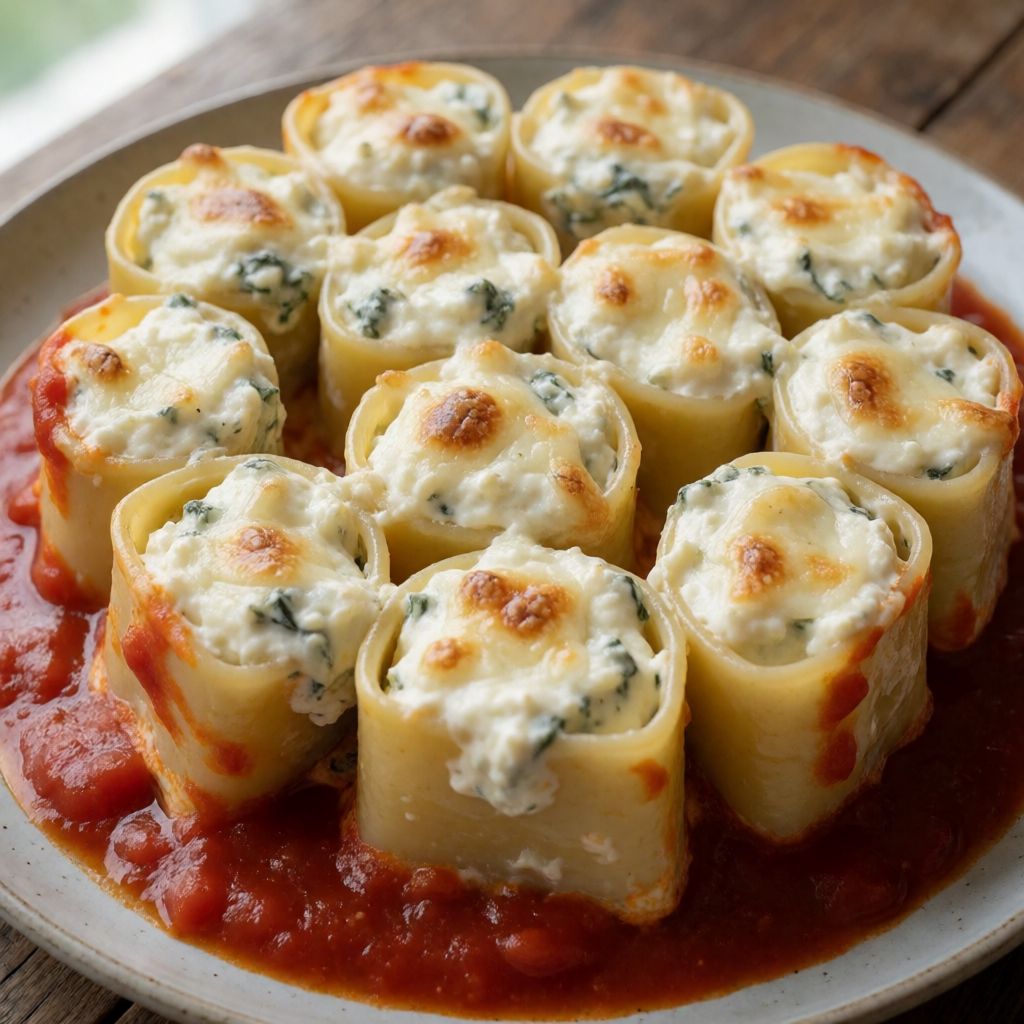
 AI photo
Stuffed Paccheri with Ricotta and Mozzarella
A pasta bake of paccheri filled with ricotta and mozzarella, baked in tomato sauce until golden.
Labels are worked out automatically from the ingredients and can be wrong. Check the packaging if it matters to you.
Ingredients
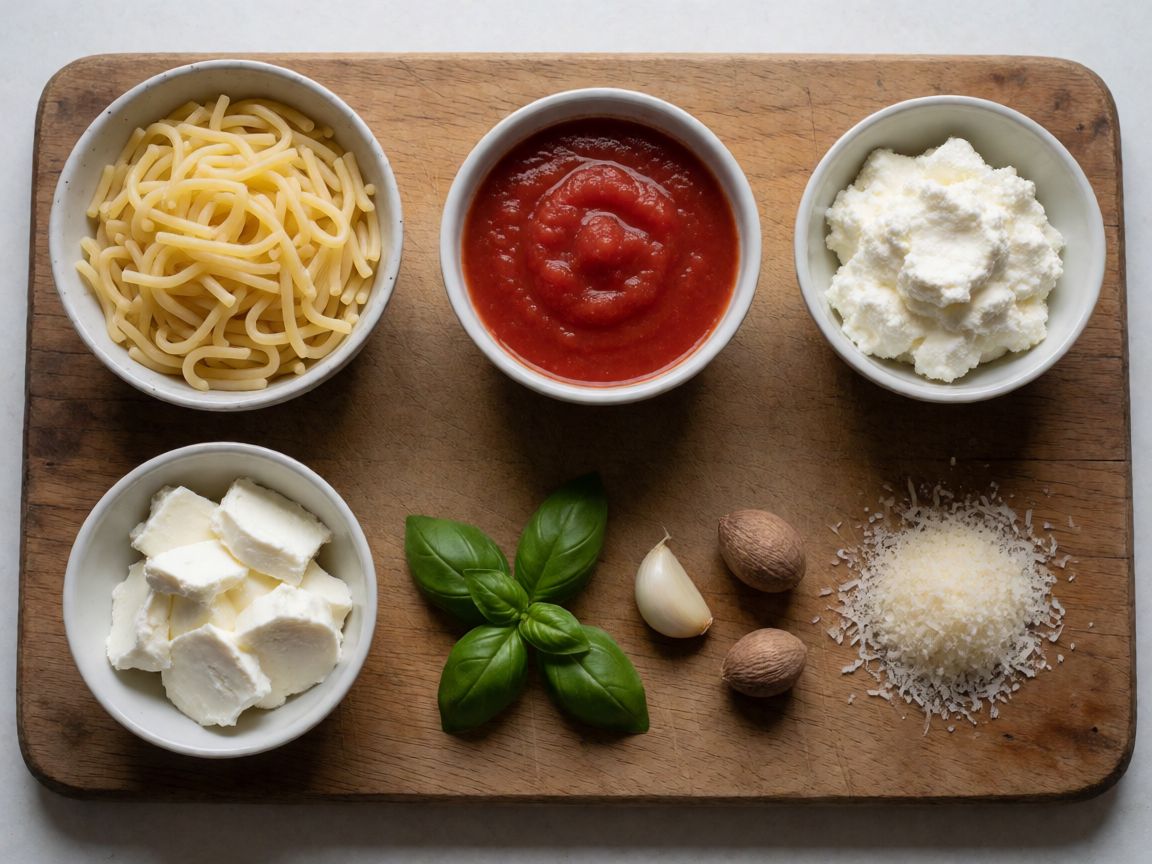
- 400 g Paccheri
- 600 g Tomato Passata
- 600 g Ricotta
- 400 g Mozzarella
- Basil to taste
- 1 clove Garlic
- Salt to taste
- Olive Oil to taste
- Nutmeg to taste
- Parmesan grated
- Black Pepper to taste








Steps
In a saucepan, mix the tomato passata with olive oil, garlic, basil, salt and pepper, and simmer.
15 minIn a bowl, mix the ricotta with mozzarella, parmesan, basil, salt, pepper and nutmeg.
Boil the paccheri in salted water until half-cooked, drain and toss with olive oil.
Spread the sauce over the bottom of the baking dish and arrange the paccheri in concentric circles.
Fill each paccheri with the ricotta mixture using a piping bag or a spoon.
Cover the paccheri with the remaining sauce.
Sprinkle with mozzarella and parmesan, drizzle with olive oil and add basil.
Bake in the oven at 180°C until a crisp crust forms.
Paccheri means "slaps" in Neapolitan dialect — big, wide tubes, wide enough to stuff, which is exactly the joke of this dish: pasta pretending to be a dumpling. You boil it only halfway, stuff it, bake it, and the oven finishes the cooking from both sides at once — tomato underneath, cheese crust on top. What decides whether it works is that half-cooked word: pasta cooked fully in the pot and then baked again turns to mush, because it's absorbed its water once already and the oven has nothing left to push through it. Stop it short, and the starch still has thirst in it, so it finishes properly in the oven without collapsing.
The second thing that decides it is the filling. Ricotta alone, baked, turns grainy and dry — it has almost no fat to hold moisture through twenty-plus minutes of heat. Mozzarella brings the fat and the stretch; together they behave like one substance instead of two. Leave the mozzarella out "to keep it light" and you get a filling that weeps water and curdles at the edges — not wrong exactly, just a different, sadder dish.
The crust on top is not decoration, it's the sign the dish is actually done: cheese and oil and the top layer of sauce catching enough direct heat to brown and tighten. Underneath, the sauce is doing the quieter job of keeping the bottom layer of pasta from drying against the dish. This is a one-pan-plus-oven construction, not a stovetop finish — treat it as architecture, tomato floor, pasta walls, cheese roof, and the logic falls into place.
Passata first, because it needs the longest run of the lot. Fifteen minutes on a gentle simmer isn't an arbitrary number from a timer, it's roughly how long it takes a thin tomato purée to lose its raw, acidic edge and thicken enough to sit under the pasta without turning the dish watery. Garlic goes in whole or lightly crushed, one clove, because its job here is perfume, not flavour you can point to — if you want it stronger, crush it harder; if you want it gone entirely by serving, fish it out before the sauce goes in the dish. Some say tomato sauce needs sugar to round it off — no, because a passata simmered long enough reduces its own acidity through evaporation; sugar is a patch for a sauce that hasn't had its time.
Ricotta is the body of the filling, and it's worth knowing what kind you're buying in a British supermarket: it's usually the cow's-milk, whey-based tub kind, soft and a bit wet. Drain any obvious liquid off the top before mixing, or the filling runs instead of holding its shape in the piping bag. If you can't get ricotta, a well-drained cottage cheese blitzed smooth, or curd cheese, will stand in — the criterion is a soft, mild, slightly grainy white cheese with no strong character of its own, because it's a canvas for the parmesan and nutmeg, not a flavour to compete with them.
Mozzarella does two different jobs depending on where it ends up. Folded into the ricotta, it melts and binds, stopping the filling drying out — any fresh mozzarella works here, the ball-in-water kind, roughly chopped. On top, for the crust, a lower-moisture mozzarella (the kind sold pre-shredded for pizza, or a block type) browns better, because it isn't fighting its own water content the way the wet ball kind does under high heat. If all you have is one tub, use it for both — the dish survives, it just won't crust quite as sharply.
Nutmeg is there for the same reason it turns up in béchamel and in Italian stuffed pastas generally — a pinch cuts the flatness of dairy and lifts it without anyone being able to name why. Don't double it thinking "more is more"; nutmeg turns medicinal fast. Parmesan grated into the filling and again on top gives you salt and savoury depth in two places doing two different things — inside it seasons, outside it's part of what browns.
Paccheri themselves: buy the real tube, wide enough to take a teaspoon or a piping nozzle. If your shop doesn't stock them, the nearest substitute by size and purpose is large rigatoni or cannelloni tubes, though cannelloni (often egg-pasta sheets rolled, or a thinner dried tube) behaves differently in the oven and tends to dry at the tips — watch it. "Half-cooked" in practice means pull it from the water when it still resists a bite rather than yields to it — a minute or two under the time you'd normally eat it at. It will feel underdone on the fork. That's correct. It finishes in the oven, where it has sauce and steam and cheese doing the rest of the work, and that's the only clock you should trust here — sight and bite, not the pot timer.
On a British domestic hob none of this needs a kazan or a professional oven — a standard fan oven at 180°C and a wide ovenproof dish is the whole ask. The only patience required is resisting the urge to pull it out the moment it smells ready; give the top the extra few minutes it needs to actually colour, because smell arrives well before the crust does.