
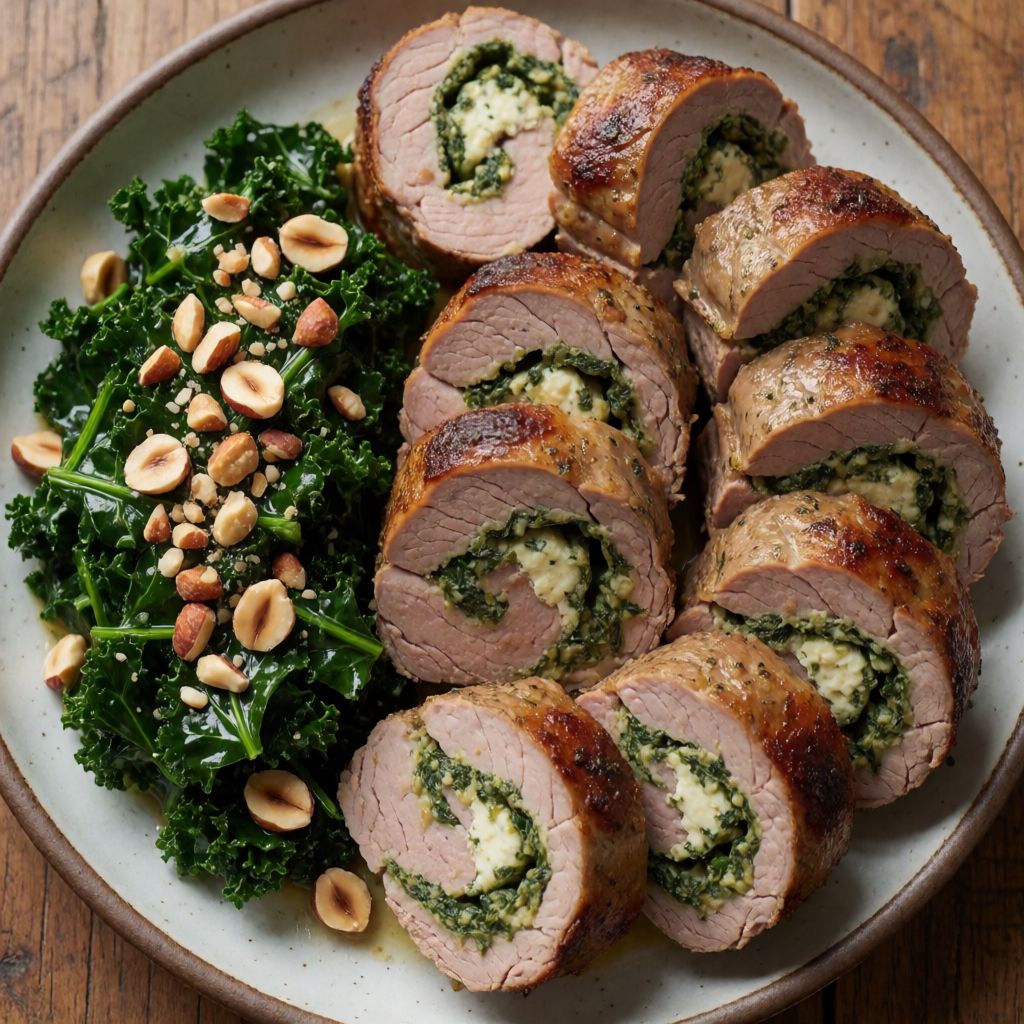
 AI photo
Stuffed Pork Tenderloin with Creamy Kale and Hazelnuts
A pork tenderloin stuffed with creamy kale, hazelnuts, cranberries and cream cheese, wrapped in prosciutto.
Labels are worked out automatically from the ingredients and can be wrong. Check the packaging if it matters to you.
Ingredients
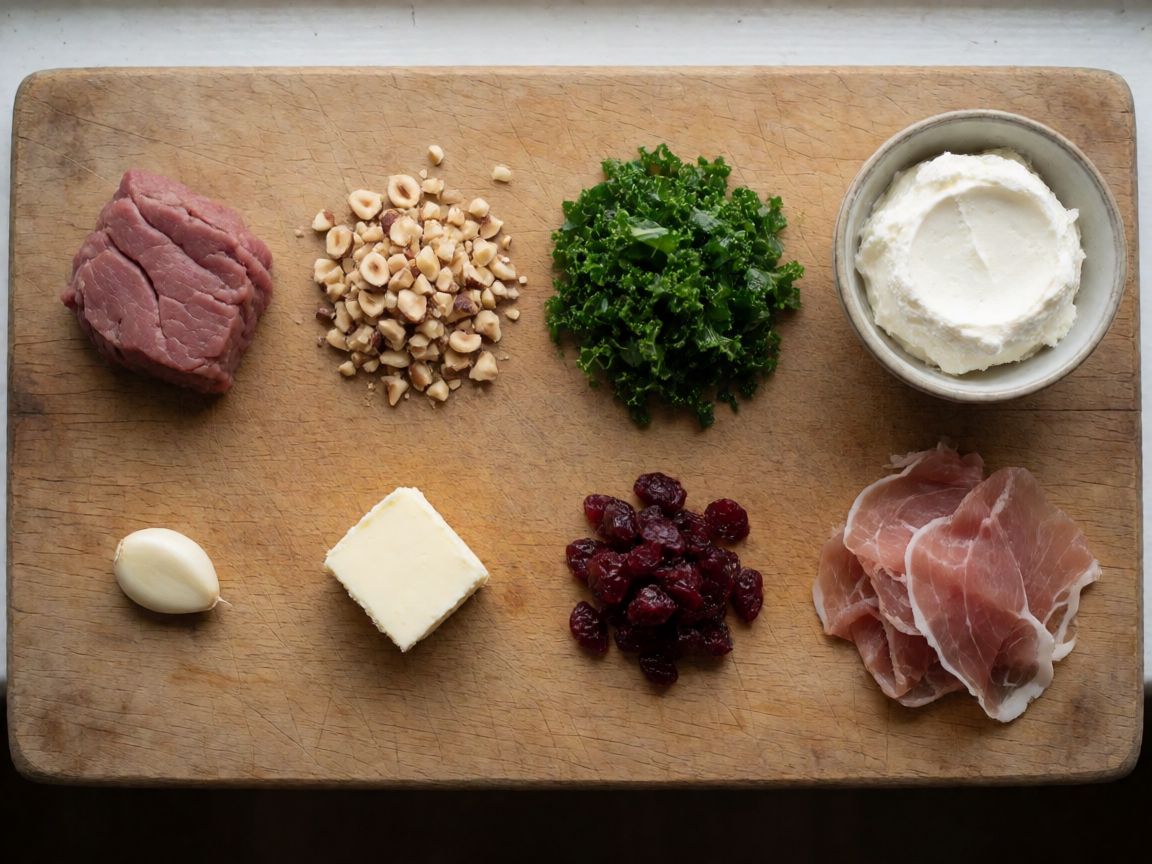
- 700 g Pork Tenderloin
- 40 g Hazelnuts finely chopped
- 50 g Kale finely chopped
- 1 clove Garlic crushed
- 1 tbsp Butter
- 150 g Cream Cheese
- 2 tbsp Cranberries dried and finely chopped
- 140 g Prosciutto
- to taste Salt
- to taste Black Pepper freshly ground









Steps
Preheat the oven to 150°C and roast the hazelnuts for 10 minutes, until the skins crack.
10 minRemove the hazelnuts from the oven, wrap them in a kitchen towel and rub to remove the skins. Roughly chop the nuts.
Put the kale and garlic in a pan with the butter and fry over medium heat until the kale wilts slightly.
Season the sautéed kale with salt and pepper, then stir in the cream cheese, hazelnuts and cranberries.
Trim the pork tenderloin of any membrane and cut a deep pocket into it for the filling.
Season the tenderloin with salt and pepper, fill the pocket with the stuffing and close the tenderloin.
Wrap the tenderloin in prosciutto, place it in a greased ovenproof dish and roast at 175°C for about 35 minutes.
35 min
This is a trick for dressing up the leanest, driest cut on the pig. Pork tenderloin has no fat seam running through it, nothing to melt and self-baste the way a shoulder or belly would. Left alone in a hot oven it turns from tender to stringy inside minutes. So the whole construction here is a pair of defences against that: a creamy filling tucked into the middle to feed it moisture from within, and a wrap of prosciutto on the outside doing the basting job the oven can't.
What actually decides whether this works is not the oven dial, it's the knife. Cut the pocket too shallow and there's nowhere for the filling to sit; cut it right through and you've made two thin fillets with stuffing falling out between them instead of one closed parcel. You want a trench, not a tunnel — deep, but with a wall of meat still holding on one side. The prosciutto wrap then does double duty: flavour, yes, but also the closing seam, snug overlapping slices holding the pocket shut while the surface firms in the heat. Loose wrapping, loose filling.
Start with the hazelnuts, because the one real failure point in this dish that has nothing to do with the meat is burnt nuts. 150°C is gentle on purpose — hot enough to crack the skins and push the oil in the nut to the surface where it toasts, too low to scorch that oil before the inside has caught up. Push the heat higher to save time and you get a nut that's bitter on the skin and raw-tasting in the middle, two failures at once. The crack in the skin is your signal, not a timer. Wrapping the hot nuts in a cloth and rubbing works because the skin, cooled fast against fabric, goes brittle and separates from the meat of the nut; the cloth also catches the mess instead of your worktop. Any nut with a papery skin worth removing will take the same treatment — almonds, even walnuts, though walnuts rarely need it since their skin is thinner and less bitter to begin with.
Kale is there for bitterness and backbone, something that doesn't collapse to mush the second it meets heat. The garlic goes in with butter rather than oil because butter's milk solids brown slightly as the garlic cooks, rounding the raw bite off it — oil alone leaves garlic sharper and less friendly inside a creamy filling. Watch the kale, not the clock: it goes from stiff and matte to glossy and floppy, shrinking visibly. That's wilted. If you've only got spinach to hand, use less heat and less patience — it collapses in a fraction of the time and will weep more water into the filling, so drain it before mixing in the cheese or you'll have a soggy pocket instead of a creamy one.
Cream cheese is the binder and the moisture bank — it holds the nuts and cranberries together and it's the thing that actually keeps the centre of the meat from drying while it roasts. Any full-fat soft cheese that doesn't split when warmed will do the same job: mascarpone works, ricotta works if you squeeze some of the whey out of it first, since loose ricotta will just run out of the pocket. The dried cranberries, chopped small, are there for acid and a flicker of sweetness cutting through all that cream and pork fat — without them the filling is rich in one direction only. Any dried tart fruit does the same work: cherries, or dried apricot with a squeeze of something sour if that's what's in the cupboard.
The prosciutto is doing more than dressing. It's cured and salted, which means as it heats it renders what little fat it has across the surface of the pork, basting a cut that otherwise has nothing to baste itself with, and its salt seasons the crust from outside the way the salt you rubbed in earlier seasons from inside the pocket — skip either one and you get a filling that tastes of everything and a meat that tastes of nothing, because seasoning doesn't travel far through solid muscle. If prosciutto isn't to hand, any thin dry-cured ham does the job; pancetta works too and bastes more generously because it carries more fat, though it reads saltier and smokier depending on the cure. Bacon rashers will wrap and crisp the same way but bring a smoke flavour the original recipe never asked for — fine if you like that direction, just know you're choosing it.
The membrane you're told to trim off the tenderloin is silverskin, a thin sheet of connective tissue that doesn't soften with roasting the way collagen in a shoulder does over hours — it just tightens and pulls the meat out of shape when it hits heat. Leave it on and your neat stuffed cylinder bows and twists in the dish instead of holding its line. A sharp thin knife, laid almost flat against the meat, slides it off in one or two long strokes; there's no shortcut worth taking here, it's two minutes of patience against a joint that cooks crooked.
Salt and pepper belong in two places, not one: inside the pocket before you fill it, and on the outside before you wrap. People season the surface and forget the inside because the inside is hidden, and that's exactly the defect — a well-crusted outside with a bland core, the opposite of what you actually wanted when you cut that pocket in the first place.