
 AI photo
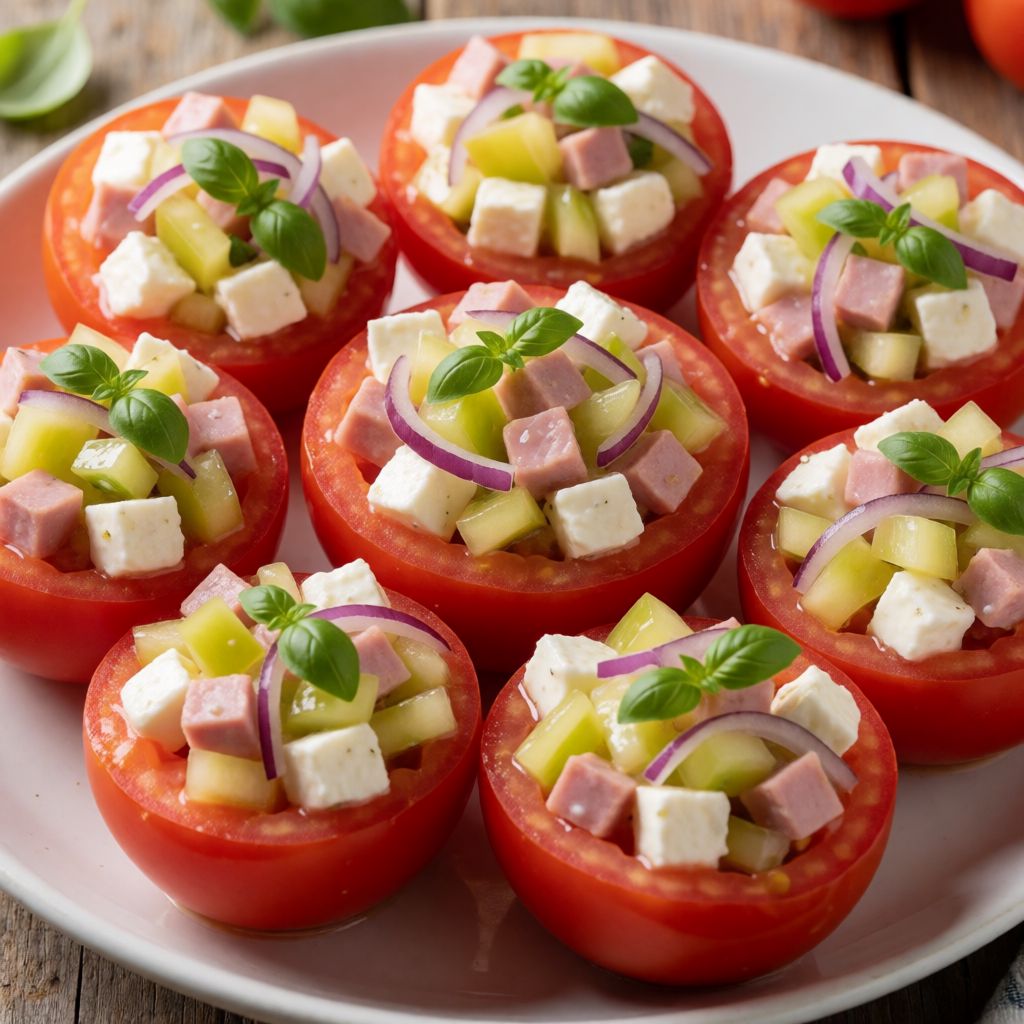
Cold Stuffed Tomatoes
A refreshing cold starter of tomatoes hollowed out and filled with a mozzarella, ham and herb salad.
Labels are worked out automatically from the ingredients and can be wrong. Check the packaging if it matters to you.
Ingredients
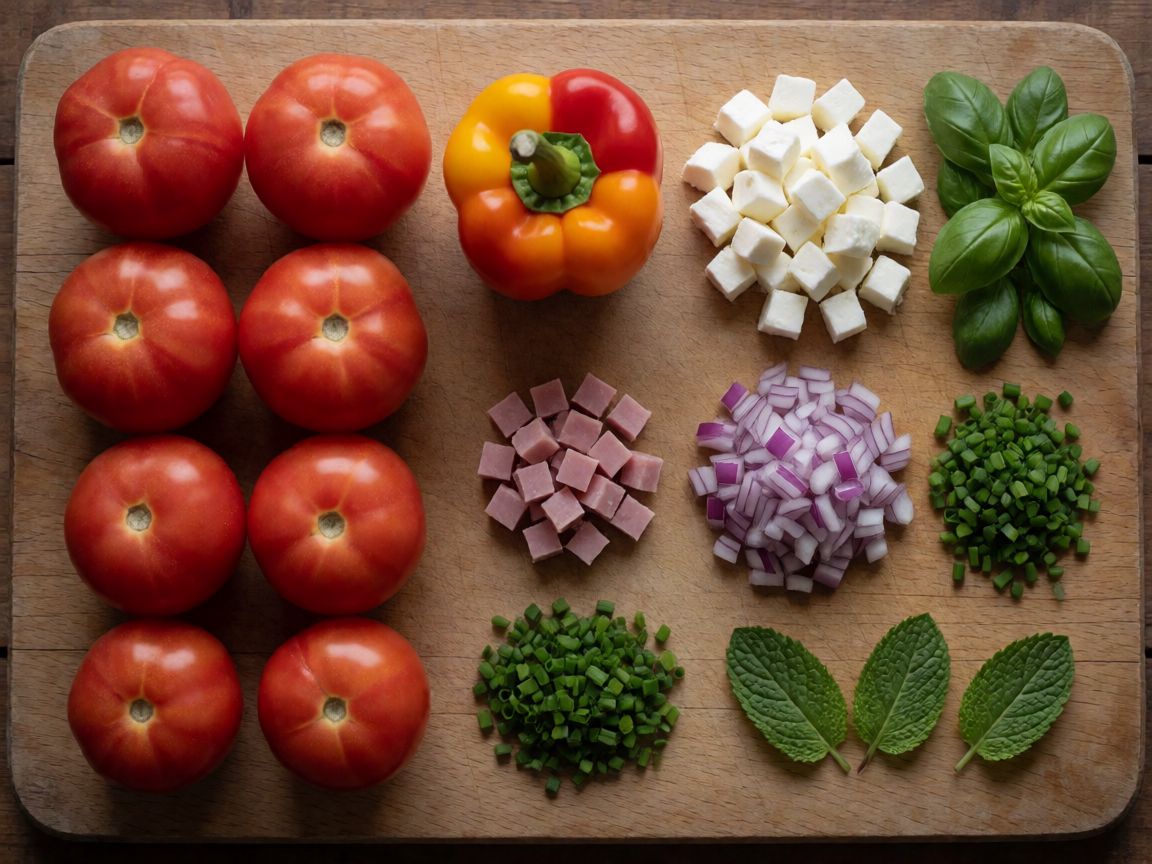
- 8 pcs Tomatoes
- 1 pcs Yellow pepper
- 1 pcs Mozzarella drained and cut into small cubes
- 100 g Ham diced
- 2 pcs Red onion chopped
- 1 bunch Basil leaves for garnish
- 1 bunch Chives chopped
- 4 pcs Mint leaves
- 2 tbsp Olive oil
- 1 tbsp Apple cider vinegar
- 1 bunch Parsley chopped
- 1 pinch Salt
- 1 pinch Black pepper









Steps
Wash and dry the tomatoes, cut off the tops and carefully scoop out the flesh with a small spoon, taking care not to damage the walls. Season the inside with salt and turn upside down on a rack.
Deseed the pepper, cut into strips, then into small cubes. Chop the red onion coarsely.
Put the vegetables in a large bowl, season with salt and pepper and dress with the olive oil and apple cider vinegar.
Add the diced ham and the mozzarella, well drained and cut into small cubes.
Stir in the chopped parsley, mint leaves and chives.
Fill the empty tomatoes with the vegetable mixture, cover with the cut-off tops, arrange on a plate and keep in the fridge until serving, garnished with basil leaves.
This is a tomato doing two jobs at once: vegetable and vessel. You hollow it, salt it, drain it, then hand it back its own insides plus a fresh crowd of mozzarella, ham, onion, pepper and herbs, dressed cold. Nothing is cooked. Which means nothing hides a weak ingredient — the tomato has to be good on its own terms, and so does everything you put inside it.
What decides whether this works isn't the filling, it's the wall. Scoop too hard and you punch through the side, and then your dressing just runs out the bottom onto the plate instead of sitting inside the tomato where it belongs. Go gently with a small spoon, follow the curve, leave a proper thickness of flesh — a shell, not a shaved tomato.
Salting the empty tomato and standing it upside down on a rack isn't decoration, it's drainage. A tomato is mostly water held in loose cell walls; cut it open and salt it, and osmosis pulls that water out through the cut surface. Skip this and the water stays put, then seeps into your filling once you spoon it in, turning a crisp salad into a soggy one sitting in pink juice. Fifteen or twenty minutes upside down is the real minimum here, not however long it takes you to chop the onion — judge it by whether droplets have actually collected, not by a clock.
The ham and mozzarella are the protein-and-fat anchor, since there's no cooking to develop flavour any other way — the mozzarella brings bland milky bulk and a bit of squeak, the ham brings salt and a bit of chew, and together they stop the dish being just "dressed vegetables in a cup." Buy mozzarella in its own liquid, not the drier pre-shredded kind sold for pizza — you need it to drain, which the recipe tells you to do, because that whey is the same enemy as the tomato's own water: more liquid pooling in your shell. Any mild, firm-ish ham works instead of a specific type — the point is small cubes with some bite, not a particular cure.
Red onion is there raw, so choose it for mildness as much as colour — red onions are genuinely less sharp than white or brown because of a lower concentration of the sulphur compounds that make your eyes water, which is exactly why it's the one onion variety people trust uncooked in a salad. If all you have is a brown onion, slice it thin and give it a rinse under cold water first; that washes off some of the sharpness that cooking would otherwise have handled for you.
The dressing is only two things — oil and vinegar — and that minimalism is deliberate, because the filling already carries salt from the ham and richness from the mozzarella. Use an olive oil with actual flavour here, since this is one of the rare recipes where the oil isn't background; it's eaten cold and raw, so a bland bottle gives you nothing back. Apple cider vinegar brings a gentler, slightly fruity acidity than white wine or malt vinegar — if you only have malt vinegar in the cupboard (common enough in a British kitchen, usually sitting next to the chip shop one), cut it with a little water or a pinch of sugar, because its sharper edge will fight the tomato instead of lifting it.
The herb trio — parsley, mint, chives — isn't just green confetti. Parsley gives grassy body, chives give a soft onion note without the bite of the raw onion doubling up, and mint is the one that actually changes the character of the dish, pulling it toward something lighter and more Mediterranean rather than just "salad in a tomato." Basil goes on at the very end, after chilling, because its flavour is carried by volatile oils that fade fast once cut and dressed — add it with the rest and by serving time it's just a wilted garnish instead of a fresh one.
Some say a stuffed tomato needs its lid skewered on with a cocktail stick to "hold it together" — no, because the filling is heavy and damp, not light and loose; the lid sits on by its own weight once the tomato is properly drained and not overstuffed. The fridge rest at the end isn't just about serving it cold, it's the second drainage step: time for the dressed filling to settle and for any last bit of liquid to find the bottom of the tomato rather than the top of your plate. Don't skip straight to the table the moment you've filled them — patience here is doing the work that heat would do in another dish.