
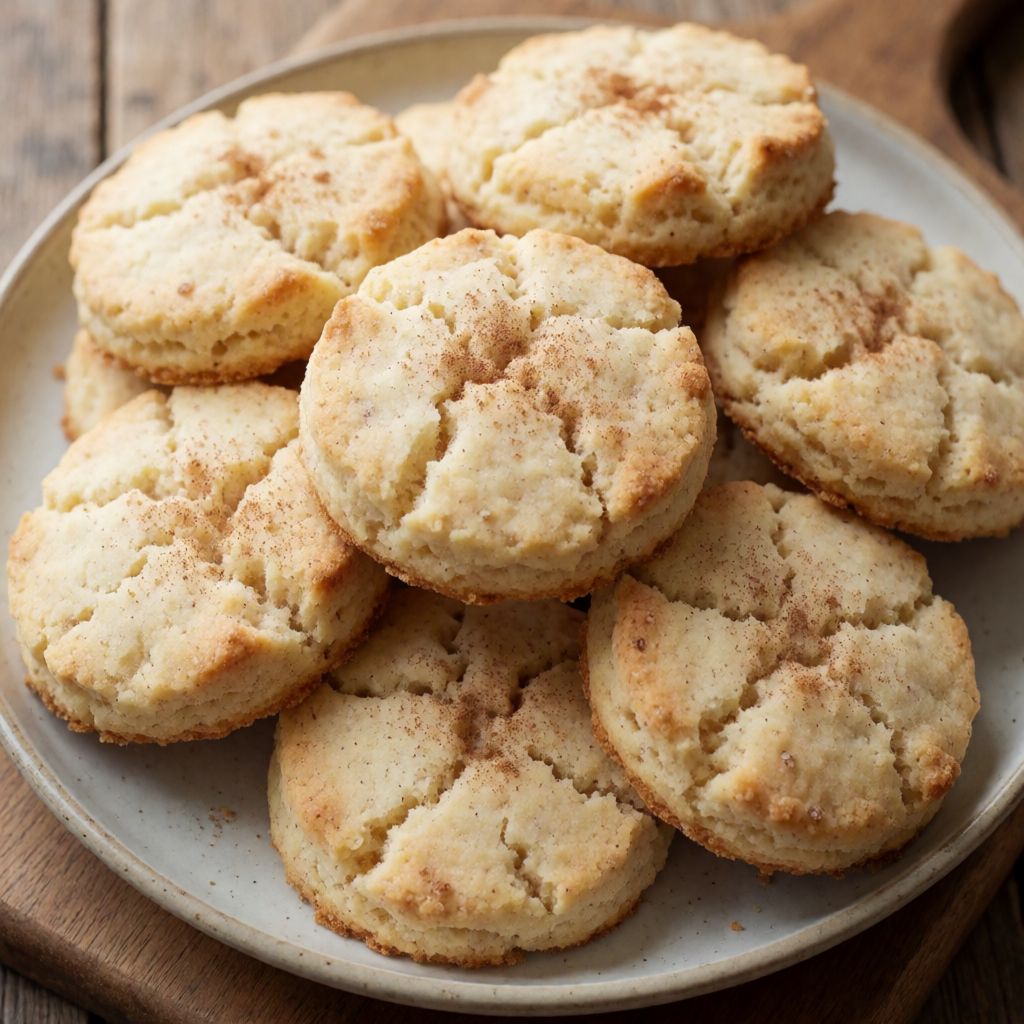
 AI photo
Sugar-Free Almond and Apple Purée Biscuits
Light, naturally sweet biscuits made with almond flour, apple purée, Greek yogurt and a touch of cinnamon.
Labels are worked out automatically from the ingredients and can be wrong. Check the packaging if it matters to you.
Ingredients
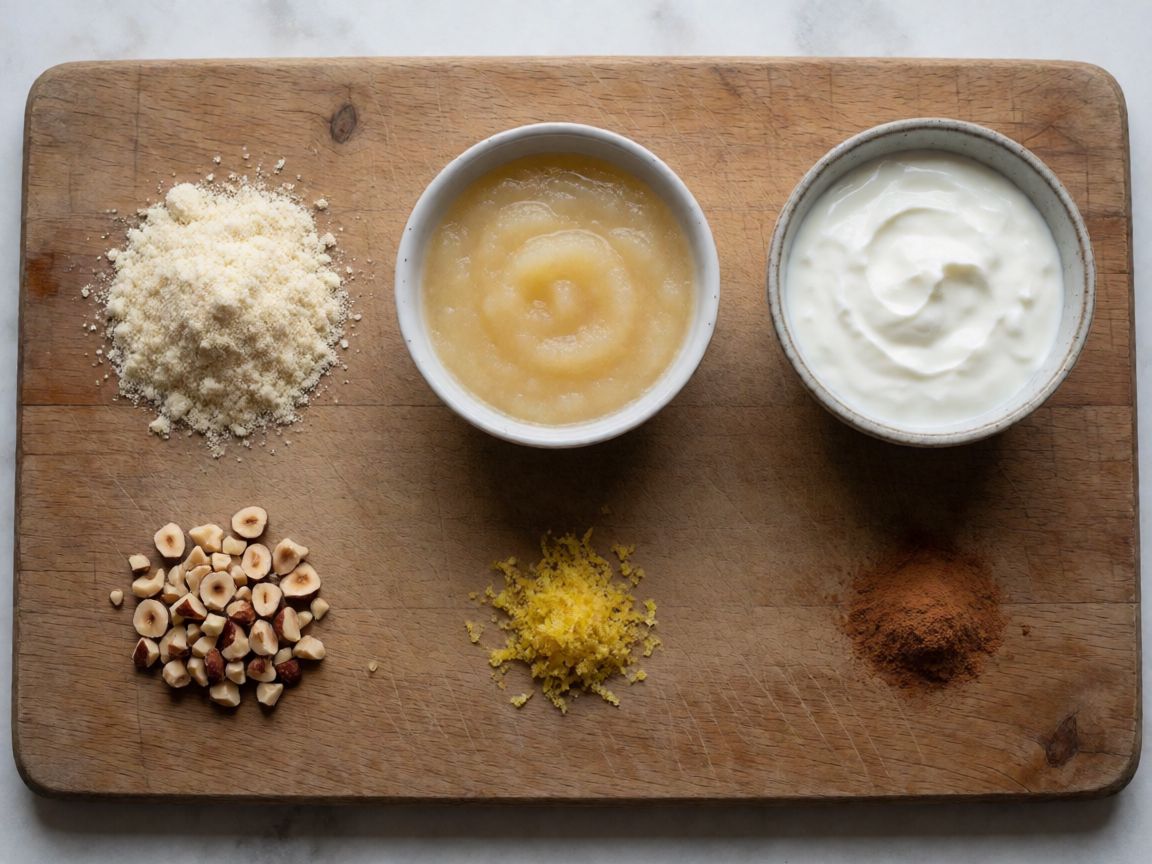
- 200 g Almond flour
- 50 g Apple Puréed from 1 baked apple
- 50 g Greek yogurt
- 20 g Hazelnuts Chopped, or use almonds
- 0.5 pcs Lemon zest Zest of half a lemon
- 1 pinch Cinnamon





Steps
Simmer the chopped apple with a little water and a pinch of cinnamon, then blend until smooth and keep it on the heat for a few more minutes so the purée thickens slightly.
10 minWeigh out 50 g of the purée.
Combine the cooled apple purée with the almond flour, add the Greek yogurt and mix well until smooth.
Add the lemon zest and chopped hazelnuts, and stir to combine.
Shape the dough into rounds using a round cutter on a parchment-lined baking tray, pressing down with the back of a spoon and lifting off the cutter.
Bake in a preheated oven at 175°C for 10 minutes.
10 minLet the biscuits cool before serving.
Forget what "biscuit" means in most kitchens — butter, sugar, egg and flour all pulling together. Here none of that cast is on stage. It's ground almonds, cooked-down apple and yogurt, pressed flat and dried out in the oven until they hold their own shape. The whole thing hangs on one thing you do before the oven is even involved: how much water you've boiled out of that apple.
Almond flour has no gluten. That's good news and bad news in one bag. Good: you can't overwork it, there's no elastic network to toughen if you mix a bit too long. Bad: there's also nothing to trap air or spring back, so the dough won't rise and won't hold a shape by itself — it needs the cutter and the back of a spoon to press it into discipline, not a rolling pin to coax it.
Some say sugar-free baking tastes like an apology — dry, cardboard, a bit sad. No, because the sweetness here isn't removed, it's concentrated. A baked apple, reduced again over the heat with cinnamon, loses most of its water and keeps all its sugar packed into a much smaller space. A little lemon zest does the job sugar usually does in a biscuit: gives it an edge, stops it tasting flat and one-note.
Don't look for deep golden-brown here. That colour comes from sugar caramelising — the Maillard business needs it — and there's barely any in this dough. Doneness is something you feel: edges firm and a little dry under a finger, centre still giving slightly. Ten minutes is where you start checking, not where you stop the clock without looking.
Almond flour is just almonds ground fine, nothing more, but "fine" matters. The good light stuff behaves almost like a paste once it meets liquid, because of how much oil is locked inside each grain. The coarser "ground almonds" sold for macaroons will work too, but your biscuit will be grittier, not smoother. Any other nut, ground properly fine and without a flavour loud enough to fight the apple, does the same job — hazelnut flour, for instance. What it can't give you, unlike wheat flour, is structure from gluten — so don't expect it to behave the same way, ever, no matter how finely it's milled.
The apple gets baked first for a reason that has nothing to do with convenience: baking drives off water slowly and turns some of the starch to sugar under gentle heat, concentrating flavour before you've even put it in a pan. The simmer-and-blend afterwards is a second reduction, with the cinnamon infusing while the water leaves. The 50 g weight you're told to hit isn't fussiness — it's a control point. Too much purée and the dough has no backbone, spreads into a puddle on the tray. Too little and it won't bind at all, crumbles the second you lift one off. If apple isn't to hand, pear or quince purée does the same work — anything with its own pectin and a bit of tartness. Steer away from very watery fruit like melon or orange; you'd be undoing the whole point of the reduction.
Greek yogurt is standing in for the egg and the butter at once — fat for richness, a little protein to firm up with heat, moisture to bring the dry almond flour together without drowning it. Use the full-fat, thick kind; that thickness is the whole reason it's chosen, a runny yogurt puts straight back the water you just spent ten minutes cooking out of the apple. No yogurt in the fridge — a thick labneh, or cream cheese loosened a touch, does the same job: fat and protein, not much water.
The hazelnuts want to stay chopped, not ground, or they vanish into the dough and you lose the point of having them. Toast them if they're raw — it wakes the oil up, and you taste the nut rather than just feel it crunch. Almonds, as the recipe itself allows, do the same job with a milder flavour — no loss, just a quieter note.
Lemon zest and cinnamon are working the same corner: lifting a dough that has no sugar to carry flavour on its own. Zest the lemon before you juice it for anything else, and take only the coloured skin — the white pith underneath is just bitterness with nothing to offer. The cinnamon is one pinch, not a flavour of its own; apple and cinnamon have been put together for long enough that it frames the fruit rather than competing with it.
This makes a dozen or so small rounds — three each for four people, better alongside a cup of tea than standing in for a proper dessert. Patience earns its place twice here: once while the apple reduces, don't pull it off the heat early just because it looks thick enough to your eye but still sounds watery in the pan; and again after baking — let them cool fully on the tray before you try to lift one. Warm, with no gluten holding anything together, they'll break in your hand, and you'll blame the recipe for what was really just impatience.