
 AI photo
Sicilian Almond Biscuits
Classic Sicilian almond biscuits with a soft, chewy centre and a delicate lemon fragrance.
Labels are worked out automatically from the ingredients and can be wrong. Check the packaging if it matters to you.
Ingredients
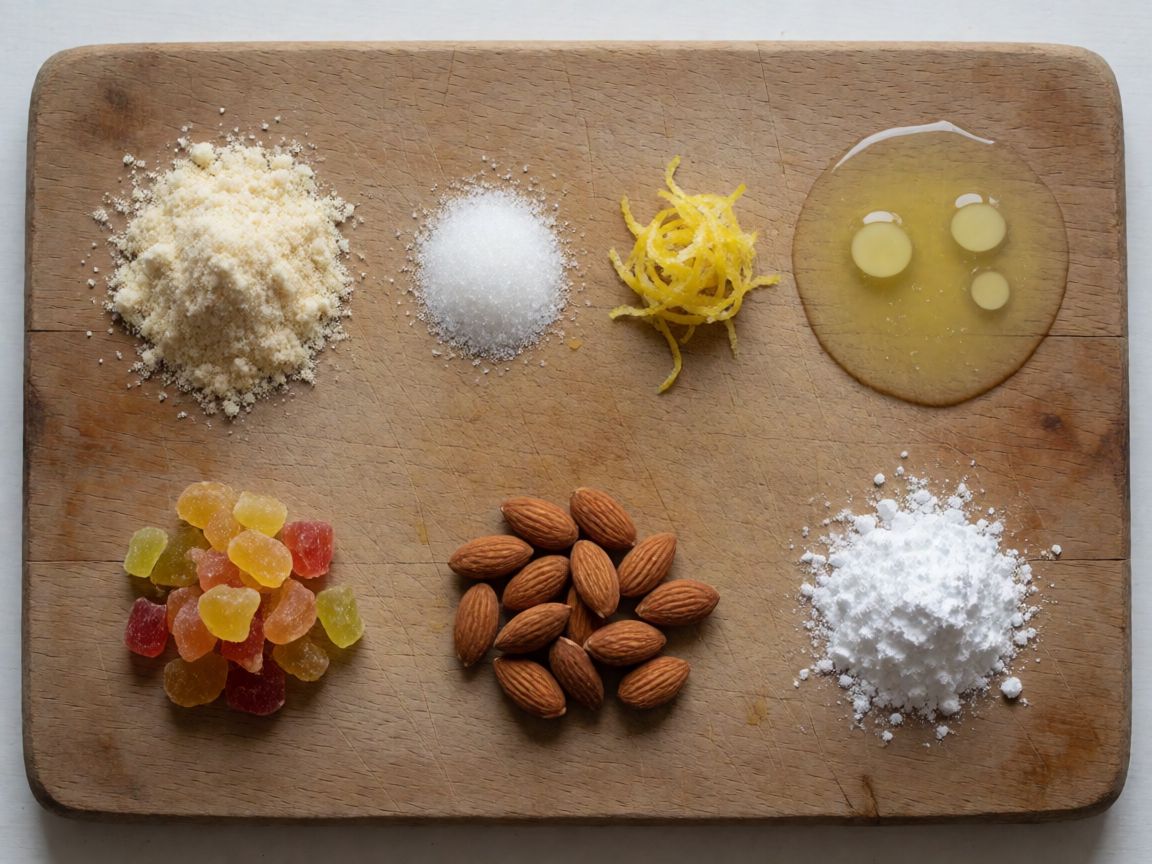
- 250 g Almond flour
- 250 g Sugar
- 1 pcs Lemon zest
- 3 pcs Egg whites
- 1 pinch Salt a pinch
- Candied fruit to taste
- Almonds to taste, whole
- Icing sugar to taste, for dusting








Steps
In a bowl, mix the almond flour, sugar and lemon zest until you get a smooth, flour-like mixture.
Whisk the egg whites with a pinch of salt using a mixer until stiff peaks form.
Gently fold the dry ingredients into the whisked egg whites, using a bottom-to-top motion.
Transfer the mixture to a piping bag fitted with a star nozzle.
Pipe small mounds, about 3–4 cm in diameter, onto a baking tray lined with parchment paper.
Decorate each biscuit with candied fruit and whole almonds.
Let the biscuits rest in the fridge for 6–7 hours, preferably overnight.
360 minBake at 180°C in a preheated oven for about 15 minutes.
15 minLet the biscuits cool to room temperature and dust with icing sugar.
This isn't a biscuit in the flour-and-butter sense — it's whipped egg white holding almond meal and sugar together, nothing else. Structurally it's closer to a macaroon than to a shortbread. That matters because every weak point in the recipe comes from forgetting there's no gluten here to save you: the whites are doing all the work of holding shape, and once you understand that, the fussy-looking steps stop looking fussy.
What decides whether these come out right is two things, and neither is the oven. First, how you fold — bottom-to-top, not stirred — because the only air in this dough is what you whipped into the whites, and every heavy-handed stroke knocks some of it back out. Lose too much air and the mounds sit flat and dense instead of holding their piped shape. Second, and more important: the long rest in the fridge before baking isn't there to chill the dough, it's there to dry a skin on the surface. That skin is what lets the biscuit crack open prettily in the oven instead of slumping sideways into a puddle — the crust sets before the inside has a chance to spread. Skip the rest, or cut it to an hour because you're hungry, and you'll get flat, shiny, crackless discs that taste fine and look like an accident.
Almond flour is the whole dish, so buy the finest, palest grind you can find, not the coarse one sold for frangipane. A coarse grind leaves grit that the whipped whites can't fully coat, and the biscuit crumbles rather than holding a clean break. If you only have whole almonds, blitz them with a portion of the sugar from the recipe — the sugar stops the almonds turning to paste from the oil releasing, which is what happens if you grind them alone for too long.
Sugar here isn't sweetening so much as structure: it dissolves into the egg white as you fold, and that syrupy mixture is what sets into the crust in the oven. Don't swap in icing sugar for the bulk of it — it's cut with cornflour to stop clumping, and that quietly changes the texture of the crust. Caster or fine granulated is what you want; it dissolves fast enough to disappear into the mix.
Lemon zest is there for the oil in the skin, not the juice — it's the only fresh, non-almond scent in the whole thing, so take it from an unwaxed lemon if you can, or at least scrub a waxed one well, because you're eating that outer layer directly.
Egg whites are the one load-bearing ingredient, which is why whisking them properly matters more than any other step here. Stiff peaks, not soft ones — soft peaks won't carry the weight of the almond-sugar mix once folded in, and the mounds will sag before they even reach the fridge. But don't over-whip either: push past stiff and the whites turn grainy and start to weep liquid, losing the elasticity that lets them fold smoothly around the dry mix. The pinch of salt isn't seasoning, it's there to help the whites hold their structure a little longer once whipped — an old trick, nothing mystical about it.
Candied fruit and whole almonds on top are decoration with a history behind them rather than a flavour requirement: almond biscuits like this come out of Sicilian convent kitchens, where sugar and candied citrus were valuable goods the nuns had access to through trade and used to show what the kitchen could afford — no flour, because flour was cheap and almonds weren't. If you don't want to buy candied fruit for a handful of biscuits, a sliver of candied orange peel you've made yourself, or simply more whole almonds, does the same job of marking the top before baking. Icing sugar at the end is just the finishing dusting, for appearance and a last touch of sweetness on a biscuit that is otherwise not very sweet-tasting once baked, the sugar having mostly gone into the crust.
On piping: a star nozzle gives the ridged shape and surface area that helps the biscuit crack attractively, but if you don't own one, a sturdy sandwich bag with a corner snipped off does the job — you lose the ridges, not the biscuit. This recipe, at 250g flour and 250g sugar, makes a modest batch; call it six servings if you're being polite about sharing, fewer if everyone in the room likes almonds as much as they should.