
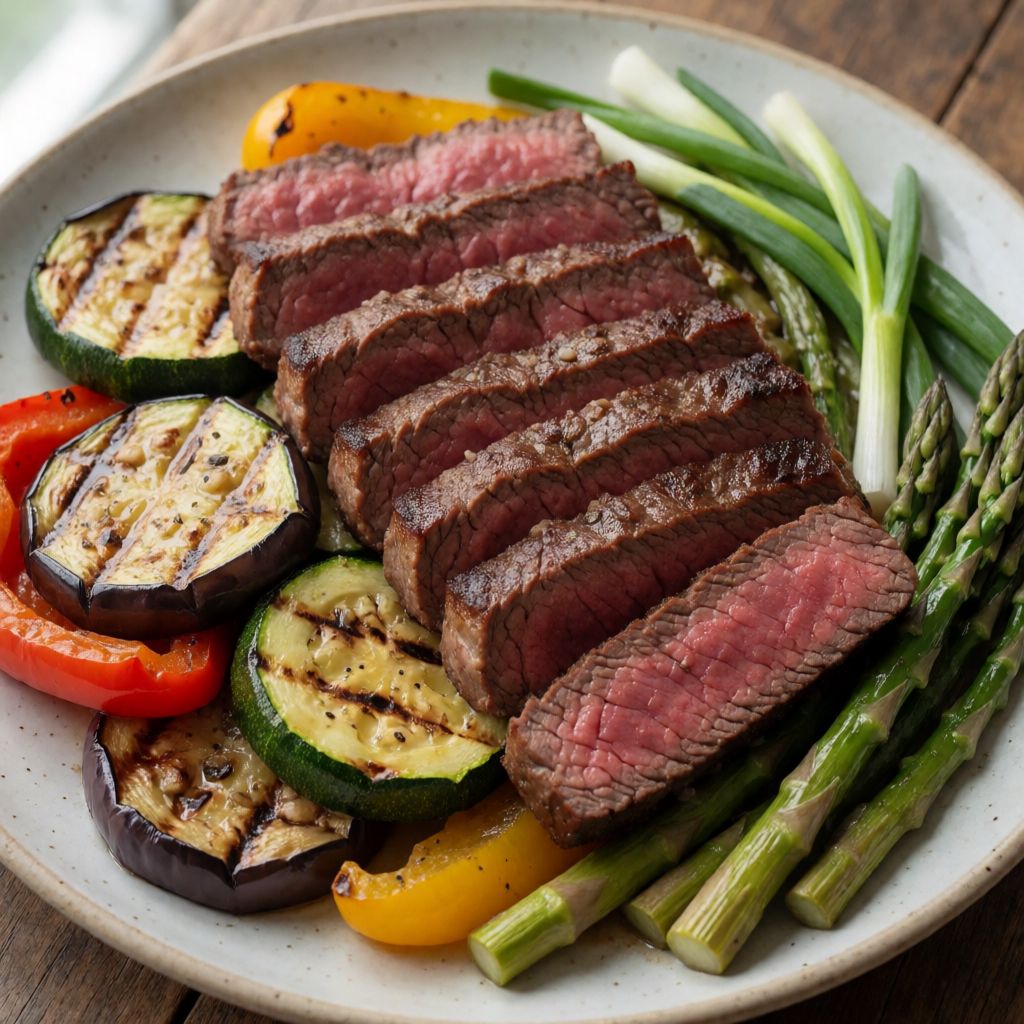
 AI photo
Tagliata with Marinated Vegetables
A quick seared beef tagliata served with lightly marinated pan-roasted vegetables.
Ingredients






Steps
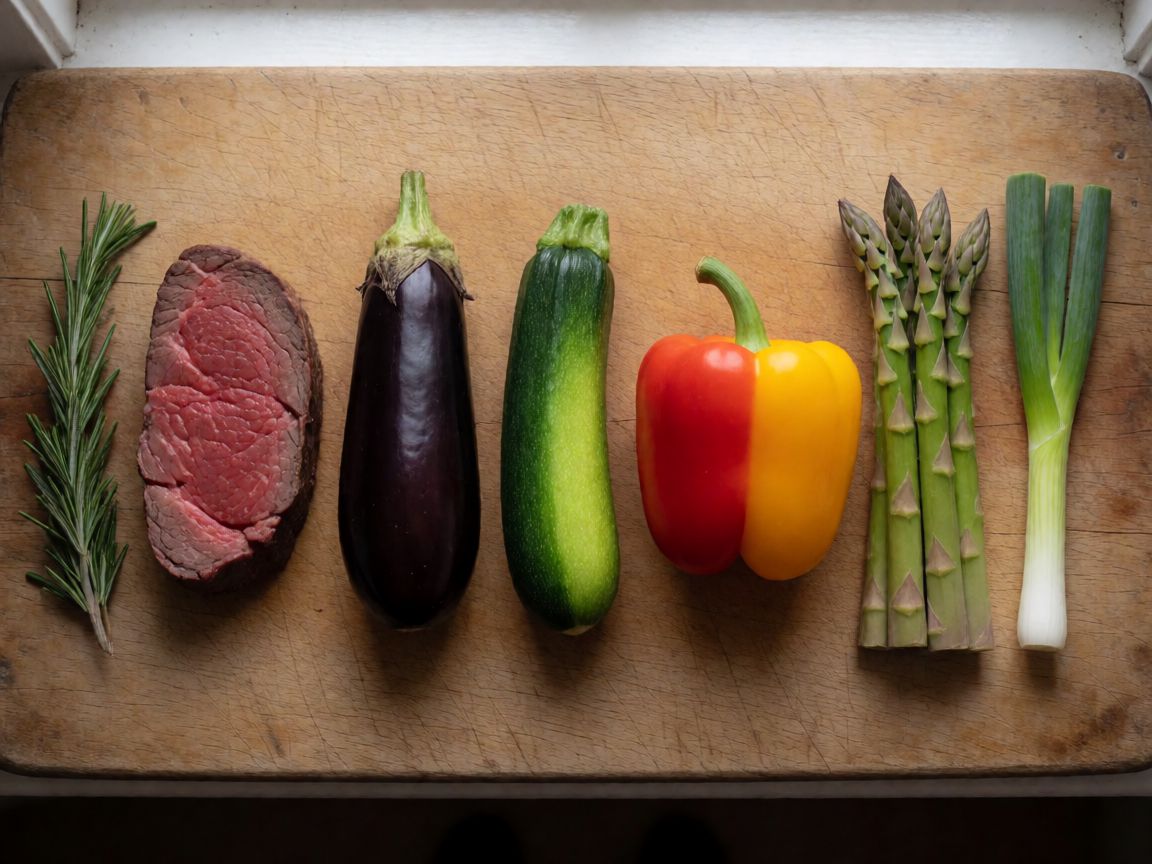
Cut the aubergine, courgette, pepper, asparagus and spring onion into cubes and fry them all together in a pan with olive oil.
Simmer over medium heat, stirring occasionally with a wooden spoon.
12 minTransfer the cooked vegetables to a bowl and marinate them with rosemary and enough olive oil.
Cut the beef sirloin into 3 pieces to shorten the cooking time.
In a pan with a little olive oil and rosemary, sear the meat over fairly high heat.
4 minSeason with salt and cook for 3-4 minutes on each side. Doneness: 63°C at the centre (medium).
Serve the sliced meat with the marinated vegetables.
Tagliata is Italian for "the cut" — not "the steak", not "the grill". The dish got its name from what happens after the fire, when the knife goes in at an angle and lays the meat out in slices. That naming is the whole point: everything before the slicing is preparation, and everything that actually matters happens in the two minutes of rest and the one decisive cut that follows it.
What decides whether this works is a crust on the beef that genuinely formed — dry and brown, not grey and weeping — and a core that leaves the heat a few degrees under target, climbing the rest of the way on its own while it sits. The vegetables are the other half of the test: five different things in one pan, and the only way they come out as five different textures instead of one soft mash is cutting them to roughly the same size and not flooding the pan with the liquid they shed.
"Medium heat" and "fairly high heat" aren't instructions, they're placeholders for what your eye and ear should be checking. For the vegetables: the oil should shimmer, and the first cube in should hiss sharply and throw a bit of steam — if it lands quietly, the pan's still cold and everything ahead of you will stew, not fry. For the meat, the pan wants to be a shade hotter again, close to the point just before it smokes, and the beef should crackle the second it touches the metal. Silence there means a grey, sweating piece of meat, because the surface water never flashed off before the protein started giving up its juices.
Start with the beef. "Sirloin" here just means a cut tender enough and quick enough to go from raw to rested steak in under ten minutes — it doesn't have to be sirloin specifically. The criterion: a tender cut, at least a couple of centimetres thick, with enough fat running through it to carry flavour as it renders. Rump, rib-eye, fillet all qualify. Cutting the piece into three isn't about speed for its own sake — a smaller mass of meat heats through more evenly, so you get less of that grey ring of overcooked meat sitting between the crust and the pink centre. Salt it just before it goes in the pan, not an hour ahead. Some say salting early toughens the meat — no, the real problem is salt pulling moisture to the surface, and that film of liquid is exactly what stops a hot pan from making proper contact. Wet meat steams. Dry meat browns.
The vegetables are the economy of the dish. Aubergine is the slow one — thirsty for oil, and it needs real heat to colour rather than collapse into something slimy. Courgette and pepper cook fast by comparison, so if you cube the aubergine small and the pepper large, you'll get soft pepper sitting next to raw aubergine at the same minute mark — cut them all to a similar size and this stops being a problem. Asparagus is the quickest of the lot; trim the woody base first, or it'll stay tough no matter how long it's in the pan. Spring onion is the fragile one — it sweetens as it caramelises but will scorch and turn bitter if it's cut too fine and left in with the slower vegetables the whole time, so cut it a little thicker than you'd think to give it a chance of surviving alongside the aubergine.
Rosemary works here because it's resinous — it releases its oil slowly under heat instead of wilting into nothing in thirty seconds like a soft herb would. That's the actual criterion if you don't have it: a woody, resinous herb that can take heat and still taste of something afterward. Thyme does the same job.
Olive oil is doing two jobs, and that matters for substitution. In the pan it's a cooking medium; in the bowl afterward, dressing the warm vegetables, it's a flavour in its own right — this isn't a dish where you want something neutral. If you've no olive oil, you want something that can still carry its own taste through heat, not a flavourless one; a cheap, mild rapeseed oil is a reasonable stand-in for the frying, but for the marinating bowl, use whatever oil tastes best to you raw, because that's the one you'll actually notice on the plate.
A word on quantity and history. Three hundred grams of sirloin between two people is modest by steak standards — this isn't the Florentine bistecca cut for one person and shared under protest. Tagliata as a form exists partly because slicing a smaller piece thin makes it look, and eat, like more: a trick of the knife standing in for a trick of the butcher's scale, which is exactly the kind of economy a Sunday roast does the opposite way, by cooking a large joint and carving thick. Here the logic runs backward — small cut, thin slices, same sense of generosity on the plate.
On an ordinary UK hob, there's no roaring gas ring doing the work a kazan or a professional flattop would — so use the heaviest, widest pan in the cupboard and give it longer to come up to heat before anything goes in, rather than trying to compensate with more fire than the pan can hold evenly. For resting the meat, a plate and a loose sheet of paper towel over the top does the job perfectly well; you don't need a carving board with a juice channel, you just need somewhere the meat can sit without steaming in its own crust. And give it the time it asks for — patience here isn't optional, it's the ingredient that turns a seared piece of meat into a rested one, and those are two different textures entirely.