
 AI photo
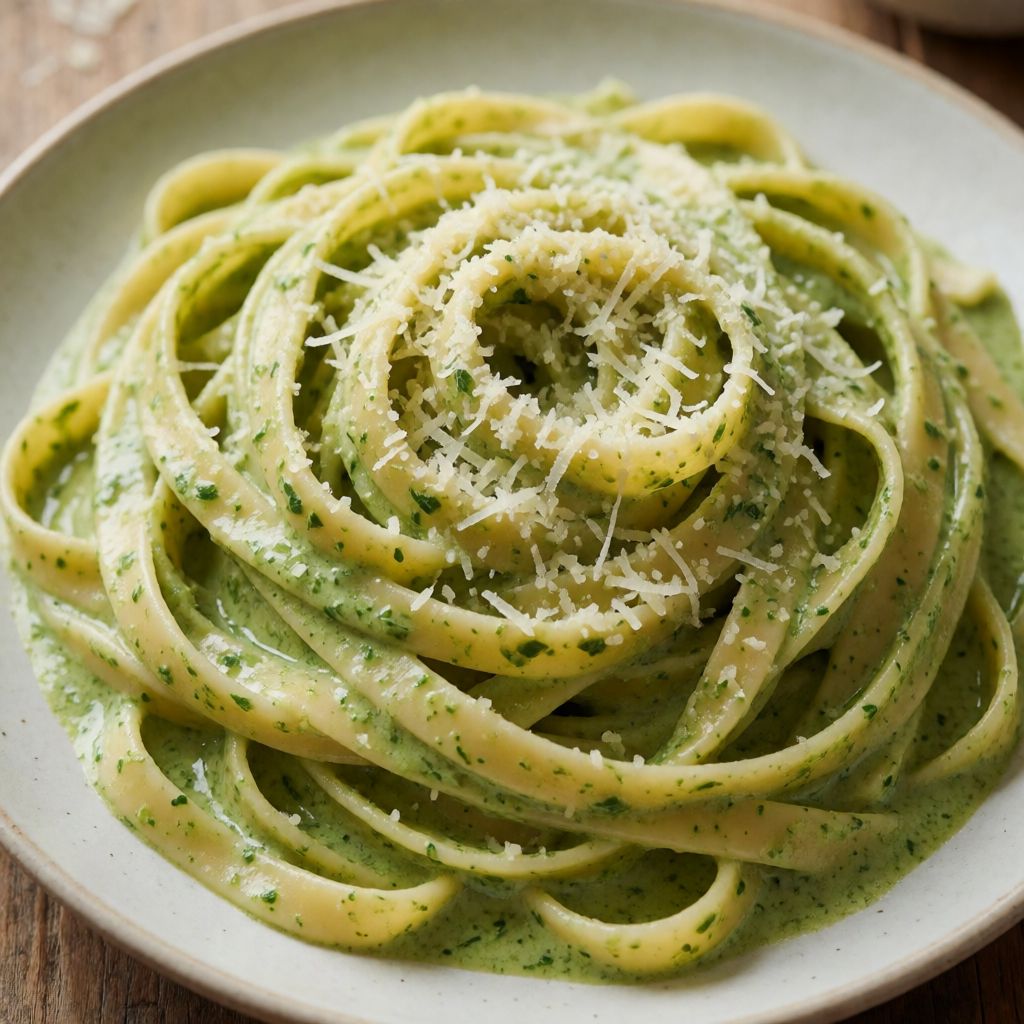
Tagliatelle with Basil Sauce
A fresh, creamy basil sauce tossed with tagliatelle for a quick, vibrant pasta dish.
Labels are worked out automatically from the ingredients and can be wrong. Check the packaging if it matters to you.
Ingredients
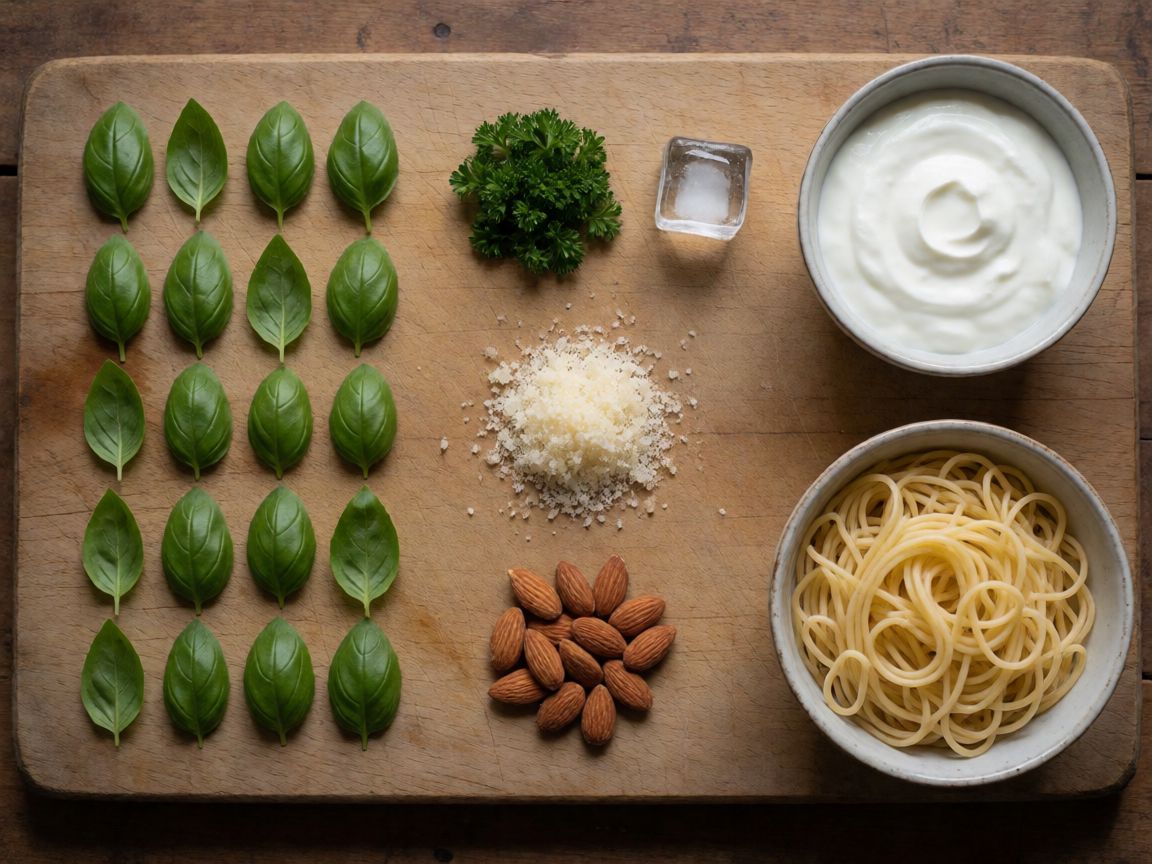
- 20 pcs Basil
- Parsley to taste
- 1 pcs Ice cube
- 1 pinch Salt
- 2 tbsp Greek yogurt
- 1 tbsp Pecorino Romano
- White pepper to taste
- 40 g Almond
- 400 g Tagliatelle
- Olive oil to taste










Steps
Put the washed and dried basil and parsley into the blender bowl.
Add the ice cube and salt, then blend in short bursts, gradually pouring in the olive oil.
Add the Greek yogurt, Pecorino Romano and almonds, and blend until smooth.
You should get a creamy sauce; if needed, add a little ricotta to adjust the consistency.
Cook the tagliatelle in plenty of salted boiling water.
10 minDrain the pasta.
Toss the cooked tagliatelle with the prepared sauce.
Serve, sprinkled with black pepper or grated Pecorino Romano on top.
This isn't pesto, even though it walks and talks like one. Classic pesto alla genovese is basil, pine nuts, garlic, pecorino, olive oil — bashed in a mortar so the leaves bruise rather than tear. This version swaps pine nuts for almonds, drops the garlic, adds yogurt, and runs the whole thing through a blender. Call it a basil sauce, because that's honest. It feeds four, and what decides whether it's good has nothing to do with how finely you chop anything.
The thing that actually makes or breaks this dish is temperature, not of a hob but of the blender bowl. Basil goes black and bitter the moment its cells are torn open and exposed to heat and air for too long — that's oxidation, the same reaction that browns a cut apple. A stone mortar crushes slowly and keeps things cool. A blade spinning at speed generates real friction heat in seconds. That's the whole reason for the ice cube: not texture, not thinning the sauce, but keeping the basil cold enough, long enough, that it stays green and tastes of itself instead of tasting of grass gone over. Blend in short bursts — not one long whirr — so the blade doesn't cook the leaf.
Basil: you want the small-leafed Genovese type if you can find it — sweeter, less of the clove-and-mint sharpness that the big-leaf "Thai-adjacent" basil sold in some UK supermarkets carries. Wash and dry it properly; wet leaves dilute the sauce and water doesn't emulsify with oil, it just sits there making everything thin and separated. A salad spinner or a clean tea towel does the drying — don't skip it because the leaves look clean enough.
Parsley "to taste" is doing quiet, practical work: it bulks out the green without adding basil's more aggressive anise note, and it holds its colour better under the blade's heat than basil does. If you're short on basil one week, lean harder on parsley rather than forcing more basil through a tired, warm blender.
Almonds replace pine nuts, and this is really a cost-and-availability substitution dressed up as a recipe choice — pine nuts are expensive and go rancid fast because of their fat content; almonds are cheaper, keep longer, and give a similar creamy bulk with less assertive flavour. If you want closer to the original character, toast the almonds very lightly first — but watch them, burnt nuts taste of nothing but burnt. Walnuts work too, though they bring more bitterness; cashews give a milder, sweeter result if that's what you want.
Pecorino Romano is sharp and salty — it's a hard sheep's cheese, aged, so it brings saltiness as much as flavour. If you can't get it, Parmesan is the obvious stand-in, though it's milder, so taste before you add any extra salt — you may need less of it than a pecorino amount. Greek yogurt gives body without the heaviness of cream and a gentle sourness that lifts the whole sauce; if you've none, a spoon of ricotta or even crème fraîche does a similar job, just adjust for the tang.
Olive oil: use one with no aggressive bitterness of its own if you want the basil to lead — you're not after a "robust, peppery" oil here, because that fights the basil for attention rather than carrying it. Any neutral-ish extra virgin will do; save the fancy single-estate bottle for drizzling at the end, not for blending in.
On the pasta water: salt it properly, like seasoning soup, not like an afterthought — this is the only seasoning the noodle itself gets, since the sauce coats rather than penetrates. And that starchy water you save a splash of before draining is what rescues a sauce gone too thick on contact with the colander — don't throw it all away, that's the single most common reason home pasta turns out gluey and separate from its sauce rather than married to it.