
 AI photo
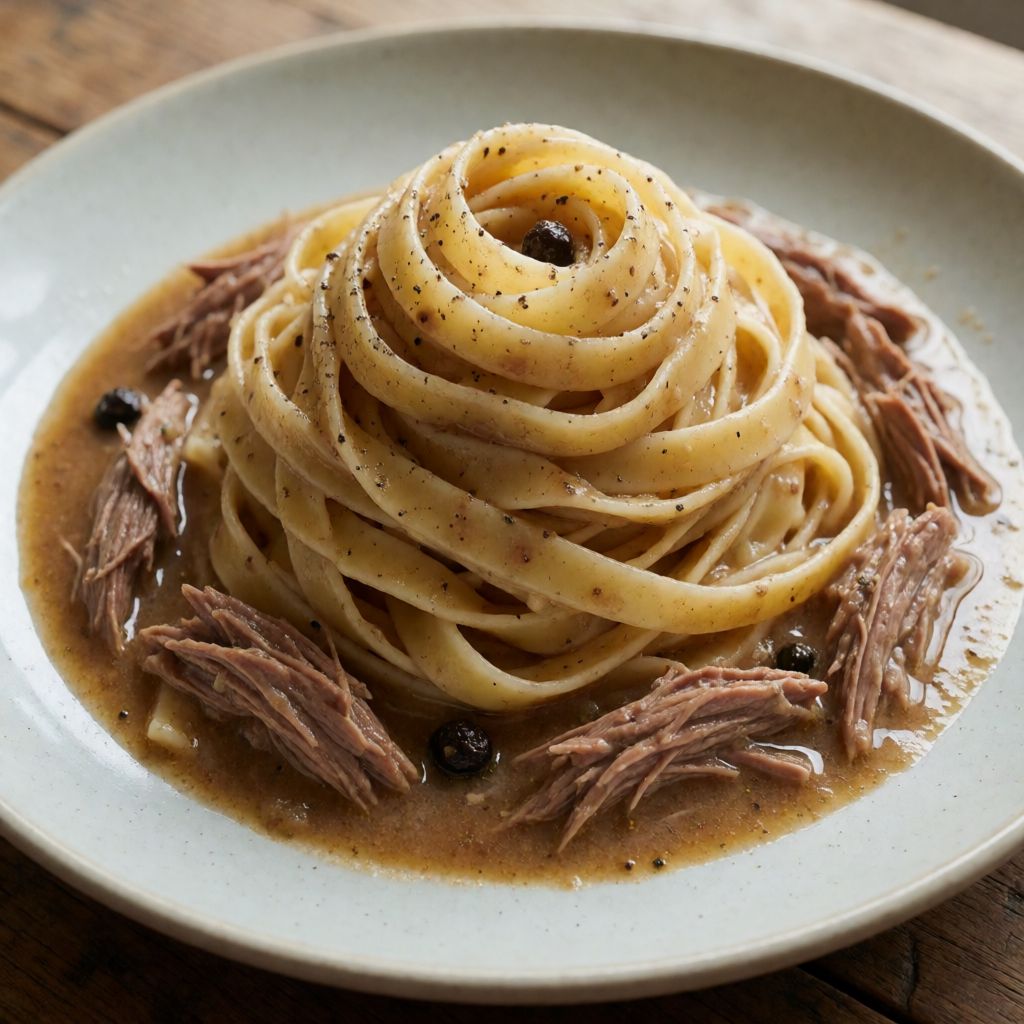
Tagliatelle with Rabbit Ragù
A slow-cooked rabbit ragù simmered with white wine, juniper and herbs, tossed with tagliatelle.
Labels are worked out automatically from the ingredients and can be wrong. Check the packaging if it matters to you.
Ingredients
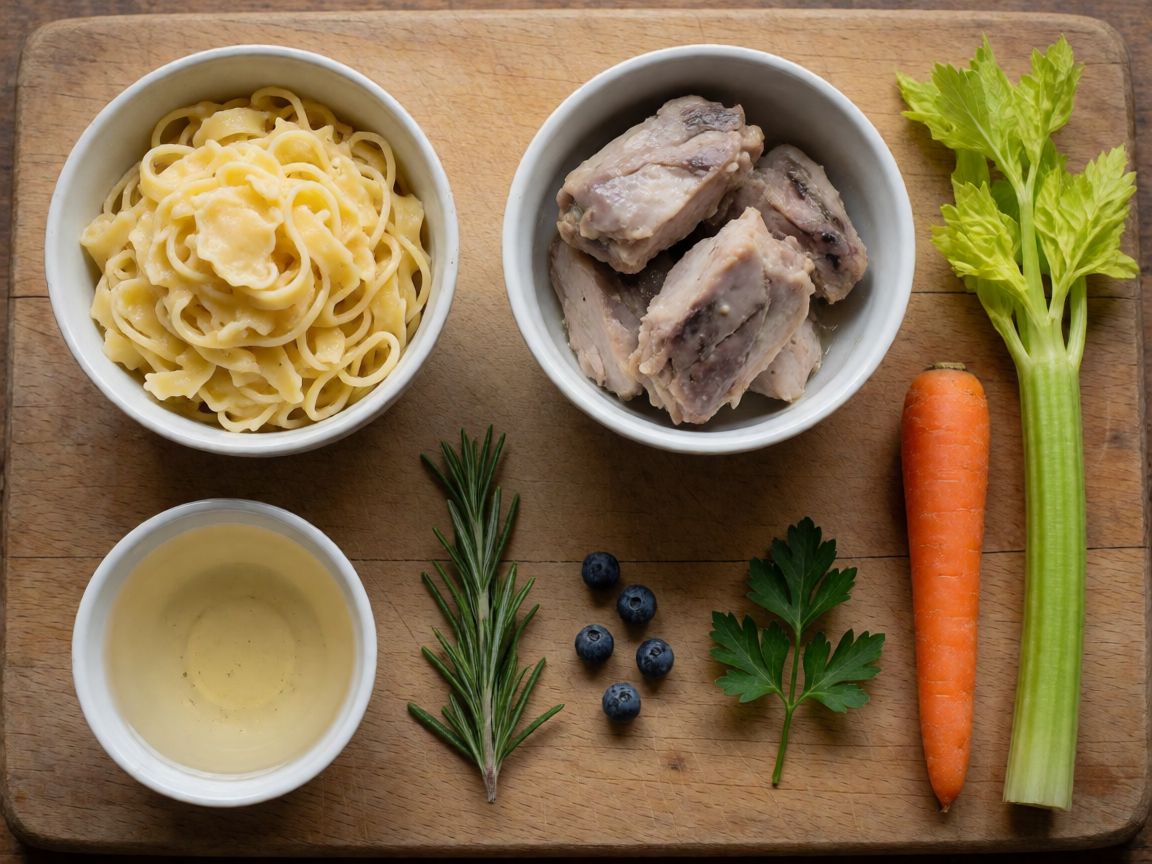
- 700 g Tagliatelle egg pasta
- 500 g Rabbit
- 300 ml White wine
- 4-5 pcs Juniper berries
- Salt to taste
- Black pepper to taste
- 1 pcs Rosemary
- 1 pcs Parsley
- 4-5 tbsp Olive oil
- 1 pcs Celery
- 1 pcs Carrot
- 0.5 pcs Onion
- 1 l Stock
- 600 ml Tomato passata













Steps
Cut the rabbit into pieces, marinate in white wine with pepper, juniper, rosemary and parsley, and refrigerate for at least 2 hours (overnight is better).
Finely chop the celery, carrot and onion together with the rosemary leaves and a sprig of parsley.
5 minSauté the chopped vegetables in olive oil over a low heat until softened.
Add the well-drained rabbit and brown over a high heat until golden.
Pour in the marinade and let it evaporate completely.
Add the hot stock and simmer, covered, over a medium heat for about 2 hours.
Before adding the passata, let any excess liquid evaporate.
Once the meat is tender, add the tomato passata and cook for a further 20 minutes.
20 minSeason with more salt if needed.
1 minCook the tagliatelle in lightly salted water until al dente, drain and toss with the ragù.
This is a ragù that treats rabbit like it's lean and a bit stubborn — because it is. No fat running through the meat, no connective tissue melting into gelatine the way it does in a good beef shin. So the whole recipe is built around compensating for that: a marinade to season deep and tenderise a little at the surface, a long slow simmer to coax tenderness without drying the meat to string, and a tomato sauce that clings rather than drowns.
What decides whether it works is patience at two separate points. The marinade needs real time — two hours minimum, but overnight is honest advice, not a flourish, because wine and juniper and rosemary need hours to get past the surface of the flesh. And the stewing needs roughly two hours at a simmer gentle enough that the liquid barely trembles, not boils, because rabbit muscle fibre is fine and tight — push it hard and it seizes up and goes chalky rather than falling apart.
Some say rabbit is "like chicken, cooks fast." No — chicken has fat and connective tissue working for it even in the leg; rabbit has almost none, and treating it like a quick sauté meat gets you dry, tired strands. Here you brown it hard and fast for colour and flavour, then immediately slow everything down. That contrast — violent heat, then near-silence — is the whole trick.
On a domestic hob you won't get the slow, even radiant heat of a kazan or a heavy cast pot sitting on embers — your ring switches on and off to hold a setting, and a thin pan will scorch at the bottom before the top layer even warms. Use the heaviest wide pan you own, keep the lid on loose rather than clamped (a plate works if your lid's missing), and check now and then that it's murmuring, not rattling. If it dries at the edges and starts catching, that's your cue to turn it down, not up.
The rabbit itself: look for a farmed one, pale pink flesh, not the deep red of wild rabbit which carries more iron-tang and needs a longer soak. If you can't get rabbit at all — and in plenty of UK butchers you genuinely can't — chicken thigh is the honest substitute, not chicken breast; thigh has a little fat and connective tissue, which breast lacks entirely, and that's closer to what rabbit needs from this method. It will cook faster, so watch doneness by feel, not the clock the recipe gives for rabbit.
The marinade — wine, juniper, rosemary, parsley, pepper — isn't there to make the meat exotic. Juniper is a cold-forest flavour that's traditionally paired with game because game needs something resinous and sharp to cut its sometimes livery note; rabbit is milder than hare but the convention carried over. If you've no juniper berries, a few crushed black peppercorns and a strip of lemon zest does a similar job of brightening, though it won't taste the same — it'll just stop the dish being flat.
Celery, carrot, onion — the base trio — go in chopped fine and cooked slow in oil until soft, because their job is to melt into the sauce and disappear, not sit there as vegetable confetti. Any oil with no smell of its own works for this stage; olive oil is traditional because it's what was to hand in the regions this dish comes from, but a flavourless vegetable oil does the softening just as well if that's your cupboard.
Stock matters more than people think for a dish this lean. Rabbit gives back very little of its own richness into the liquid compared to beef or lamb, so a weak stock leaves you with a watery, thin-tasting ragù no matter how long you simmer it. Use a proper stock — homemade if you have it, otherwise a good concentrated bought one rather than a thin cube dissolved in a litre of water — because the dish is borrowing body it can't make for itself.
Tomato passata rather than tinned chopped tomatoes is about texture, not snobbery: passata is already smooth, so it coats the pasta and clings to the meat instead of sitting in watery chunks. If all you have is chopped tinned tomato, blitz it or push it through a sieve first — the sauce needs to be a sauce, not a stew with tomato pieces floating in it.
Last thing, and it's the one that gets skipped: let the pasta water be properly salty — like the sea, people say, and for once that's not a myth, it's just the only reliable gauge anyone's given you for "enough." Egg tagliatelle cooks fast, a few minutes, so have the ragù ready and warm before the pasta goes in. Toss them together in the pan off the heat, not on separate plates with sauce spooned over — that's the difference between pasta that tastes of the ragù and pasta that's just wearing it as a coat.