
 AI photo
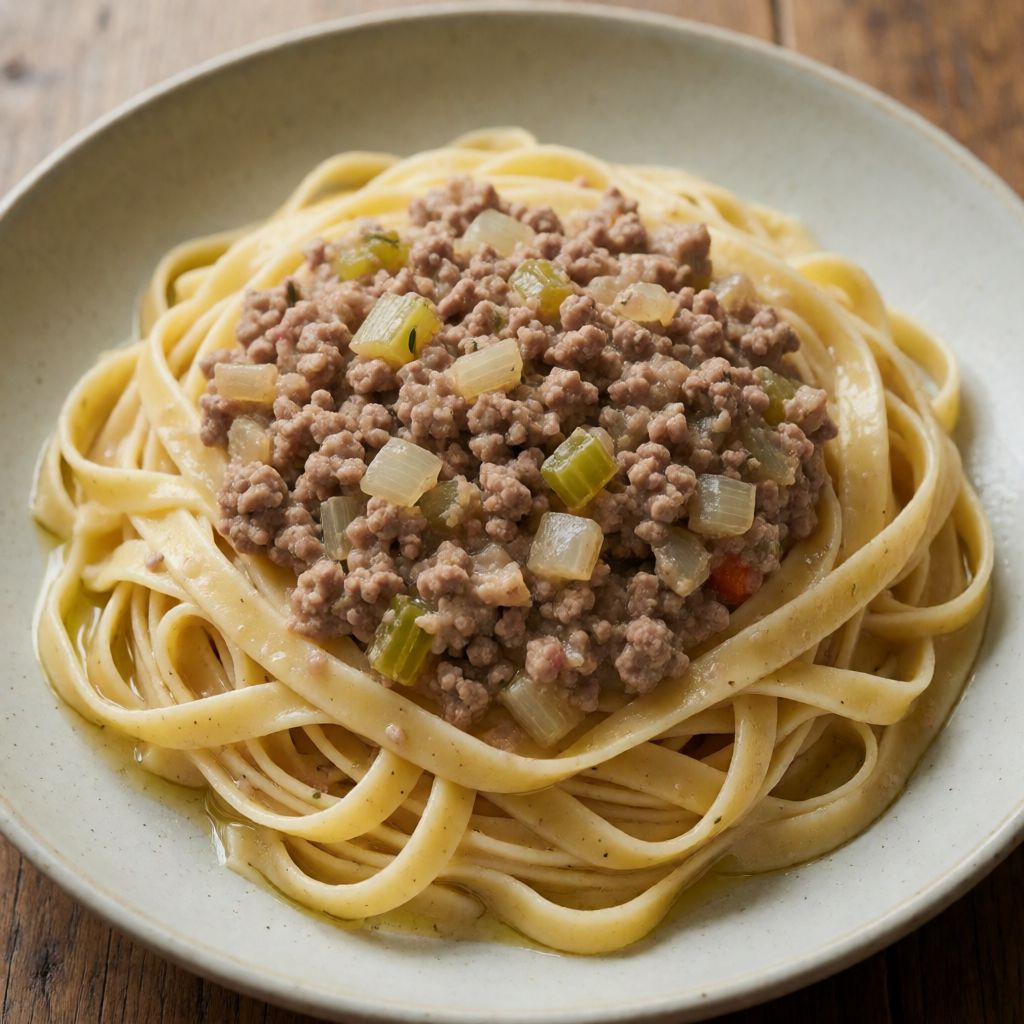
Tagliatelle with White Ragù
A delicate white ragù made with lean beef and white wine, tossed with tagliatelle.
Labels are worked out automatically from the ingredients and can be wrong. Check the packaging if it matters to you.
Ingredients
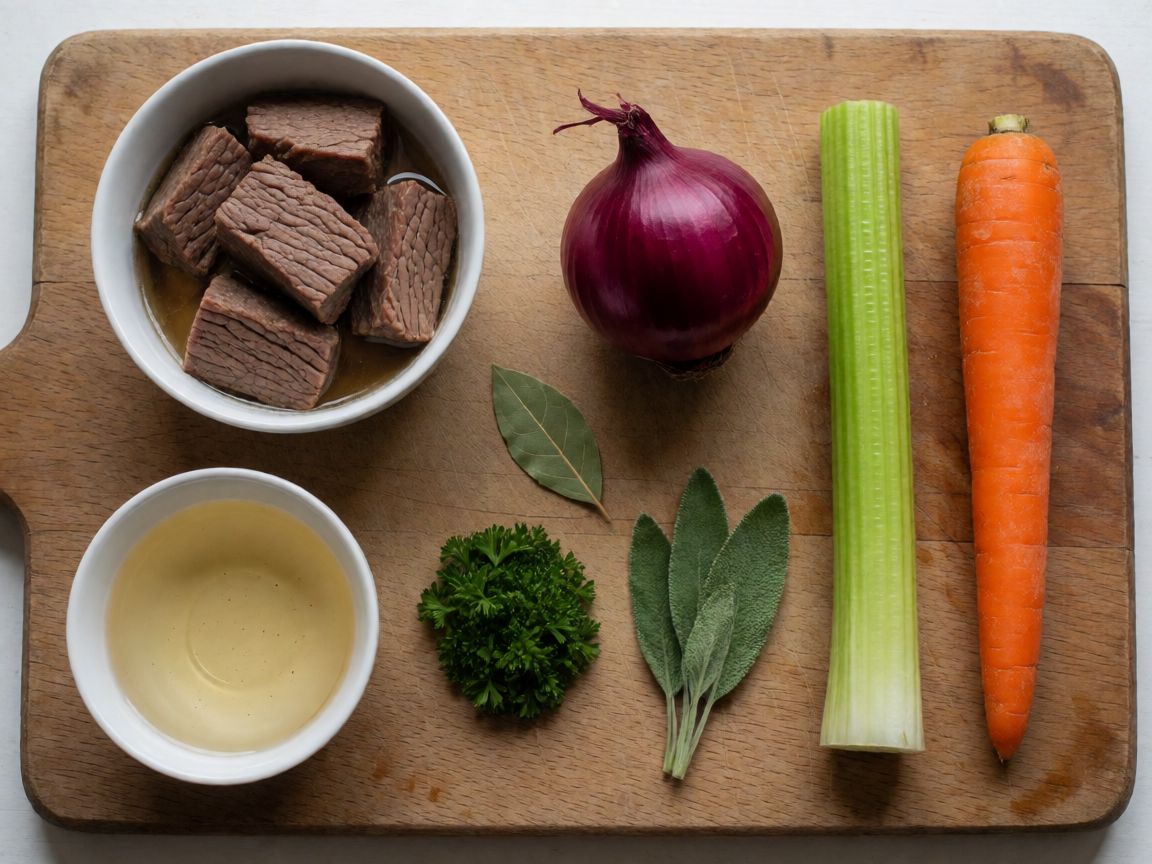
- 450 g Beef fillet
- 250 ml White wine
- 1 pcs Red onion
- 1 pcs Celery stick
- 1 pcs Carrot
- 2 tbsp Olive oil
- Salt to taste
- Black pepper to taste
- Parsley to taste
- Sage to taste
- Bay leaf to taste
- 400 g Tagliatelle
- Hard cheese grated










Steps
Finely chop the beef fillet with a knife or pass it through a mincer.
Heat the olive oil in a pan and fry the red onion until soft.
Add the carrot and celery, and fry together for a few more minutes.
Add the meat, brown it, then pour in the white wine and let it evaporate.
Cover with a lid and simmer on low heat for 20 minutes until the meat is cooked through (71°C internal temperature).
20 minSeason with salt and pepper, and sprinkle with chopped parsley, sage and bay leaf.
Continue simmering for another 10 minutes, making sure the sauce does not evaporate completely.
10 minMeanwhile, cook the tagliatelle in plenty of salted boiling water until al dente.
Drain the pasta and toss with the finished white ragù.
Serve sprinkled with grated hard cheese.
White ragù is what you get when you refuse the tomato. Strip the usual beef ragù of its red sauce and you're left with the bones of the dish: meat, wine, soffritto, and whatever liquid the pan gives up on its own. It's older than the tomato version, in fact — tomatoes only got to northern Italian kitchens in numbers after the 1700s, so this is closer to what a ragù was before anyone thought to redden it.
What decides whether this works is restraint at two points: the browning and the simmer. You brown the onion to soft, not to brown — this is the base, and if it catches colour too early it turns bitter and that bitterness sits under everything else you add later. Then you brown the meat properly, because that's where the flavour actually comes from, not from the wine. Some say wine is the flavour-carrier here — no, wine is the degreaser. It lifts the browned bits stuck to the pan (the fond), and once it's done that job you let it evaporate off, because what you want left behind is concentrated savour, not a puddle of alcohol.
The second decision point is the simmer. You're told 20 minutes then 10 — treat that as the minimum, not the answer. The meat is done at 71°C by instrument, if you have one; by eye and tongue, it's done when it's lost its raw pink and gone fully grey-brown through, and the sauce around it should be thick enough to cling to a strand of pasta, not run off it. If it looks loose and watery at the 30-minute mark, give it longer, lid off, rather than serve it thin.
The beef fillet is doing a job slightly against its nature here. Fillet is normally the cut you grill fast and serve pink, because it's lean and tender and has little connective tissue to break down. In a ragù you're not relying on long-cooked collagen for texture — you're relying on fine chopping or mincing to do that work instead, which is why the recipe has you knife-chop or mince it rather than leave it in chunks. If you want to spend less on this, a well-trimmed chuck or shin, minced, gives you more flavour from fat and connective tissue for less money — fillet here is paying for tenderness you're about to destroy by cincing it anyway, so it's really a question of what you've got and what you want to taste of.
The red onion, carrot and celery are your soffritto — the flavour base that exists in almost every Italian meat sauce because it's cheap, it's what grows locally, and frying vegetables in fat before you add meat means you're building sweetness and depth before the protein even arrives. Any onion will do if red isn't to hand; red onion is just milder and a touch sweeter raw, which matters less once it's cooked soft. The carrot should go in until it bends rather than snaps when you press it with a spoon — that's your doneness cue, not a clock.
White wine's only job, as above, is to lift the fond and thin the fat enough to let the meat start simmering rather than frying. Use something dry and unsweetened — a basic dry white you'd actually drink a glass of, because cooking concentrates whatever's in the bottle, including sweetness you didn't want. If you've genuinely no wine, a splash of water with a squeeze of lemon does the deglazing job, though you lose the slight acidity wine gives the finished sauce.
Sage, bay and parsley go in late rather than at the start because their aromatics are fragile — bay in particular turns bitter and flat if you cook it to death, so it's added with the seasoning rather than fried in the oil. Use fresh herbs if you can; dried bay is fine and actually keeps its character well, dried sage and parsley less so — fresh parsley especially loses almost everything in the drying.
Olive oil just needs to be any oil with no smell of its own strong enough to fight the meat — a light olive oil or a neutral vegetable oil both work; save your good extra-virgin for drizzling on something raw, because its aroma burns off the moment it hits a hot pan anyway.
On the UK kitchen: you don't need a kazan or anything exotic for this — a wide, heavy-based frying pan or a sauté pan with a lid is exactly right, closer to what this dish was built for than any fancy pot. If your lid doesn't fit well, a plate on top does the same job of holding steam in during the simmer. And don't rush the finish — ragù, white or red, is a patience dish before it's a technique one; the last ten minutes uncovered, watching the sauce thicken rather than glancing at a timer, is what separates a sauce that coats from one that just sits in a puddle under your tagliatelle.