
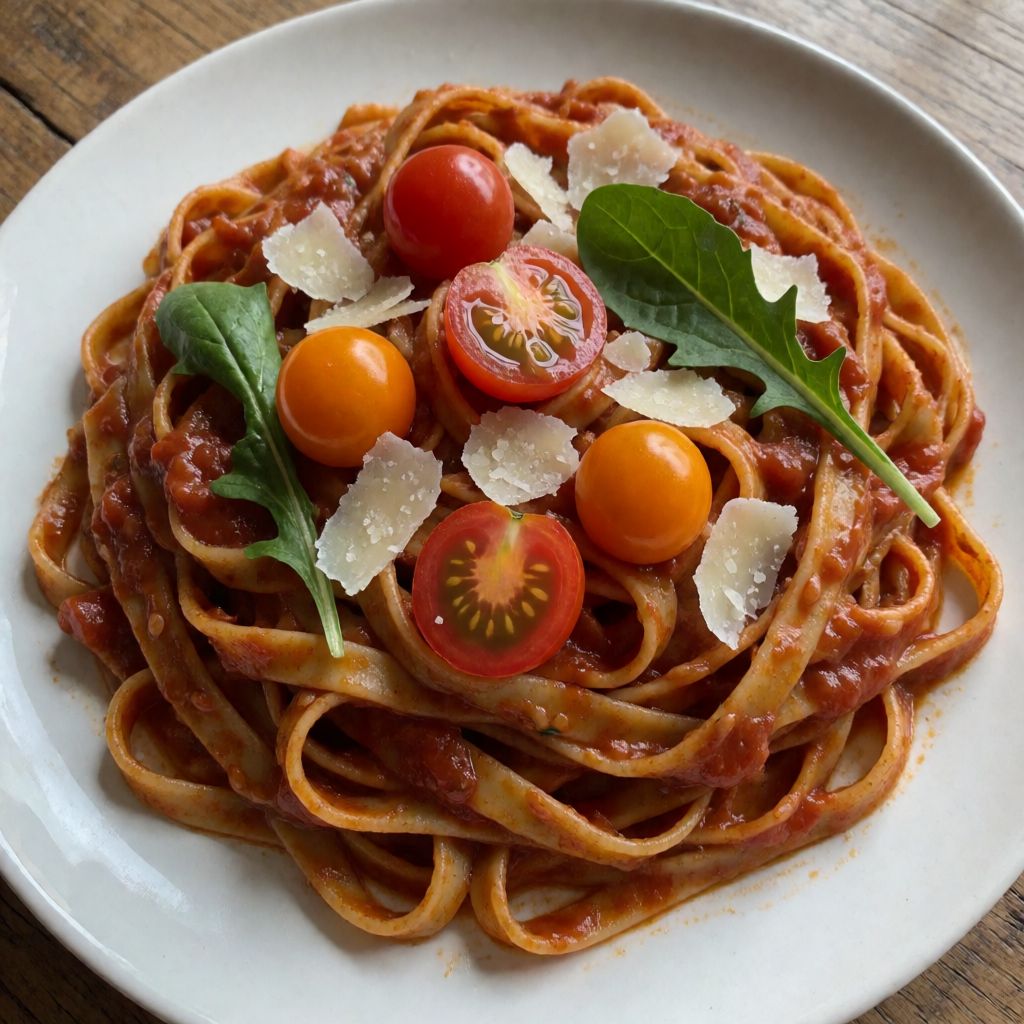
 AI photo
Ermes Red Rice Tagliatelle with Datterini Tomatoes, Pecorino and Rocket
A quick pasta dish with datterini tomatoes, pecorino romano and peppery rocket.
Labels are worked out automatically from the ingredients and can be wrong. Check the packaging if it matters to you.
Ingredients
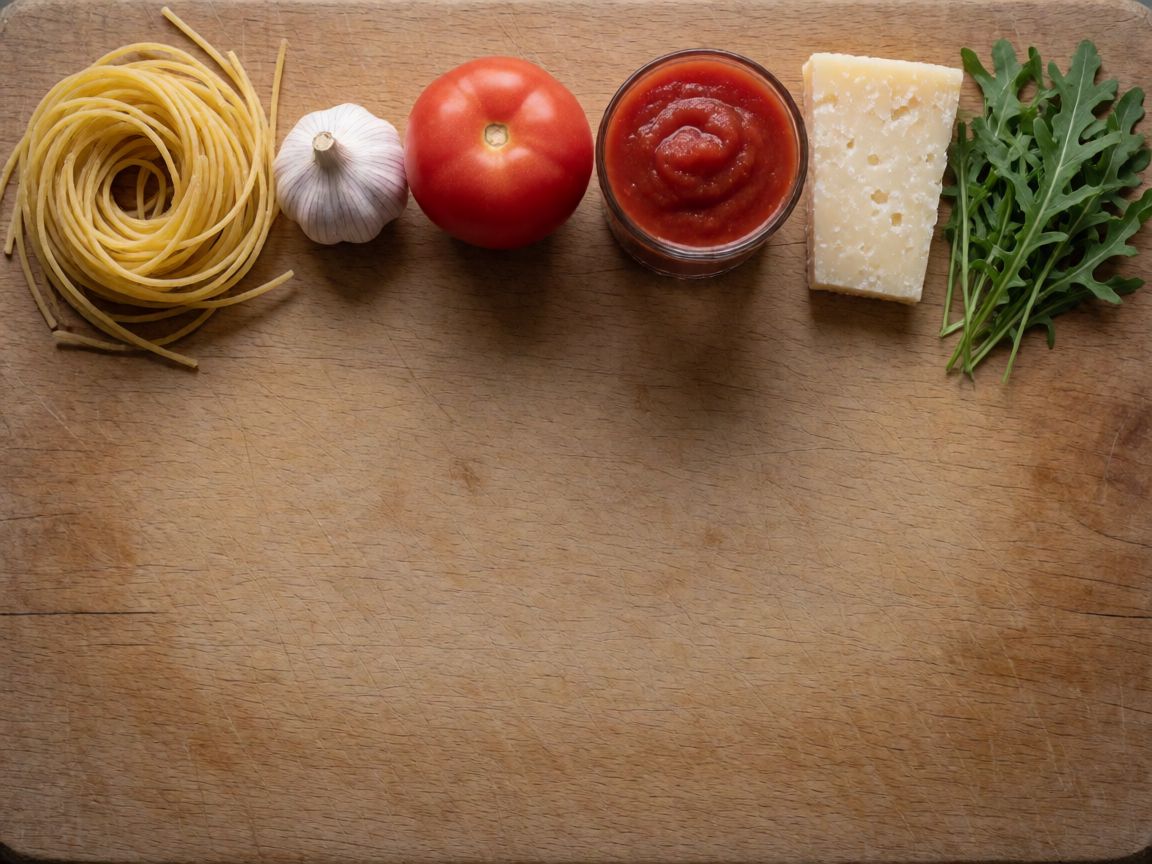
- 400 g Pasta or regular tagliatelle
- 1 clove Garlic
- 200 g Datterini Tomatoes
- 120 g Tomato Passata
- 2 tbsp Olive Oil
- Salt to taste
- Black Pepper freshly ground, to taste
- 2 tbsp Pecorino Romano
- 200 g Rocket









Steps
In a high-sided pan, heat the olive oil and sauté the garlic until fragrant but not browned.
Add the datterini tomatoes and tomato passata, cover and cook for 10 minutes.
10 minSeason with salt to taste and add freshly ground black pepper.
Bring a large pot of salted water to the boil and cook the tagliatelle together with a handful of rocket.
Drain the pasta al dente along with the rocket.
3 minTip the drained pasta and rocket into the pan with the sauce, add the pecorino romano, toss everything together, heat briefly and serve topped with fresh rocket.
This is a fast, light pasta: red-rice tagliatelle in a short tomato sauce, finished with rocket and sharp sheep's cheese. Nothing here needs a kazan or an hour of patience — but the few minutes it does ask for are the whole dish. Three things decide whether it works: whether the garlic stays sweet instead of turning bitter, whether the tomato actually thickens instead of staying watery, and whether the rocket survives two different jobs — one cooked into the sauce, one raw on top — without either of them going to mush or staying too fierce to eat.
Some say garlic has to brown, even catch a little colour, for 'real flavour'. No — browned garlic is bitter garlic. What you want here is garlic that has simply woken up: the smell changes from raw and sharp to sweet and round, no colour change needed. This matters more than usual because what follows — the passata — is supposed to taste clean and sweet, and a scorched undertone from the garlic will sit under the whole sauce and you can't cook it out later.
The ten minutes under cover isn't idle time, it's the sauce building itself. A lid traps the steam from the datterini, they collapse and give up their water into the passata, and the sauce thickens from the inside rather than by hard boiling it dry, which on a thin domestic pan would just scorch the bottom before the top had reduced. Lift the lid once, maybe twice, no more — every time you lift it, the steam that was doing the work escapes.
The pasta itself: red rice tagliatelle is ordinary durum semolina pasta with red rice flour worked in for colour and a slightly different bite. The mechanism of cooking it is the same as any dried pasta — starch outside gelatinises into the water, the protein skeleton inside holds firm until you've gone past al dente. Regular egg-free tagliatelle does the same job without the colour, and there's no reason to chase the red-rice version if your shop doesn't stock it; this sauce is light and doesn't lean on egg richness, so any flat dried pasta of similar width will behave the same in the pan.
One clove of garlic is not there to be tasted as garlic — it's there to perfume the oil. Crush it lightly rather than mince it fine if you want a gentler, rounder smell; the more cut surface you expose, the more pungent and fast-burning it gets, which is exactly what you're trying to avoid in step one.
Datterini and passata are doing two different jobs that look like one. The datterini — small, sweet, thin-skinned tomatoes — bring actual bite and bursts of concentrated sweetness; the passata brings the body and moisture that lets the sauce coat pasta instead of sitting in puddles at the bottom of the bowl. If datterini aren't to be found, any small, properly ripe cherry tomato will do the same work — the only criterion is sweetness and a skin thin enough to collapse under heat without peeling.
The olive oil here is tasted, not just a cooking medium, so this is one of the rare cases where you shouldn't reach for a neutral oil to save money — use whatever olive oil you'd happily put on bread, because its flavour is meant to come through in the finished dish, not hide behind the tomato.
Pecorino romano is salty and sharp because it's a sheep's cheese, aged, made to season rather than to melt smoothly like a mozzarella. Add it off the worst of the heat and toss rather than boil it in the sauce — too much direct heat and the proteins in the cheese clump and turn grainy instead of binding into the sauce, which is the usual reason a 'creamy' pasta ends up with little rubbery lumps. Parmesan will stand in for it, but it's milder, so use a touch more than the recipe says, to taste rather than by the gram.
Rocket does double duty, and that's deliberate, not wasteful. The handful cooked with the pasta surrenders its bitterness into the sauce; the handful scattered fresh on top keeps its peppery crunch and the bright green colour that cooked rocket loses within a minute. In a flat with no kazan, use whatever wide, high-sided pan you have for the sauce — it just needs enough room that when you tip the drained pasta and rocket in, you can toss without half of it landing on the hob. A good plate laid over the pan does the job of a lid for the ten-minute simmer well enough; you're trapping steam, not sealing a pressure vessel.