
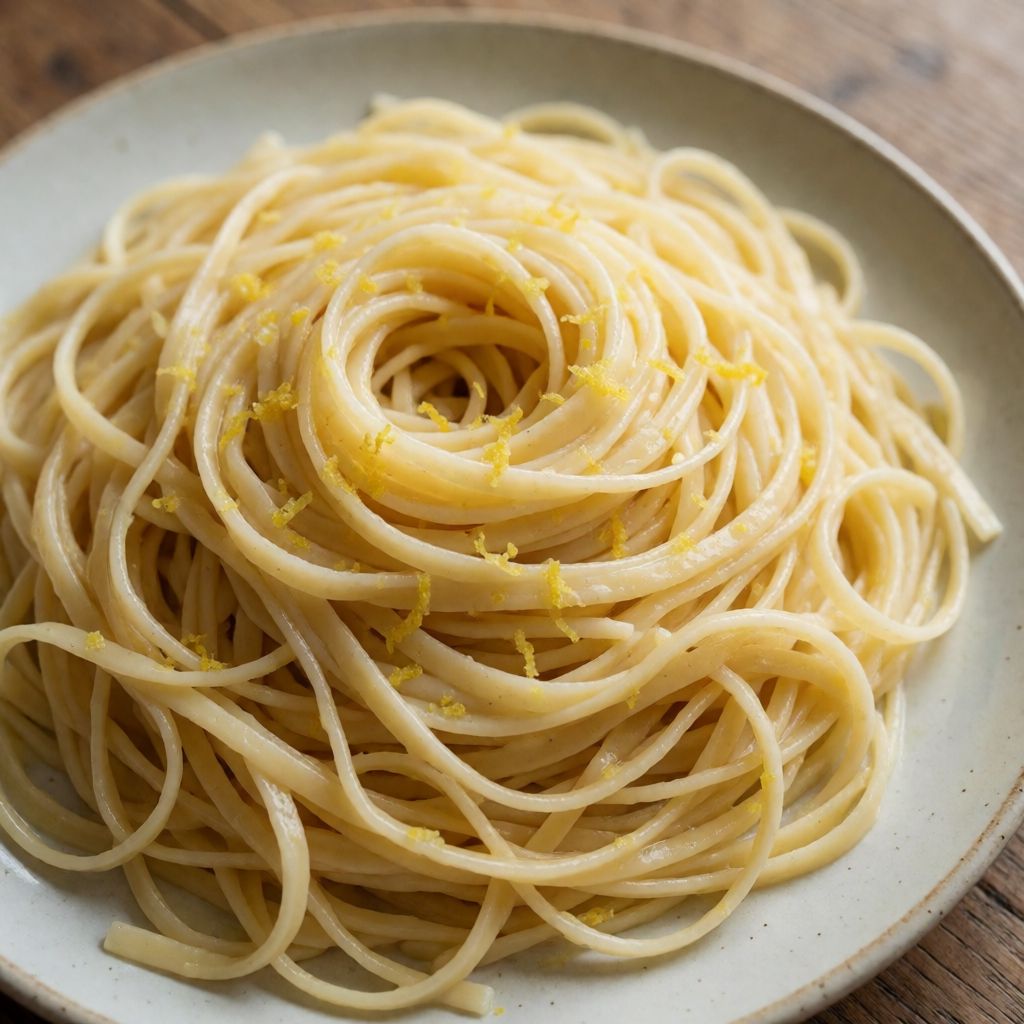
 AI photo
Tagliolini with Lemon
A simple homemade egg-yolk tagliolini pasta tossed in butter, olive oil and fresh lemon zest and juice.
Labels are worked out automatically from the ingredients and can be wrong. Check the packaging if it matters to you.
Ingredients
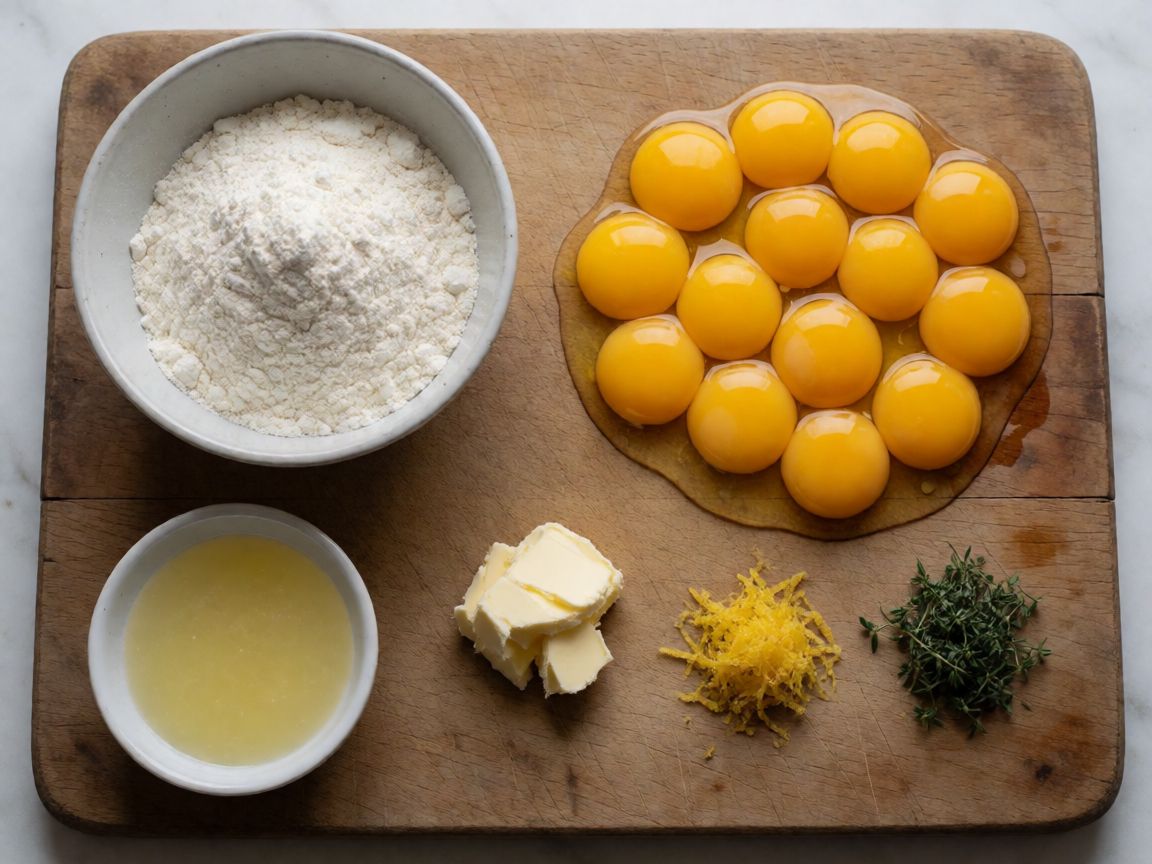
- 400 g Durum Flour
- 13 pcs Egg Yolk
- 1-2 tbsp Water cold
- Salt to taste
- 50 g Butter
- 20 g Olive Oil
- 1 pcs Lemon Zest
- 1 pcs Lemon Juice juice of 1 lemon
- Thyme to taste
- White Pepper to taste, optional










Steps
Sift the durum flour, make a well in the centre, add the egg yolks and salt. Knead the dough, gradually adding cold water until it becomes smooth, elastic and firm.
Wrap the dough in cling film and let it rest for 30 minutes at room temperature.
30 minCut the dough into 3-4 pieces and pass each through a pasta roller, gradually reducing the thickness to the thinnest setting.
Pass the rolled sheets through a tagliolini attachment or cut into 2mm-wide strips with a sharp knife.
Shape the tagliolini into nests and let them dry on a flour-dusted surface or lay them out on a pasta drying rack.
Bring a large pot of salted water to the boil and cook the tagliolini for 1-2 minutes.
2 minIn a large pan over low heat, melt the butter.
This is tagliolini al limone - not a sauce recipe so much as a tightrope between a very rich egg pasta and a sharp citrus-butter that has to cut through it without falling apart. Everything here is decided at two moments: how the dough comes together, and whether the butter holds an emulsion or splits into oily puddles with lemon floating on top.
Thirteen egg yolks to 400 g of durum flour is not showing off. It's an old kitchen economy: wherever meringues or zabaglione got made, yolks piled up with no use for them, and pasta is where they went. No whites means no extra water to roll out later - the dough is denser and more elastic, takes a thinner cut without going limp, but it also fights you more in the kneading, because yolk fat resists gluten development in a way plain water doesn't.
The pasta cooks in under two minutes, and that's not a clock figure, it's a description of a sheet that's already a millimetre thin and partly conditioned by the yolk and the rest - you're finishing it, not reviving a dry rod. Watch for the strands going from matte to glossy and loosening apart instead of clumping; that's doneness, the one or two minutes is just the floor.
The finish lives or dies on the butter. Melted low and unhurried, it should never split into clear fat and milky solids - that split is what a rushed 'medium heat' and an impatient splash of lemon juice do to it. A spoon of the pasta's starchy cooking water, added at the right moment, is what keeps fat and acid holding hands instead of pushing each other away.
Durum flour is on the ingredient list, not plain '00', for a structural reason. Its higher protein and harder starch give the dough a backbone - it survives being rolled paper-thin and cut into strands without tearing, and it keeps some bite in the pot instead of turning to paste the second it hits boiling water. If you can't get durum, use the strongest bread flour on the shelf by the same criterion - protein near 12-13% - not a soft cake flour, which will give you a dough that's easy to knead and useless to roll.
The yolks are fat, colour and structure, and the cold water in the recipe isn't there to loosen the dough - it's there because pure yolk is too viscous to wet 400 g of flour evenly on its own; a tablespoon or two lets the well close up without you overworking it into toughness. Salt goes into the dough itself, not only the sauce, because this pasta carries almost nothing else in the way of seasoning - the lemon is sharp, not salty, and the two need to meet somewhere.
Making a well and working the flour in from the edges is a hydration trick, not tradition for its own sake: it stops pockets of dry flour sealing themselves off before the gluten has a chance to develop around them, which is what gives you a dough with hard little lumps in it later. Resting it at room temperature for half an hour, not in the fridge, matters for the same reason people get wrong the other way round - some say chill it for a 'better texture'. No: a cold dough stiffens up and cracks the moment you try to roll it thin, because the gluten hasn't had time to relax. Room temperature is what lets it stretch instead of fight you.
Rolling through the machine gradually, setting by setting, is what stops tearing - and tearing is almost always blamed on a 'weak' dough when the real cause is skipping settings. Each pass conditions the gluten in another thin layer; jump from thick to thin and you ask one pass to do the work of four. Without a pasta machine, a rolling pin does the same job on the same principle: roll, fold, rest, roll again, always a little thinner than you think is safe, never all at once.
Drying the cut tagliolini into nests gives the surface a light skin, and that skin is what stops the strands welding into one solid brick, on the rack and later in the boiling water. A proper drying rack is a nicety, not a requirement - a floured tray, or a clean tea towel laid over the back of a chair, moves the same air across the same surface. The only real requirement is that air can get at all sides of the strand.
Butter, oil, zest, juice, thyme and pepper are the whole sauce, and each one earns its place. The olive oil - or any oil with no smell of its own, so a neutral one, not extra virgin with opinions of its own - goes in to buy the butter a little more room before it browns, nothing more poetic than that. Zest before you juice the lemon, not after, or you're scraping pith off a squeezed husk and getting bitterness for your trouble; the zest carries the aroma, the juice carries the cut. Add the juice once the pan has calmed down, off the worst of the heat, because acid meeting fat too hard and too fast is exactly what curdles it, whatever the recipe's good intentions. Thyme and white pepper are there for restraint - white pepper specifically so a pale dish doesn't end up freckled with black specks. Leave them out and you'd barely notice; leave out the emulsion step and you'd notice everything.