
 AI photo
Pasta Timballo
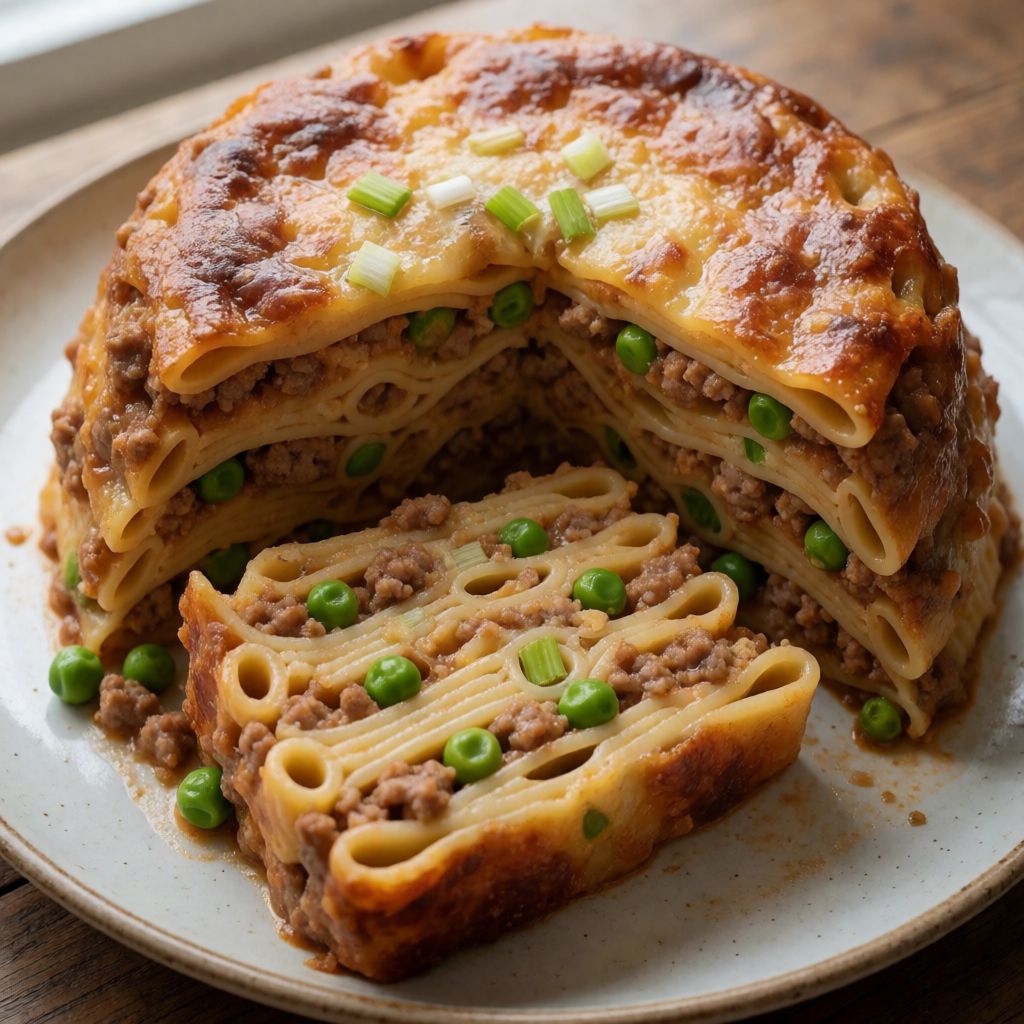
A rich baked pasta timballo layered with ragù, mozzarella and parmesan.
Labels are worked out automatically from the ingredients and can be wrong. Check the packaging if it matters to you.
Ingredients
- 200 g Minced veal and pork
- 200 g Sausage meat skin removed
- 150 g Peas
- 50 ml White wine
- 1 pcs Spring onion
- Olive oil to taste
- Salt to taste
- Black pepper to taste
- 1 l Tomato passata
- 500 g Rigatoni or another short pasta
- 400 g Mozzarella
- 80 g Parmesan
- Basil to taste













Steps
Fry the finely chopped spring onion in olive oil in a pan.
Add the minced veal and pork and the crumbled sausage meat, and fry over high heat, stirring, until browned.
Pour in the white wine and let it evaporate completely.
Add the peas and cook for about 10 minutes.
10 minAdd the tomato passata, a ladle of hot water and season with salt to taste.
Cover the pan with a lid and simmer the ragù over a very low heat for 1 hour. It is ready when it reaches 71°C inside.
Bring a large pot of salted water to the boil and cook the rigatoni until al dente.
Put the pasta in a large bowl and toss with 2-3 ladles of the ragù.
Spread half the pasta into a round baking dish 28-30 cm in diameter.
Add more ragù, parmesan, sliced mozzarella and chopped basil.
Layer in the rest of the pasta, add more slices of mozzarella, basil and a generous layer of ragù and parmesan.
Bake the timballo at 200°C for about 30 minutes.
30 min
What was changed
Salsiccia has been swapped for plain sausage meat Sausage meat, and the pasta ingredient has been set to rigatoni Rigatoni to match the dish.
Timballo is baked pasta built like a cake, not served like one. Rigatoni, ragù and mozzarella go into a round dish in layers, then into the oven, so that what comes out can be cut into wedges at the table instead of ladled onto a plate. The name comes from timpano, a drum — that's not poetry, that's the shape you're aiming for, and it's why the dish has to be round and a few inches deep, not shallow and wide.
What decides whether it holds together or turns into a tomato puddle is how far you cook the pasta before it goes anywhere near the oven. Al dente here means genuinely biting back, because the rigatoni is going to cook twice — once in water, once again in the sauce's heat inside the oven. Boil it soft the first time and the second cooking turns it to paste; you lose the structure that lets a slice stand up on a plate rather than slump.
The ragù is doing the other half of the work, and it needs the hour it's given. That's not caution, that's chemistry: a slow, barely-moving simmer is what breaks the stiffness out of the mince, lets the sausage fat carry flavour through the tomato, and gives the pea sugars time to dissolve into the sauce rather than sit next to it. Rush that hour on higher heat and you'll taste three separate things — meat, tomato, peas — instead of one sauce. Patience is the ingredient doing the most work here, and it's the one nobody puts on the shopping list.
Go through what's actually in the pan and why. The veal-and-pork mince plus sausage meat is doing two jobs with one buy: the sausage brings fat and seasoning a butcher already built in — fennel, garlic, whatever house blend — so you're not reaching for a spice rack to compensate for lean mince. If you only have plain mince, salt it earlier and more generously, and don't skimp on the olive oil at the start; you're replacing fat the sausage would have supplied.
The wine isn't flavour, it's a solvent. Poured onto the fried meat it lifts the browned bits stuck to the pan and carries them into the sauce — that's what the frying at high heat in step two was actually for, building that fond. Letting it evaporate completely matters because ethanol boils off before water does; leave it half-cooked and you'll taste raw alcohol sitting on top of the tomato instead of underneath it. No wine in the house — a splash of wine vinegar cut with water does the acid job, just without the aroma.
The peas go in early and then sit through the whole hour of simmering with everything else — that's deliberate, not an oversight. They're not meant to stay firm; they're meant to break down and sweeten the sauce, balancing the acidity of the tomato and the fat of the sausage. If you're using fresh peas rather than frozen, no extra step needed — they go in straight, same as frozen, because an hour of low heat does the softening either way.
Rigatoni specifically, not spaghetti, not penne lisce — the ridges and the tube hold sauce inside and out, and the wall is thick enough to survive the second cooking in the oven without collapsing. A smooth, thin pasta shape would turn to mush under the same treatment; this is a case where the shape of the pasta is a structural choice, not a style one.
Mozzarella is the one ingredient that can quietly sabotage the whole thing with water. A very wet, fresh ball of mozzarella in brine will weep liquid as it melts, and that liquid pools between your layers and makes the finished timballo slide apart when you cut it. Pat it dry before slicing, or better, use a firmer, lower-moisture block mozzarella sold for cooking rather than eating raw — any firm, mild, high-melt cheese does this job; fior di latte is the obvious one, but a block cooking mozzarella from a British supermarket works the same way.
Parmesan on top isn't garnish, it's the crust — it salts the surface and browns under the oven's heat the way bread crust browns, giving you something to bite against before you hit the soft layers underneath. Any hard aged cheese with that sharp, salty edge can stand in — Grana Padano, pecorino if you want it saltier. The 71°C the recipe gives you for the meat isn't a flavour number, it's a food-safety one: that's the core temperature at which minced meat is reliably free of the bacteria that live on the outside of whole cuts but get mixed right through when meat is minced — which is also why a steak can be eaten pink and mince can't. And the 200°C bake at the end is simply hot enough to melt the cheese fully and set a gold crust on top in the time it takes the inside to just finish heating through — you're looking for bubbling at the edges and colour on top, not a clock.