
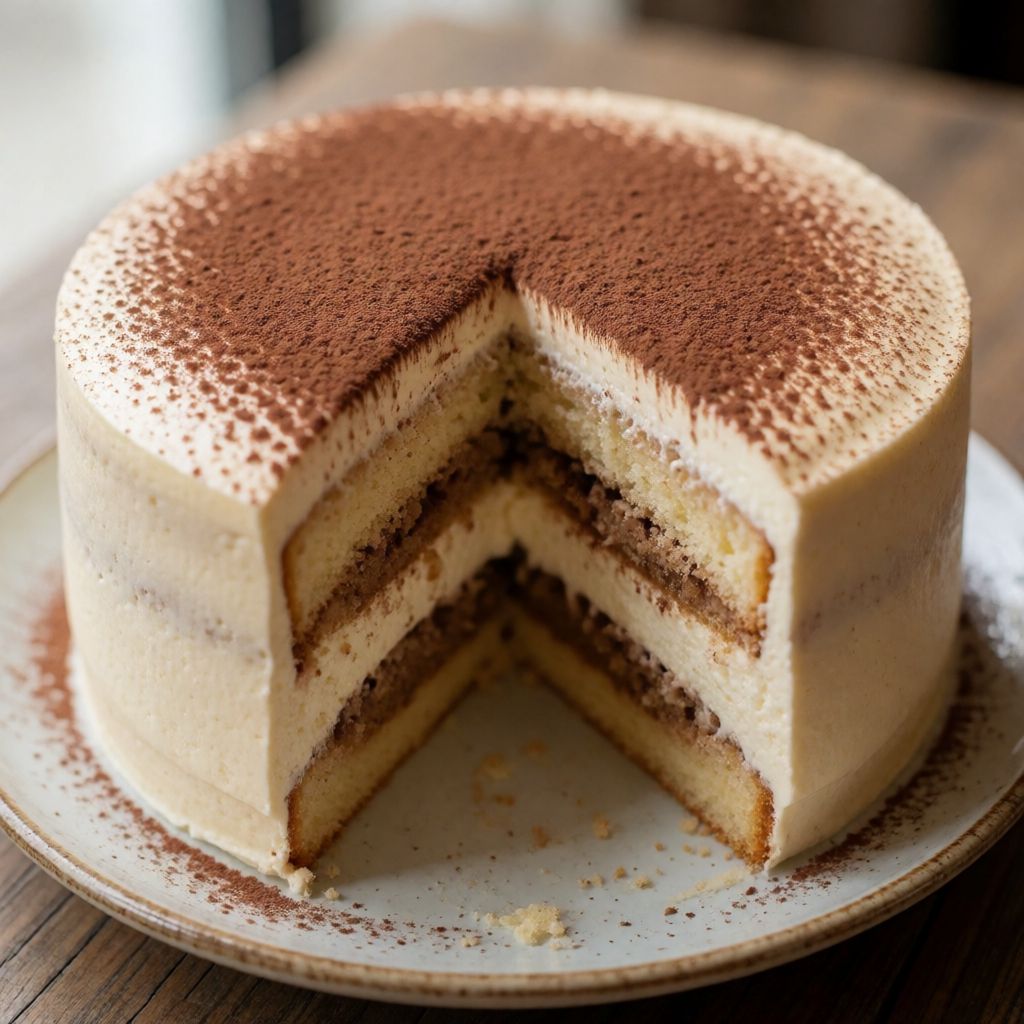
 AI photo
Tiramisu Cake with Sponge and Mascarpone Cream
A layered sponge cake soaked in coffee syrup and filled with a rich mascarpone and cream filling.
Labels are worked out automatically from the ingredients and can be wrong. Check the packaging if it matters to you.
Ingredients
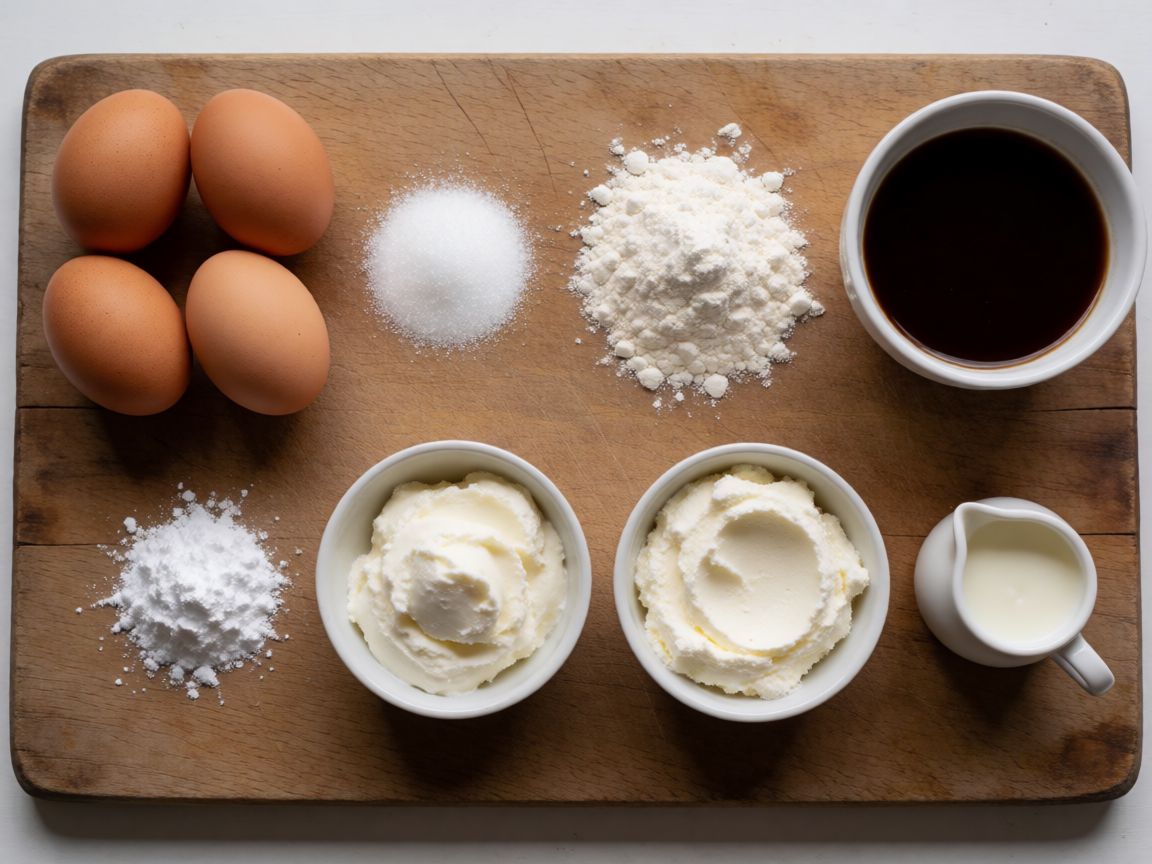
- 4 pcs Eggs
- 120 g Caster sugar
- 70 g Potato starch
- 70 g Plain flour
- 150 g Coffee at room temperature
- 120 g Water
- 10 g Icing sugar optional
- 250 g Mascarpone
- 550 g Double cream
- 1 pcs Vanilla pod
- 150 g Icing sugar
- Butter for greasing the tin
- Chocolate crumbles for decoration
- Cocoa powder for dusting before serving










Steps
Using an electric mixer, whisk the eggs with the sugar until pale and fluffy.
Sift in the potato starch and flour and gently fold in with a spatula.
Pour the batter into a 22 cm tin and bake in an oven preheated to 180°C.
40 minLet the sponge cool completely, then slice it with a serrated knife into 3 layers.
Make the syrup by mixing the room-temperature coffee, water and icing sugar.
In a large bowl, whisk the double cream with the mascarpone using an electric mixer.
Gradually add the icing sugar and flavour with the seeds of the vanilla pod, whisking until thick.
Transfer the cream into a piping bag fitted with a round nozzle.
Place the first sponge layer on a serving plate lined with strips of paper.
Brush the layer with the coffee syrup.
Pipe on the first layer of cream, top with the second sponge layer, repeat the syrup and cream, then top with the third layer.
With a palette knife, spread a little cream around the sides of the cake and decorate with chocolate crumbles.
Remove the paper strips and any excess crumbles.
Cover the top of the cake with dollops of cream.
Keep the cake refrigerated until serving.
Dust with cocoa powder just before serving.
This isn't the tiramisu you dig out of a dish with a spoon — it's that dessert rebuilt as a cake you can slice and plate properly. Same logic, different architecture: instead of ladyfingers soaked soft, you bake a génoise-type sponge, cut it into three honest layers, and let coffee syrup do the softening job that the biscuits used to do on their own.
What decides whether it works is the sponge, and specifically whether it's dry enough to drink. Potato starch sits alongside the flour here for a reason — starch has no gluten to toughen the crumb, so the sponge stays light and open enough to soak up syrup instead of turning to wallpaper paste. Skip it and use all flour, and you get a denser cake that resists the coffee instead of welcoming it.
The second decision point is the cream. Mascarpone alone is too dense to pipe without going grainy under heat from your hands; double cream alone won't hold a shape once sliced. Together, whisked until thick, you get something that stands in neat lines from a piping bag and doesn't run when the cake sits at room temperature for the ten minutes it takes to serve. Some say mascarpone must be at room temperature before mixing, like butter for a buttercream — no, because this isn't an emulsion you're coaxing together, it's just whipping; cold mascarpone whisks into cold cream just fine and holds structure better for longer.
Eggs and sugar whisked to pale and fluffy is the whole engine of this sponge — no raising agent in the list, because the air beaten into the eggs is the raising agent. Whisk until the mixture holds a ribbon when you lift the whisk, not just until it's foamy; thin foam collapses under the flour, a thick ribbon survives folding and carries the sponge up in the oven on trapped air alone.
Potato starch stands in here for the gluten-free flour blends you'd normally reach for in a genoise — but you don't need it to be gluten-free to want it. Its job is mechanical: starch grains swell and set the crumb without forming the elastic strands that flour alone would build with all that whisking. If you've only got plain flour in the cupboard, use it all, but fold even more gently and expect a slightly closer crumb — the cake will still work, it'll just drink syrup a touch slower.
The coffee syrup is water and icing sugar cut into strong coffee, nothing more, and that's deliberate. Undiluted espresso brushed onto sponge turns bitter and wet in patches; the water spreads it evenly and the sugar balances the bitterness so you taste coffee, not ashtray. Use whatever coffee you'd actually drink — instant granules dissolved strong work fine, this isn't a dish that notices the difference between a moka pot and a jar.
Double cream is the UK's stand-in for the heavy cream Italian recipes assume, and it's the right one — anything under about 35% fat won't whip stiff enough to hold piped lines once mascarpone's weight is added to it. Mascarpone itself has no real substitute that behaves the same; cream cheese is tangier and wetter and will loosen the mix, though in a pinch beaten smooth and used in slightly smaller quantity it won't ruin the cake, just sharpen it.
Vanilla pod seeds scraped into the cream are there for a smell, not a flavour you could swap in with a few drops and call identical — vanilla extract is a fair stand-in, vanilla essence a weaker one, but either beats a bare pod you forgot to open, which gives nothing at all.
Icing sugar rather than caster sugar in the cream isn't fashion — caster sugar's coarser crystals sit grainy in a cold whipped cream that never gets hot enough to dissolve them properly; icing sugar's fine enough to vanish into the whisk. The 10g of icing sugar in the syrup is marked optional for the same reason some people take their coffee black: it's balance, not necessity.
On an ordinary hob kitchen you don't need a kazan or anything grand for this — a stand mixer or a decent hand whisk, a 22cm tin, a serrated knife for the layers and a palette knife for the sides is the whole kit. The paper strips under the cake while you build it aren't decoration either — they catch the smears of cream and coffee that would otherwise glue the cake to the plate, and you pull them out clean at the end instead of scrubbing icing off china.