
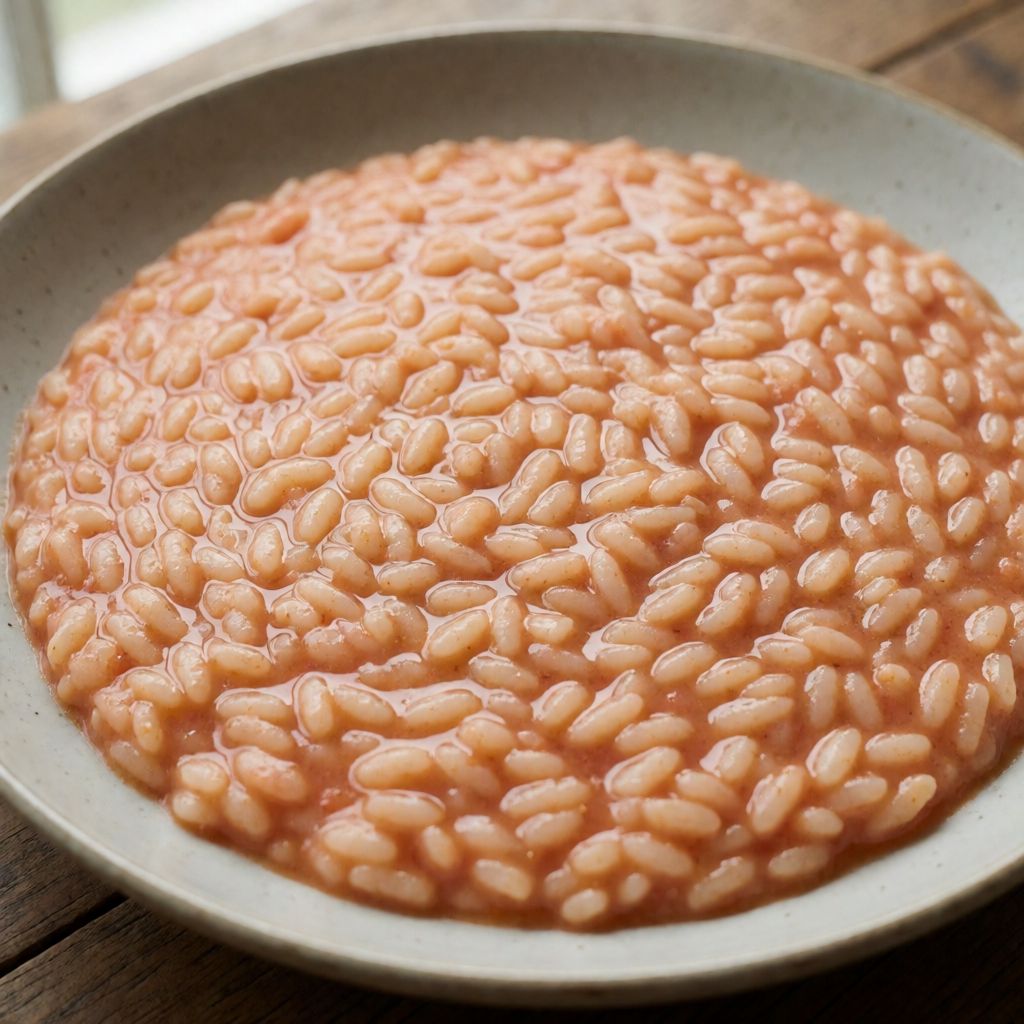
 AI photo
Tomato Risotto
A simple tomato risotto made with Carnaroli rice, tomato passata, garlic, onion and Parmesan.
Labels are worked out automatically from the ingredients and can be wrong. Check the packaging if it matters to you.
Ingredients
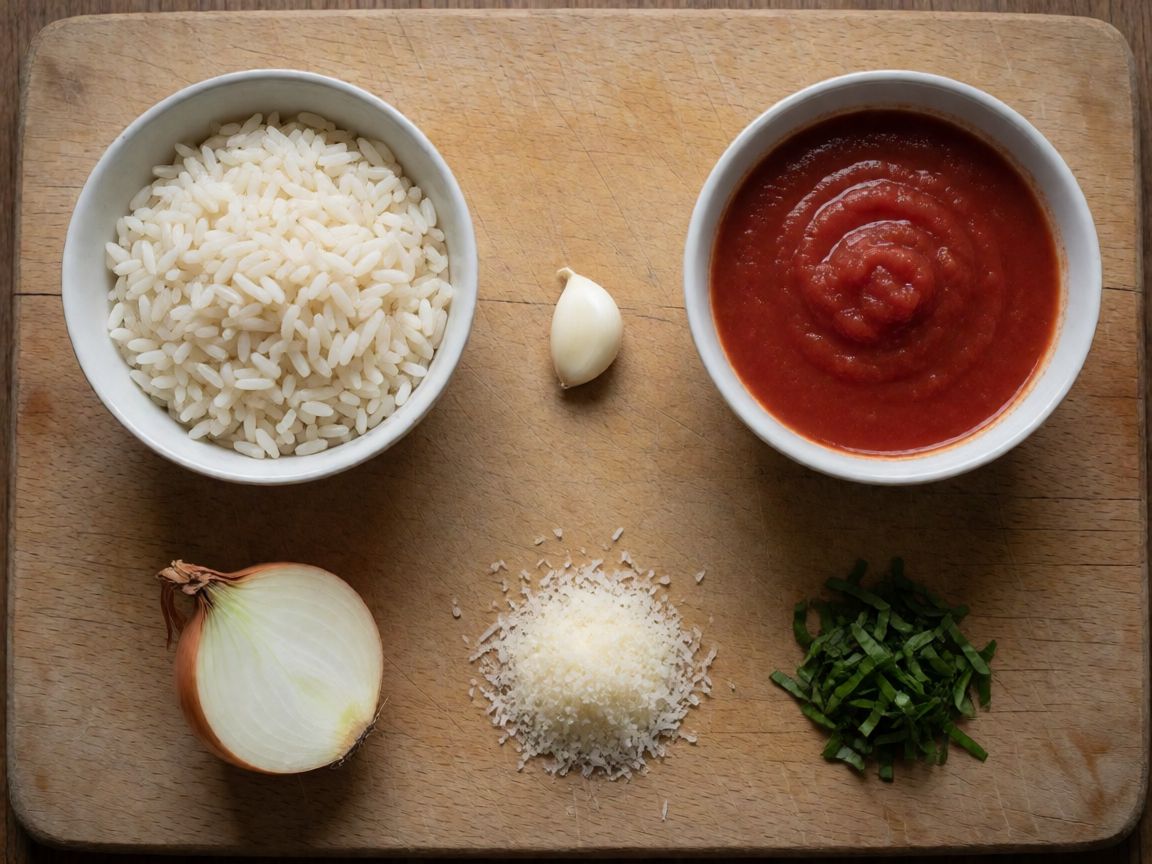
- 320 g Carnaroli risotto rice
- 600 g Tomato passata
- 1 clove Garlic
- 1/2 pcs Onion
- 60 g Parmesan grated
- Basil to taste
- Olive oil to taste
- Salt to taste
- Black pepper to taste









Steps
Heat four tablespoons of olive oil with the garlic and onion in a saucepan, then add the tomato passata and basil leaves.
Cook over medium heat until the sauce thickens slightly, then remove the garlic.
15 minBring 1 litre of salted water to the boil.
Over medium-low heat, toast the rice in a little olive oil until it turns translucent.
Gradually add the water in at least four batches, stirring the rice constantly over medium-low heat.
About halfway through cooking, add the tomato sauce and continue cooking, gradually adding more water.
Cook the rice until al dente, tasting the grains to check.
Remove from the heat, stir in the grated Parmesan, season with salt and black pepper, and serve on plates.
This is not a boiled rice dish, it's a fed one. You starve the rice of water, then give it back in doses, and in between those doses the grains rub against each other and against the pan and shed a bit of their starch into the liquid. That shed starch is the sauce - you don't pour a sauce over risotto, you build one out of the rice itself. Whether this works depends on three things: the kind of rice, how fast you feed it water, and whether you stop before it turns to porridge.
The tomato part is a separate little operation and it's worth treating it as one, not a shortcut. You reduce the passata with garlic and basil until it thickens - that's not decoration, it's concentration. Raw passata is mostly water; cook it down and you're boiling off that water so what's left is flavour, not liquid. Add it to the rice too early, still thin and sharp, and the acid in it will fight the rice's starch release, keeping the grains stubborn and the whole pot thinner than it should be. That's why it goes in halfway, once it's already behaved and already lost its rawness.
Some say risotto needs you standing over it stirring without a break for twenty minutes. No - because stirring too hard, too constantly, grinds the grains down and dumps starch into the water faster than it can be absorbed, and you end up with glue, not cream. What you actually need is enough movement to keep the grains in contact with each other and with the hot pan, not a marathon.
Carnaroli is specified for a reason that's about starch architecture, not snobbery. It carries more amylose than the softer round rices, and amylose is what gives the grain backbone - it resists collapsing even while the outer layer is shedding starch and turning creamy. If all you've got is Arborio, use it, just watch it more carefully near the end, because it goes from al dente to mush faster. What you should not reach for is a long-grain rice like basmati or jasmine - wrong starch, wrong shape, it will stay separate and dry whatever you do to it, because it simply doesn't release the right starch to build a sauce.
The tomato passata is the body of this dish, so buy the plain kind - just crushed, strained tomato, nothing added - rather than a ready 'sauce' with sugar, herbs and vinegar already in it, because you're about to cook and season it yourself and you don't want someone else's seasoning fighting with yours. No passata in the cupboard - tin of whole or chopped tomatoes, blitzed smooth, does the same job, it just needs a touch longer to reduce down to the right thickness.
Garlic goes in only to lend its smell to the oil, then comes out. Leave it in the whole cooking time and it turns bitter and acrid - the sulphur compounds that give garlic its punch break down into something harsher the longer they sit in hot oil. Pulling the clove out once it's done its job is how you avoid that bitterness without losing the flavour it already gave up. The onion stays in, finely enough chopped or grated that it more or less disappears into the sauce rather than sitting there as texture.
Olive oil here is doing a plain job - carrying heat to the onion and garlic, and later coating the rice grains before any water goes in, which is what actually stops them clumping into a solid mass. Any oil with no smell of its own that can take gentle heat will do this; you don't need your best bottle for the pan, save that for drizzling at the end if you want it. Use salted water rather than a stock cube dissolved in water - a stock cube brings its own salt and its own flavour profile, and against tomato and Parmesan, both already strong, it tends to muddy rather than help. Keep that water hot on a second ring while you cook, not cold from the tap - tipping cold liquid into the pan drops the temperature and stalls the starch's work exactly when you don't want it to stop.
Parmesan goes in with the heat off, and that's not fussiness either. Cheese on a boil separates - the fat and protein split apart and you get a greasy, grainy sauce instead of a silky one. Off the heat, the residual warmth melts it through without ever pushing it past that point. Taste the rice for doneness rather than watching a clock - you're after a grain with a little resistance at the centre, not a hard bite and not a surrender. Water in four or more batches rather than one big pour is what gives you the time to judge that properly - a flood of liquid all at once robs you of the control that makes risotto risotto, and robs you of the chance to actually taste your way to done, which, more than any step here, is the one worth being patient about.