
 AI photo
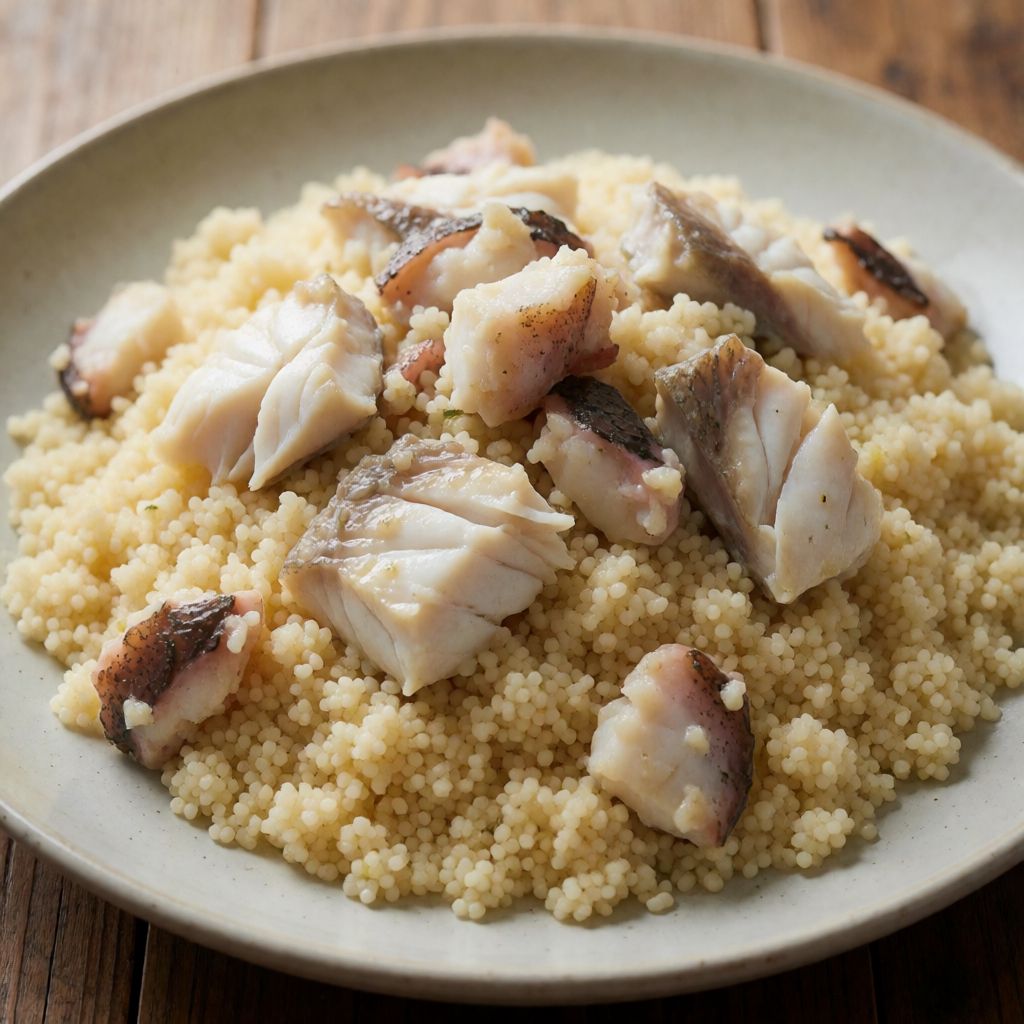
Trapani-Style Couscous with Fish
Fish couscous from Trapani in Sicily, steamed and served with a tomato and almond fish sauce.
Labels are worked out automatically from the ingredients and can be wrong. Check the packaging if it matters to you.
Ingredients
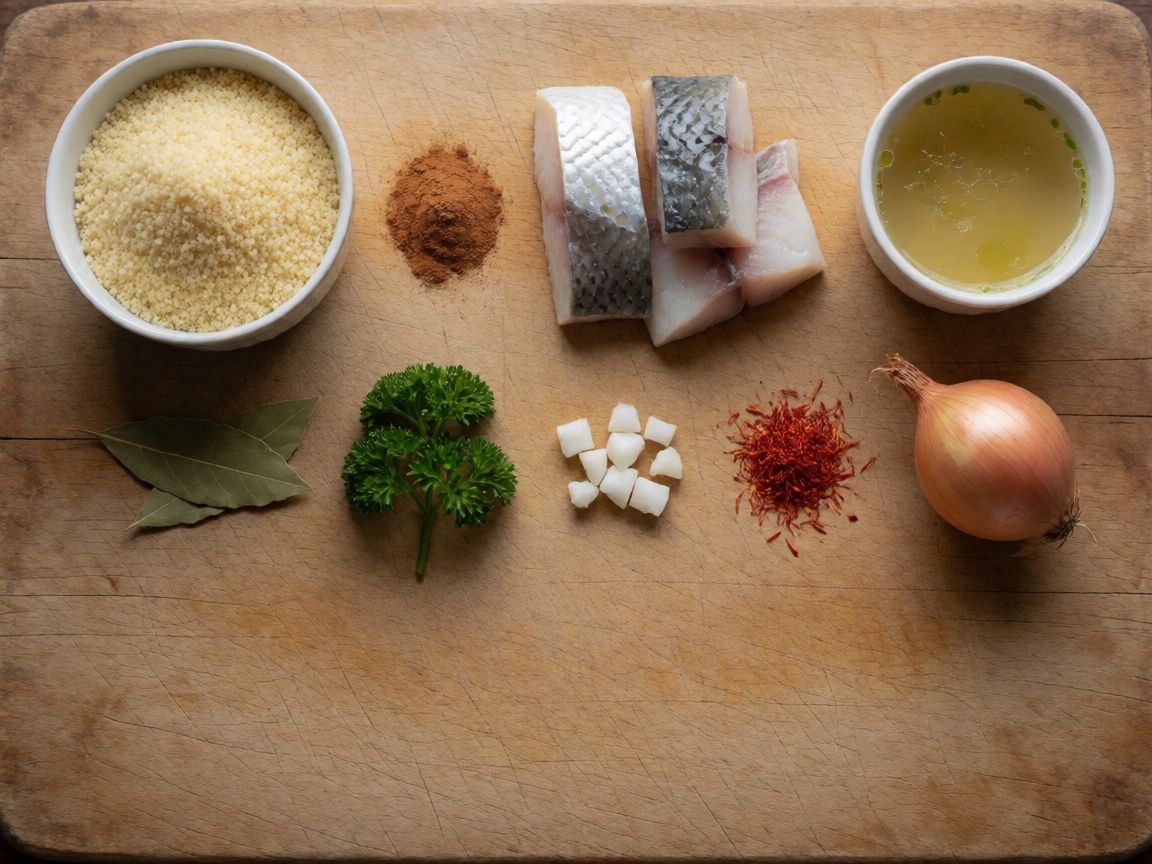
- 1 kg Couscous
- 3 tbsp Olive oil
- Water to taste
- Black pepper to taste
- Cinnamon to taste
- 2 kg Mixed fish gurnard, monkfish, hake and conger eel, or other firm white fish from the fishmonger
- 1.5 l Water
- 0.5 l Fish stock
- Black pepper to taste
- 2 pcs Bay leaf
- 2 pcs Parsley
- pinch Saffron a pinch
- 1 pcs Onion
- Salt to taste
- 800 g Tomato passata
- 1 pcs Onion
- 1 clove Garlic
- 50 g Almonds
- Parsley to taste
- Olive oil to taste
- Salt to taste












Steps
Pour water into a wide pot, add black peppercorns, bay leaf, parsley stalks and the onion. Simmer for 15 minutes.
15 minAdd the fish, cover with a lid and cook for a further 30 minutes. Doneness: 63°C at the thickest point.
Tip the couscous into a bowl, moisten with an emulsion of water and oil, carefully breaking up any lumps. Cover with a towel and leave to swell for 30 minutes.
30 minMake the sauce: pour a little water into a pan, season with salt, add chopped onion and garlic. Let the water evaporate, pour in olive oil, add the tomato passata, almonds, parsley and a pinch of salt. Simmer for 15 minutes.
15 minRemove the garlic from the sauce.
Strain the hot poaching broth from the fish and pour it into the tomato sauce along with the fish stock. Cook over high heat until the sauce thickens.
Remove the sauce from the heat.
Separate the fish from the bones, flake the flesh and set aside.
Pour enough water into the base of a couscoussier and bring to the boil. Cover the perforated top with cloth, add the bay leaf and the couscous. Steam for 20 minutes.
20 minSeason the couscous in the couscoussier, adding half the tomato sauce and the fish. Cook for a further 10 minutes.
10 minLeave everything to rest for an hour.
Serve with the remaining sauce on the side.
This is Trapani couscous — cuscusu — the dish that tells you Sicily is closer to Tunisia than to Rome. Trapani sits at the western tip of the island, and for centuries its fishermen traded with North Africa before they traded with the Italian mainland. The couscous came on those boats, not in a cookbook. What decides whether it works is not the fish, not the sauce — it's whether you let the semolina actually swell before you try to steam it. Skip that and you get wet grit at the bottom of the pot and hard pellets on top, and you'll blame the recipe instead of your own impatience.
The whole thing runs on two separate cooking processes that only meet near the end. The fish poaches gently in its own aromatic bath — onion, bay, parsley stalks, pepper — until it just gives at 63°C, no higher, because fish muscle above that point turns to rubber and there's no sauce rich enough to disguise it. Meanwhile the couscous is steamed, dry, over a separate pot of water, the way rice is steamed over broth in a Persian kitchen — contact with liquid is the enemy here, not the friend. Only at the very end do the two worlds combine: the poaching broth goes into the tomato sauce to thicken it, the fish goes into the couscous to perfume it.
About the couscoussier: you almost certainly don't have one, and you don't need to buy one for a dish you'll make twice a year. A couscoussier is just a stockpot with a perforated steamer basket that clips on top, built to let steam rise through grain without any liquid touching it. In an ordinary UK kitchen, a large pan with a metal colander or sieve set into the rim, sealed at the gaps with a damp cloth, does the same job — steam wants to escape sideways, your cloth stops it, that's the entire engineering problem solved. A couscous gauze or even a clean tea towel works as the cloth between grain and metal; it stops the semolina falling through the holes and catches condensation drips that would otherwise turn the bottom layer soggy.
The fish list — gurnard, monkfish, hake, conger eel — is a Sicilian fish-market list, not a sacred one. What you're actually choosing for is firm white flesh that holds together after thirty minutes in broth and doesn't disintegrate when you flake it off the bone. Ask your fishmonger for "stewing fish" or mixed trimmings from firm white species — coley, pollock, even a cheap bit of cod loin — and you're in the right territory. Avoid anything oily or delicate like mackerel or plaice; it'll fall apart into shreds before the broth even reduces.
The two onions and the garlic do different jobs and that's why they're listed twice. The first onion goes into the poaching water whole, simply to perfume the broth as it simmers — it's spent by the time you strain it out, discard it without guilt. The second onion is chopped fine and sweated in water, not oil, at the start of the tomato sauce — a trick worth knowing generally: water first lets the onion soften and release sugar without catching and turning bitter on a UK hob's often-uneven heat, and only once it's soft do you add the oil, which now flavours rather than fries. The garlic clove is there purely to lend background warmth to the sauce while it simmers, then it comes out — leave it in and by the time the sauce reduces with fish broth and stock, it turns sharp and dominates everything else.
Almonds in a fish sauce look odd on paper. This is the Arab-Sicilian habit of using ground nuts to thicken and round out a sauce before tomatoes were common, and even after tomatoes arrived from the New World the almonds stayed, because they add a fat and a texture tomato alone doesn't have. If you have none, a spoon of tahini or a small handful of blanched hazelnuts will do the same structural job — something fatty and ground to carry body.
Saffron and cinnamon are the two spices that tell you this dish didn't come from mainland Italian cooking, where warm spice in a savoury fish dish is almost unheard of. Saffron needs no substitute — there isn't a real one, and the pinch specified is genuinely a pinch, a few threads, not a spoonful, because too much turns medicinal rather than fragrant. Cinnamon is "to taste" because its whole purpose is to sit in the background, barely noticed, warming the tomato without announcing itself; if you're nervous of it, start with a single small pinch rather than a measured amount — you can't take it back out once it's in.
Any oil with no smell of its own will do for moistening the couscous and finishing the sauce — the point is lubrication and a little gloss, not flavour. Olive oil is traditional because it's what Sicily has always had on hand in abundance; a flavourless vegetable or sunflower oil works at the swelling stage where you genuinely don't want competing taste, though for the final drizzle over the sauce, a good olive oil earns its place back, since that's where you taste it undiluted.