
 AI photo
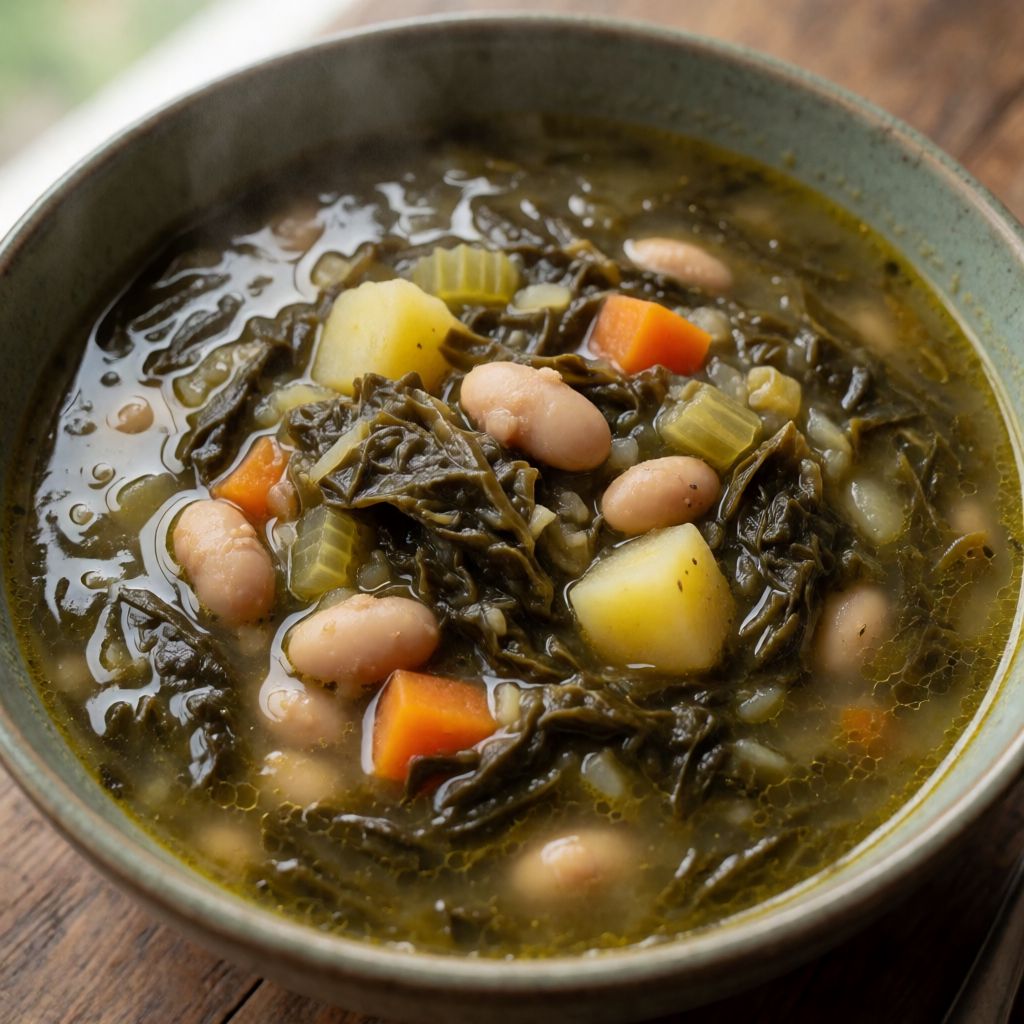
Tuscan Black Cabbage Soup
A hearty Tuscan soup of black cabbage, beans, potatoes and vegetables, finished with crusty bread.
Labels are worked out automatically from the ingredients and can be wrong. Check the packaging if it matters to you.
Ingredients
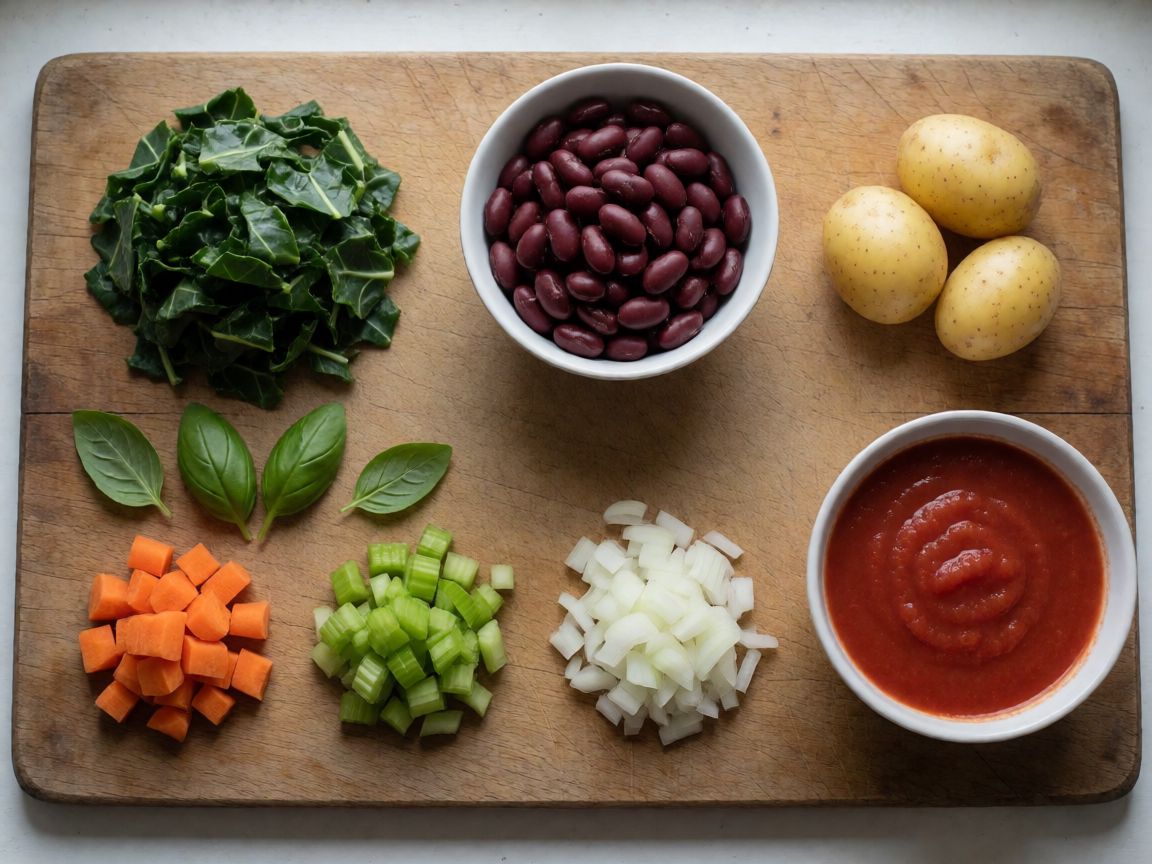
- 1 kg Tuscan black cabbage
- 1 kg Beans
- 1.5 kg Potatoes
- 150 g Carrot
- 150 g Celery sticks
- 150 g Onion
- 300 ml Olive oil
- 3 pcs Basil
- 200 g Tomato passata
- 500 g Tuscan bread
- Salt to taste
- Black pepper to taste







Steps
In a fairly large pot, sauté the chopped carrot, onion, celery and basil.
Cut the potatoes into small pieces.
When the onion is lightly browned, add the potatoes to the pot and cook all the ingredients together.
Add about 500 g of the beans and the finely chopped black cabbage leaves.
In a separate bowl, mix the tomato passata, season with salt and pepper to taste, and stir well before adding it to the pot.
Simmer all the vegetables in a small amount of water or stock.
Add the remaining 500 g of beans, previously puréed together with their cooking liquid, and let the soup simmer gently for about 10 more minutes.
10 minWatch that nothing sticks to the bottom of the pot, stirring occasionally.
Serve the soup hot with pieces of stale bread or cubes of Tuscan bread, lightly toasted in a pan.
Ribollita is peasant arithmetic dressed up as a soup: bread that's gone hard, beans that take a day to cook anyway, and whatever's left of the cabbage patch, all boiled down so nothing in the larder goes to waste. The name means "reboiled" — it was built to be made once and eaten for three days, getting better each time the bread drinks more soup and falls apart into it. If you're hunting for a clean, brothy minestrone here, you've got the wrong dish; this one is meant to be thick enough that a spoon stands up in it.
What decides whether it works is the bean split. Half the beans go in whole, half get blitzed with their own cooking water and stirred back in — that puréed half is your thickener, no flour or cornflour needed. Skip that step and you've made a perfectly nice vegetable soup, but not ribollita; the texture is the whole point, not a garnish on it.
The cabbage — cavolo nero, dark and leathery, not the pale frilly stuff — goes in late and gets cooked properly, not blanched and left crunchy. Some say long-cooked greens are "ruined" greens; no, because this isn't a salad leaf, it's a brassica bred to survive frost, and it only turns tender and loses its bitterness after real time in hot liquid. Snap-tender is the wrong target here.
Patience is the actual ingredient that makes this dish taste like more than its parts. An hour of gentle simmering, maybe a rest and a reheat the next day, is what turns separate vegetables into one thing.
Start with the sauté: carrot, celery, onion, basil, in oil, until the onion goes from raw-white to pale gold — that's the cue, not a clock. This base (Italians call it soffritto) exists because raw onion and celery have a sharp, slightly bitter edge; a few minutes in warm oil softens their cell walls and lets their sugars show instead of their harshness. Watch the onion, not the timer — gold means sweet, and the moment it tips toward brown at the edges you've crossed into bitter again, which no amount of simmering afterwards will undo.
Potatoes go in whole chunks early, because they need the longest run of the vegetables to break down — you want them collapsing at the edges by the end, thickening the broth a little on their own, not holding a neat cube shape like a stew. If your potatoes are old and starchy, cut them a bit bigger; floury potatoes fall apart fast and you don't want soup.
The beans: dried cannellini or borlotti soaked and simmered from scratch, if you have the day for it; tinned beans if you don't, and nobody in a Tuscan kitchen would have scorned you for it — beans were the cheap protein here precisely because you could grow and dry your own, not because the tin was invented later to be a lesser option. Keep back their cooking liquid (or the tin liquor) when you purée half — that liquid carries the starch that does the thickening, plain water won't do the same job.
Olive oil at 300ml for four people looks generous, and it is — this is a dish from olive country, where oil was the thing you had more of than money, and it's stirred through the soffritto and often drizzled raw over the finished bowl too, for the grassy top note that cooking burns off. Any oil with no flavour of its own will carry the vegetables, but swap it for a neutral oil and you lose that last green bitterness that's part of the dish's identity — use olive oil if you can get it, even an ordinary bottle, not the good finishing stuff.
Tomato passata is there for colour and a little acid lift against all that oil and starch, not to make this a tomato soup — stir your seasoning into it before it goes in the pot, because salt dissolves evenly in liquid and unevenly into a pot already full of vegetables, and nobody wants one spoonful that's all pepper.
Tuscan bread, the dense unsalted kind, is the reason this soup exists at all — bread that had gone stale by day three of the week got torn up and dropped into the pot to soften and swell, stretching one soup into another meal. In a UK kitchen, a few days' worth of a crusty white loaf or sourdough does the job — anything with enough structure to absorb liquid without dissolving to paste. Toast or pan-fry your bread pieces before serving rather than dropping them in raw; that gives the bread a dry, slightly crisp shell that holds its shape for the first minute or two in the hot soup, instead of collapsing into a mush the second it touches the bowl.