
 AI photo
Two-Layer Vanilla and Chocolate Pudding
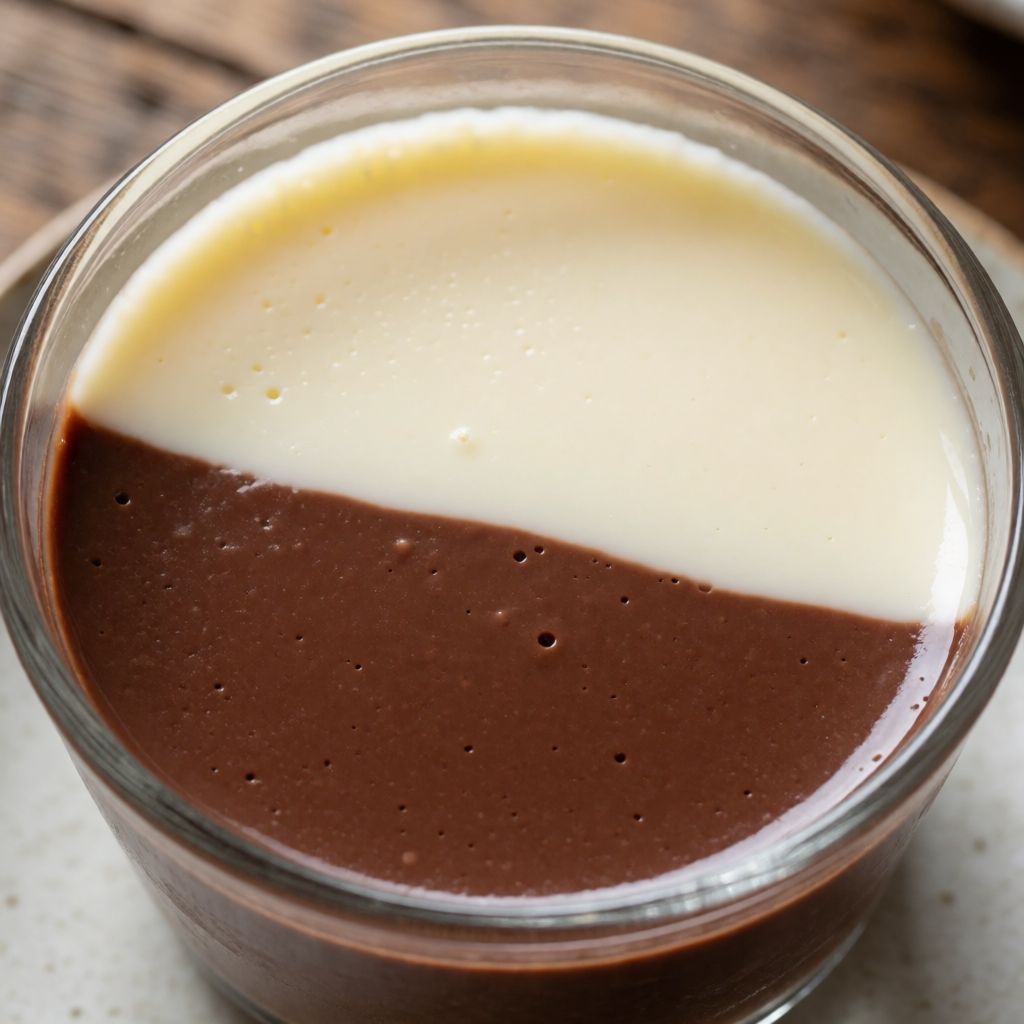
A creamy vanilla custard pudding topped with a rich chocolate and butter layer.
Labels are worked out automatically from the ingredients and can be wrong. Check the packaging if it matters to you.
Ingredients
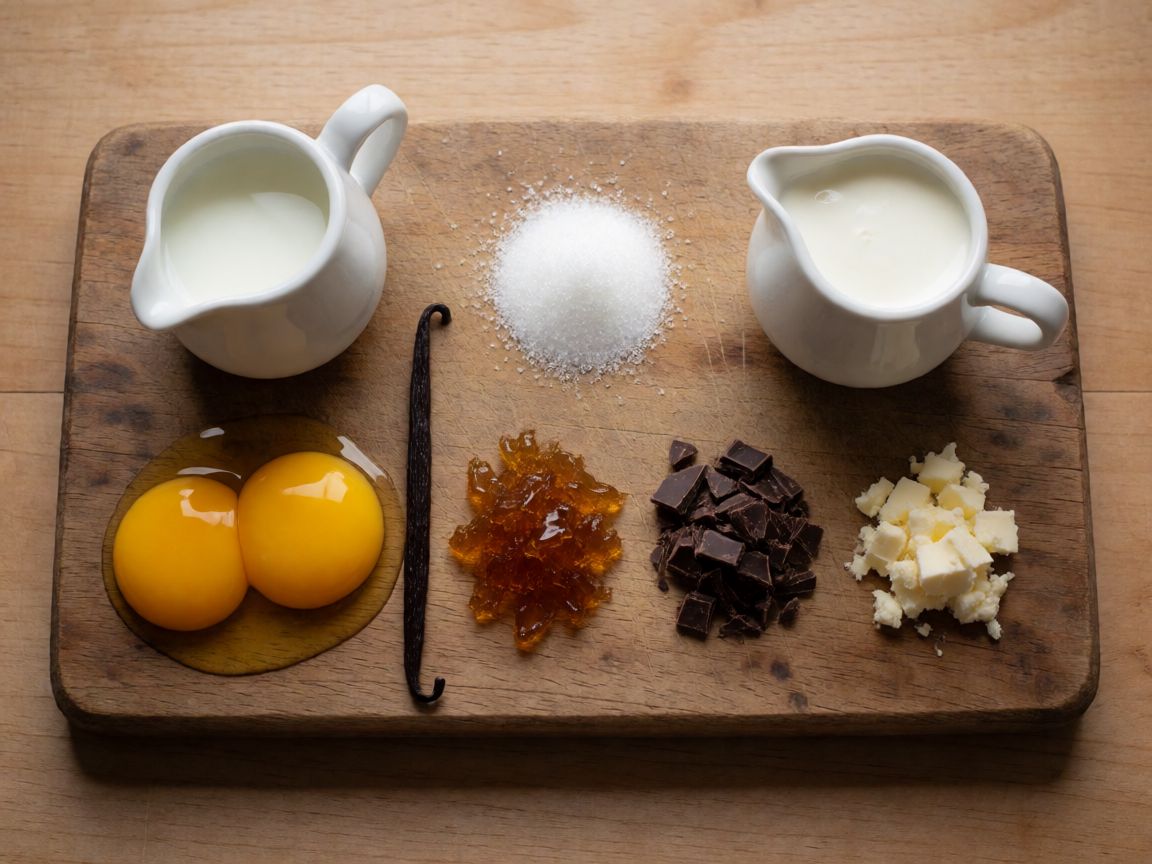
- 500 ml Milk
- 110 g Sugar
- 100 ml Double cream
- 2 pcs Egg yolks
- 5 g Gelatine
- 0.5 pcs Vanilla pod
- 60 g Dark chocolate
- 60 g Butter
- 60 g Plain flour








Steps
Soak the gelatine in cold water for 10 minutes.
10 minIn a saucepan combine the milk and cream, add the seeds scraped from the vanilla pod. Heat gently for a few minutes until it just begins to boil.
In a large bowl whisk the egg yolks with the sugar using a mixer.
Squeeze out the gelatine and stir it into the hot milk mixture until fully dissolved.
Combine the milk mixture with the egg yolk mixture, gently stirring by hand with a whisk.
Pour the finished custard into 4 pudding moulds.
Put the puddings in the fridge for 4-5 hours, or in the freezer to halve the setting time.
300 minIn a saucepan over a very low heat, melt the butter together with the sugar and the dark chocolate broken into pieces.
Add the flour and cook, stirring continuously.
Pour in the pre-warmed milk in a thin stream until the mixture is smooth and even.
Let the cream cool slightly in a bowl covered with cling film.
Spoon the chocolate cream over the vanilla puddings right to the edge of the moulds and level the surface with a spoon.
Put the puddings in the fridge to set for at least 2 hours.
120 min
This is a panna-cotta dressed as a trifle: a soft vanilla custard set with gelatine, topped with a thick chocolate cream that behaves like a cooled roux sauce poured over it. Two separate cooking logics, one bowl. That's the whole trick and the whole risk — get either layer wrong and you don't get two layers, you get soup with chocolate on top.
The vanilla base is not a custard in the crème anglaise sense — you never cook the yolks on heat. You dissolve gelatine into hot milk and cream, then marry that hot liquid with raw yolk-and-sugar off the stove. Some recipes tell you to cook egg and milk together "for safety" — don't, here, because the only thing holding this pudding together is gelatine, and if you scramble the yolks on heat you get grainy custard with lumps floating in a bowl, not a clean set. The set itself comes from cold, not from eggs: four to five hours in a British fridge, which runs colder and less humid than a Mediterranean one, so trust the fridge time given, don't shortcut it with the freezer unless you plan to eat today — ice crystals in a delicate set can weep later as it defrosts and leave you with a slightly grainy, slightly wet surface instead of a clean cut.
Milk and double cream together, not cream alone, because cream alone sets too rich and too heavy under gelatine — you'd get something closer to a chocolate-crowned butter block than a pudding you want a second spoonful of. Whole milk is the baseline here; British supermarket "whole milk" at around 3.5% fat is fine, don't reach for skimmed or you lose the body the cream is meant to round out.
The vanilla pod gives you real seeds, little black flecks through the custard, which is also proof to anyone eating it that no bottle of essence stood in. If you haven't got a pod — they're not cheap and sit in the baking aisle looking intimidating — a teaspoon of good vanilla extract (not "flavouring", which is usually vanillin and water with nothing behind it) gets you most of the way; you lose the visual freckling but keep the smell, which is what actually matters on the tongue.
Gelatine: 5g here is a light set deliberately, because this is meant to tremble slightly when you turn the mould out, not stand up like jelly on a children's party table. Leaf or powder both work — leaf needs soaking in cold water as the recipe says, powder needs the same cold-water bloom but less of it, roughly equal weight. If you're using agar-agar as a vegetarian swap, know it sets firmer and doesn't melt again in a warm room the way gelatine does, so the texture changes — fine, but don't expect the same wobble.
Egg yolks do no thickening work on the stove here — their job is richness and a faint eggy backbone to the custard, which is why you never cook them, only fold them into hot liquid off the heat. Two yolks for 500ml of liquid is a light hand; this isn't crème anglaise where yolks are the only setting agent, gelatine is doing that job, so don't be tempted to add extra yolks "for safety" — you'll just get a heavier custard that fights the lightness gelatine gives you.
Butter, sugar, dark chocolate, flour: that's a ganache that's been told to also be a sauce. The flour is the part people skip when they freelance a version of this, and it's the part that stops the chocolate cream sliding straight off the vanilla layer when you cut into it — without it you have ganache, which sets glossy and firm on its own but has no body to spread evenly to the rim of a mould with a spoon. Dark chocolate at 60g for four portions wants real cocoa content — 60-70% — not a milk chocolate bar, because milk chocolate carries its own sugar and fat and will throw the whole balance of the butter-sugar-chocolate melt off; you'll end up fighting a sauce that's too soft to hold a layer.
Patience is doing more work in this recipe than any ingredient. Ten minutes of prep, seven hours of waiting — fridge, then fridge again — and nothing about that waiting can be rushed except the one place the recipe itself gives you permission: swap fridge for freezer on the first set if you're short on time, nowhere else. Try to speed up the final two-hour set and you'll cut into a chocolate top that hasn't firmed, and it won't hold its edge against the vanilla below — you'll get streaks, not layers.