
 AI photo
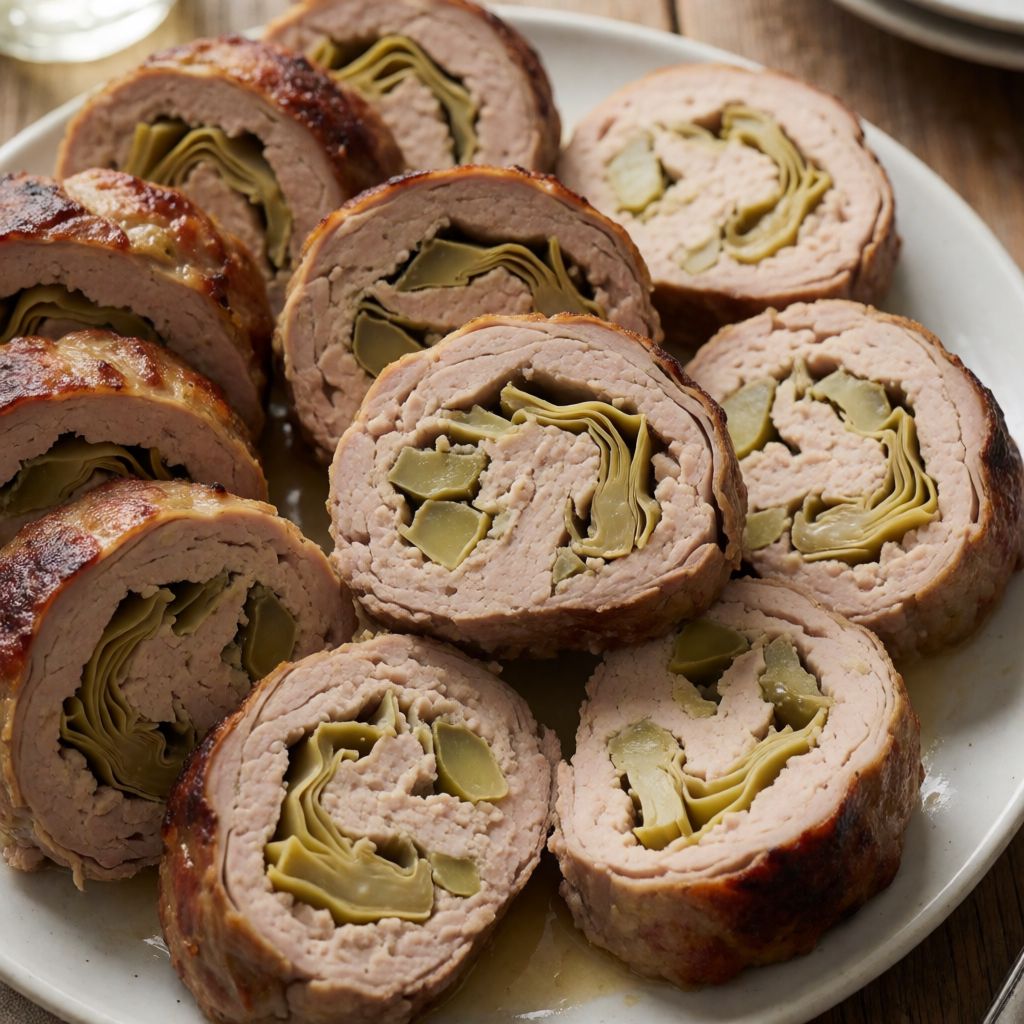
Veal and Chicken Roulade with Artichokes
A simple veal and chicken roulade filled with artichokes, a comforting Italian-style meat dish.
Labels are worked out automatically from the ingredients and can be wrong. Check the packaging if it matters to you.
Ingredients
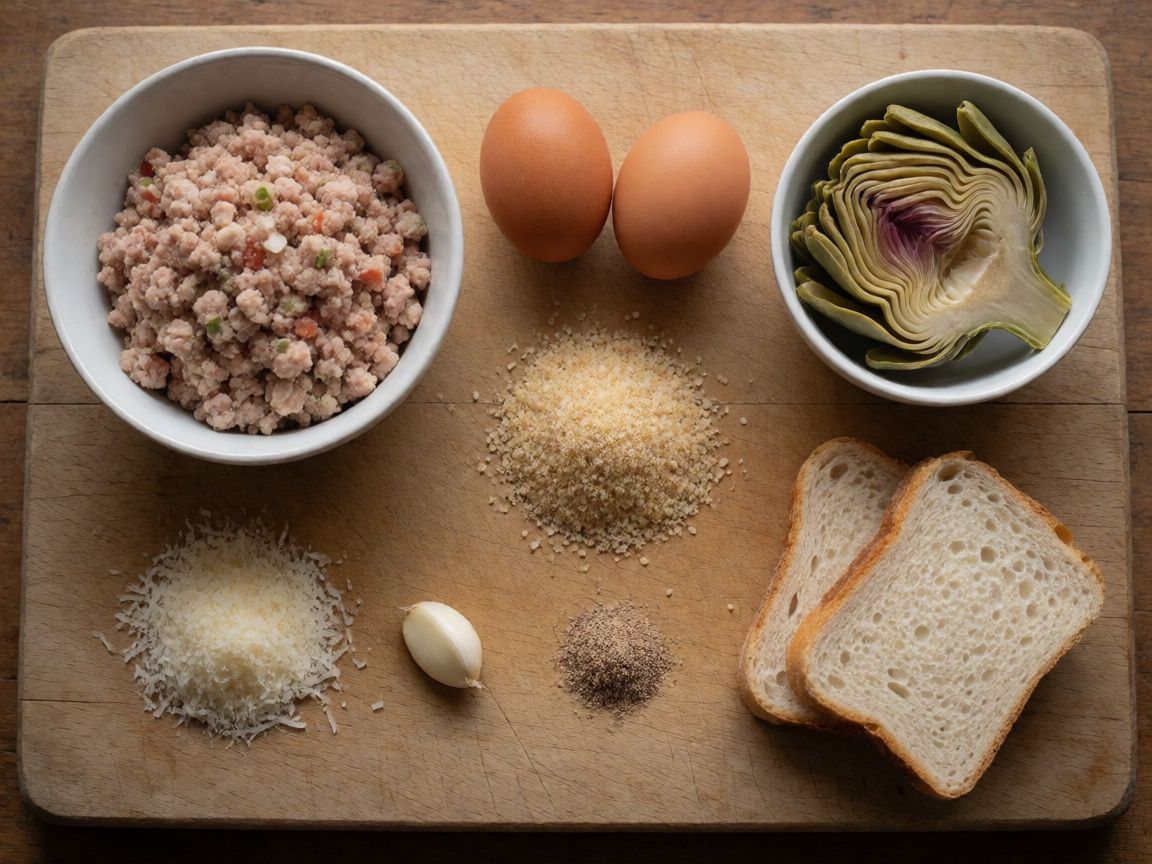
- 400 g Minced chicken and veal
- 2 pcs Eggs
- Breadcrumbs to taste
- Salt to taste
- Black pepper to taste
- 300 g Artichoke
- 1 clove Garlic
- Parmesan to taste
- pinch Nutmeg
- 2 pcs White bread slices
- Milk a little
- Vegetable oil for frying











Steps
In a pan, fry the artichokes with a clove of garlic until soft, let cool, then remove the garlic.
Combine the mince with the eggs, Parmesan and slices of white bread, soaked in milk and well squeezed out.
Add breadcrumbs if needed. Season with salt, pepper and nutmeg, and mix well.
Spread the meat mixture on baking parchment, arrange the artichokes over it and roll up into a roulade.
Sprinkle with breadcrumbs and place in a tin greased with oil.
Bake in the oven at 180°C for 50 minutes until cooked through.
50 minCheck that the roulade has reached an internal temperature of 71°C before serving.
Serve with mashed potato or steamed vegetables.
This is not really a roulade in the French sense — it is a rolled meatloaf with artichokes tucked inside, baked whole and sliced like a terrine. Think of it as a Sunday roast that has been through a bit of Italian tailoring: the shape does the work that oven timing usually does in a joint of beef.
What decides whether it holds together or falls apart on the board is moisture, not luck. Lean mince on its own bakes dry and crumbly — there is nothing in it to hold water once the heat drives it out. The soaked bread fixes that: it is a panade, a sponge that takes up the milk and gives it back slowly as the mince cooks, so the inside stays moist while the outside still browns. Skip the soak and use dry breadcrumbs only, and you get a drier, denser slice — not wrong, just a different animal.
The second thing that decides it is the shape. A roll has to be roughly even along its length, because heat crawls in from the outside at the same rate everywhere — a fat lump in the middle of an otherwise thin roll will still be pink when the rest is done. And some say you can tell a meatloaf is cooked because it's gone brown and firm on the outside — no, because a dense cylinder of mixed mince conducts heat slowly through its own flesh, and the surface will happily lie to you about the centre. That is exactly why the recipe asks you to check 71°C with a thermometer rather than guess by minutes: with chicken in the mix, you are not just cooking for texture, you are cooking past the point where it's safe.
On the mince: veal and chicken together is an economical pairing as much as a flavour one — veal alone is lean and expensive and a little flat on its own; chicken brings moisture and a cheaper price per kilo. If you can't get veal, pork mince does the same lean-but-not-dry job and is the more common partner for chicken in a British butcher's case anyway.
The eggs are not there for richness, they're there as glue. Egg protein sets somewhere around 60–70°C, which is roughly the same zone the meat itself is finishing in, so by the time your roll hits temperature the eggs have locked the structure — that's what lets you slice it rather than have it collapse into a heap of hot mince.
The bread-and-milk panade and the breadcrumbs are doing two different jobs, and it's worth telling them apart. The soaked bread is moisture management, as above. The dry breadcrumbs, added only if the mixture feels loose, are there to take up excess liquid and give the mince enough body to roll without tearing — use them to correct, not as the main bulk, or you'll end up with something closer to stuffing than meatloaf. Parmesan adds salt and that deep savoury edge (glutamate, if you want the chemistry) without adding liquid the way a softer cheese would — a hard, dry grating cheese is the right family here; a pre-grated bag cheese with anti-caking powder in it will not melt or season the same way, so grate your own if you can.
The artichokes are fried gently with a whole clove of garlic, then the garlic is taken back out. That's an infusion, not a seasoning by inclusion — the point is garlic-flavoured oil meeting soft vegetable, not someone biting into a hot raw-ish clove halfway through dinner. If artichokes aren't to hand, or you don't fancy trimming a fresh one (a job that takes longer than the frying itself), jarred or tinned artichoke hearts, well drained, do the job — the criterion is a cooked vegetable with its water already driven off, so it doesn't weep into the mince once it's rolled up and baked. Spinach, squeezed properly dry, or mushrooms fried down hard, would follow the same logic if artichokes are out of season or out of budget.
For the oil — frying the artichokes and greasing the tin — anything with no smell of its own does the job: sunflower, rapeseed, a mild vegetable oil. Rapeseed is the home-grown version in Britain and behaves the same way. Save a fruity olive oil for where you'll actually taste it, which isn't here.
On the kitchen itself: you don't need a kazan or a trussing needle for this, a baking tin and a sheet of parchment will roll and hold the shape well enough, and most ovens that roast a joint on a Sunday will happily take this one too, at the same kind of oven-air temperature that browns a crust while the heat works its way to the centre. Mash or steamed vegetables on the side isn't a style choice so much as the right match — something plain enough not to fight the nutmeg and Parmesan already doing the seasoning work inside.