
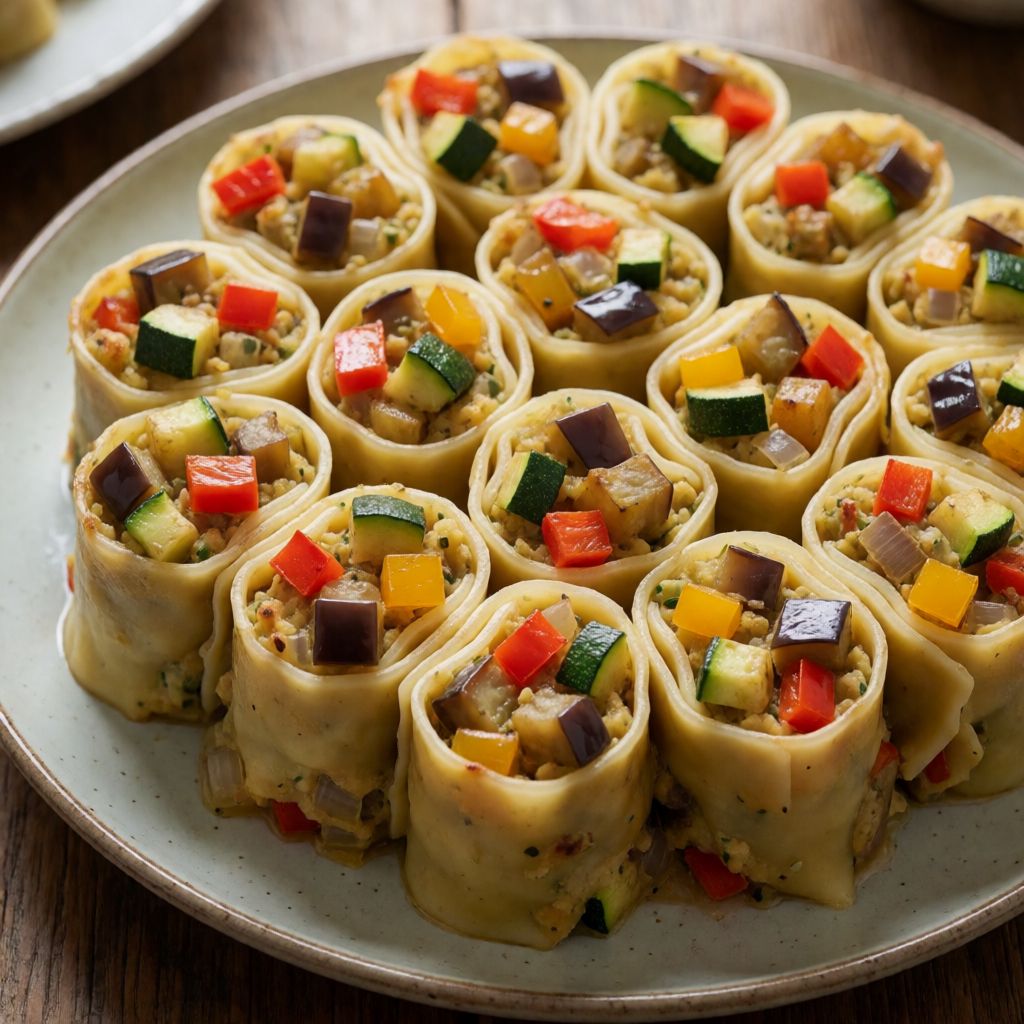
 AI photo
Vegetarian Cannelloni
Lasagne sheets rolled with onion, courgette, pepper and aubergine in a creamy béchamel, baked until golden.
Labels are worked out automatically from the ingredients and can be wrong. Check the packaging if it matters to you.
Ingredients
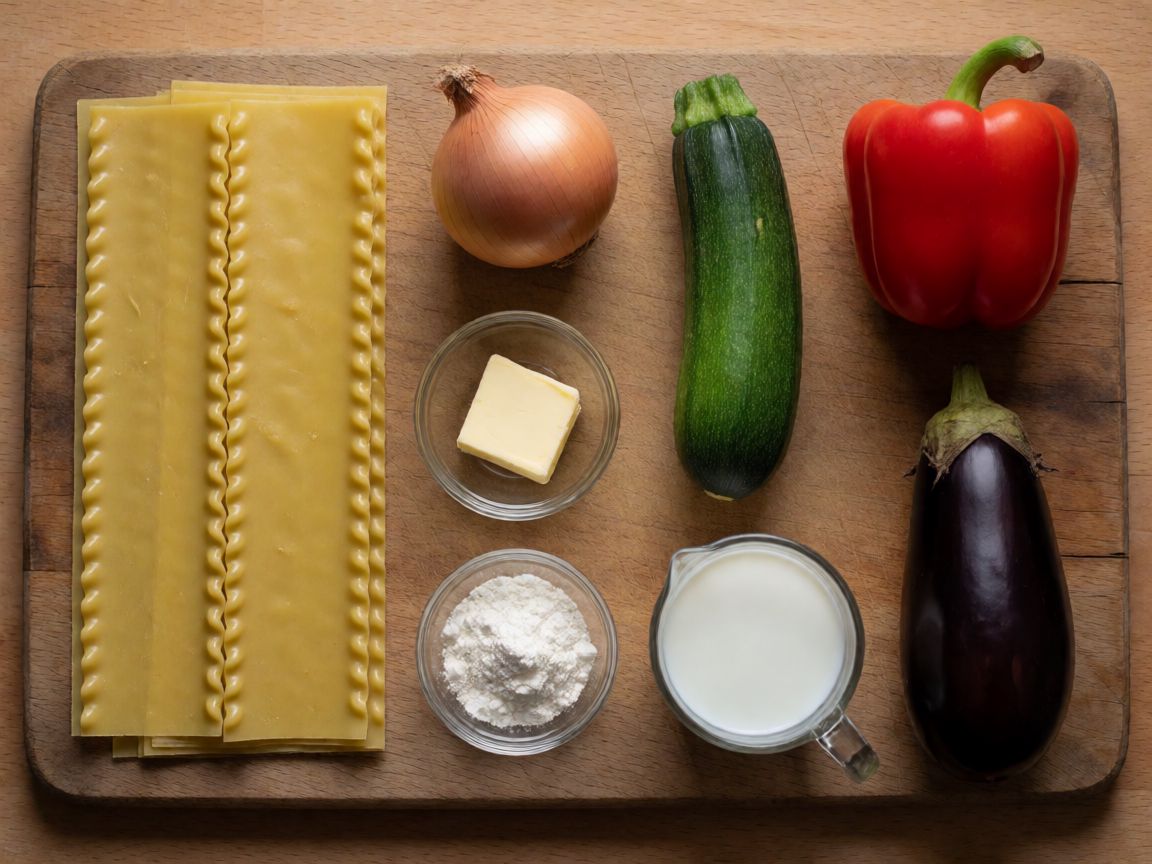
- 500 g Lasagne sheets
- 250 g Onion
- 250 g Courgette
- 250 g Bell pepper
- 250 g Aubergine
- 120 g Butter
- 120 g Plain flour
- 1 l Milk
- Olive oil to taste
- Salt to taste
- Black pepper to taste
- Nutmeg to taste
- 30 g Parmesan
- Parmesan to taste, for sprinkling













Steps
Fry the onion in olive oil.
Add the diced vegetables: aubergine, bell pepper and courgette. Stir with a spoon.
Cook for about 7-8 minutes, stirring occasionally.
8 minAdd salt and black pepper to taste and cook for another 7-8 minutes.
8 minMelt the butter in a pan and add the sifted flour, whisking by hand.
In a deep saucepan bring the milk to the boil.
Add the flour-and-butter mixture to the milk and cook, whisking continuously.
Add salt, black pepper and nutmeg to taste to the béchamel sauce and mix well.
Transfer the vegetables to a bowl, add 1/5 of the béchamel, mix and add the Parmesan.
Mix everything well with a spatula or spoon.
Grease a baking dish with olive oil and spread a little béchamel on the bottom.
On each lasagne sheet, lay a strip of the vegetable filling across the full width.
Roll the sheets from the shorter side to form cannelloni, and place them in the dish.
Cover with the remaining béchamel, sprinkle with Parmesan and drizzle a little olive oil.
Bake in a fan oven at 200°C for 15-20 minutes.
18 min
Cannelloni is lasagne with ambitions — the same sheet, the same béchamel, but rolled instead of layered, so every mouthful carries its own ratio of filling to sauce instead of relying on the whole dish to average out. That's the mechanism that decides whether it works: in a flat layered lasagne a dry patch gets rescued by its neighbours; in a rolled tube, a thin or dry roll stays dry, because nothing migrates sideways once it's sealed in a cylinder. So the filling has to be wet enough to coat but not so wet it turns the pasta to porridge, and the sauce has to be thin enough to pour but not so thin it runs straight through and leaves the top rolls bare.
What decides it, really, is water. Onion, courgette, aubergine and pepper are all mostly water held in cell walls, and frying them hot and uncovered is not about colour — it's about getting that water out as steam before it's allowed to pool. Some say you should salt the vegetables before cooking to "draw out moisture" — no, because salting raw vegetable doesn't remove water from the pan, it just redistributes it into the pan at a lower temperature, which is the opposite of what you want with a filling. You want it boiled off, not released and sitting in liquid under the pasta. Fry hard, uncovered, until the aubergine stops looking shiny and starts looking matte and slightly collapsed — that's cooked out moisture, not a timer.
The vegetables: aubergine is the one that needs respect, because unlike courgette or pepper it has genuine bitterness locked in its flesh along with a sponge-like structure that soaks oil rather than frying in it. Dice it small and cook it properly rather than hoping heat alone will fix it — if it still tastes bitter or feels spongy rather than soft when you bite a piece, it needs more time in the pan, not more seasoning. Courgette and pepper are forgiving; they mostly need not to be raw in the middle and not to have turned to mush — pepper should bend, not snap, courgette should give slightly, not collapse. Onion goes in first and alone because it needs longer at a gentler heat to go from sharp to sweet — going from pale gold toward amber, never dark brown, which would mean sugars burning rather than caramelising, and burnt sugar reads as bitter in the finished dish, not rich.
Butter and flour in equal weight is the classic roux ratio, and it's not arbitrary — that ratio is what gives you a sauce thick enough to cling to pasta without sliding off, at the volume of milk given here. If you're out of butter, any flavourless fat that can hold flour in suspension will do the same mechanical job — but butter also contributes its own mild dairy fat flavour that oil doesn't, so with oil the sauce works structurally but tastes thinner. Plain flour, not self-raising — the raising agent in self-raising flour has no purpose in a sauce and can give an odd aftertaste. If you have no flour at all, cornflour slurry can thicken milk, but it sets differently — glossier, more jelly-like when cold — so it's a repair, not an equal substitute.
Parmesan appears twice and does two different jobs. Inside the filling, mixed into the vegetables with a little béchamel, it's there to bind and season — a hard, salty, aged cheese melts into the mix and seasons from within rather than sitting on top. On the outside, sprinkled before baking, its job is to brown — the proteins and fats in aged hard cheese catch heat and colour fast, giving you that spotted golden surface rather than a wet one. Any hard, well-aged cheese that melts and browns under heat can stand in — a mature Cheddar will do it, though it will taste more like itself and less neutral than Parmesan.
Lasagne sheets here are doing double duty — they need to be pliable enough to roll around a strip of filling without cracking, which usually means briefly softened in hot water first if you're using dried sheets, since dry pasta straight from the box will crack rather than curl. Fresh lasagne sheets roll more easily if you can get them, but dried is what most kitchens have, and it works once softened.
On oven and heat: "200°C fan" means air moving hard around the dish, which is what gets a browned, slightly crisp top on béchamel in under twenty minutes rather than the hour a static oven might need to do the same job by slow evaporation. If your oven is conventional rather than fan, expect to add heat or time to get the same surface — the mechanism you're chasing is browning on top, bubbling underneath, not a clock number.
One honest note for a domestic kitchen: a kazan-style wide pan isn't needed here at all — a wide frying pan and a deep saucepan cover the whole job, and a baking dish you'd normally reach for after a Sunday roast is exactly the right shape for rolling cannelloni into rows. The one thing no oven glove fixes is rushing the vegetable fry — give it the full stretch uncovered, because that's the only point in the recipe where water has to leave and can't be baked out later. Patience there is the ingredient the rest of the method assumes you've already added.